

Convert Cups to Quarts: Expert Conversion Guide
Convert Cups to Quarts: Expert Conversion Guide
Whether you’re following a recipe, mixing cleaning solutions, or measuring ingredients for a home improvement project, understanding how to convert cups to quarts is an essential kitchen and household skill. The answer is straightforward: 1 quart equals 4 cups. However, mastering this conversion opens doors to more confident cooking, baking, and DIY work around your home. This comprehensive guide walks you through the conversion process, practical applications, and helpful tricks to remember these measurements.
Accurate measurements matter more than most people realize. In cooking and baking, precision can mean the difference between a perfectly risen cake and a dense disappointment. For home maintenance tasks like diluting cleaning products or preparing solutions for household repairs, proper measurements ensure safety and effectiveness. By learning how many cups make a quart and understanding the broader measurement system, you’ll tackle kitchen projects and household tasks with greater confidence and better results.
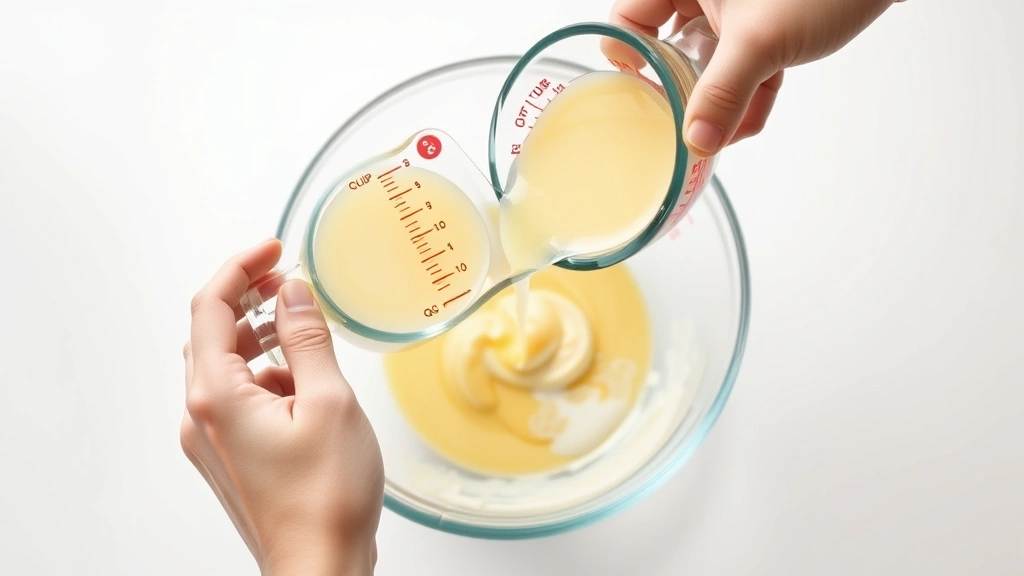
Understanding Cups and Quarts
The cup and quart are both volume measurements used primarily in cooking and baking throughout the United States. Understanding what these measurements represent helps you use them effectively. A cup is a smaller unit of volume, while a quart is larger. The relationship between them is fixed and consistent, making conversions reliable and straightforward.
The cup measurement originated in cooking and is standardized in the US customary system. One cup equals 8 fluid ounces or 236.6 milliliters. The quart, meanwhile, represents a quarter of a gallon—hence its name. One quart equals 32 fluid ounces or approximately 946 milliliters. These standardized measurements ensure that recipes and instructions produce consistent results whether you’re cooking in New York or California.
When measuring liquids versus dry ingredients, the conversion remains the same volumetrically. However, it’s important to note that weight can differ between substances. One cup of water weighs differently than one cup of flour, but they both occupy the same volume. This distinction matters when following recipes that specify weight measurements or when preparing beverages and cleaning solutions that require precise liquid measurements.

The Basic Conversion Formula
The fundamental conversion you need to remember is simple: 1 quart = 4 cups. This single relationship allows you to solve virtually any conversion problem between these two measurements. To convert cups to quarts, you divide the number of cups by 4. To convert quarts to cups, you multiply the number of quarts by 4.
Let’s break down the formula mathematically:
- Cups to Quarts: Number of cups ÷ 4 = Number of quarts
- Quarts to Cups: Number of quarts × 4 = Number of cups
For example, if you have 8 cups and want to know how many quarts that represents, divide 8 by 4 to get 2 quarts. Conversely, if you need 3 quarts of liquid and want to measure it in cups, multiply 3 by 4 to get 12 cups. These calculations work for whole numbers and fractions alike, making the conversion system flexible and adaptable to any recipe or project requirement.
Understanding this relationship also helps you work with partial measurements. Half a quart equals 2 cups, a quarter quart equals 1 cup, and three-quarters of a quart equals 3 cups. These fractional relationships appear frequently in recipes, particularly when you’re scaling recipes up or down for different serving sizes.
Quick Reference Chart
Having a quick reference chart accessible in your kitchen makes conversions instant and error-free. Print this chart or save it to your phone for quick reference while cooking or working on household projects:
| Cups | Quarts |
|---|---|
| 1 cup | 0.25 quarts |
| 2 cups | 0.5 quarts |
| 3 cups | 0.75 quarts |
| 4 cups | 1 quart |
| 5 cups | 1.25 quarts |
| 6 cups | 1.5 quarts |
| 8 cups | 2 quarts |
| 12 cups | 3 quarts |
| 16 cups | 4 quarts |
This chart covers the most common measurements you’ll encounter in everyday cooking and household tasks. Bookmark this reference for quick access whenever you need to convert between cups and quarts without mental math.
Practical Conversion Examples
Real-world scenarios help cement your understanding of cup-to-quart conversions. Let’s walk through several practical examples you might encounter in your kitchen or home.
Example 1: Scaling a Recipe You find a soup recipe that serves 4 people and calls for 6 cups of broth, but you need to feed 8 people. First, convert 6 cups to quarts: 6 ÷ 4 = 1.5 quarts. Then double the recipe for 8 servings: 1.5 quarts × 2 = 3 quarts, which equals 12 cups of broth needed.
Example 2: Beverage Preparation You’re hosting a gathering and want to make 2 quarts of iced tea. Knowing that 1 quart equals 4 cups, you need 8 cups of tea concentrate to achieve your goal. This calculation ensures you make exactly the right amount without waste or shortage.
Example 3: Household Cleaning Solutions A cleaning guide recommends mixing 1 quart of water with cleaning concentrate. If you only have a 1-cup measuring cup available, you now know you need to fill it 4 times to achieve the proper 1-quart measurement, ensuring the solution has the correct concentration for effective cleaning.
Example 4: Canning and Preservation Traditional jam recipes often call for quarts of berries. If your picking containers hold 2 cups each and you need 3 quarts of berries, you’ll need to fill your containers 6 times (3 quarts × 4 cups per quart ÷ 2 cups per container = 6 containers).
These examples demonstrate why understanding practical measurement conversions matters for everyday tasks. Whether you’re cooking, baking, cleaning, or preserving food, accurate conversions ensure successful outcomes.
Converting Cups to Quarts in Recipes
Recipe conversion represents one of the most common applications of cup-to-quart conversion. Many traditional recipes use quarts while modern recipes often specify cups. Converting between them allows you to use any recipe regardless of its measurement system.
Scaling Recipes Up When you need to double or triple a recipe, converting to quarts can simplify calculations. A recipe calling for 8 cups of liquid becomes 2 quarts—much easier to remember and work with. If you need to triple it, that’s 6 quarts instead of 24 cups. This mental simplification reduces errors and makes recipe scaling intuitive.
Scaling Recipes Down Conversely, when reducing recipes for smaller servings, understanding the quart-cup relationship helps you visualize portions. A 4-quart recipe reduced by half becomes 2 quarts or 8 cups. Knowing both measurements lets you choose whichever is easier to work with given your available measuring tools.
Comparing Old and New Recipes Older cookbooks and family recipes often specify quarts, while contemporary cooking websites and apps use cups. Understanding both systems lets you confidently use recipes from any source. Your grandmother’s quart-based canning recipes work perfectly alongside modern cup-based measurements.
When working with recipes from sources like Family Handyman that include household projects involving measurements, you’ll appreciate knowing how to convert fluidly between measurement systems.
Kitchen Tools for Accurate Measuring
Having the right measuring tools ensures accuracy whether you’re working in cups or quarts. Different tools serve different purposes, and understanding their applications helps you achieve consistent results.
Measuring Cups Standard measuring cup sets typically include 1-cup, 1/2-cup, 1/3-cup, and 1/4-cup measures. These tools work best for dry ingredients and thick liquids. For liquids, fill to the marked line at eye level to ensure accuracy. Having quality measuring cups eliminates guesswork and ensures your conversions translate to actual measurements.
Liquid Measuring Cups These graduated cylinders with spouts and handles are specifically designed for liquids. They allow you to see the liquid level clearly and pour without spillage. Many liquid measuring cups display both cup and ounce markings, making conversions even easier. A 4-cup liquid measuring cup conveniently shows 1-quart markings, making the relationship visual and intuitive.
Kitchen Scales Digital kitchen scales provide weight measurements, which differ from volume measurements. While a cup of water weighs about 8 ounces, a cup of flour weighs only about 4.5 ounces. For recipes requiring precision, scales eliminate the ambiguity of volume measurements entirely. Many modern scales display measurements in both volume and weight, making them versatile tools for any kitchen.
Measuring Spoons For smaller quantities, measuring spoons provide accuracy. Understanding that 16 tablespoons equal 1 cup (and therefore 4 tablespoons equal 1/4 cup) helps you work flexibly with recipes regardless of specified measurements.
When preparing household cleaning solutions or similar projects beyond cooking, having dedicated measuring tools ensures you maintain proper concentrations and safety standards. Avoid using cooking measurement tools for cleaning products, and vice versa, to prevent cross-contamination.
Common Measurement Mistakes
Even experienced cooks make measurement errors. Understanding common mistakes helps you avoid them and improve your success rate with recipes and household tasks.
Confusing Fluid Ounces with Ounces Fluid ounces measure volume, while ounces measure weight. These are not interchangeable. One cup equals 8 fluid ounces by volume, but a cup of flour weighs only about 4 ounces. This confusion causes recipe failures more often than people realize. Always check whether a recipe specifies fluid ounces (volume) or ounces (weight).
Not Leveling Dry Ingredients When measuring flour or other dry ingredients, the method matters significantly. Scooping directly from the bag compacts the ingredient, resulting in more than the recipe intends. Instead, spoon the ingredient into the measuring cup and level it with a knife. This technique ensures consistent measurements and better recipe results.
Measuring at the Wrong Eye Level When using liquid measuring cups, always check the level at eye level while the cup sits on a flat surface. Measuring from above or below introduces parallax error, causing inaccurate measurements. This seemingly small detail accumulates across multiple ingredients, affecting the final result.
Forgetting to Account for Ingredient Variations Different brands of the same ingredient sometimes vary slightly in density. Professional bakers often weigh ingredients rather than measuring by volume for this reason. For home cooking, this variation rarely causes problems, but awareness helps you understand why recipes sometimes don’t turn out exactly as expected.
Rushing Conversions Mental math errors happen when you’re in a hurry. Double-check your conversions, especially when scaling recipes significantly. A simple mistake in division or multiplication compounds across all recipe ingredients, ruining the final dish. Taking an extra 10 seconds to verify your math prevents frustration and wasted ingredients.
Learning to handle household challenges with precision applies to measurement accuracy as much as any other home task. Attention to detail matters in every aspect of home management.
FAQ
How many cups equal 1 quart?
One quart equals exactly 4 cups. This is the fundamental conversion you need to remember for all cup-to-quart calculations. Whether you’re measuring liquids or dry ingredients, this volumetric relationship remains constant.
How do I convert 2 quarts to cups?
Multiply 2 quarts by 4 to get 8 cups. Any time you need to convert quarts to cups, simply multiply the number of quarts by 4. This formula works for whole numbers and fractions alike.
What’s the difference between a quart and a liter?
A quart and a liter are similar but not identical. One quart equals approximately 0.946 liters, while 1 liter equals about 1.057 quarts. For most cooking purposes, they’re close enough to use interchangeably, though precise recipes may require actual conversion. A quart is slightly smaller than a liter.
Can I use the same measuring cups for dry and liquid ingredients?
While you technically can, it’s not ideal. Liquid measuring cups are designed to be filled to the brim without spillage and have a spout for pouring. Dry measuring cups allow you to level off the top for accuracy. Using the correct tool for each ingredient type ensures better results, though the volume measurement remains the same.
How many quarts are in a gallon?
One gallon equals 4 quarts, which means one gallon equals 16 cups. Understanding this relationship helps you work with larger quantities. When scaling recipes significantly, thinking in gallons and quarts often simplifies calculations.
Why do some recipes use cups while others use quarts?
Recipe measurement preferences vary by region, era, and culinary tradition. Older recipes and canning instructions typically specify quarts, while modern cookbooks and online recipes favor cups. Both measurements are equally valid; the choice usually reflects the recipe source rather than any functional difference.
What if my recipe calls for 1.5 quarts?
Convert 1.5 quarts to cups by multiplying: 1.5 × 4 = 6 cups. Alternatively, remember that 1 quart equals 4 cups and 0.5 quarts equals 2 cups, so 1.5 quarts equals 6 cups total. Breaking down fractional quarts into their component parts often makes mental math easier.
How do I measure 1 quart with only a 1-cup measuring cup?
Fill your 1-cup measuring cup 4 times. Each cup equals one-quarter of a quart, so filling it 4 times accumulates to 1 full quart. This method works for any fractional measurement—fill the cup the appropriate number of times based on the conversion formula.

Related Posts

Superscript in Google Docs: Expert Tips

Strikethrough in Excel: Easy Steps for Beginners
