

How Many Oreos to Cover US? Experts Weigh In
How Many Oreos to Cover the US? Experts Weigh In
Ever wondered about the absurd math behind covering an entire country with cookies? The question “how many Oreos to cover the US” has captivated mathematicians, food enthusiasts, and curious minds alike. While it might seem like a silly thought experiment, the answer reveals fascinating insights into scale, geometry, and just how enormous the United States truly is. This comprehensive guide breaks down the calculation step-by-step, explores the science behind it, and examines why this seemingly pointless question actually teaches us valuable lessons about dimensional analysis and critical thinking.
Whether you’re settling a debate with friends, working through a math problem, or simply satisfying your curiosity, understanding this calculation requires us to consider cookie dimensions, land area, and basic arithmetic. The results might surprise you—and the methodology can be applied to countless other real-world scenarios in construction, landscaping, and home improvement projects.
Understanding Oreo Dimensions
To calculate how many Oreos would cover the United States, we must first establish the precise dimensions of a standard Oreo cookie. A regular Oreo is circular with a diameter of approximately 1.75 inches (or about 4.45 centimeters). This measurement is crucial because it determines the surface area each individual cookie occupies when placed flat on a surface.
The standard Oreo cookie has remained relatively consistent in size since its introduction in 1912, though the company has experimented with various formats including Double Stuf, Golden, and mini versions. For this calculation, we’re focusing on the classic regular Oreo, which is the most commonly consumed variety. The circular shape is essential to our math because we need to calculate the area of each cookie’s face.
To find the area of a circular Oreo, we use the formula: Area = πr², where r is the radius. With a diameter of 1.75 inches, the radius is 0.875 inches. This gives us an area of approximately 2.405 square inches per Oreo. Converting to metric, each cookie covers roughly 15.5 square centimeters. Understanding these precise measurements forms the foundation for our entire calculation and demonstrates why detailed how-to guides and tutorials emphasize the importance of accurate measurements in any project.
When planning home improvement projects, whether you’re cleaning a coffee maker or calculating material needs for a larger undertaking, these same principles of precise measurement apply. The difference between success and failure often comes down to getting your dimensions right from the start.

US Land Area Calculations
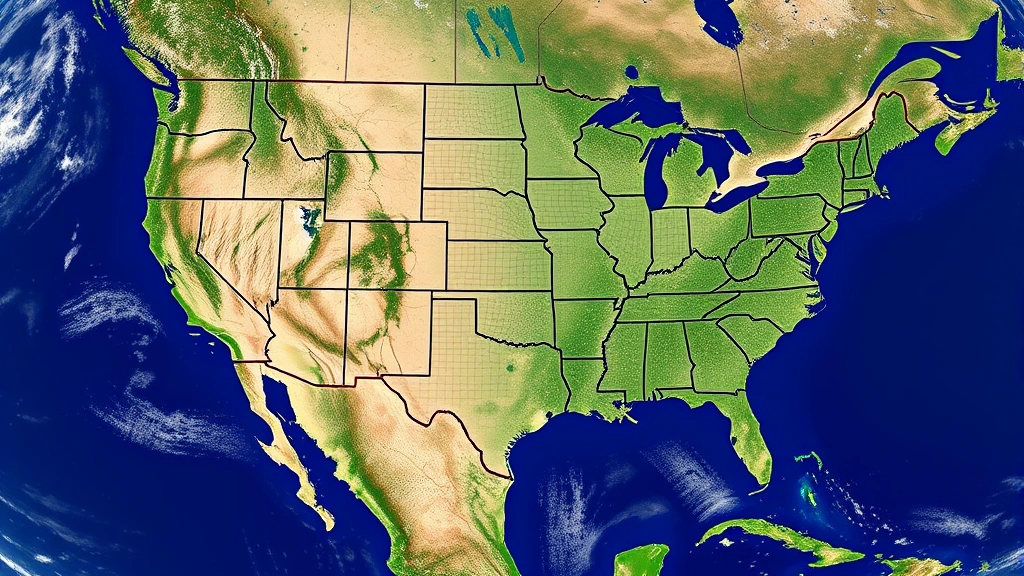
The United States covers an enormous expanse of land, and getting the exact figure requires clarification about which territories we’re including. The contiguous United States (excluding Alaska and Hawaii) spans approximately 3.8 million square miles or about 9.8 million square kilometers. If we include Alaska and Hawaii, the total jumps to approximately 3.8 million square miles for the contiguous states plus 665,000 square miles for Alaska and 10,930 square miles for Hawaii, bringing the total to roughly 4.5 million square miles.
For this calculation, we’ll use the commonly referenced figure of 3.8 million square miles for the contiguous United States, as this is what most people envision when they think of “the US.” Converting this to square inches makes the comparison with our Oreo dimensions possible. One mile equals 5,280 feet, and one foot equals 12 inches, so one square mile equals 201,600,000 square inches.
Multiplying 3.8 million square miles by 201,600,000 square inches per square mile gives us approximately 765,080,000,000,000 square inches. This enormous number illustrates the massive scale we’re working with and why understanding area calculations is fundamental in fields ranging from kitchen measurements for French press coffee to large-scale construction projects that require comprehensive planning.
When contractors estimate materials for major projects like roofing, flooring, or landscaping, they rely on these same area calculations. The methodology we’re using here—breaking down large figures into manageable units—is exactly what professionals use when determining how much material they need for residential or commercial work.
The Mathematical Formula
Now that we have both the area of a single Oreo and the total area of the United States, the calculation becomes straightforward division. The formula is simple: Number of Oreos = Total US Area ÷ Area per Oreo. However, the execution reveals just how massive the numbers become when working with continental scales.
Our calculation: 765,080,000,000,000 square inches ÷ 2.405 square inches per Oreo = approximately 318 trillion Oreos. More precisely, we’re looking at roughly 318,000,000,000,000 individual cookies needed to cover every square inch of the contiguous United States with a single layer of Oreos placed edge-to-edge with no gaps or overlaps.
To put this in perspective, consider that the world’s annual cookie production is measured in millions of tons. The Oreo is the best-selling cookie globally, with billions sold annually, yet even producing 318 trillion cookies would require centuries of global production at current rates. This mathematical exercise demonstrates the importance of understanding scale and magnitude—concepts critical when planning any substantial home improvement or construction project.
When you’re working on timing calculations for everyday tasks, you’re using the same logical thinking required for these larger problems. Whether measuring seconds for boiling water or calculating millions of square feet for a construction job, the fundamental approach remains consistent.
Breaking Down the Numbers
To truly comprehend the scale of 318 trillion Oreos, let’s break this number into relatable segments. If you could eat one Oreo per second without stopping, it would take you approximately 10 million years to consume this many cookies. The current world population is about 8 billion people; if divided equally, each person would receive roughly 40 million Oreos.
In terms of weight, a standard Oreo weighs about 11 grams or 0.39 ounces. Multiplying 318 trillion Oreos by 11 grams yields approximately 3.5 billion metric tons of cookies. To contextualize this, the entire global annual wheat production is roughly 700 million metric tons. We would need five times the world’s annual wheat harvest just to produce the flour needed for these Oreos.
The caloric content presents another interesting angle. Each Oreo contains approximately 53 calories. Multiplying this by 318 trillion gives us about 16.9 quadrillion calories. The average person requires about 2,000 calories daily, meaning this quantity of Oreos could theoretically feed the current world population for approximately 2.3 million years. These mind-bending numbers illustrate why dimensional analysis and scaling are so important in practical applications.
Understanding scale becomes particularly relevant when planning home projects. Whether you’re calculating how much paint you need to cover your walls or determining the amount of flooring material required for your renovation, applying these same principles ensures you purchase the right quantities and avoid costly mistakes.
Real-World Applications
While covering the United States with Oreos remains purely theoretical, the mathematical principles behind this calculation have tremendous practical applications. Contractors, architects, and engineers use dimensional analysis constantly when estimating materials for projects. A roofing company calculating how many shingles are needed, a flooring contractor determining tile quantities, or a landscaper estimating mulch requirements all employ the same methodology we’ve used here.
Construction projects require precise material calculations to avoid waste and budget overruns. When you’re planning a kitchen renovation or any home improvement, understanding area calculations helps you estimate costs accurately. If you’re replacing flooring in a 200-square-foot room and each box of tiles covers 10 square feet, you need 20 boxes. This simple calculation scales to massive projects affecting accuracy and expense.
Environmental scientists use similar scaling techniques to understand land use, forest coverage, and agricultural capacity. Urban planners apply these principles when designing cities and infrastructure. The seemingly absurd question about Oreos actually teaches fundamental skills applicable across numerous professional fields and personal projects.
For DIY enthusiasts tackling home improvements, this type of thinking prevents costly errors. Whether you’re determining how much drywall you need, calculating paint quantities, or planning a landscape redesign, accurate area measurements and mathematical scaling ensure your project stays on budget and runs smoothly.
Why This Matters
Beyond the novelty factor, the “how many Oreos to cover the US” question serves an important educational purpose. It demonstrates the value of breaking down complex, seemingly impossible problems into manageable components. This problem-solving approach—identifying what information you need, gathering accurate data, applying appropriate formulas, and interpreting results—is fundamental to success in mathematics, science, engineering, and practical life skills.
The question also highlights how easily human intuition fails when dealing with extreme scales. Most people significantly underestimate the answer before doing the math, revealing how challenging it is for our brains to comprehend truly enormous numbers. This humbling reality is why engineers and professionals always rely on calculations rather than guesswork, especially when mistakes could prove costly or dangerous.
Critical thinking about such questions develops analytical skills that transfer to countless real-world scenarios. When you encounter a problem—whether it’s estimating materials for a home project, understanding the scale of global issues, or evaluating claims based on data—the methodology remains consistent. Ask clarifying questions, gather precise information, apply appropriate calculations, and verify your results.
For homeowners and DIY enthusiasts, this mindset prevents expensive mistakes. Before starting any project, proper planning based on accurate measurements and calculations determines success. Whether you’re learning to use a French press or tackling major renovations, the principle of careful measurement and calculation applies universally.
FAQ
What if we included Alaska and Hawaii in the calculation?
Including Alaska and Hawaii increases the total US area to approximately 3.8 million square miles for the contiguous states plus 675,931 square miles combined for Alaska and Hawaii, totaling roughly 4.5 million square miles. This would increase the Oreo requirement to approximately 378 trillion cookies, or roughly 19% more than the contiguous US alone.
How many Oreos would fit in a single layer stacked together?
If we stacked Oreos in a single layer without gaps, we could fit approximately 318 trillion cookies as calculated. However, in practical stacking scenarios with some overlapping or gaps, the actual number might vary by 5-10% depending on arrangement efficiency.
Could this calculation be applied to other cookies or food items?
Absolutely. The same methodology works for any circular or rectangular item. You would simply measure the dimensions of the item, calculate its area, divide the total US area by that figure, and arrive at your answer. This principle applies to any coverage calculation, from shingles to tiles to any other material.
How long would it take to arrange all these Oreos?
If one person could place one Oreo per second working continuously without breaks, it would take approximately 10 million years to arrange all 318 trillion Oreos. This illustrates why large-scale projects require teams of workers and mechanized processes.
What’s the most practical application of this type of calculation?
For homeowners, the most practical application is estimating materials for renovation projects. Using the same principles, you can calculate how much flooring, roofing, paint, or landscaping materials you need, ensuring accurate budgeting and avoiding costly overages or shortages.
Why is understanding scale important for home improvement?
Understanding scale prevents expensive mistakes and ensures projects stay within budget. Accurate area calculations determine material quantities needed, labor costs, and project timelines. Misjudging scale can result in purchasing too much material (wasting money) or too little (delaying the project and increasing costs).

Related Posts

Superscript in Google Docs: Expert Tips

Strikethrough in Excel: Easy Steps for Beginners
