
How Long Does Nail Polish Take to Dry? Expert Guide
How Long Does Nail Polish Take to Dry? Expert Guide
There’s nothing quite like the anticipation of freshly painted nails—that moment when you admire your handiwork and realize you need to resist the urge to touch anything for what feels like forever. Whether you’re a seasoned nail enthusiast or someone who just occasionally indulges in a manicure at home, understanding drying times can save you from smudged polish disasters and help you plan your beauty routine more effectively.
The truth is, nail polish drying times aren’t as straightforward as “15 minutes and you’re done.” Multiple factors influence how quickly your polish sets, from the type of formula you’re using to the environmental conditions in your space. This comprehensive guide breaks down everything you need to know about nail polish drying times, practical tips to speed things up, and the differences between various polish types.
Let’s dive into the science and strategy behind achieving perfectly dry nails every single time.
Standard Drying Times for Different Polish Types
When you ask “how long does nail polish take to dry,” the answer depends heavily on what type of polish you’re using. Traditional nail polish, gel polish, and quick-dry formulas all have vastly different timelines, and understanding these distinctions helps you set realistic expectations.
Traditional Nail Polish: Your standard drugstore nail polish typically takes 15 to 30 minutes to dry to the touch. However, this “dry to the touch” stage doesn’t mean your nails are completely hardened. Full cure time—when the polish reaches maximum hardness and durability—usually takes 24 to 48 hours. Yes, you read that right. Those first 15 minutes are just the beginning.
Quick-Dry Polish: Manufacturers have responded to our collective impatience by developing quick-dry formulas that can set in as little as 3 to 5 minutes. These polishes contain specialized resins and solvents that evaporate faster than traditional formulas. While they’re genuinely faster, they still benefit from a full 30 minutes before you engage in activities that could potentially damage the finish.
Gel Polish: If you’ve ever had a gel manicure at a salon, you know that gel polish dries almost instantly under UV or LED light—typically 30 to 60 seconds per coat. Without a light source, gel polish won’t cure properly and remains tacky indefinitely. This is why at-home gel manicures require investing in a proper UV or LED lamp.
Factors That Affect Drying Speed
Polish drying time isn’t just about the formula—it’s influenced by a surprising number of variables. Understanding these factors gives you control over the process and helps you achieve consistent results.
Humidity Levels: High humidity is the enemy of nail polish drying. When moisture content in the air is elevated, solvents in the polish evaporate more slowly, extending your wait time significantly. Conversely, low humidity accelerates evaporation and speeds up drying. If you live in a humid climate, you might need to add 10 to 15 minutes to your standard drying time.
Temperature: Warmer environments promote faster solvent evaporation, which means your polish dries quicker in heated spaces. Cold temperatures slow everything down. This is why nail technicians often work in climate-controlled rooms, and why your nails might take longer to dry during winter months or in air-conditioned spaces.
Polish Thickness: The amount of polish you apply directly impacts drying time. Thick, heavy coats take considerably longer to dry than thin, even applications. A single thick coat might take 20 minutes, while two thin coats could be dry in 15 minutes total. The key is understanding that thinner applications dry faster because there’s less solvent to evaporate from the surface.
Polish Color: Believe it or not, darker polish colors generally dry slower than lighter shades. Dark pigments require more binders and solvents to achieve their color intensity, which means more evaporation is necessary. Conversely, light pinks and nudes often dry surprisingly quickly.
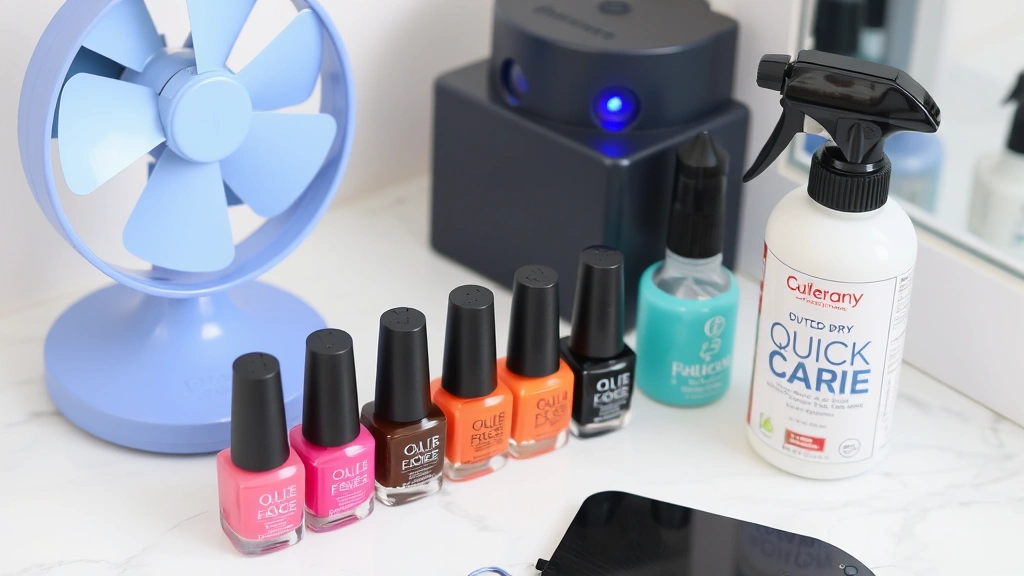
Air Circulation: Stagnant air around your nails increases drying time. When air can circulate freely around your wet polish, solvents evaporate faster. This is why turning on a fan or sitting near an open window noticeably speeds things up.
How to Speed Up Drying Time
If you’re tired of waiting around for your nails to dry, these proven strategies will help you cut your drying time significantly without sacrificing quality.
Use a Quick-Dry Spray or Drops: Quick-dry products work by absorbing moisture and reducing friction on the nail surface. Apply them immediately after your final coat, and you can reduce drying time from 30 minutes to just 5 to 10 minutes. While these products do work, they can sometimes affect the finish’s smoothness, so experiment to find what works for your preferred polish.
Apply Thin Coats: This is perhaps the most effective strategy. Instead of applying one thick coat, use two or three thin coats. Each thin layer dries faster than a single heavy application, and you’ll actually finish sooner overall. This technique also produces a more professional-looking finish.
Increase Air Circulation: Position a fan near your drying nails, open windows, or sit in a well-ventilated area. Even a gentle breeze makes a measurable difference in drying speed. Some people keep a small desk fan specifically for this purpose.
Lower the Humidity: If you’re in a humid environment, running a dehumidifier or air conditioner creates optimal drying conditions. Even turning on your bathroom exhaust fan helps pull moisture from the air.
Warm Your Hands Slightly: Gentle warmth accelerates solvent evaporation. Some people dip their fingertips in cool water (not hot—that’s too extreme) immediately after application, which creates a slight temperature differential that speeds drying. Others sit in the sun briefly to warm their hands naturally.
Environmental Impact on Polish Drying
Your home’s environmental conditions create a significant impact on polish drying times, and paying attention to these variables gives you remarkable control over the process.
During winter months, indoor heating systems reduce humidity levels, which paradoxically can speed up drying despite the cold temperatures. However, if you’re in a climate where winter brings increased moisture, drying times might actually extend. Summer humidity is typically the biggest challenge—your nails might take 40 to 50 minutes to fully dry to the touch.
Seasonal changes also affect the types of products that work best. Winter might be the perfect time to experiment with standard polish, while summer could necessitate quick-dry formulas or gel polish to maintain efficiency.
If you’re serious about achieving consistent drying times, consider creating a dedicated nail-painting station in a specific room where you can control conditions. Close windows and doors, run air conditioning or a dehumidifier, position a fan, and you’ve created an ideal nail-drying environment.
Comparing Different Polish Formulas
Not all nail polish is created equal, and different formulas offer distinct advantages depending on your priorities and lifestyle.
Traditional Lacquer-Based Polish: This is your classic drugstore polish. It dries through solvent evaporation, which takes time but produces a beautiful, glossy finish. These polishes are affordable and come in endless color options, but they require patience.
Water-Based Polish: Marketed as eco-friendly and non-toxic alternatives, water-based polishes dry faster than traditional lacquer—typically 10 to 15 minutes to the touch. However, they’re often less durable and may chip more easily. They’re excellent if you want frequent color changes without the wait.
Quick-Dry Formulas: These contain specialized resins that evaporate faster. Brands specifically formulating for quick-dry performance have made significant advances, and some genuinely do dry in 5 to 10 minutes. The trade-off is sometimes a slightly less glossy finish compared to traditional polish, though quality varies by brand.
Gel Polish: The fastest-drying option when using proper UV or LED curing. The downside is the required equipment investment and the more involved removal process for gel nail polish. If you want salon-quality results at home, gel is worth the investment. Understanding how to properly remove gel varnish is important before committing to this method.
Shellac and Hybrid Polishes: These sit between traditional and gel polish. They’re cured with UV light but are easier to remove than full gel polish. Drying time is essentially instant under the lamp, making them ideal if you want quick results without gel’s removal complexity.
Common Mistakes That Slow Down Drying
Sometimes we inadvertently sabotage our own nail-drying process. Recognizing these common mistakes helps you avoid unnecessary delays.
Applying Polish Too Thickly: The most common error. A thick coat might look more opaque initially, but it takes significantly longer to dry and is more prone to smudging. Thin, even coats are always superior.
Not Waiting Between Coats: Applying a second coat before the first is dry traps solvents between layers, extending overall drying time and potentially creating an uneven finish. Wait at least 2 to 3 minutes between thin coats.
Touching or Blowing on Your Nails: Blowing on wet polish seems logical but actually slows drying by introducing moisture from your breath. Touching your nails, even gently, can disrupt the drying process and create imperfections.
Using Old or Separated Polish: As polish ages, its formula changes. Separated or thickened polish dries differently and often takes longer. If your polish has been sitting unopened for years, it might not perform as expected.
Ignoring Room Temperature: Painting your nails in a cold room and then moving to a warm one creates inconsistent drying. Pick a comfortable temperature and stay in that environment while your polish sets.
Overcrowding Your Hands: If you’re painting all ten nails and then immediately trying to do other activities, you’re increasing the risk of smudging. Give yourself adequate space and time to keep your hands still and separated.
If you’re committed to maintaining beautiful nails long-term, understanding the removal process is equally important. Learn how to get gel nail polish off properly if you experiment with gel formulas, as improper removal damages the nail bed.
Frequently Asked Questions
Does nail polish dry faster in the cold?
This is counterintuitive, but cold temperatures actually slow down solvent evaporation, making polish dry slower in cold environments. Warm conditions accelerate drying. However, if cold weather correlates with lower humidity in your area, that reduced moisture might speed things up despite the temperature. The humidity level typically matters more than temperature alone.
Is my nail polish fully dry after 15 minutes?
Your polish is dry to the touch after 15 to 30 minutes with traditional formulas, but it’s not fully cured. Full hardening takes 24 to 48 hours. During those first hours, your polish is still vulnerable to smudging if you’re careless. Treat your nails gently for at least several hours after painting.
Can I speed up drying time with ice water?
Yes, this actually works. Gently dipping your fingertips in cool water (not ice-cold, which is too extreme) immediately after your final coat can reduce drying time by several minutes. The temperature differential helps solvents evaporate faster. Just be gentle to avoid disturbing your polish.
Why does my nail polish never seem to fully dry?
If your polish consistently stays tacky, consider humidity levels in your environment, the age of your polish, or whether you’re applying coats too thickly. High humidity is the most common culprit. Using a quick-dry top coat or quick-dry spray can also help if environmental factors are beyond your control.
Do gel polishes really dry instantly?
Under UV or LED light, gel polish cures in 30 to 60 seconds per coat. Without the light, gel polish remains uncured and sticky indefinitely. This is why proper equipment is essential for at-home gel manicures. The instant drying is one of gel polish’s biggest advantages, though removal requires more effort than traditional polish.
What’s the difference between drying and curing?
Drying refers to the initial setting phase when your polish feels dry to the touch—typically 15 to 30 minutes for traditional polish. Curing is the full hardening process where the polish reaches maximum durability and hardness, which takes 24 to 48 hours. Gel polish cures under light in seconds but traditional polish requires time and patience.
Can I use a hair dryer to dry my nails faster?
Hot air from a hair dryer can actually slow drying by introducing moisture and heat unevenly. A cool fan is far more effective. If you must use a hair dryer, use the cool setting and keep it at a distance to avoid disrupting your polish.
Does the brand of polish matter for drying time?
Yes, different brands have different formulations. Premium brands often have better quick-dry technology, while budget options might take slightly longer. However, application technique and environmental factors typically have more impact than brand alone. Quality matters, but technique matters more.

Related Posts

How Long to Boil Lobster Tails: Cooking Guide

How Long to Fly from New York to London? Travel Times
