
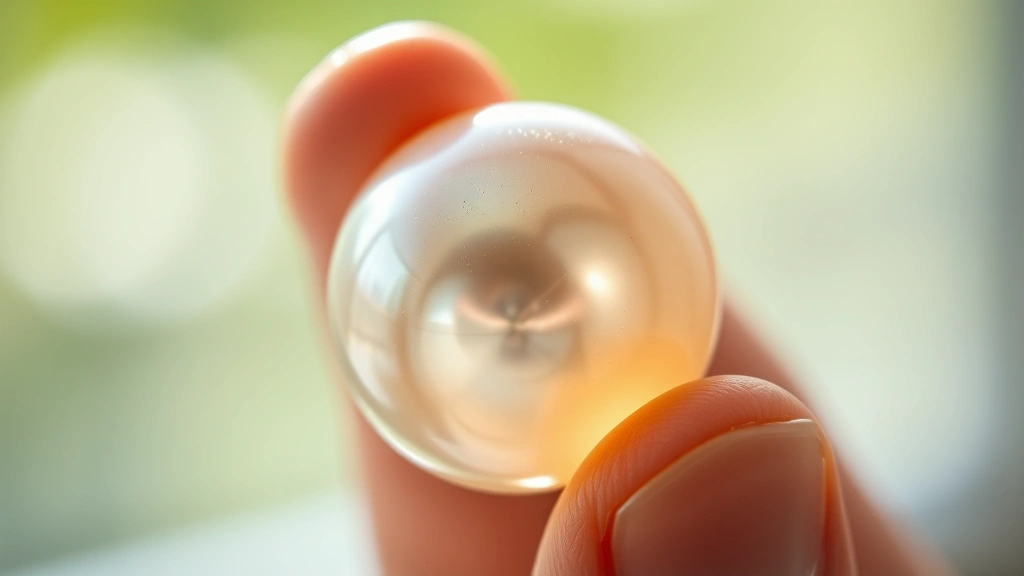
How to Tell If Pearls Are Real: Expert Tips
How to Tell If Pearls Are Real: Expert Tips for Authenticating Your Jewelry
Pearls have captivated humanity for centuries, representing elegance, sophistication, and timeless beauty. Whether you’ve inherited a strand of pearls from your grandmother, purchased what you believed to be authentic pearls at an estate sale, or you’re considering investing in fine pearl jewelry, knowing how to authenticate them is essential. The pearl market is flooded with imitations, cultured pearls, and synthetic alternatives that can fool even the discerning eye. Understanding the telltale signs of genuine pearls versus fakes will help you make informed decisions and protect your investment.
The challenge isn’t just distinguishing real pearls from costume jewelry—it’s understanding the nuances between natural pearls, cultured pearls, and imitations. Each category has distinct characteristics that require different evaluation methods. This guide will walk you through practical, expert-backed techniques you can use at home, along with insights into when you should seek professional appraisal.
Let’s dive into the fascinating world of pearl authentication and equip you with the knowledge to confidently assess the pearls in your collection.
Understanding Pearl Types: Natural, Cultured, and Imitation
Before you can effectively determine if pearls are real, you need to understand what “real” means in the pearl world. The terminology can be confusing because cultured pearls are technically real pearls—they’re just not naturally formed. Let’s break down the three main categories.
Natural pearls form entirely without human intervention. An irritant enters an oyster or mussel, and the mollusk secretes nacre (mother-of-pearl) around it as a defense mechanism. This process takes years, and only a small percentage of naturally irritated mollusks produce gem-quality pearls. Natural pearls are exceptionally rare and command premium prices.
Cultured pearls are created when humans deliberately insert an irritant—typically a piece of shell or tissue—into the mollusk. The creature then produces nacre around this implant, just as it would with a naturally occurring irritant. The vast majority of pearls sold today are cultured pearls. They’re genuine pearls, but they owe their existence to human intervention. Cultured pearls represent excellent value and still possess the beauty and durability of their natural counterparts.
Imitation pearls (also called costume or fake pearls) are entirely synthetic creations. They’re typically made from glass, plastic, shell, or mother-of-pearl coated with a pearl-like substance. These have minimal value and wear away quickly, revealing the base material underneath.
Understanding this distinction is crucial because when someone asks “how to tell if pearls are real,” they might mean distinguishing cultured from imitation pearls, or they might want to identify the rare natural pearls. The authentication methods differ slightly depending on what you’re trying to determine.
The Tooth Test: Your First Authentication Method
One of the simplest and most effective at-home tests is the tooth test. This method exploits a fundamental difference between genuine pearls and imitations: genuine pearls have a slightly gritty texture due to their nacre composition, while imitations are typically smooth.
Here’s how to perform the tooth test:
- Gently run the pearl across the surface of your front tooth—the edge, not the flat part. You’ll want to use light pressure, not aggressive rubbing.
- Genuine pearls will feel slightly gritty or sandy, almost like very fine sandpaper.
- Imitation pearls will feel perfectly smooth, like running glass or plastic across your tooth.
Why does this work? Genuine pearls are composed of layers of nacre, which is crystalline in structure. This creates microscopic irregularities on the surface. Imitations are either solid plastic, glass, or plastic-coated shells with a smooth surface finish. The gritty sensation you feel is your tooth detecting these microscopic variations in the pearl’s surface.
Important caveat: Don’t use this test on pearls you haven’t examined closely first. If you notice any visible damage, coating, or concerns about the pearl’s condition, skip the tooth test to avoid further damage. Also, be gentle—you’re not trying to scratch the pearl or your tooth. Light pressure is sufficient.
Examining Surface Characteristics and Luster
The visual appearance of a pearl reveals tremendous information about its authenticity. Genuine pearls, whether natural or cultured, exhibit distinctive optical properties that imitations struggle to replicate convincingly.
Luster is perhaps the most telling visual characteristic. Genuine pearls possess a deep, warm luster that seems to glow from within. Light reflects off the nacre layers in a way that creates a luminous quality. This isn’t a surface shine—it’s a depth of light that results from light penetrating multiple layers of nacre and reflecting back. Imitation pearls typically have a flat, superficial shine that sits on the surface. Compare a genuine pearl to an imitation under natural light, and you’ll immediately notice the difference. The real pearl appears to have internal light, while the fake looks painted or coated.
Surface texture and imperfections also matter. Genuine pearls rarely have perfectly smooth, flawless surfaces. They may display slight dimples, ridges, or variations in color. These imperfections are actually signs of authenticity—they indicate the pearl grew naturally, with subtle variations in nacre deposition. Imitation pearls are often too perfect, with uniform color and surface finish. Manufacturers try to create the ideal pearl, which paradoxically makes them look fake. Natural variation is your friend when authenticating pearls.
Color consistency provides another clue. Genuine pearls typically have color variations, with some areas slightly darker or lighter than others. The nacre composition varies slightly across the pearl’s surface, creating subtle color shifts. Imitation pearls often have uniform color throughout, which is another telltale sign of artificial creation.
To examine these characteristics effectively, use natural light or a jeweler’s loupe. Avoid harsh fluorescent lighting, which can obscure the pearl’s true appearance. Hold the pearl at different angles and observe how light interacts with its surface.
Weight and Density Evaluation
Genuine pearls have a specific density that differs from most imitation materials. While this test requires some reference pearls or a scale, it’s a reliable authentication method.
Genuine pearls typically weigh more than you’d expect based on their size. This is because nacre is denser than the plastic or glass used in imitations. If you have a pearl that feels surprisingly light for its size, it’s likely an imitation. Conversely, a pearl that feels substantial and has appropriate weight for its dimensions is more likely to be genuine.
For more precise assessment, you can compare the pearl to a known genuine pearl of similar size. Hold both in your hand and note the weight difference. Genuine pearls will feel noticeably heavier. If you have access to a precision scale, genuine pearls typically have a specific gravity between 2.70 and 2.78. Most imitation materials have lower specific gravities, usually between 1.0 and 2.5.
This test works best when you’re comparing pearls of the same approximate size and type. A small genuine pearl might weigh less than a large imitation, so size context is essential.
The X-Ray and Advanced Testing Methods
When you need definitive authentication, professional testing methods provide conclusive results. X-radiography is the gold standard for pearl authentication and can distinguish between natural, cultured, and imitation pearls.
X-ray radiography works by revealing the internal structure of the pearl. Natural pearls show a concentric ring pattern of nacre layers around the nucleus. Cultured pearls display a different pattern—the nacre layers are thinner and more uniform, surrounding the artificial implant. Imitation pearls show no internal structure or a completely different pattern. A qualified gemologist can interpret these X-ray images and provide a definitive assessment.
Other advanced testing methods include:
- Spectrophotometry: Measures how the pearl absorbs and reflects light at different wavelengths, helping identify the pearl type and any treatments.
- Raman spectroscopy: Analyzes the molecular composition of the pearl to identify the type of nacre and detect imitations.
- Magnetic resonance imaging (MRI): Provides detailed internal images without radiation, useful for examining the nucleus and nacre layers.
While these tests are expensive and require professional equipment, they’re invaluable when you’re dealing with valuable pearls or when other tests are inconclusive. Major pearls should always be professionally tested and certified.
Inspecting the Drill Hole and Nacre Layers
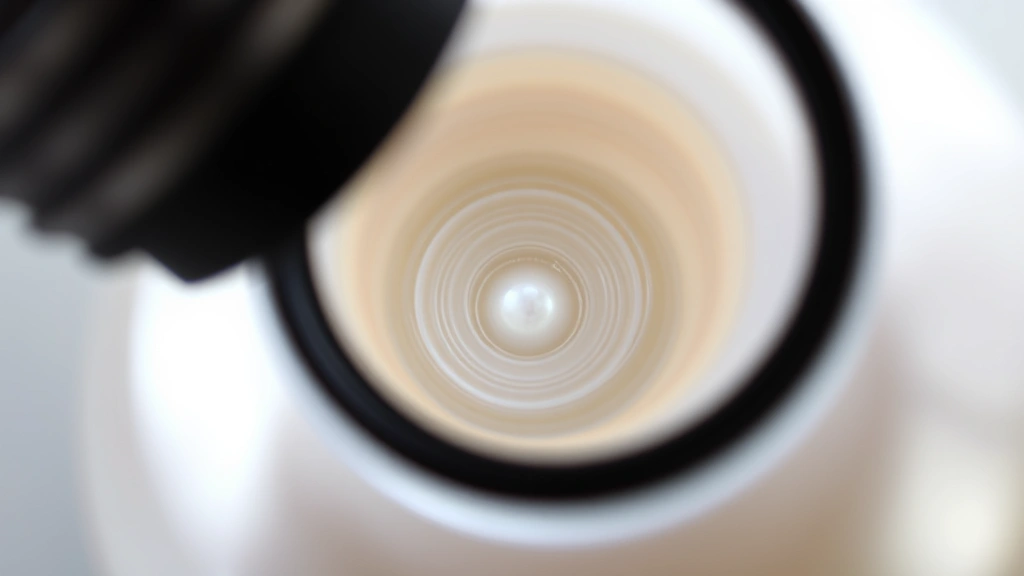
If your pearls are strung, the drill hole provides an excellent authentication opportunity. This is one of the most definitive tests you can perform at home.
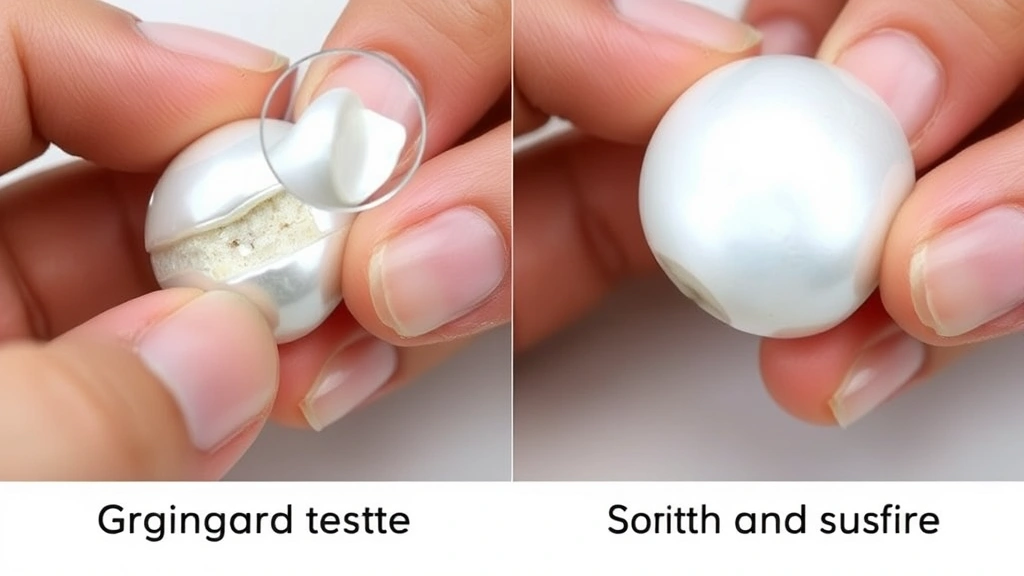
Examining the drill hole: Use a jeweler’s loupe or magnifying glass to look closely at the hole where the pearl is drilled. In genuine pearls, you’ll see visible nacre layers inside the hole. These appear as concentric rings or layers of the pearlescent material. This is because the pearl was built up in layers, and drilling through it reveals these layers. In imitation pearls, the hole typically shows either solid material (plastic or glass) or a thin coating over a different base material. If you see a chalky or powdery substance around the hole, or if the hole reveals a different colored material, you’re likely looking at an imitation.
Nacre thickness: For cultured pearls, nacre thickness is an important quality indicator. Higher quality cultured pearls have thicker nacre layers. You might not be able to measure nacre thickness precisely at home, but you can get a sense of it by examining the drill hole. Thick, visible nacre layers suggest a quality cultured pearl. Thin or barely visible nacre might indicate a lower-quality cultured pearl or a potential imitation.
This test is particularly useful because it’s difficult for manufacturers to convincingly fake the internal structure visible in a drill hole. It’s one reason why pearls with visible drill holes are actually easier to authenticate than undrilled pearls.
Temperature and Texture Assessment
Genuine pearls feel distinctly different from imitations when you pay attention to temperature and texture.
Temperature test: Hold the pearl in your hand for a moment, then bring it to your cheek or forehead. Genuine pearls feel cool to the touch and take longer to warm up to body temperature compared to plastic or glass imitations. Imitation pearls warm up quickly because plastic and glass are better thermal conductors than nacre. This test is subtle but surprisingly effective. The pearl should feel cool and slightly dense against your skin, not warm or lightweight.
Texture under magnification: Using a magnifying glass or jeweler’s loupe, examine the pearl’s surface closely. Genuine pearls show natural texture variations, including tiny scratches, subtle color variations, and microscopic ridges created by nacre formation. Imitation pearls often appear artificially smooth or have a painted-on appearance. The nacre of genuine pearls creates a complex, organic texture that’s difficult to replicate artificially.
These subtle tests might seem minor individually, but when combined with other authentication methods, they build a compelling case for or against authenticity.
Certification and Professional Authentication
If you own valuable pearls or you’re considering a significant purchase, professional certification is worth the investment. Reputable gemological laboratories can provide detailed reports on your pearls’ authenticity, type, quality, and value.
Where to get pearls certified: Organizations like the Gemological Institute of America (GIA) and the American Gem Society (AGS) provide professional pearl authentication and grading. These laboratories use the advanced testing methods mentioned earlier and provide detailed reports that include information about the pearl’s origin, type, and quality characteristics.
When you receive a certification report, it will specify whether your pearls are natural, cultured, or imitation. For cultured pearls, it will indicate the type of cultured pearl (Akoya, Tahitian, South Sea, freshwater, etc.), the nacre thickness, and quality grades for luster, surface, shape, and color. This information is invaluable for insurance purposes and if you ever decide to sell the pearls.
Cost considerations: Professional certification isn’t free, typically ranging from $50 to several hundred dollars depending on the pearl’s size and complexity. However, for pearls worth thousands of dollars, certification is a wise investment. It protects your interests and provides definitive authentication that removes any doubt.
If you’re purchasing pearls and the seller claims they’re valuable, always request certification before completing the purchase. Reputable dealers will be happy to provide it or facilitate professional testing.
For everyday costume pearls or pearls of modest value, the at-home tests described earlier are usually sufficient. Use professional authentication when the stakes are higher—valuable inherited pieces, significant purchases, or pearls you plan to insure.
Frequently Asked Questions
Can I tell the difference between cultured and natural pearls without professional testing?
Distinguishing cultured from natural pearls at home is extremely difficult without professional equipment like X-radiography. Both have genuine nacre and similar external characteristics. However, price is often a clue—natural pearls are significantly more expensive than cultured pearls. If you purchased pearls at a reasonable price, they’re almost certainly cultured. Natural pearls typically cost thousands of dollars per strand. For definitive identification, professional testing is necessary.
What’s the best way to clean real pearls to maintain their authenticity?
Use a soft, damp cloth to gently wipe pearls after wearing them. Avoid harsh chemicals, ultrasonic cleaners, and steam cleaning, which can damage the nacre. Store pearls in a soft pouch separate from other jewelry to prevent scratching. If your pearl jewelry includes metal settings like silver, you might wonder about how to clean sterling silver components separately. For valuable pearls, have them professionally cleaned by a jeweler experienced with pearls.
Are freshwater pearls real pearls?
Yes, freshwater pearls are genuine pearls. They form in freshwater mollusks and are most commonly cultured pearls. They have real nacre and authentic pearl characteristics. Freshwater pearls tend to be less expensive than saltwater pearls like Akoya or South Sea pearls, but they’re still genuine pearls, not imitations. The tooth test, luster examination, and other authentication methods apply equally to freshwater pearls.
Why do some pearls have a certificate and others don’t?
Certification is optional and typically provided for higher-value pearls or when specifically requested. Pearls worth under a few hundred dollars rarely come with certificates because the certification cost would exceed the pearl’s value. High-end pearls, especially natural pearls or exceptional cultured pearls, are usually certified. If you’re purchasing expensive pearls without certification, request that the seller provide it or allow you to have them professionally tested before purchase.
Can imitation pearls ever pass the tooth test?
High-quality imitation pearls coated with real nacre or mother-of-pearl might feel slightly gritty on the tooth test. However, they typically feel less consistently gritty than genuine pearls, and the overall surface texture will still feel smoother. The tooth test is most reliable when combined with other tests like the luster examination and drill hole inspection. No single test is 100% foolproof, which is why multiple assessment methods are recommended.
How do pearl treatments affect authenticity?
Many pearls undergo treatments to enhance their appearance, including bleaching, dyeing, and irradiation. These treatments don’t make the pearls fake—they’re still genuine pearls. However, treatments should be disclosed when pearls are sold. Treated pearls are typically less expensive than untreated pearls of similar quality. Professional certification will identify whether treatments have been applied, providing you with complete information about what you’re purchasing.
If I’m buying pearl jewelry, what should I look for beyond authentication?
Beyond confirming the pearls are genuine, consider the metal quality of the setting. If you’re purchasing a ring, you might want to understand how to know your ring size before finalizing your purchase. For strand necklaces, check the stringing quality—pearls should be knotted between each pearl to prevent them all from spilling if the string breaks. Examine the clasp for durability. Consider the pearl’s luster, surface quality, and shape based on your personal preferences. Finally, verify that any valuable pearls come with insurance documentation or professional certification.

Related Posts

How Long to Boil Lobster Tails: Cooking Guide

How Long to Fly from New York to London? Travel Times
