
Learn to Shoot a Basketball: Coach Tips
Learn to Shoot a Basketball: Coach Tips for Beginners and Advanced Players
Whether you’re stepping onto the court for the first time or looking to refine your shooting technique, mastering the basketball shot is fundamental to the game. A proper shooting form combines mechanics, consistency, and practice—three elements that separate casual players from those who can reliably put the ball through the net under pressure. This guide breaks down the essential coaching tips that will transform your shooting ability, from your stance to your follow-through.
The beauty of basketball shooting is that it’s a learnable skill. Unlike some athletic abilities that rely heavily on natural talent, shooting is something anyone can improve through deliberate practice and proper instruction. Professional coaches have identified the key mechanical principles that lead to shooting success, and we’ll explore each one in detail so you can implement them immediately.
Fundamental Shooting Stance and Positioning
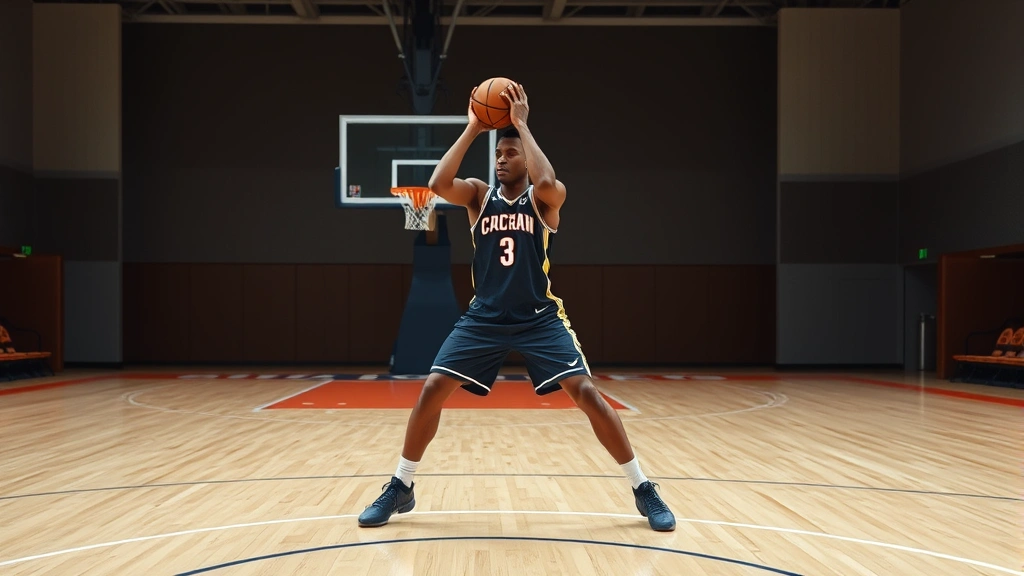
Your shooting stance is the foundation upon which all other shooting mechanics are built. A solid stance provides stability, consistency, and the ability to shoot effectively from any position on the court. The best shooters in basketball share remarkably similar stances because the fundamentals work—they’ve been refined through decades of coaching and competition.
Start with your feet shoulder-width apart, with your shooting-side foot slightly forward. This offset position helps align your body toward the basket and creates a natural shooting line. Your knees should be slightly bent, never locked straight. This bend is crucial because it allows you to generate power from your legs rather than relying solely on your arms, which would result in inconsistent shots. A bent-knee position also lowers your center of gravity, improving balance and stability.
Your shoulders should be squared to the basket, meaning both shoulders point directly at your target. Many beginners make the mistake of opening their shoulders too wide or closing them too much, which throws off their shot alignment. Keep your head steady and your eyes focused on a consistent target—most coaches recommend focusing on the back of the rim or the front of the rim, whichever feels more natural to you. This focus point becomes your reference throughout the shot.
Your body weight should be distributed evenly across the balls of your feet, never on your heels. This positioning allows you to stay on the balls of your feet throughout the shooting motion, maintaining better control and balance. Think of yourself as a coiled spring—ready to extend upward with power and precision.
Grip and Hand Placement
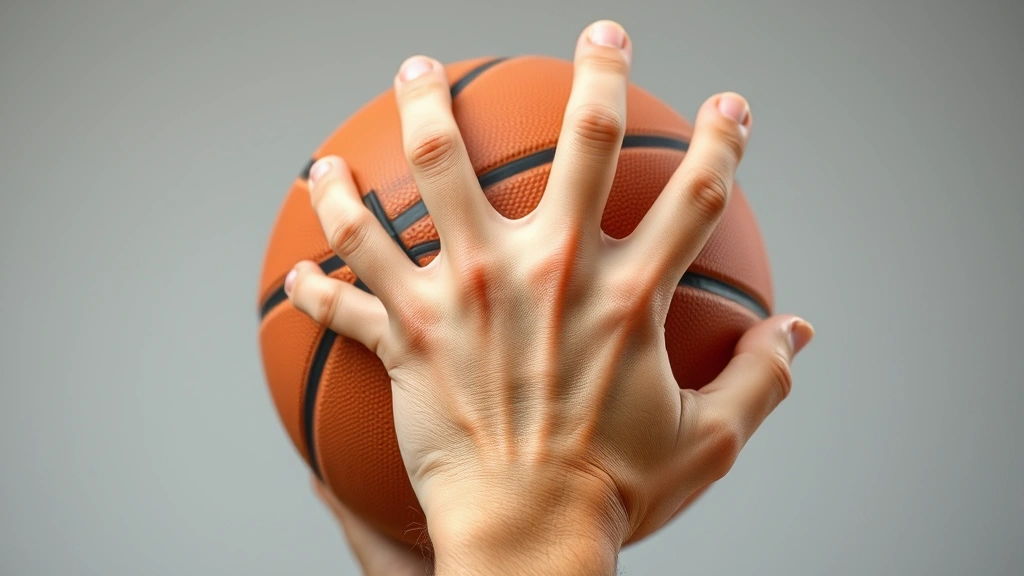
How you hold the basketball directly impacts your shooting accuracy and consistency. Your shooting hand should form a “T” shape with your index and middle fingers, with these two fingers serving as your guide fingers on the ball. The ball should rest on your fingertips, never in your palm. This fingertip grip gives you maximum control and allows for the proper rotation needed for an accurate shot.
Your guide hand (non-shooting hand) should be positioned on the side of the ball at approximately the 3 o’clock position (for right-handed shooters; 9 o’clock for left-handed shooters). The guide hand’s purpose is to stabilize the ball and help guide it toward the basket—it should not impart any force or rotation onto the ball. Many young players make the mistake of trying to shoot with both hands, which creates inconsistency. Your guide hand is a stabilizer only.
Your shooting hand should be positioned underneath and slightly behind the ball, with your elbow tucked in close to your body. Your elbow position is critical because it determines your shot’s trajectory and consistency. A flared elbow causes the ball to drift left or right, while a tucked elbow creates a straighter path to the basket. Think of your elbow as forming a 90-degree angle with your body, creating a stable platform for your shot.
The spacing between your hands should be about one hand-width apart. This spacing allows both hands to work together without interfering with each other. Your wrists should be relaxed but firm, not floppy. A proper wrist position at the start of your shot sets you up for the critical follow-through phase.
The Shot Release and Follow-Through
The release is where many shooters struggle because it’s the fastest part of the shooting motion and requires precise timing. Your release should be smooth and fluid, not jerky or rushed. Begin by extending your legs, driving upward through your knees and ankles. This leg extension provides the primary power source for your shot—approximately 50% of your shot’s power should come from your legs.
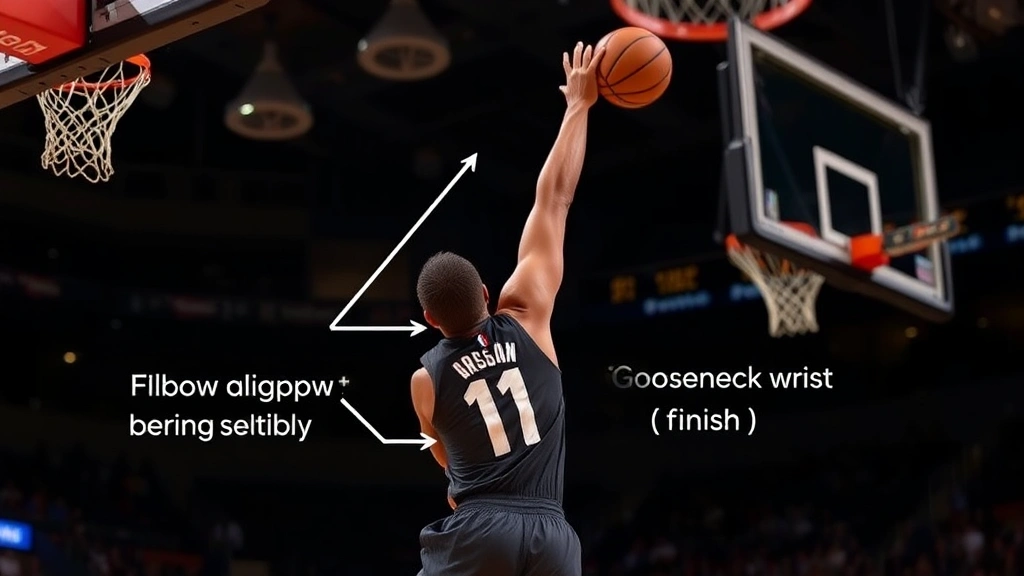
As your legs extend, your shooting arm should rise in one smooth motion. Your arm path should be relatively straight, with your elbow staying underneath the ball throughout the motion. As you approach the top of your shot, your wrist should begin to flex downward, creating backspin on the ball. This backspin is essential for a soft shot that has a better chance of bouncing favorably off the rim.
Your release point is the moment when the ball leaves your fingertips. This should occur at the peak of your jump, when your body has fully extended upward. Releasing at the peak provides maximum elevation and makes it harder for defenders to block your shot. The release itself should be from your fingertips, particularly your index and middle fingers, which impart the final rotation on the ball.
The follow-through is what separates good shooters from great shooters. After releasing the ball, your shooting arm should continue upward in a relaxed, natural motion. Your wrist should finish in a “gooseneck” position—flexed downward as if you’re reaching into a cookie jar on a high shelf. Your guide hand should drop away naturally. Hold your follow-through until the ball goes through the net; this habit builds consistency and helps you identify any mechanical issues in your shot.
Footwork and Balance
Footwork is often overlooked by casual players, but it’s absolutely critical for consistent shooting. Your feet control your balance, your elevation, and your ability to shoot effectively off the dribble or on catch-and-shoot opportunities. Proper footwork also helps you avoid traveling violations and keeps you ready for defensive assignments.
When shooting off a catch, your feet should land simultaneously in a balanced stance. This simultaneous landing (called a “two-foot landing”) provides maximum stability and allows you to shoot immediately or make a quick move. Your feet should be slightly wider than shoulder-width, with your shooting-side foot slightly forward. This positioning is consistent with the stance we discussed earlier.
When shooting off the dribble, your footwork becomes more complex. A common approach is the “one-two” step: as you gather the ball with your final dribble, you step with your non-shooting foot first, then step with your shooting foot. This footwork gets you elevated quickly and maintains balance. Some advanced players use a crossover step or other variations, but the fundamental principle remains: your feet should land in a stable, balanced position before you begin your shooting motion.
Jump height is important, but balance is more important. A slightly shorter jump with perfect balance will produce more consistent results than maximum elevation with poor balance. Focus on staying on the balls of your feet throughout your shot, maintaining that spring-like tension that allows for explosive extension.
Range and Distance Shooting
Modern basketball has expanded the shooting range dramatically, with three-point shots becoming increasingly common at all levels of play. Learning to shoot from various distances is essential for today’s player. The mechanics we’ve discussed apply to all distances, but distance shooting requires additional focus on consistency and arc.
Your arc—the angle at which the ball travels toward the basket—should be between 45 and 50 degrees for optimal shooting. A lower arc (flatter shot) is more difficult to make from distance because the margin for error decreases. A higher arc gives you more room for the ball to drop into the basket. Professional shooters tend to have slightly higher arcs on three-pointers than on mid-range shots.
As you extend your range, your shooting motion should remain fundamentally the same, but your leg drive becomes even more critical. Distance shooting requires more power, which must come from your lower body. Many shooters who struggle from distance are trying to muscle the ball with their arms rather than generating power from their legs. Remember: your legs provide the power, your arms provide the direction.
The shooting form consistency becomes increasingly important at distance. Even small deviations in your release point, wrist angle, or follow-through become magnified over greater distances. This is why elite shooters spend countless hours perfecting their mechanics—they’re building the muscle memory that allows them to repeat their shot with precision night after night.
Game Situations and Pressure Shooting
The difference between practice shooting and game shooting is often dramatic. In practice, you’re relaxed, focused, and shooting under ideal conditions. In games, you’re fatigued, pressured, and often contested. Developing the mental and physical skills to shoot effectively under pressure is what separates good players from great ones.
Contested shots are a reality in basketball. A defender may be closing out on you, forcing you to adjust your shot. The key is maintaining your fundamental form even when contested. Your footwork and balance become even more critical when a defender is nearby. Some of the best shooters in the world can knock down shots while being heavily guarded because their fundamentals are so ingrained that they don’t need to think about them.
Fatigue is another major factor in game shooting. As you tire, your legs provide less power, and many shooters begin to rely more on their arms. This is why conditioning is so important for shooters—you need the physical endurance to maintain proper form throughout an entire game. Practice shooting when you’re tired to simulate game conditions and build the stamina needed for consistent performance.
Pressure shooting situations—free throws, playoff games, crucial moments—require mental preparation. The best shooters develop a consistent pre-shot routine that they use every single time they shoot. This routine might include taking a specific number of dribbles, taking a deep breath, or focusing on a specific target. This routine becomes a trigger that puts your mind and body in the proper state for shooting.
Free throw shooting deserves special attention because it’s the only uncontested shot in basketball. This is your opportunity to score with no defense, yet many players struggle at the free throw line under pressure. Shoot free throws every single day in practice, and develop a routine that you use consistently. The repetition and consistency you build in practice will carry over to games.
Consider working with a basketball coaching resource or finding a local instructor who can provide personalized feedback on your shooting form. Video analysis can be incredibly valuable—recording yourself shooting from different angles helps identify mechanical issues that you might not feel while shooting.
FAQ
What’s the most important aspect of shooting a basketball?
While all aspects of shooting form are important, your foundation—your stance and balance—is the most critical element. A solid stance allows everything else to build properly. You can have good arm mechanics, but if your feet and body position are incorrect, you won’t shoot consistently.
How long does it take to develop a reliable jump shot?
Developing a reliable jump shot typically takes several months of consistent practice. However, seeing noticeable improvement can happen within weeks if you’re practicing with proper form and getting quality coaching feedback. The key is consistency—shooting 100-200 quality shots daily will produce faster results than sporadic practice.
Should I shoot with one hand or two hands?
You should shoot with one hand as your primary shooting hand, with your other hand serving only as a guide. Shooting with both hands creates inconsistency and makes it difficult to develop the muscle memory needed for reliable shooting. The guide hand is important for stability, but it should not contribute power or direction to your shot.
Can adults learn to shoot if they didn’t learn as children?
Absolutely. While learning proper form as a child is beneficial, adults can absolutely develop good shooting form through deliberate practice and proper instruction. Your brain is capable of building new motor patterns at any age. The key is consistent, focused practice with attention to proper mechanics.
How do I improve my three-point shooting?
Improving your three-point shooting requires the same fundamentals as mid-range shooting, plus additional focus on consistency and range. Shoot hundreds of threes from game-speed situations, not just standing in one spot. Practice coming off screens, shooting off the dribble, and shooting contested threes to simulate game conditions.
What’s the best way to practice shooting?
The best shooting practice combines different shot types and game situations. Include spot-up threes, mid-range shots, pull-ups off the dribble, and contested shots. Also practice free throws daily and shoot when you’re fatigued to simulate game conditions. Quality always beats quantity—100 focused, properly-executed shots beats 500 careless shots.

Related Posts

Superscript in Google Docs: Expert Tips

Strikethrough in Excel: Easy Steps for Beginners
