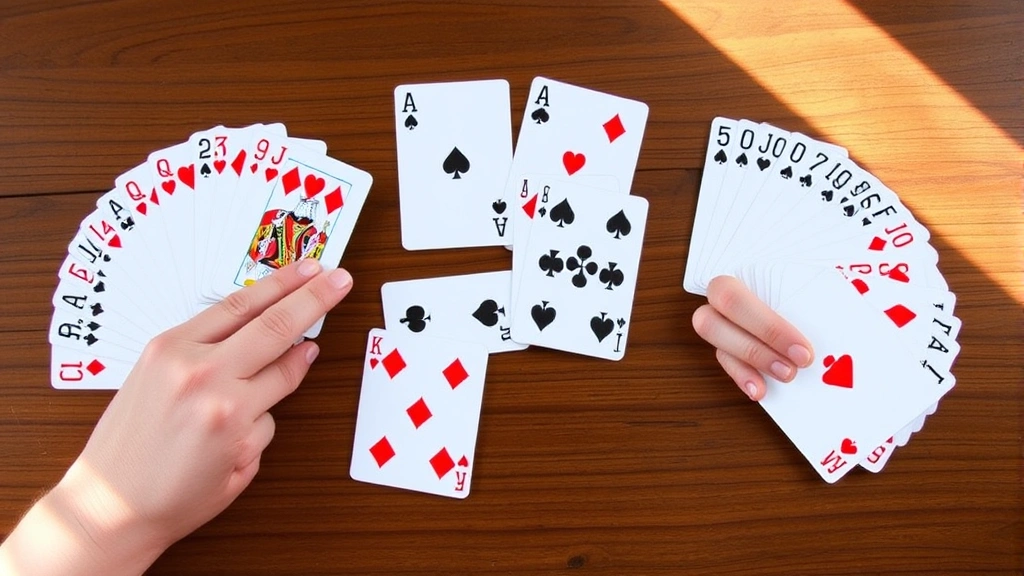
Learn Canasta Rules: Beginner’s Guide
Learn Canasta Rules: A Beginner’s Guide to Playing This Classic Card Game
Canasta is a captivating rummy-style card game that has entertained millions of players worldwide since its invention in Uruguay during the 1930s. Whether you’re looking to join a game night with friends or expand your card game repertoire, understanding canasta rules is essential for enjoying this strategic and social pastime. This comprehensive beginner’s guide will walk you through everything you need to know to start playing confidently.
The beauty of canasta lies in its blend of luck and strategy. Players must form melds—combinations of cards of the same rank—while managing their hand strategically and keeping track of opponents’ plays. With clear rules and consistent practice, you’ll be playing like a seasoned canasta enthusiast in no time.
What Is Canasta and Game Overview
Canasta, meaning “basket” in Spanish, is a card game for two to six players that combines elements of rummy with unique twists. The primary objective is to form melds—sets of three or more cards of the same rank—and score points by creating canastas, which are melds of seven or more cards. Understanding how to play canasta involves learning the ranking system, meld requirements, and scoring mechanics.
The game uses two standard decks of 52 cards plus four jokers per deck, totaling 108 cards. Red threes are special cards that award bonus points, while black threes serve as defensive blockers. Jokers and twos act as wild cards, allowing flexible meld combinations. The game progresses through multiple rounds until one player or team reaches a predetermined point goal, typically 5,000 points.
One of canasta’s most appealing aspects is its social nature. Players often play in teams, creating opportunities for partnership strategy and friendly competition. Unlike solitary card games, canasta encourages conversation and camaraderie while maintaining engaging gameplay mechanics.
Setting Up Your Game
Before dealing the first hand, you’ll need to prepare properly. Start by assembling your canasta deck—two standard decks with all jokers included. Shuffle thoroughly to ensure random card distribution. For a four-player game, typically the best format, arrange players in alternating teams so partners sit across from each other.
Each player receives 15 cards dealt one at a time in clockwise rotation. After dealing, place the remaining deck face-down as the draw pile, with the top card flipped face-up to start the discard pile. If the first card is a wild card or red three, place another card on top of it. This setup ensures everyone has equal opportunity and maintains game balance.
Players should arrange their cards by rank and suit for easy reference. Keep your hand hidden from opponents to maintain strategic advantage. The player to the dealer’s left plays first, beginning the action. If you’re new to the game, consider using a beginner’s guide resource to refresh setup procedures before starting.
Card Values and Melds
Understanding card values is crucial for scoring and strategic play. Melds form the foundation of canasta—they’re combinations of three or more cards of the same rank. Natural melds contain only cards of the same rank, while mixed melds include one or two wild cards (jokers or twos). Black threes can only form melds with other black threes and cannot include wild cards.
Canastas are melds containing seven or more cards. Natural canastas—made entirely of cards of the same rank—score significantly higher than mixed canastas containing wild cards. A natural canasta of sevens scores 500 points, while a mixed canasta scores 300 points. This scoring structure rewards careful planning and card management.
Card point values determine scoring:
- Jokers and Twos: 50 points each
- Aces and Eights: 20 points each
- Kings, Queens, Jacks, Tens, and Nines: 10 points each
- Sevens through Fours: 5 points each
- Red Threes: 100 points each (bonus)
- Black Threes: 5 points each
Red threes are particularly valuable. If you draw a red three, immediately place it face-up on the table and draw a replacement card. Holding red threes at game end deducts their point value from your score, so strategic play involves managing these cards carefully throughout the game.
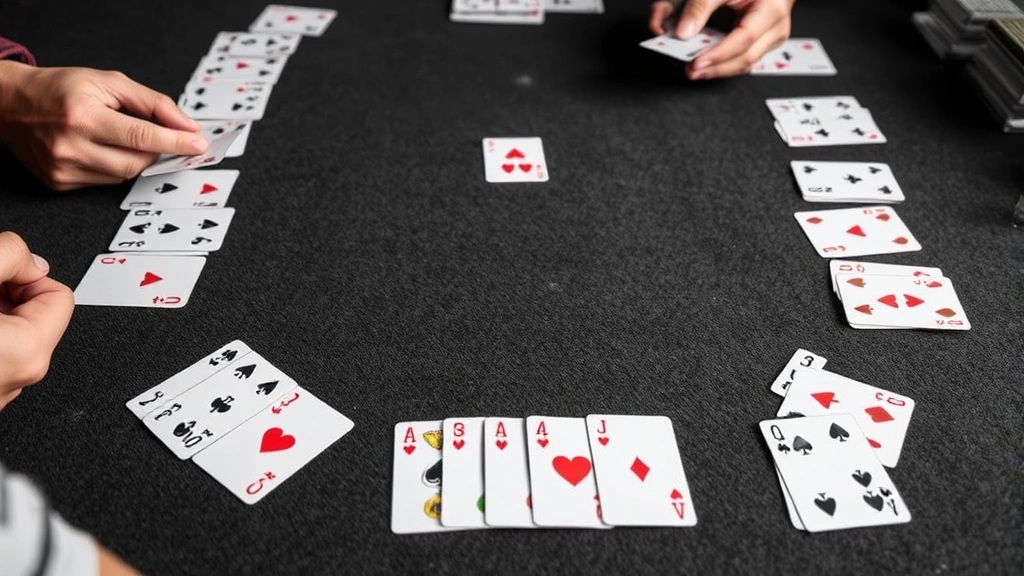
How to Play: Turn Structure
Each turn follows a consistent structure that becomes intuitive with practice. On your turn, you must first draw a card from either the draw pile or the discard pile. Drawing from the discard pile requires specific conditions—you must have a matching card in your hand to immediately add to existing melds or create a new meld with that card.
After drawing, you may meld cards if desired. This involves laying down combinations of three or more cards of the same rank on the table in front of your team. You can also add cards to existing melds on the table, whether created by your team or opponents. This flexibility creates strategic opportunities for blocking opponents and building your own scoring combinations.
The turn concludes when you discard one card face-up onto the discard pile. This card becomes available for the next player to potentially draw. Strategic discard selection is critical—discarding cards your opponents need is a defensive move, while discarding cards they’re unlikely to want protects your hand strength.
Special considerations apply when the discard pile is “frozen.” This occurs when a black three is on top or when a wild card is in the pile. Frozen piles can only be picked up by players holding two natural cards matching the top card. This rule adds strategic depth and prevents early dominance.

Going Out and Scoring
Going out occurs when a player or team melds all cards from their hand, including their final discard. To go out, a team must have formed at least one canasta. This requirement prevents premature game endings and ensures meaningful gameplay throughout. A player may ask their partner “May I go out?” before attempting to end the round.
When a player goes out, the round ends immediately. Points are calculated for all melds created by each team. The team that goes out receives 100 bonus points if they melded all cards without their partner melding any cards—this is called “concealing.” If the partner contributed melds, the team receives 200 bonus points instead.
Scoring requires careful calculation:
- Add point values of all cards in completed melds
- Add canasta bonuses (500 for natural, 300 for mixed)
- Add red three bonuses (100 points each, or 800 if all four red threes)
- Add going-out bonus (100 or 200 points)
- Subtract point values of cards remaining in hand
- Subtract red three penalties if held at game end
Teams accumulate points across multiple rounds until reaching the target score. In tournament play, 5,000 points typically wins. Casual games might use lower targets like 2,500 points. Once a team reaches the goal, they win the game. If multiple teams could reach the goal in the same round, the team with higher points wins.
Advanced Strategies for Beginners
As you become comfortable with basic rules, strategic thinking elevates your game. One fundamental strategy involves card management—holding cards that form potential melds while discarding cards opponents likely need. Experienced players track which cards have been played and discarded, predicting opponents’ hands.
Another key strategy is deciding when to meld versus when to hold cards. Melding early gives opponents information about your hand composition, while holding back creates uncertainty. However, melding also prevents card accumulation penalties and increases your team’s scoring opportunities. Balance information control with scoring potential.
Partnership communication is crucial in team games. While direct discussion about hand contents is prohibited during play, observing your partner’s melds and discards provides valuable information. Your partner’s early melding of fives, for example, suggests they might need additional fives to complete a canasta.
Defensive play matters significantly. If an opponent is clearly building toward a canasta in eights, avoid discarding eights that could help them complete it. Instead, discard cards they’re less likely to need. Freezing the discard pile by placing black threes strategically can block opponents from accessing high-value cards.
Managing wild cards requires careful consideration. While wild cards enable flexible melding, using them too early depletes your options later. Preserve wild cards for critical moments when completing a canasta or going out. Similarly, red threes should be managed strategically—placing them on the table immediately prevents hand penalties but also signals your team’s point advantage.
Common Mistakes to Avoid
Beginning players often make preventable errors that impact their game performance. One common mistake involves premature melding. New players sometimes meld too eagerly, revealing their hand composition and reducing their flexibility for future plays. Experienced players often hold strong melds until strategic moments maximize their value.
Another frequent error is mismanaging red threes. Many beginners forget that holding red threes at game end deducts their point values. Always place red threes on the table immediately upon drawing them. This simple habit prevents costly scoring penalties and maintains your team’s point advantage.
Improper discard strategy causes many losses. Discarding cards without considering opponents’ potential needs is careless. Always think about which cards your opponents might want before discarding. Discarding from the suit you’re building, for example, helps opponents predict your strategy and potentially block you.
Misunderstanding the discard pile freeze rule confuses many beginners. Remember that frozen piles (with black threes on top or containing wild cards) require two natural matching cards to pick up. Attempting illegal pickups wastes turns and frustrates teammates. Review this rule before playing if you’re uncertain.
Players also frequently overlook the requirement for at least one canasta to go out. Melding all cards without forming a seven-card canasta doesn’t end the round—you must continue playing. Understanding this rule prevents embarrassing mistakes and maintains game flow.
Finally, poor hand organization creates confusion and slows gameplay. Arrange cards by rank and suit consistently. This simple habit reduces errors, speeds up decision-making, and demonstrates respect for other players’ time. If you’re learning with experienced players, ask for recommendations on other strategic games to expand your gaming knowledge.
Frequently Asked Questions
Can you meld cards on your first turn?
No, you cannot meld on your first turn. The player to the dealer’s left draws first, then plays according to standard turn rules. Most games follow the convention that first-turn melds require specific point minimums to ensure fair gameplay, though casual games may vary these rules.
What happens if the draw pile runs out?
If the draw pile is exhausted, players must draw from the discard pile. If the discard pile is also empty and a player needs to draw, the round typically ends immediately. This situation is rare but important to understand for complete rule knowledge.
Can you pick up the discard pile if it contains a wild card?
No, a discard pile with a wild card on top is frozen. You cannot pick it up unless you hold two natural cards matching the rank of the card beneath the wild card. This rule creates strategic opportunities for defensive play.
What’s the difference between a natural and mixed canasta?
A natural canasta contains only cards of the same rank with no wild cards, scoring 500 points. A mixed canasta contains one or two wild cards along with natural cards, scoring 300 points. Natural canastas are more valuable but harder to complete.
How many players can play canasta?
Canasta accommodates two to six players, though four-player team games are most popular and balanced. Two-player games use modified rules with higher point requirements. Six-player games work best with house rule adjustments for pacing.
Is there a time limit for making decisions?
Most casual games have no formal time limit, though players should avoid excessive deliberation. Tournament play implements time controls to maintain reasonable game pace. Discuss expectations with your group before starting.
Can you change your meld after placing it?
Once a meld is placed on the table, it cannot be reorganized or modified. This rule prevents confusion and maintains game integrity. Plan carefully before committing melds to the table.
What happens if you forget to place a red three on the table?
If discovered before the next player draws, place the red three immediately and draw a replacement card. If discovered after the next player draws, you must leave the red three in your hand and accept the point penalty at game end. This rule emphasizes attention and card management.

Related Posts

Program a Key Fob? Expert Tips & Guide
Prevent Razor Bumps: Expert Tips for Smooth Shaving