
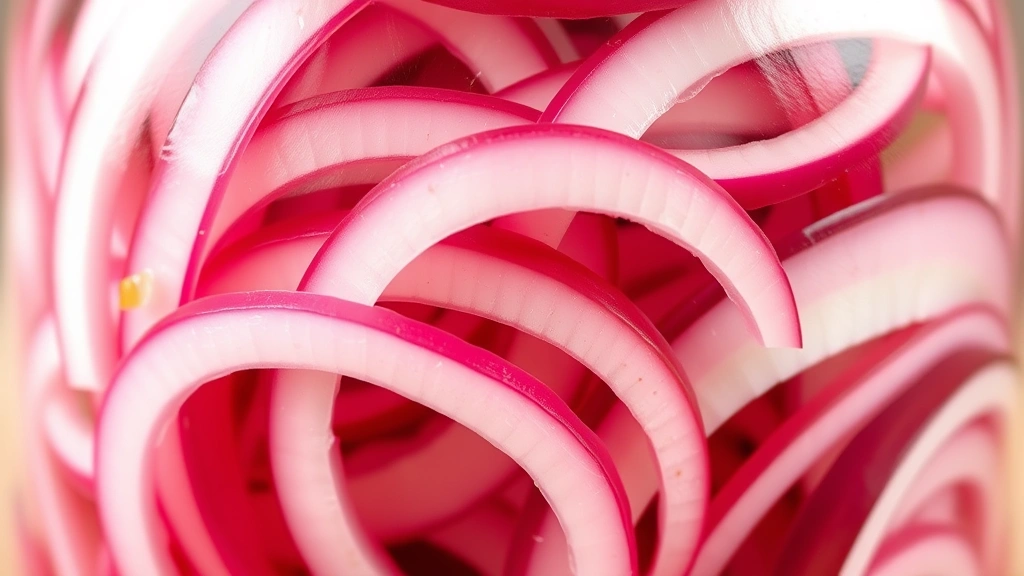
Pickled Red Onions: Easy Recipe for Beginners
Pickled Red Onions: Easy Recipe for Beginners
Pickled red onions are one of the easiest homemade condiments you can make, requiring just a handful of ingredients and minimal kitchen skills. These vibrant, tangy onions transform ordinary meals into something special, adding a burst of flavor and color to tacos, salads, sandwiches, and grain bowls. Whether you’re a seasoned cook or picking up a knife for the first time, this beginner-friendly guide will walk you through every step of the process.
The beauty of pickling red onions lies in its simplicity and versatility. Unlike other preservation methods that require special equipment or extensive knowledge, pickled onions need only a clean jar, basic pantry staples, and about 15 minutes of active preparation time. Once you master this fundamental technique, you’ll discover endless possibilities for customizing flavors and using your homemade creation throughout the week.
In this comprehensive guide, we’ll explore the science behind pickling, provide you with a foolproof recipe, and share professional tips that will have you creating restaurant-quality pickled onions at home. You’ll learn how to select the right onions, prepare them properly, and store them for maximum freshness and flavor.
Why Pickled Red Onions Are Perfect for Beginners
Pickling is an ancient preservation technique that transforms fresh vegetables through the power of acid and salt. For beginners, pickled red onions represent the ideal entry point into home preservation because they require no specialized equipment, no heat processing, and deliver consistent results every single time. Unlike canning, which demands precise temperature control and sterilization protocols, quick-pickling red onions uses a cold-pack method that’s forgiving and straightforward.
Red onions are particularly forgiving because their natural sugar content balances the acidity of vinegar beautifully, creating a pickle that tastes sophisticated without requiring any special technique. The red pigmentation also means your finished product looks restaurant-quality, making it feel like you’ve accomplished something far more complex than you actually have. Additionally, the texture of red onions holds up remarkably well during pickling, remaining pleasantly crisp even after days in the brine.
Learning how to make rose water or other homemade condiments shares similar principles with pickling, teaching you foundational preservation skills applicable across many kitchen projects. This knowledge builds confidence and opens doors to creating numerous other homemade staples.
Ingredients You’ll Need
The ingredient list for pickled red onions is refreshingly minimal, yet each component plays a crucial role in developing flavor and ensuring proper preservation:
- Red onions: 2-3 medium onions (approximately 1 pound), sliced into thin rings or half-moons
- White vinegar: 1 cup (distilled white vinegar works best for clarity and consistency)
- Water: 1 cup (filtered or tap water)
- Salt: 1 tablespoon (kosher salt or pickling salt, avoid iodized salt)
- Sugar: 1 tablespoon (granulated sugar balances acidity)
- Spices (optional but recommended): 1 teaspoon black peppercorns, 2-3 whole cloves, 1 bay leaf, ½ teaspoon red pepper flakes for heat
The choice of vinegar matters significantly. White vinegar provides a clean, sharp flavor and keeps your pickles bright and transparent. Some cooks prefer apple cider vinegar for a slightly sweeter, more complex taste, though this will darken your finished product slightly. The salt serves dual purposes: it extracts moisture from the onions and enhances overall flavor complexity. Sugar isn’t strictly necessary for preservation but adds balance and helps develop that characteristic sweet-tart profile that makes pickled onions so addictive.
Essential Equipment and Preparation
One of the greatest advantages of making pickled red onions is the minimal equipment requirement. You’ll need:
- One clean glass jar (16-32 ounces) with a tight-fitting lid
- A sharp knife or mandoline slicer
- A cutting board
- A measuring cup and spoons
- A small saucepan for heating the brine
- A wooden spoon for stirring
Before beginning, wash your jar thoroughly with hot, soapy water and rinse completely. While commercial canning doesn’t require sterilization for quick-pickles, a clean jar prevents unwanted flavors and ensures the longest possible shelf life. If you want to sterilize your jar, simply place it in boiling water for 10 minutes, then let it air-dry completely.
Preparing your onions properly determines your final product’s texture and appearance. Start by selecting firm, unblemished red onions. Peel away the papery outer skin, leaving the root end intact until you’ve sliced the onion. This keeps the rings together and makes slicing safer and more efficient. Using a sharp knife, slice onions into thin rings, approximately ⅛-inch thick. If you have access to a mandoline slicer, it creates perfectly uniform slices, though a good knife works equally well. Place sliced onions in a colander and rinse briefly under cool water to remove excess onion juice, which can cloud your brine.
Step-by-Step Recipe Instructions
Step 1: Prepare Your Brine
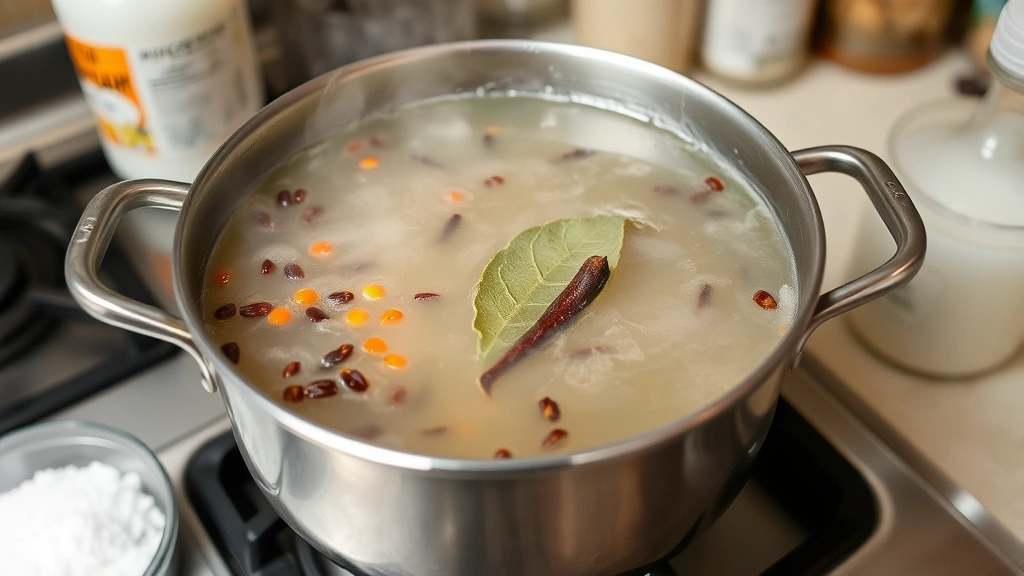
In a small saucepan, combine water, vinegar, salt, sugar, and any whole spices you’re using. Bring the mixture to a boil over medium-high heat, stirring occasionally until salt and sugar dissolve completely. This typically takes 3-5 minutes. The brine should smell pungent and aromatic. Remove from heat and let cool for 2-3 minutes. Heating the brine serves multiple purposes: it ensures salt and sugar fully dissolve, it infuses spices more effectively, and it slightly softens the onions while maintaining their structural integrity.
Step 2: Layer Your Onions
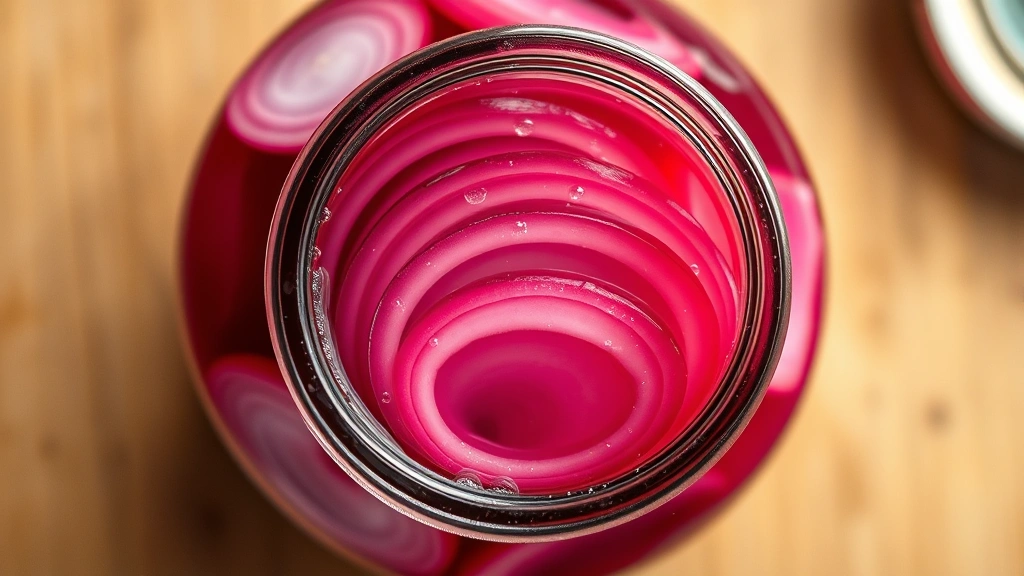
Place your prepared red onion slices into your clean glass jar, packing them reasonably firmly but not compressing them so tightly that they can’t absorb brine evenly. Fill the jar until about ½ inch remains at the top. If you’ve prepared more onions than fit in your jar, save them for a second batch or enjoy them fresh in salads.
Step 3: Pour the Brine
Carefully pour the still-warm brine over the onion slices, ensuring all onions are completely submerged. This is critical for proper pickling and preventing spoilage. If some onions float above the brine, use a small spoon or clean weight to gently press them down. Aim to fill the jar until brine reaches about ½ inch from the top, leaving minimal headspace.
Step 4: Cool and Seal
Allow the jar to cool to room temperature, approximately 30-45 minutes. Once cooled, screw the lid on tightly. The cooling process allows the flavors to begin melding while the brine sets. At this point, your pickled onions are technically ready to eat, though the flavor will be quite sharp.
Step 5: Refrigerate and Wait
Place your sealed jar in the refrigerator. While the onions are technically edible immediately, they taste dramatically better after at least 4-6 hours of refrigeration, and they reach their peak flavor after 24-48 hours. The cold temperature allows flavors to meld and develop complexity while the acid gently penetrates the onion layers.
Flavor Variations and Customization
Once you’ve mastered the basic recipe, experimentation becomes the fun part. The foundational technique remains identical, but you can create entirely different flavor profiles by adjusting spices and aromatics. Learning how to make perfume involves similar principles of layering complementary scents; pickling works the same way with flavors.
Spicy Variation: Add 1-2 whole dried chili peppers, ¼ teaspoon cayenne pepper, or ½ teaspoon red pepper flakes to create a pickled onion with heat. This version pairs exceptionally well with tacos, nachos, and spicy Asian dishes.
Aromatic Variation: Include a 2-inch piece of fresh ginger (sliced), 2-3 star anise pods, and 1 teaspoon coriander seeds for an Asian-inspired version that complements Vietnamese and Thai cuisine beautifully.
Herbal Variation: Add 2-3 fresh thyme sprigs, 1 rosemary sprig, and a few fresh dill fronds for an herbaceous version that elevates simple roasted vegetables and grilled meats. Similar to how how to make lemon balm focuses on capturing herbal essence, herbal pickles preserve fresh flavors wonderfully.
Sweet Variation: Increase sugar to 2-3 tablespoons and add 1 teaspoon pickling spice (a pre-made blend of mustard seeds, coriander, and other spices) for a sweeter pickle that works beautifully in charcuterie boards and alongside rich meats.
Citrus Variation: Replace half the white vinegar with apple cider vinegar and add the zest of one lemon or lime for brightness and complexity. This version pairs exceptionally well with fish and seafood dishes.
Storage and Shelf Life Guidelines
Properly stored pickled red onions last remarkably long, making them an excellent pantry staple for busy households. Store your sealed jar in the refrigerator at a consistent temperature between 35-40°F. Under these conditions, quick-pickled onions remain safe and flavorful for 3-4 weeks. The flavor actually improves during the first 2-3 weeks as spices continue infusing and flavors meld.
After opening your jar, always use clean utensils to remove onions, never dipping fingers directly into the brine. This prevents bacterial contamination and extends shelf life. Once opened, consume your pickled onions within 2-3 weeks for best quality, though they typically remain safe somewhat longer if stored properly.
If you want to extend shelf life beyond refrigerator storage, you can process jars using a water bath canning method, similar to traditional canning techniques. However, this requires proper canning equipment and procedures to ensure food safety. For beginners, refrigerator storage is perfectly adequate and safer.
Avoid storing pickled onions at room temperature in sealed jars, as this creates an anaerobic environment where harmful bacteria can develop. The brine’s acidity provides some protection, but refrigeration is essential for food safety with quick-pickled products.
Troubleshooting Common Issues
Problem: Onions Are Too Soft or Mushy
Solution: You likely overcooked the brine or used onions that were already past their prime. Ensure you only bring the brine to a rolling boil briefly, then remove from heat. Select firm, fresh onions and slice them uniformly so they cook evenly. Thicker slices also maintain crispness better than paper-thin ones.
Problem: Brine Is Cloudy
Solution: Cloudiness typically results from using iodized table salt, which contains anti-caking agents. Always use kosher salt or pickling salt. Alternatively, cloudy brine may result from onion particles or sediment. You can strain the brine through cheesecloth and return it to the jar, though the cloudiness doesn’t affect flavor or safety.
Problem: Onions Taste Too Vinegary
Solution: This usually means either the brine wasn’t sufficiently diluted or you used a particularly strong vinegar. Increase the water content slightly in your next batch, or use a milder vinegar like rice vinegar. You can also add slightly more sugar to balance acidity.
Problem: Onions Lost Their Color
Solution: Red onion color fades slightly over time due to the acidic environment, which is completely normal. However, if color fades immediately, you may have used older onions or exposed them to light. Store jars in a dark cupboard rather than on bright shelves. This issue is purely cosmetic and doesn’t affect flavor or safety.
Problem: Jar Developed Mold or Unpleasant Odor
Solution: Discard the entire batch immediately. Mold indicates contamination, and the brine’s acidity may not have been sufficient to prevent bacterial growth. This typically results from jars stored at room temperature or contaminated utensils. Always refrigerate and use clean implements.
The Family Handyman’s canning guide provides additional resources for food preservation if you want to explore advanced techniques beyond quick-pickling.
FAQ
How long do pickled red onions last in the refrigerator?
Properly stored pickled red onions last 3-4 weeks in the refrigerator. The flavor actually improves during the first 2-3 weeks as spices continue infusing. Always use clean utensils when removing onions and store the sealed jar at a consistent temperature between 35-40°F.
Can I use white onions instead of red onions?
Yes, you can use white or yellow onions, though they’ll lack the beautiful red color that makes this dish visually striking. White onions have a slightly sharper flavor, so you might increase sugar slightly to balance acidity. Red onions remain the superior choice for both flavor and appearance.
Do I need special canning equipment?
No. Quick-pickled onions require only a clean glass jar with a tight-fitting lid. You don’t need special canning jars, lids, or processing equipment. Any clean glass jar from pasta sauce or jam works perfectly well.
Can I make pickled onions without heating the brine?
You can, though heating ensures salt and sugar dissolve completely and allows spices to infuse more effectively. If you prefer cold-packing, dissolve salt and sugar in a small amount of warm water first, then combine with vinegar and cold water. The results will be slightly less flavorful initially but still acceptable.
What’s the best way to use pickled red onions?
Pickled red onions work beautifully on tacos, in salads, on sandwiches, alongside grilled meats, in grain bowls, on charcuterie boards, and as a topping for nachos or burrito bowls. They add brightness and color to any dish needing acidity and visual appeal.
Can I reuse the brine for a second batch?
While the brine technically contains enough vinegar to pickle more onions, the flavor becomes diluted and less complex. For best results, prepare fresh brine for each batch. However, if you’re making pickled onions frequently, reusing brine works in a pinch, though you should add fresh spices.
Are homemade pickled onions healthier than store-bought versions?
Homemade pickled onions allow you to control ingredients, sugar content, and sodium levels. Most store-bought versions contain added preservatives and often higher sugar content. Making your own ensures you know exactly what goes into your food, making them a healthier choice for those monitoring sugar or sodium intake.
Can I freeze pickled red onions?
Freezing isn’t recommended for pickled onions. The freezing process breaks down cell walls, resulting in mushy, unpalatable texture when thawed. Refrigeration is the optimal storage method for maintaining both texture and flavor.
What if my onions float above the brine?
Onions floating above the brine risk exposure to air, which can promote mold growth. Use a small spoon or clean weight to gently press them down, ensuring complete submersion. Some people use a small glass jar or fermentation weight to keep onions submerged.
How do I know if my pickled onions have gone bad?
Signs of spoilage include visible mold, unpleasant or off odors, slimy texture, or cloudiness that develops after initial preparation. If any of these appear, discard the entire batch. Properly stored pickled onions should smell pleasantly vinegary and look crisp and colorful.

Related Posts

Superscript in Google Docs: Expert Tips

Strikethrough in Excel: Easy Steps for Beginners
