
Lower Pool Alkalinity? Expert Methods Revealed
How to Lower Alkalinity in Pool: Expert Methods Revealed
High alkalinity in your pool can lead to cloudy water, scaling on equipment, and reduced effectiveness of chlorine sanitizers. Unlike pH, which measures acidity or alkalinity on a scale of 0-14, alkalinity refers to the water’s ability to resist pH changes. When alkalinity climbs above the ideal range of 80-120 ppm (parts per million), your pool chemistry becomes unstable and difficult to manage. The good news is that lowering alkalinity is a straightforward process that any pool owner can master with the right knowledge and tools.
Understanding how to lower alkalinity in pool water is essential for maintaining crystal-clear, safe swimming conditions. Many pool owners struggle with this aspect of water chemistry because they confuse alkalinity with pH or don’t know which chemicals to use. This comprehensive guide will walk you through proven methods, step-by-step procedures, and expert tips to get your pool back into balance quickly and efficiently.
Understanding Pool Alkalinity
Alkalinity is distinct from pH, though many pool owners confuse the two. While pH measures how acidic or basic water is, alkalinity measures the concentration of bicarbonate, carbonate, and hydroxide compounds that buffer pH changes. Think of alkalinity as a protective shield that keeps pH stable—without adequate alkalinity, pH swings wildly with every addition of chemicals or environmental factor.
Ideal pool alkalinity ranges between 80-120 ppm for most pools, though some experts recommend 100-120 ppm for better stability. When alkalinity exceeds 150 ppm, several problems emerge: water becomes cloudy, calcium deposits form on walls and equipment, chlorine becomes less effective, and adjusting pH becomes nearly impossible. High alkalinity essentially locks your pH in place, making the water resistant to chemical adjustments.
The relationship between alkalinity and pH is crucial to understand. When alkalinity is too high, even adding acid to lower pH becomes inefficient because the alkaline compounds resist the change. This is why many pool owners find themselves in a frustrating cycle of adding chemicals without seeing results. The solution is to first lower alkalinity, then address pH separately if needed. For more detailed guidance on pool maintenance, visit the FixWiseHub Blog for comprehensive how-to guides.
Testing Your Pool Alkalinity Levels
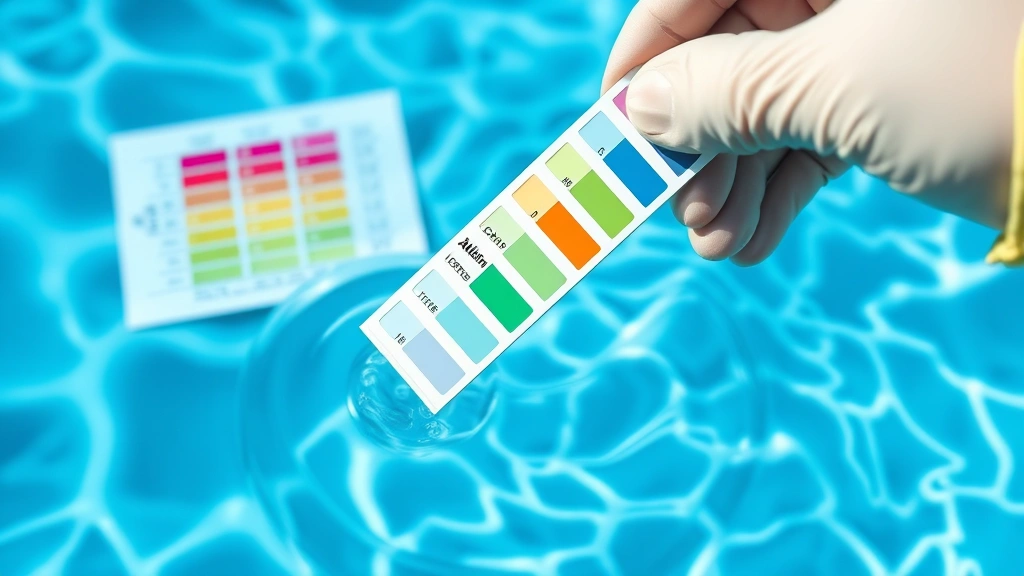
Before taking any corrective action, you must accurately test your pool’s alkalinity. Testing is the foundation of proper pool chemistry management, and skipping this step can lead to over-correction and new problems.
Testing Methods Available:
- Test Strips: Quick and affordable, though less precise than other methods. Dip the strip into pool water for 2-3 seconds, then compare the color to the chart. Test strips typically provide results within ±10 ppm.
- Liquid Test Kits: More accurate than strips, these kits use chemical reagents to determine exact alkalinity levels. Follow the kit instructions carefully, as different brands have slightly different procedures.
- Digital Testers: The most accurate option, digital meters provide precise readings instantly. They require calibration before each use but eliminate guesswork.
- Professional Testing: Many pool supply stores offer free water testing. Bring a sample in a clean container for professional analysis.
Test your pool at least twice weekly during swimming season, and always test before making chemical adjustments. For best results, test in the early morning before sunlight affects readings, or in the late evening. Take samples from at least 18 inches below the surface, away from return jets and skimmers, to get a representative sample of the entire pool.
Record your results in a notebook or pool maintenance app. Tracking trends over time helps you identify patterns and adjust your maintenance routine accordingly. If alkalinity consistently rises despite your efforts, you may have hard water or need to investigate other factors like high pH or mineral content.
Using Muriatic Acid to Lower Alkalinity
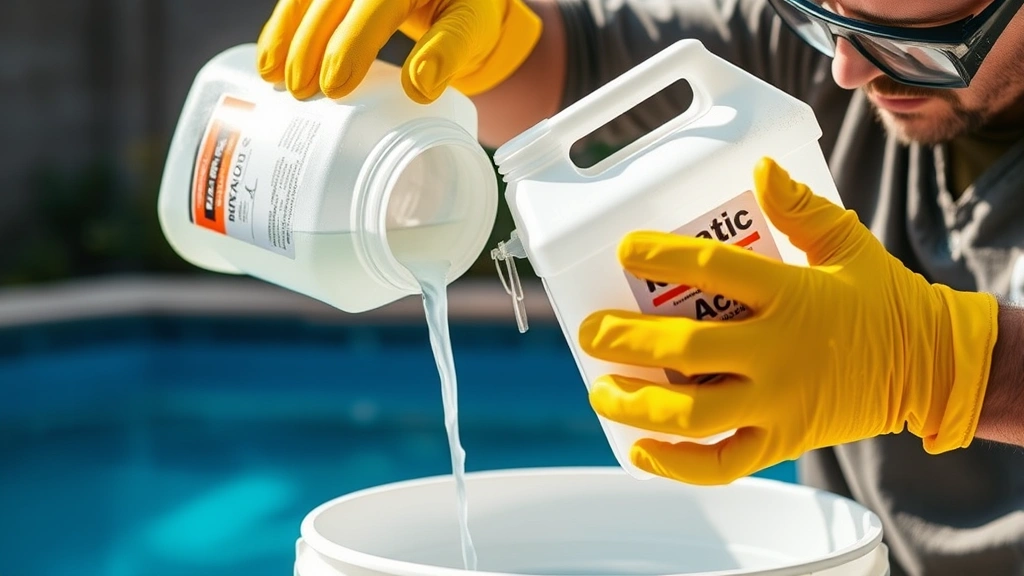
Muriatic acid (hydrochloric acid) is the most common and effective method for lowering pool alkalinity. It works quickly and precisely, though it requires careful handling due to its corrosive nature. This approach is similar to fixing structural issues in that it requires precision and safety precautions.
Safety Precautions First:
- Wear chemical-resistant gloves, safety goggles, and a respirator mask
- Work in a well-ventilated area away from children and pets
- Never add water to acid; always add acid to water
- Keep a neutralizing agent (baking soda) nearby in case of spills
- Have a first-aid kit accessible
- Read the manufacturer’s safety data sheet completely before starting
Calculating the Correct Dose:
The amount of muriatic acid needed depends on your pool size and how much you need to lower alkalinity. As a general rule, one quart of muriatic acid lowers alkalinity by approximately 10 ppm in a 10,000-gallon pool. However, this varies by product concentration (typically 20-35% acid), so always check your product’s specifications.
Use this formula: (Current Alkalinity – Target Alkalinity) ÷ 10 × (Your Pool Volume ÷ 10,000) = Quarts of Acid Needed
Example: Your 15,000-gallon pool has 160 ppm alkalinity, and you want to reach 100 ppm. (160-100) ÷ 10 × (15,000 ÷ 10,000) = 9 quarts of muriatic acid.
Step-by-Step Application Process:
- Turn on your pool circulation system to ensure even distribution
- Pour the calculated acid into a plastic bucket (never use metal)
- Add the acid to the pool by slowly pouring it near the return jet, never directly into the skimmer
- Wait 30 minutes for the chemical to circulate throughout the pool
- Test alkalinity again to verify the results
- If needed, repeat the process in smaller increments rather than over-correcting
- Monitor pH levels, as muriatic acid also lowers pH
Most pool professionals recommend lowering alkalinity gradually over several days rather than in one large treatment. This prevents pH from dropping too quickly and gives you better control over the final result. Start with 75% of your calculated dose, test after 24 hours, then adjust as needed.
Sodium Bisulfate as an Alternative Method
Sodium bisulfate (also called dry acid or pH decreaser) offers a safer alternative to muriatic acid for pool owners who prefer solid chemicals. While it also lowers pH, it’s less corrosive and easier to handle, making it ideal for beginners or when working with children nearby.
How Sodium Bisulfate Works:
When dissolved in pool water, sodium bisulfate creates bisulfate ions that lower both pH and alkalinity. It’s slower-acting than muriatic acid but provides more control and is safer to transport and store. The trade-off is that you’ll need larger quantities and must wait longer between treatments to see results.
Dosing Guidelines:
Sodium bisulfate typically lowers alkalinity by about 4 ppm per pound in a 10,000-gallon pool. This means you need roughly 2.5 times more sodium bisulfate by weight than muriatic acid to achieve the same result. For a 10,000-gallon pool needing a 50 ppm alkalinity reduction, you would need approximately 12-13 pounds of sodium bisulfate.
Application Steps:
- Calculate the required amount using the guidelines above
- Ensure your pool pump is running at full circulation
- Dissolve the sodium bisulfate in a plastic bucket of pool water first
- Pour the mixture around the perimeter of the pool, distributing evenly
- Wait 24 hours before retesting
- Repeat if necessary, testing every 24 hours until you reach target levels
- Monitor both pH and alkalinity, as sodium bisulfate affects both
Sodium bisulfate is particularly useful when you need to lower alkalinity without drastically affecting pH. It’s also the safer choice for indoor pools or situations where acid fumes are a concern. However, it dissolves more slowly and requires patience, making it less ideal for emergency situations requiring immediate correction.
Dilution and Water Replacement Strategy
Sometimes the most straightforward approach to lowering alkalinity is simply replacing a portion of your pool water with fresh water. This method works best when alkalinity is only slightly elevated or when combined with other chemical treatments.
When to Use Dilution:
- Alkalinity is elevated but other parameters are within range
- You want to avoid using large quantities of chemicals
- Your pool has high total dissolved solids (TDS) or calcium hardness
- You’re dealing with very hard tap water in your area
- You prefer a more gradual, natural approach
The Dilution Process:
Drain 10-25% of your pool water and refill with fresh water. This dilutes the alkaline compounds proportionally. The amount you need to drain depends on how much you need to lower alkalinity. Generally, draining 10% of pool volume reduces alkalinity by roughly 10%. For a pool with 150 ppm alkalinity that you want to bring to 100 ppm, you’d need to replace approximately 33% of the water.
However, consider your water source first. If your tap water has high alkalinity (common in areas with hard water), dilution may be ineffective. Test your tap water’s alkalinity before proceeding. You might need to use distilled water or combine dilution with chemical treatment for better results.
Combining Dilution with Chemical Treatment:
For efficiency, combine water replacement with muriatic acid or sodium bisulfate. This approach reduces the chemical quantity needed while still achieving your target levels. Start by draining 15% of your pool, refill, then add 50-75% of your calculated chemical dose. This hybrid method is cost-effective and reduces the environmental impact of chemical disposal.
Prevention Tips for Maintaining Balance
The easiest way to manage alkalinity is to prevent it from becoming elevated in the first place. Consistent maintenance and smart practices keep your pool chemistry stable year-round.
Regular Testing Schedule:
Test alkalinity at least twice weekly during swimming season. More frequent testing—even daily during hot weather or after heavy use—catches problems early when they’re easier to correct. Establish a consistent testing routine, perhaps morning and evening, to track trends.
Monitor Your Water Source:
Your tap water’s alkalinity affects your pool. If you live in an area with naturally hard water, your alkalinity will gradually climb over time. Consider having your water tested annually, or adjust your treatment strategy based on seasonal changes in water hardness.
Control Debris and Organic Matter:
Leaves, pollen, and other organic debris decompose in your pool, increasing alkalinity. Skim regularly, empty skimmer baskets frequently, and maintain proper filtration. A clean pool resists alkalinity buildup better than a dirty one.
Maintain Proper Chlorine Levels:
High chlorine levels can contribute to pH and alkalinity fluctuations. Keep chlorine between 2-4 ppm for best results. This also improves water clarity and reduces the need for frequent chemical adjustments. For comprehensive home maintenance advice, check out the FixWiseHub Blog for expert tips.
Use pH Increaser Sparingly:
Sodium carbonate (pH increaser) also raises alkalinity. Use it only when absolutely necessary, and always in small doses. Many pool problems stem from over-correcting pH with increaser.
Maintain Filter Efficiency:
A properly functioning filter removes particles that can affect water chemistry. Clean or backwash your filter regularly according to manufacturer recommendations. A clogged filter reduces circulation, preventing chemicals from distributing evenly.
Common Mistakes to Avoid
Learning from others’ mistakes helps you maintain better pool chemistry more efficiently.
Over-Correcting:
The biggest mistake is adding too much acid or bisulfate at once. This can swing your water chemistry in the opposite direction, creating new problems. Always start with 75% of your calculated dose and adjust gradually. Patience yields better results than aggressive treatment.
Confusing Alkalinity with pH:
Many pool owners treat alkalinity when they actually need to adjust pH, or vice versa. These are separate parameters requiring different treatments. Always test both before making adjustments. Understanding the difference is as crucial as knowing how to clean a coffee maker—you need the right approach for each task.
Skipping Circulation:
Never add chemicals to a pool without running the circulation system. Without proper circulation, chemicals concentrate in one area, creating hot spots and uneven treatment. Always run your pump for at least 24 hours after adding chemicals.
Testing Incorrectly:
Taking water samples from the wrong location or testing with expired test strips leads to inaccurate results. Sample from at least 18 inches deep, away from return jets, and use fresh test strips or kits. Replace liquid test kit reagents annually.
Adding Acid to Water vs. Water to Acid:
This is critical for safety. Always add acid to water, never the reverse. Water added to acid can cause violent boiling and splashing, resulting in serious burns. This rule applies to muriatic acid especially.
Ignoring Weather and Seasonal Changes:
Heavy rain dilutes alkalinity while sunny weather increases it through evaporation concentration. Algae growth and organic debris also affect alkalinity. Adjust your maintenance routine seasonally and after significant weather events.
Not Maintaining Calcium Hardness:
While lowering alkalinity, monitor your calcium hardness (ideal range: 200-400 ppm). Low calcium combined with low alkalinity can cause corrosion. If both are low, raise calcium hardness before further reducing alkalinity.
Frequently Asked Questions
How long does it take to lower pool alkalinity?
Muriatic acid works within 30 minutes to 1 hour, though full circulation throughout the pool takes 24 hours. Sodium bisulfate takes 24-48 hours to fully dissolve and show results. Water dilution takes effect immediately but requires time to drain and refill. Most pool professionals recommend waiting 24 hours between treatments to accurately assess results.
Can I lower alkalinity without lowering pH?
Not completely, as both muriatic acid and sodium bisulfate lower pH as well as alkalinity. However, you can minimize pH reduction by using smaller doses over several days. After lowering alkalinity, test your pH and adjust separately if needed using pH increaser (sodium carbonate) or pH decreaser as appropriate.
What’s the difference between alkalinity and pH?
Alkalinity measures buffering capacity (ability to resist pH change), while pH measures acidity/basicity on a 0-14 scale. You can have high alkalinity with normal pH, or low alkalinity with high pH. They’re independent parameters requiring separate testing and treatment.
Is it safe to swim while lowering alkalinity?
It depends on the chemical used and concentration. With muriatic acid, wait at least 30 minutes after treatment and verify pH is safe (7.2-7.6) before swimming. Sodium bisulfate is safer and allows swimming sooner, though waiting 24 hours is recommended. Always test chlorine levels before allowing swimmers in the pool.
How often should I test alkalinity?
Test at least twice weekly during swimming season, or weekly during off-season. Test more frequently—even daily—during hot weather, after heavy rain, or following chemical treatments. Consistent testing catches problems early when they’re easier to correct.
Why does my alkalinity keep rising?
Common causes include hard tap water, algae growth, organic debris decomposition, or using pH increaser too frequently. Test your tap water’s alkalinity, maintain proper filtration, skim debris regularly, and avoid unnecessary pH adjustments. If problems persist, consult a professional pool technician.
Can I use vinegar to lower alkalinity?
While vinegar is acidic, it’s not strong enough to effectively lower pool alkalinity. You’d need impractically large quantities, and the acetic acid doesn’t provide the rapid results needed. Stick with muriatic acid or sodium bisulfate for reliable, efficient results.
What happens if alkalinity stays too high?
High alkalinity causes cloudy water, calcium scaling on equipment, reduced chlorine effectiveness, pH instability, and equipment corrosion. Over time, it can damage your pool’s plaster, filter, and circulation system, leading to expensive repairs. Addressing high alkalinity promptly prevents these costly problems.

Related Posts

Superscript in Google Docs: Expert Tips

Strikethrough in Excel: Easy Steps for Beginners
