
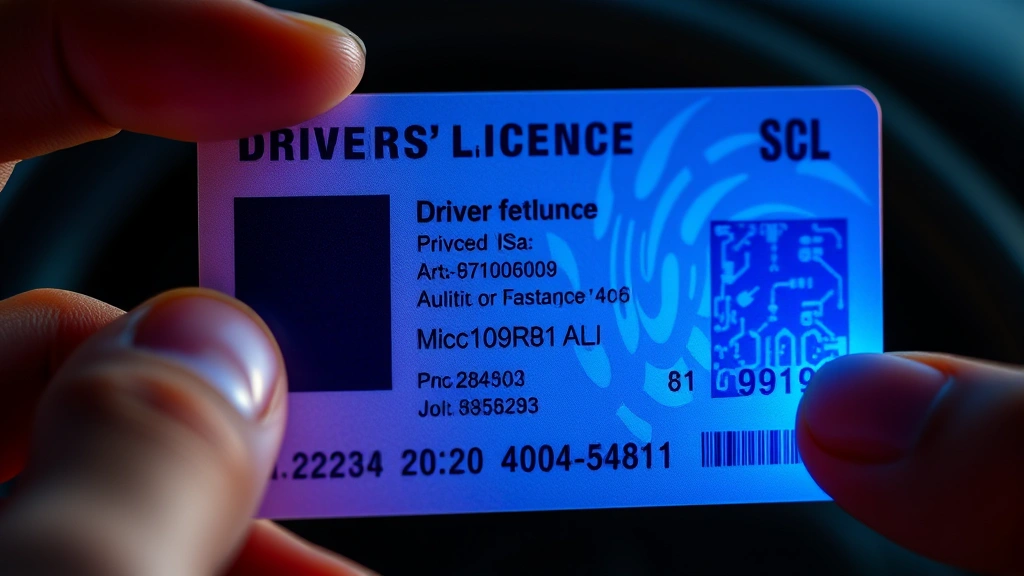
DIY Fake ID: Why It’s Not Worth It.
DIY Fake ID: Why It’s Not Worth It
The temptation to create a fake ID might seem like a quick solution to access age-restricted venues or purchase age-gated products, but the reality is far more serious than most people realize. Whether you’re considering how to get a fake id or simply curious about the topic, understanding the legal consequences, security risks, and ethical implications is crucial before taking any action. This comprehensive guide explores why attempting to create or use a fraudulent identification document is a decision that could derail your future.
In an age where digital security and identity verification have become increasingly sophisticated, the risks associated with fake identification have multiplied exponentially. What might have seemed like a harmless prank decades ago is now a federal crime with severe penalties that can follow you for life. Rather than exploring methods to obtain fraudulent documents, this article examines the legitimate reasons why this path is dangerous and what you should know about the legal system’s response to identity fraud.

Understanding Fake ID Laws and Federal Crimes
Creating, possessing, or using a fake ID isn’t simply a local misdemeanor—it’s a federal offense under the Identity Theft and Assumption Deterrence Act. The federal government takes document fraud seriously because fraudulent identification documents can be used for terrorism, human trafficking, and other serious crimes. When you create a fake ID, you’re not just breaking one law; you’re potentially violating multiple statutes simultaneously.
Each state has additional laws that compound federal penalties. For example, possessing a fake ID in California can result in misdemeanor charges with up to six months in jail and a $250 fine, but creating one elevates the offense to a felony. In New York, the penalties are even stricter, with potential felony charges carrying up to four years in prison. These aren’t theoretical punishments—they’re actively prosecuted across the country.
The definition of what constitutes a fake ID is broader than most people understand. It’s not just about creating an entirely fraudulent document from scratch. Using someone else’s real ID, altering an existing ID, or even possessing someone else’s ID without permission can result in criminal charges. If you allow someone to use your ID, you could face charges for conspiracy or aiding and abetting fraud. The legal entanglement spreads quickly once authorities become involved, similar to how freezing rows in Excel locks multiple elements—except in this case, you’re locking yourself into a criminal record.
Federal law enforcement agencies, including the Secret Service and FBI, have dedicated divisions focused on document fraud. These aren’t small-time investigators; they’re highly trained professionals with access to sophisticated detection technology. The infrastructure for catching fake ID operations is extensive and constantly improving.

The Criminal Penalties You Face
Understanding the specific penalties should be your first reality check. Federal penalties for identity fraud and document forgery include:
- Prison time: Up to 15 years for document forgery under federal law
- Fines: Up to $250,000 or more in federal cases
- Restitution: You may be ordered to pay victims for damages caused by fraud
- Probation: Extended probationary periods after release, restricting your freedom
- Permanent criminal record: A felony conviction that never disappears
State penalties vary but are often severe. In Texas, making or possessing a fake ID is a felony punishable by up to two years in prison and $4,000 in fines. In Florida, you could face up to five years in prison. These aren’t minor infractions that disappear after a few years—they’re life-altering criminal convictions.
When you’re convicted, the criminal record follows you everywhere. Employment background checks will reveal the conviction. Housing applications will be denied. Professional licenses will be unattainable. Graduate school admissions will be nearly impossible. The immediate thrill of gaining access to a bar or buying alcohol is incomparable to the decades of consequences that follow a conviction.
Prosecutors often stack charges, meaning you could face multiple counts simultaneously. If you use the fake ID to commit another crime—like fraud or underage drinking—additional charges compound your legal jeopardy. What seemed like a single mistake becomes a federal case with multiple felony counts.
How Modern Security Features Make Fakes Obvious
Even if you somehow obtained a fake ID, modern identification documents have evolved far beyond what amateur forgers can replicate. State driver’s licenses and ID cards now include security features that are nearly impossible to duplicate without industrial-grade equipment:
- Holograms and optically variable devices: These three-dimensional security elements change appearance when viewed from different angles and require specialized manufacturing equipment
- Microprinting: Text so small it’s invisible to the naked eye but readable under magnification, requiring precision printing technology
- UV-reactive inks: Elements visible only under ultraviolet light that reveal hidden images and patterns
- RFID chips: Radio-frequency identification embedded in modern IDs that transmit encrypted data when scanned
- Laser engraving: Three-dimensional images burned into the ID material itself, impossible to replicate with traditional printing
- Color-shifting inks: Pigments that change color based on viewing angle, requiring specialized chemical formulations
Bouncers and bartenders are trained to spot fakes. Many establishments use ID scanning machines that verify the document’s authenticity through barcode reading and database cross-referencing. When you hand over a fake ID, the scanner immediately flags it as invalid, and the establishment is legally required to report it to authorities.
The technology continues advancing. Many states have implemented Real ID compliance, which includes additional security measures and federal verification protocols. This makes it even harder for forged documents to pass scrutiny. Just as you might learn how to clean a coffee maker by understanding its components, law enforcement understands every component of legitimate IDs and can immediately spot discrepancies in fakes.
Digital Tracking and Law Enforcement Detection
One of the most overlooked aspects of fake ID operations is the digital footprint they leave. In today’s connected world, it’s nearly impossible to obtain a fake ID without creating evidence that leads directly to you:
Online ordering trails: If you order from an online vendor, you’re leaving payment records, shipping addresses, and IP addresses that federal investigators can trace. Payment processors like PayPal, cryptocurrency exchanges, and credit card companies cooperate with law enforcement and maintain detailed transaction logs.
Vendor databases: Most online fake ID vendors are actually undercover law enforcement operations or informants. The FBI and Secret Service run sophisticated sting operations where they pose as vendors, collect customer information, and then prosecute buyers. Hundreds of people are arrested annually through these operations.
Social media and messaging: Many people discuss obtaining fake IDs on social media platforms, through text messages, or in group chats. Law enforcement monitors these platforms and uses screenshots as evidence. Even deleted messages can be recovered from phone backups and server logs.
Venue surveillance: When you use a fake ID at a bar or club, you’re recorded on security cameras. If the establishment reports the fake ID, investigators can identify you through facial recognition technology and cross-reference it with other databases.
Identity databases: Modern ID verification systems are connected to state and federal databases. When a fake ID is scanned, it triggers alerts that are logged and investigated. These alerts create a digital breadcrumb trail leading back to you.
The investigation process is sophisticated. Agents can subpoena your phone records, email accounts, and social media profiles. They can identify associates through communication patterns and build a case that includes conspiracy charges against your friends. What started as an individual decision becomes a group prosecution.
The Long-Term Consequences on Your Future
Beyond the immediate criminal penalties, a fake ID conviction creates permanent barriers to your future opportunities. This is where the real cost becomes apparent:
Employment impact: Most employers conduct background checks. A felony conviction for fraud is a massive red flag. Employers in finance, healthcare, education, government, and security will automatically disqualify you. Even retail and service industry jobs may reject you. Professional licenses—for nursing, law, accounting, teaching—are essentially unattainable with a fraud conviction on your record.
Educational consequences: Universities and graduate programs conduct background checks. Many schools have explicit policies denying admission to applicants with felony convictions. If you’re already enrolled, a conviction could result in expulsion. Scholarships will be forfeited. Financial aid may be revoked.
Housing and rental discrimination: Landlords routinely deny applications from applicants with felony records. Finding housing becomes significantly more difficult and expensive. Some areas have legal protections against this discrimination, but many don’t.
Professional licensing: If you’re pursuing a career that requires licensure—law, medicine, psychology, engineering—a fraud conviction will likely disqualify you or create an impossible uphill battle during the character and fitness evaluation.
Travel restrictions: A felony conviction can complicate international travel. Some countries deny entry to people with criminal records. Visa applications may be denied. Your passport could be revoked in certain circumstances.
Gun rights: A felony conviction permanently revokes your Second Amendment rights in most states. You can never legally own a firearm.
Financial consequences: You’ll face significant legal fees—often $10,000 to $50,000 or more for adequate representation. Court fines and restitution add to the financial burden. A criminal record makes it harder to obtain loans, credit cards, and mortgages. Interest rates will be higher when you do qualify.
These aren’t theoretical concerns—they’re documented, long-term impacts affecting people convicted of fraud. A single decision to obtain a fake ID can derail plans you’ve been working toward for years, similar to how a single structural error can compromise an entire home improvement project like fixing a hole in the wall properly.
Why Online Services Are Scams
If you’ve searched for how to get a fake ID, you’ve likely encountered websites advertising fake ID services. Understanding why these are scams—beyond the obvious legal issues—is important:
Law enforcement operations: The FBI and Secret Service operate undercover websites posing as fake ID vendors. They collect customer information and use it to build prosecution cases. Ordering from what you think is a vendor might actually be ordering from federal agents.
Money theft: Even when vendors aren’t law enforcement, they’re often simple thieves. You send money and receive nothing. Your payment information is stolen and used for identity theft. You can’t report the theft to police without incriminating yourself.
Unusable products: Some vendors deliver fake IDs that are obviously counterfeit—poor quality, incorrect holograms, misspelled text. You’ve paid money for a document that immediately gets you arrested.
Identity theft: Providing your personal information to these services puts you at risk for identity theft. Your data is sold to other criminals or used to open fraudulent accounts in your name.
Extortion: Some vendors collect information and then extort money from customers, threatening to report them to police unless they pay additional fees.
The common thread is that every path leads to either arrest or financial loss. There’s no scenario where ordering a fake ID online ends well. The risk-to-benefit analysis is completely skewed against you.
Legitimate Alternatives to Consider
If you’re interested in accessing age-restricted activities or products, there are legitimate approaches:
Wait until you’re of legal age: This is the most obvious solution, but it’s worth stating directly. The legal drinking age exists for health and safety reasons. Waiting a few years is genuinely the simplest path forward.
Obtain a legitimate state ID: If you need identification for purposes other than age verification, apply for a state ID card or driver’s license through your state’s DMV. The process is straightforward and the document is completely legal.
Use passport cards: If you’re traveling internationally or need federal identification, a passport card is a legitimate option that serves as valid ID for many purposes, similar to how learning how to freeze tomatoes provides a legitimate preservation method.
Explore age-appropriate activities: There are countless activities and venues that don’t have age restrictions. Movies, sports events, concerts, restaurants, outdoor activities, and social gatherings offer entertainment without legal risk.
Seek adult mentorship: If you’re interested in activities typically associated with adulthood, find mentors who can guide you through the transition legally. Older siblings, parents, or trusted adults can provide access to age-appropriate experiences.
The FixWiseHub Blog offers how-to guides and tutorials for legitimate home improvement and practical skills that offer more rewarding long-term value than any shortcut could provide.
FAQ
What are the federal penalties for fake ID possession?
Federal penalties include up to 15 years in prison for document forgery, fines up to $250,000, and permanent criminal record. State penalties vary but are often severe, ranging from misdemeanor charges with jail time to felony convictions.
Can a fake ID conviction be expunged from my record?
Expungement depends on your state’s laws and the specific charges. Many states don’t allow expungement for felony fraud convictions. Even if expungement is possible, it’s complicated, expensive, and not guaranteed. The conviction may remain visible to certain employers and agencies.
How do bouncers and bartenders spot fake IDs?
They’re trained to recognize security features like holograms, microprinting, and color-shifting inks. Many establishments use ID scanning machines that verify authenticity through barcode reading and database cross-referencing. Inconsistencies in font, colors, or text immediately raise red flags.
Are online fake ID vendors legitimate?
No. Online vendors are either law enforcement operations, scammers stealing money, or identity thieves. There is no legitimate online vendor for fraudulent documents. Every transaction leaves digital evidence that can be traced.
Will a fake ID conviction affect my college applications?
Yes, significantly. Most universities conduct background checks and have explicit policies regarding felony convictions. A fraud conviction could result in admission denial or expulsion if you’re already enrolled. Scholarships and financial aid may be forfeited.
What should I do if I’m caught with a fake ID?
Contact a criminal defense attorney immediately before speaking to police. Don’t make statements without legal representation. An attorney can advise you on your options, potential consequences, and defense strategies specific to your jurisdiction.
Can I use someone else’s real ID?
No. Using someone else’s ID is a crime, and the person whose ID you used can face charges for allowing you to use it. Both parties can be prosecuted for conspiracy and fraud.

Related Posts

Superscript in Google Docs: Expert Tips

Strikethrough in Excel: Easy Steps for Beginners
