

Find Triangle’s Missing Side? Expert Techniques
How to Find the Missing Side of a Triangle: Expert Techniques
Finding the missing side of a triangle is a fundamental skill that applies to countless real-world scenarios, from construction projects to home renovations. Whether you’re framing a roof, installing diagonal bracing, or calculating dimensions for a triangular deck, understanding the mathematical techniques to determine an unknown side will save you time, materials, and costly mistakes.
This comprehensive guide walks you through multiple methods for finding missing triangle sides, including the Pythagorean theorem for right triangles, the Law of Cosines for any triangle, and practical step-by-step approaches you can apply immediately. We’ll also explore when and how to use each technique, ensuring you have the right tool for every situation.
Understanding Triangle Basics
Before diving into calculation methods, it’s essential to understand the fundamental properties of triangles. Every triangle has three sides and three angles, and the sum of all interior angles always equals 180 degrees. The relationship between sides and angles determines which calculation method you’ll use to find a missing side.
Triangles are classified into three main types based on their angles: right triangles (containing one 90-degree angle), acute triangles (all angles less than 90 degrees), and obtuse triangles (one angle greater than 90 degrees). Your triangle’s classification directly influences which formula you’ll apply. For example, if you have a right triangle, the Pythagorean theorem becomes your most efficient tool.
The sides of a triangle also have specific names depending on context. In right triangles, the longest side opposite the right angle is called the hypotenuse, while the other two sides are legs. If you need more detailed guidance on this specific case, our article on how to find the hypotenuse of a triangle provides additional techniques.
Understanding these basics ensures you select the appropriate method and avoid common calculation errors. Take time to identify what information you already have: two sides and an included angle, two angles and one side, or all three sides with one unknown.
The Pythagorean Theorem Method
The Pythagorean theorem is the most straightforward and widely-used method for finding missing sides in right triangles. This ancient mathematical principle states that in any right triangle, the square of the hypotenuse equals the sum of squares of the other two sides. The formula is expressed as: a² + b² = c², where c is the hypotenuse and a and b are the legs.
Step-by-step process for finding a missing leg:
- Identify your known values: Determine which two measurements you have. You’ll need either the hypotenuse and one leg, or you already know both legs and need to verify.
- Rearrange the formula: If you know the hypotenuse (c) and one leg (a), rearrange to find b: b² = c² – a²
- Substitute your numbers: Plug in your measurements. For example, if c = 13 feet and a = 5 feet, then b² = 169 – 25 = 144
- Calculate the square root: Take the square root of your result. In this example, √144 = 12 feet
- Verify your answer: Double-check by plugging values back into the original formula: 5² + 12² = 25 + 144 = 169 = 13²
This method works perfectly for construction projects like roof framing, where you often know the rise and run and need to calculate the rafter length. This Old House provides excellent resources for understanding how builders apply the Pythagorean theorem in real construction scenarios.
Common real-world applications include calculating diagonal bracing for deck corners, determining stair stringers, and finding the length of support beams. The simplicity of this method makes it invaluable for DIY projects where quick calculations are necessary.
Using the Law of Cosines
When you’re dealing with triangles that aren’t right triangles, the Law of Cosines becomes your essential tool. This formula works for any triangle when you know two sides and the included angle (the angle between those two sides), or when you know all three sides and need to find an angle.
The Law of Cosines formula is: c² = a² + b² – 2ab·cos(C), where a and b are known sides, C is the included angle between them, and c is the side you’re solving for.
Step-by-step application:
- Identify your known information: You need two sides and the angle between them. For example, side a = 10 feet, side b = 8 feet, and angle C = 45 degrees.
- Find the cosine of your angle: Use a scientific calculator to find cos(45°) = 0.707
- Apply the formula: c² = 10² + 8² – 2(10)(8)(0.707) = 100 + 64 – 113.12 = 50.88
- Take the square root: c = √50.88 ≈ 7.13 feet
- Double-check your work: Verify the angle measurement and recalculate to ensure accuracy
This method proves invaluable when you’re working with triangular roof trusses, diagonal measurements across rooms, or any situation where the triangle doesn’t contain a right angle. The precision of the Law of Cosines makes it essential for professional carpentry and home improvement projects.
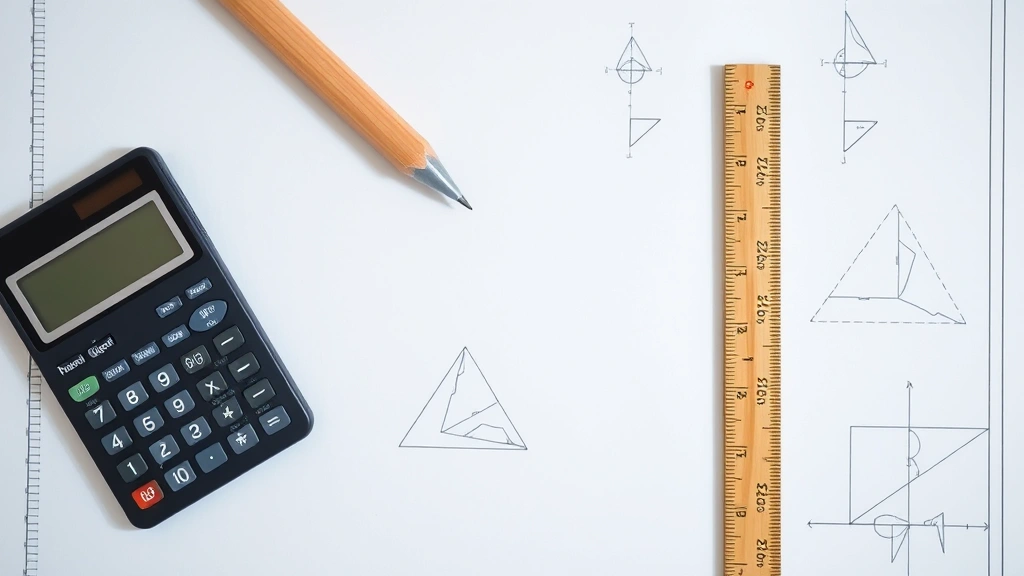
Applying the Law of Sines
The Law of Sines provides another powerful method for finding missing sides when you know two angles and one side (AAS or ASA configuration). This formula states: a/sin(A) = b/sin(B) = c/sin(C), where lowercase letters represent sides and uppercase letters represent the angles opposite those sides.
Using the Law of Sines effectively:
- Identify what you know: You must have at least one complete side-angle pair (a side and the angle opposite to it) plus either another angle or another side.
- Find the third angle: If you have two angles, subtract from 180 degrees to find the third: Angle C = 180° – Angle A – Angle B
- Set up your proportion: If you know side a and angles A and B, and need to find side b: a/sin(A) = b/sin(B)
- Solve for the missing side: b = a · sin(B)/sin(A)
- Calculate using a scientific calculator: Plug in your sine values and multiply accordingly
This method excels when surveying property lines, calculating distances in triangular garden designs, or determining unknown dimensions in architectural plans. The Law of Sines is particularly useful because it requires fewer calculations than the Law of Cosines in certain situations.
Practical DIY Applications
Understanding how to find missing triangle sides directly impacts your success on home improvement projects. Let’s explore specific scenarios where these techniques prove invaluable.
Roof Framing and Rafter Calculation: When building a roof, you typically know the run (horizontal distance) and the rise (vertical height). These two measurements form the two legs of a right triangle, with the rafter being the hypotenuse. Using the Pythagorean theorem, you can calculate exact rafter lengths before cutting materials. A 12-foot run with a 6-foot rise requires a rafter of approximately 13.4 feet. This precision prevents waste and ensures structural integrity.
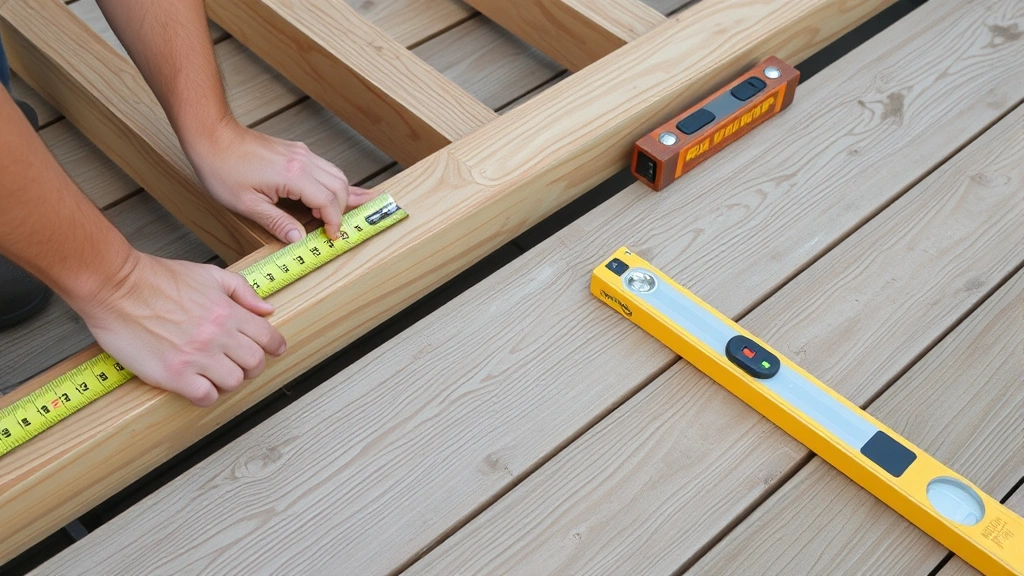
Deck Diagonal Bracing: To ensure your deck frame is perfectly square, calculate the diagonal distance. If you have a 12-foot by 16-foot rectangular deck, the diagonal should measure approximately 20 feet. If your measured diagonal differs, you know the frame isn’t square and needs adjustment before building.
Staircase Stringers: Stair stringers are cut at an angle from the rise and run measurements. If you have a 10-foot rise over a 12-foot run, the stringer length (hypotenuse) is approximately 15.6 feet. This calculation ensures your staircase fits properly and maintains consistent step heights.
Triangular Roof Trusses: Many roof designs use triangular trusses. If you know the base width and the desired peak height, you can calculate the rafter lengths needed. These measurements ensure all trusses are identical and the roof peaks align perfectly.
Garden and Landscape Design: Creating triangular garden beds or pathways requires accurate measurements. Using the Law of Cosines, you can determine the third side of a triangular garden area when you know two sides and the angle between them, ensuring your design is precisely executed.
Home Renovation Measurements: When installing diagonal shelving, creating angled wall sections, or designing custom built-ins, calculating missing triangle sides ensures components fit perfectly within your space. These calculations prevent costly mistakes and material waste.
Common Mistakes to Avoid
Even experienced builders make errors when calculating missing triangle sides. Being aware of common pitfalls helps you maintain accuracy and precision in your projects.
Confusing angle types: The most frequent error involves using the wrong angle in your calculation. Remember that the Law of Cosines requires the included angle (the angle between your two known sides). Using an opposite angle produces incorrect results. Always carefully identify which angle you’re using before substituting values.
Calculator mode errors: Scientific calculators have degree and radian modes. Ensure your calculator is set to degree mode unless you’re specifically working with radians. Switching between modes mid-calculation produces wildly inaccurate results.
Forgetting to take the square root: When using the Pythagorean theorem or Law of Cosines, you square your values during calculation but must take the square root of your final result. Forgetting this step gives you the square of the side length, not the actual measurement.
Misidentifying the hypotenuse: In right triangles, the hypotenuse is always the longest side and always opposite the right angle. Don’t assume a side is the hypotenuse just because it’s longer; verify that a right angle exists opposite to it. For more information on identifying and calculating hypotenuses, see our guide on finding the hypotenuse of a triangle.
Rounding too early: Maintain full decimal precision throughout your calculations. Only round your final answer. Rounding intermediate steps accumulates errors that become significant in construction projects.
Assuming all triangles are right triangles: Not every triangle contains a 90-degree angle. Before applying the Pythagorean theorem, verify that your triangle actually has a right angle. Otherwise, use the Law of Cosines or Law of Sines.
Measurement errors: The most common cause of incorrect results isn’t mathematical—it’s inaccurate initial measurements. Use quality measuring tools, measure multiple times, and average your results to ensure precision. Small measurement errors multiply through your calculations.
For additional mathematical techniques and resources, Family Handyman offers practical guides for applying geometry to home projects. Additionally, Home Depot’s learning center provides project-specific measurement guides and calculation tools.
When working on complex projects, don’t hesitate to use online calculators or apps specifically designed for construction geometry. These tools reduce human error and provide instant verification of your manual calculations. However, understanding the underlying mathematics ensures you can recognize when results seem incorrect.
FAQ
What’s the difference between the Pythagorean theorem and the Law of Cosines?
The Pythagorean theorem applies exclusively to right triangles and uses only the two legs and hypotenuse. The Law of Cosines works for any triangle and incorporates angles into the calculation. In fact, the Pythagorean theorem is a special case of the Law of Cosines where the angle is exactly 90 degrees (and the cosine of 90° equals zero).
Can I find a missing side if I only know one side and one angle?
No, you need additional information. Knowing only one side and one angle doesn’t uniquely determine a triangle. You need either: two sides and an included angle, two angles and any side, or all three sides. With insufficient information, infinite triangles could fit your parameters.
How do I know which formula to use?
Identify what information you have: If you have a right triangle with two sides known, use the Pythagorean theorem. If you have two sides and the included angle, use the Law of Cosines. If you have two angles and one side, use the Law of Sines. Start by categorizing your known values, then match them to the appropriate formula.
Why do construction professionals use these calculations?
Precision in construction prevents costly mistakes, material waste, and structural problems. A miscalculation of even a few inches in roof framing can cause misalignment throughout the entire structure. Using proper mathematical techniques ensures components fit together perfectly, structures are safe, and materials are used efficiently.
Can I use these methods for any shape, or just triangles?
These specific methods apply only to triangles. However, you can divide other polygons into triangles and apply these techniques to each section. This approach is commonly used in surveying, landscape design, and calculating areas of irregular shapes.
What if my calculator doesn’t have a cosine function?
Most smartphones have scientific calculator apps available for free. Alternatively, online calculators specifically designed for triangle calculations can perform these functions instantly. However, a basic scientific calculator (typically $15-30) is a worthwhile investment for any DIYer who regularly works on projects requiring geometric calculations.
How accurate do my measurements need to be?
Measurement accuracy depends on your project. For rough framing, measurements within 1/4 inch are typically acceptable. For finish carpentry, cabinetry, or trim work, 1/16 inch accuracy is often required. Always measure twice, use quality tools, and understand your project’s tolerance requirements before beginning calculations.
Can I verify my answer without redoing the entire calculation?
Yes. Plug your calculated side back into the original formula and verify the equation balances. For example, if you calculated a missing side using the Pythagorean theorem, square all three sides and confirm that the sum of the two leg squares equals the hypotenuse square. This verification catches calculation errors quickly.

Related Posts

Superscript in Google Docs: Expert Tips

Strikethrough in Excel: Easy Steps for Beginners
