
Calculate Triangle Hypotenuse? Expert Tips Inside
How to Calculate Triangle Hypotenuse: Expert Tips Inside
Whether you’re working on a home renovation project, building a deck, or tackling geometry homework, knowing how to find the hypotenuse of a triangle is an essential skill that applies to countless real-world situations. The hypotenuse is the longest side of a right triangle, and calculating it accurately ensures your measurements, angles, and structures are perfectly aligned.
In this comprehensive guide, we’ll walk you through the mathematical principles, practical methods, and expert tips for finding the hypotenuse. From understanding the Pythagorean theorem to using modern tools and calculators, you’ll gain the confidence to solve any hypotenuse problem quickly and accurately. Let’s dive in and master this fundamental concept that bridges mathematics and practical application.
Understanding the Pythagorean Theorem
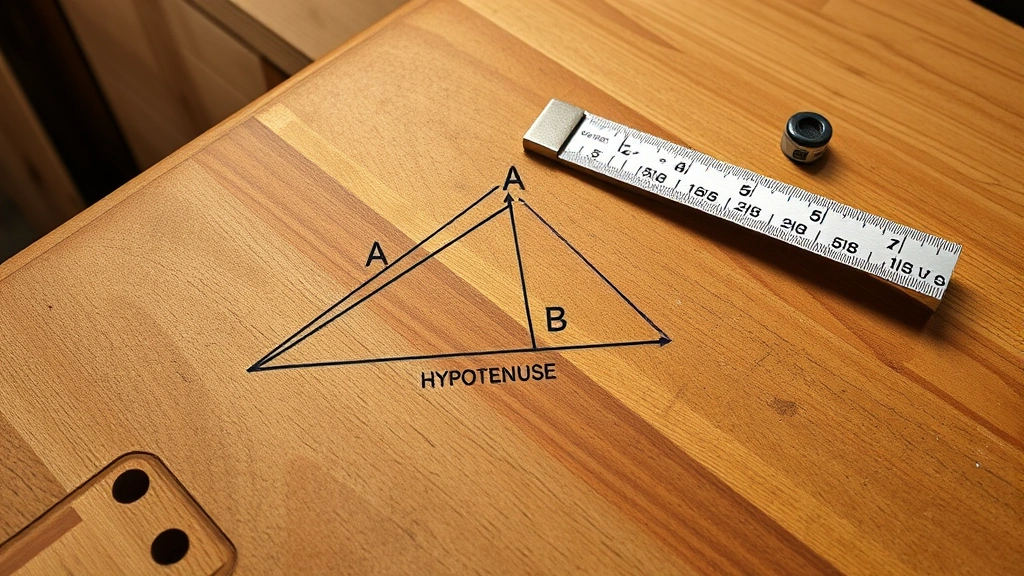
The foundation of calculating a triangle’s hypotenuse rests on one of mathematics’ most elegant principles: the Pythagorean theorem. This ancient mathematical concept, attributed to the Greek mathematician Pythagoras, states that in any right triangle, the square of the hypotenuse equals the sum of the squares of the other two sides.
A right triangle is specifically a triangle with one 90-degree angle. The two sides that form this right angle are called the legs or catheti, while the side opposite the right angle is the hypotenuse. Understanding this distinction is crucial because the Pythagorean theorem only applies to right triangles—not to obtuse or acute triangles.
The beauty of this theorem lies in its simplicity and universal application. For over 2,500 years, builders, architects, engineers, and mathematicians have relied on this principle to solve spatial problems. When you’re framing a roof, setting foundation corners, or installing diagonal bracing, you’re applying the Pythagorean theorem in real time.
The theorem also works in reverse. If you know the hypotenuse and one leg, you can find the missing leg. This flexibility makes it invaluable for troubleshooting construction problems or verifying measurements on job sites. Understanding how to find missing side of triangle values becomes straightforward once you grasp this principle.

The Basic Formula for Finding Hypotenuse
The mathematical formula for calculating the hypotenuse is elegantly simple:
c² = a² + b²
In this formula:
- c represents the hypotenuse (the side you’re solving for)
- a represents the length of the first leg
- b represents the length of the second leg
To find the actual length of the hypotenuse, you take the square root of both sides:
c = √(a² + b²)
This is the fundamental equation you’ll use repeatedly. The simplicity of this formula belies its power—with just two measurements, you can determine the third dimension of any right triangle. Whether your sides are measured in inches, feet, meters, or any other unit, the relationship remains constant.
Let’s establish a practical mindset: if you’re measuring a diagonal brace for a bookshelf or checking if a corner is truly square, this formula is your best friend. The consistency of the mathematical relationship means that if your calculated hypotenuse doesn’t match your physical measurement, you’ve found an error worth investigating.
Step-by-Step Calculation Method
Now let’s break down the calculation process into manageable steps that anyone can follow, regardless of mathematical background.
Step 1: Identify Your Known Values
First, determine which measurements you have. You need the lengths of both legs (the two sides that form the right angle). Let’s use a practical example: you’re installing a diagonal brace in a cabinet, and the vertical side is 24 inches while the horizontal side is 32 inches.
Step 2: Square Each Leg Measurement
Take your first leg measurement and multiply it by itself. Then do the same for the second leg:
- a² = 24 × 24 = 576
- b² = 32 × 32 = 1,024
Step 3: Add the Squared Values
Sum your two squared numbers together:
- 576 + 1,024 = 1,600
Step 4: Calculate the Square Root
Find the square root of your sum. This gives you the hypotenuse length:
- c = √1,600 = 40 inches
So in our example, your diagonal brace should measure exactly 40 inches from corner to corner. This straightforward method works whether your numbers are whole numbers or decimals, small or large.
Practical Verification Tip: Always double-check your arithmetic, especially when squaring larger numbers. A single calculation error compounds through the process. Many professionals use the This Old House methodology of calculating twice before cutting materials—a wise practice that saves waste and frustration.
Practical Applications in Home Improvement
Understanding how to calculate the hypotenuse transforms from abstract mathematics into practical utility when you’re working on actual projects. Let’s explore real-world scenarios where this skill proves invaluable.
Checking Square Corners
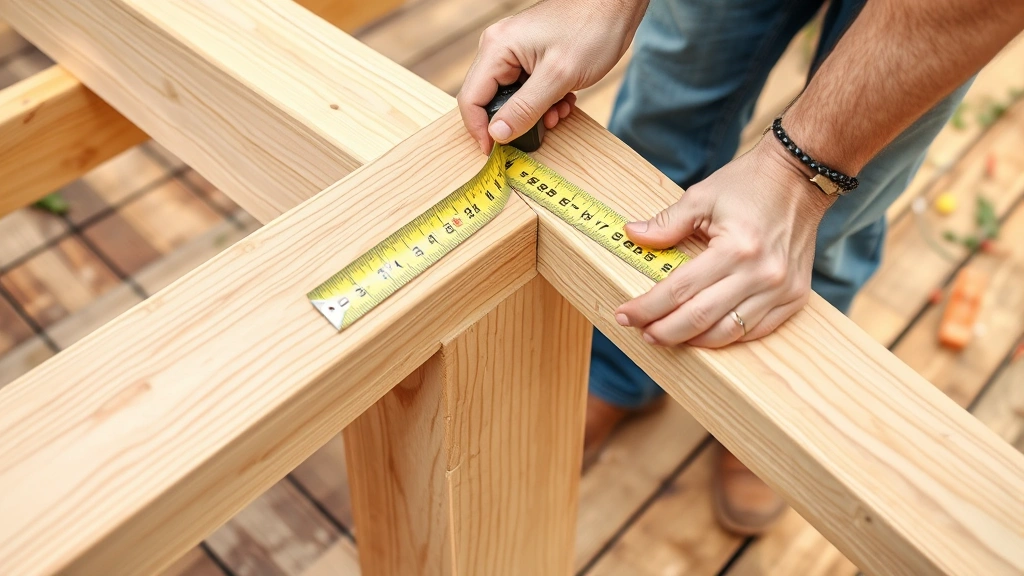
One of the most common uses is verifying that corners are truly square (90 degrees). The 3-4-5 rule is a classic carpenter’s trick: if you measure 3 units along one wall, 4 units along the adjacent wall, the diagonal should measure exactly 5 units if the corner is square. This is simply the Pythagorean theorem in action: 3² + 4² = 9 + 16 = 25 = 5².
For larger spaces, scale this up: use 6-8-10, 9-12-15, or any multiple of 3-4-5. When laying out a foundation or checking if a room is rectangular, this method is faster and more reliable than trust.
Roofing and Structural Angles
When calculating roof pitch or determining rafter lengths, the hypotenuse calculation is essential. If you know the rise (vertical height) and run (horizontal distance), the rafter length is the hypotenuse. This ensures proper material ordering and structural integrity. Many roofing projects depend on precise hypotenuse calculations for both aesthetics and function.
Diagonal Bracing and Support
Installing diagonal braces in shelving, deck railings, or structural supports requires knowing the exact diagonal distance. Calculating the hypotenuse ensures your braces fit perfectly and provide optimal support. Undersized braces compromise strength; oversized ones won’t fit properly.
Stair and Ramp Construction
When building stairs or accessibility ramps, you need to know the diagonal distance from the bottom of the first step to the top of the last step. This hypotenuse calculation determines both material needs and structural design. Family Handyman frequently emphasizes that proper calculations prevent costly rebuilds.
Cabinet and Furniture Building
Custom cabinetry requires precise diagonal measurements to ensure doors close properly and frames are square. Calculating the hypotenuse of each compartment verifies that your assembly is accurate before finishing.
Using Calculator Tools and Technology
While understanding manual calculation is essential, modern tools can speed up the process and reduce arithmetic errors. Let’s explore the options available to you.
Scientific Calculators
A basic scientific calculator with a square root function (√) button simplifies hypotenuse calculations significantly. Simply enter your formula: √(a² + b²), and the calculator handles the arithmetic. This is particularly useful when working with decimal measurements or unusual dimensions.
Online Hypotenuse Calculators
Numerous free online tools allow you to input your leg measurements and instantly receive the hypotenuse. These calculators often provide step-by-step breakdowns of the calculation, making them excellent learning tools. Look for calculators on educational sites or general math resources.
Smartphone Applications
Construction and mathematics apps available on iOS and Android devices include hypotenuse calculators. Many include additional features like unit conversion, which proves invaluable when working with mixed measurements (feet and inches, for example). Some advanced apps even include augmented reality features for real-time measurement.
Spreadsheet Software
If you’re managing multiple calculations, Excel, Google Sheets, or similar software allows you to create a hypotenuse calculator template. Use the formula =SQRT(A1^2+B1^2) to calculate automatically. This is efficient for large projects with many diagonal measurements.
Professional Measurement Tools
Modern laser distance meters and digital measuring devices can measure distances directly, including diagonals. While these don’t eliminate the need for understanding hypotenuse calculations, they provide verification and can measure distances that are difficult to access physically.
Regardless of which tool you choose, understanding the underlying mathematics ensures you can verify results and catch errors. Technology should enhance your work, not replace your understanding.
Common Mistakes to Avoid
Even experienced professionals occasionally make errors when calculating hypotenuses. Being aware of common pitfalls helps you maintain accuracy.
Mistake 1: Using the Wrong Triangle Type
The Pythagorean theorem only works for right triangles. If your triangle doesn’t have a 90-degree angle, this formula won’t work. Verify that you’re working with a right triangle before applying the formula. When in doubt, use a square or level to confirm the right angle.
Mistake 2: Confusing Legs and Hypotenuse
The hypotenuse is always the longest side and always opposite the right angle. Don’t accidentally use the hypotenuse as one of your leg measurements. Double-check which sides you’re squaring before performing calculations.
Mistake 3: Arithmetic Errors in Squaring
Multiplying numbers incorrectly is surprisingly common, especially with larger numbers. 24² is 576, not 576. Take time to verify each squaring step, or use a calculator to eliminate doubt. A single arithmetic error cascades through your calculation.
Mistake 4: Forgetting the Square Root
After adding your squared values, you must take the square root to get the actual hypotenuse length. Forgetting this step gives you c² instead of c—a dramatic error that would result in a measurement far too large. Always remember: after adding, take the square root.
Mistake 5: Unit Inconsistency
Ensure all your measurements use the same units before calculating. If one leg is in feet and another in inches, convert first. Mixing units produces meaningless results. When in doubt, convert everything to the smallest unit (inches rather than feet, for example).
Mistake 6: Rounding Too Early
When working with decimals, maintain precision throughout your calculation. Round only at the final step. Rounding intermediate results compounds errors and may affect your final answer significantly, especially in critical applications like structural work.
Advanced Techniques and Special Triangles
Beyond basic calculations, understanding special triangle types and advanced applications elevates your problem-solving capabilities.
The 3-4-5 Triangle Family
The 3-4-5 right triangle is the most famous Pythagorean triple—a set of three whole numbers that satisfy the Pythagorean theorem. Multiples of this ratio (6-8-10, 9-12-15, 12-16-20, etc.) are equally valid and appear frequently in construction because they produce whole-number measurements.
Other common Pythagorean triples include:
- 5-12-13
- 8-15-17
- 7-24-25
Memorizing these triples accelerates field calculations. If you recognize that your measurements match one of these patterns, you instantly know the hypotenuse without any calculation.
45-45-90 Triangles
In a 45-45-90 triangle (an isosceles right triangle), the two legs are equal length, and the hypotenuse equals a leg length multiplied by √2 (approximately 1.414). If each leg is 10 units, the hypotenuse is 10√2, or about 14.14 units. This relationship appears frequently in diagonal measurements of square spaces.
30-60-90 Triangles
These triangles have sides in the ratio 1:√3:2. If the shortest side (opposite the 30-degree angle) is 1 unit, the medium side is √3 units, and the hypotenuse is 2 units. This pattern appears in certain roof designs and architectural applications.
Using Trigonometry for Angles
When you know one leg and an angle (other than the right angle), you can find the hypotenuse using trigonometric functions. If you know the adjacent leg and the angle, use cosine: hypotenuse = adjacent / cos(angle). This advanced technique is valuable when you can’t directly measure both legs.
Solving Reverse Problems
Sometimes you know the hypotenuse and one leg, and need to find the missing leg. Rearrange the formula: b² = c² – a². This is useful when verifying measurements or troubleshooting construction problems. For instance, if your diagonal brace should be 40 inches but measures 41 inches, you can calculate what the actual leg measurement is.
These advanced techniques transform you from someone who merely applies formulas to someone who understands the deeper relationships in right triangles. This knowledge proves invaluable when problems don’t fit standard scenarios.
FAQ
Can I use the Pythagorean theorem for triangles that aren’t right triangles?
No, the Pythagorean theorem applies exclusively to right triangles. For other triangle types, you’d need different approaches such as the Law of Cosines. If you’re unsure whether your triangle is a right triangle, verify that one angle measures exactly 90 degrees using a square or protractor.
What if my calculated hypotenuse doesn’t match my physical measurement?
This indicates an error somewhere. First, re-verify your leg measurements—they may be slightly different than you thought. Then, recalculate carefully. If discrepancies persist, your triangle might not be a true right triangle, or there may be physical warping or measurement difficulties. In construction, small discrepancies (under 1/16 inch) are often acceptable, but larger gaps suggest investigation.
Do I need to memorize the formula?
While memorizing c = √(a² + b²) is helpful, understanding the concept matters more. You can always look up the formula, but understanding when and how to apply it requires conceptual knowledge. Most professionals keep reference materials handy, and using them is perfectly acceptable.
How precise do my measurements need to be?
Precision depends on your application. For rough construction work, measurements to the nearest 1/4 inch suffice. For finish carpentry or cabinetry, 1/16 inch precision is standard. For specialized applications, even greater precision might be necessary. Always measure twice and consider what level of accuracy your project requires.
What’s the easiest way to check if a corner is square?
Use the 3-4-5 rule: measure 3 feet along one wall and 4 feet along the adjacent wall. If the diagonal distance is exactly 5 feet, your corner is square. For larger spaces, scale up proportionally (6-8-10, 9-12-15, etc.). This is faster than calculating and equally reliable.
Can I calculate hypotenuse if I only know one leg and an angle?
Yes, using trigonometry. If you know the angle and the adjacent leg, divide the leg by the cosine of the angle. If you know the angle and the opposite leg, divide the leg by the sine of the angle. This requires a scientific calculator with trigonometric functions, but it solves problems where you can’t measure both legs directly.
Why is the hypotenuse always the longest side?
Mathematically, since the hypotenuse squared equals the sum of the other two sides squared, it must be larger than either individual leg. Geometrically, it’s the side opposite the largest angle (the 90-degree angle), and in any triangle, the longest side is opposite the largest angle. This relationship is fundamental to triangle geometry.

Related Posts

Superscript in Google Docs: Expert Tips

Strikethrough in Excel: Easy Steps for Beginners
