
How to Find Neutrons: A Simple Guide
How to Find Neutrons: A Simple Guide
When you’re diving into the world of physics or chemistry, understanding the fundamental building blocks of matter becomes essential. Neutrons are one of these critical components, sitting quietly inside the nucleus of every atom except hydrogen-1. But here’s the thing—finding neutrons isn’t about hunting through your kitchen or backyard. Instead, it’s about understanding where they hide within atomic structures and how to calculate or identify them using straightforward methods.
Whether you’re a student tackling homework, a curious adult exploring scientific concepts, or someone preparing for an exam, this guide breaks down everything you need to know about locating neutrons. We’ll walk through the practical steps, explain the science behind it, and answer the questions that typically trip people up. Think of this as your roadmap to demystifying one of nature’s most fundamental particles.
The beauty of finding neutrons is that you don’t need expensive equipment or a laboratory. Armed with basic information about an element and a simple formula, you’re already halfway there. Let’s explore how to make this process clear and manageable.
What Are Neutrons and Why They Matter
Neutrons are subatomic particles that live in the nucleus of atoms, hanging out alongside protons. Unlike protons, which carry a positive electrical charge, neutrons are electrically neutral—hence their name. This neutrality is actually their superpower in the atomic world. While protons determine what element an atom is, neutrons contribute to the atom’s mass and stability.
Think of an atom like a sports team. Protons are the players whose positions define what team you’re on. Neutrons are the coaches and support staff who help keep everything balanced and functional. Without the right number of neutrons, an atom becomes unstable and radioactive. With the right number, it’s stable and plays nice with other atoms.
The reason we care about finding neutrons goes beyond academic curiosity. Understanding neutron counts helps us predict element behavior, understand radioactivity, and grasp why certain isotopes exist. It’s foundational knowledge that connects chemistry, physics, and even nuclear science.
Understanding Atomic Structure Basics
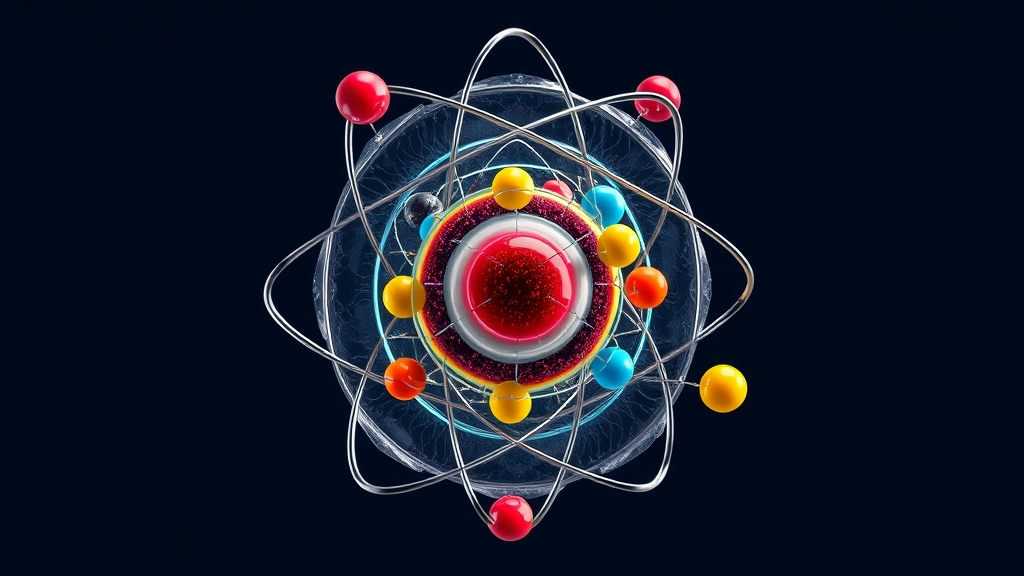
Before we jump into the calculation methods, let’s establish a solid foundation. Every atom consists of three main particles: protons, neutrons, and electrons. The nucleus—the dense center of the atom—contains the protons and neutrons. Electrons orbit around this nucleus in electron shells.
Here’s what you absolutely need to know about each particle:
- Protons: Positively charged particles in the nucleus. The number of protons defines what element an atom is. Carbon always has 6 protons, oxygen always has 8, and so on.
- Neutrons: Neutral particles in the nucleus. Different atoms of the same element can have different numbers of neutrons, creating isotopes.
- Electrons: Negatively charged particles orbiting the nucleus. In a neutral atom, the number of electrons equals the number of protons.
The key insight here is that the atomic number (which you’ll see on the periodic table) tells you the number of protons. The mass number tells you the combined total of protons and neutrons. Once you understand these two numbers, finding neutrons becomes straightforward subtraction.
The Simple Formula for Finding Neutrons
This is where everything clicks into place. The formula for finding the number of neutrons is beautifully simple:
Number of Neutrons = Mass Number − Atomic Number
That’s it. That’s the entire mathematical foundation you need. Let’s break down each component so there’s no confusion:
- Mass Number: The total number of protons and neutrons combined in an atom’s nucleus. You’ll find this as the larger number in isotope notation.
- Atomic Number: The number of protons in an atom’s nucleus. This is the smaller number and appears on the periodic table. It’s what makes an element unique.
Understanding this relationship is crucial. Since protons and neutrons are the only particles in the nucleus, and we know the total (mass number) and how many are protons (atomic number), simple subtraction gives us the neutron count. It’s like knowing you have 20 items total in a box, and 7 of them are red balls. You immediately know there are 13 non-red items.
Step-by-Step Process
Now let’s walk through the actual process you’d use when trying to figure out how to find neutrons for any element. This systematic approach works every single time.
Step 1: Identify the Element
First, you need to know which element you’re working with. Is it carbon, nitrogen, oxygen, or something else? The element name or symbol is your starting point. If you’re given an isotope symbol like Carbon-12 or written as 12C, you already have the information you need right there.
Step 2: Find the Atomic Number
Look up the element on the periodic table. The atomic number appears as the smaller number, typically at the top left or center of each element’s box. For carbon, the atomic number is 6. For oxygen, it’s 8. This number never changes for a given element—it’s the defining characteristic.
Step 3: Locate or Determine the Mass Number
The mass number might be given to you directly in the problem or isotope notation. If you see “Carbon-12,” that 12 is your mass number. If you see 14N, the 14 is the mass number. Sometimes you’ll see it written as “atomic mass” on the periodic table, but be careful—the atomic mass on the periodic table is typically an average of all naturally occurring isotopes, so you might need to round to the nearest whole number.
Step 4: Apply the Formula
Subtract the atomic number from the mass number. Write it out: Mass Number − Atomic Number = Number of Neutrons. Double-check your arithmetic because a simple calculation error will throw off your answer.
Step 5: Verify Your Answer
Does your answer make sense? Neutron counts should be positive whole numbers. For lighter elements, the number of neutrons is usually close to the number of protons. As elements get heavier, they typically need more neutrons relative to protons to maintain stability. If your answer seems wildly off, retrace your steps.
Using the Periodic Table Effectively
The periodic table is your best friend when learning how to find neutrons. However, many students don’t fully exploit what this remarkable chart offers. Let’s talk about extracting maximum value from it.
On a standard periodic table, each element box contains several pieces of information. The atomic number is always there—sometimes at the top, sometimes integrated into the design. The element symbol is obvious. But the atomic mass (or relative atomic mass) is the number that often confuses people.
The atomic mass shown on most periodic tables is a weighted average of all naturally occurring isotopes of that element. For example, chlorine’s atomic mass is listed as approximately 35.45. This isn’t a whole number because chlorine exists as a mixture of 35Cl (about 76%) and 37Cl (about 24%) in nature. If you round 35.45 to the nearest whole number, you get 35, which corresponds to the most common isotope.
When you’re practicing how to find neutrons, always use the mass number specific to the isotope you’re studying, not the average atomic mass. If the problem says “nitrogen-15,” use 15, not 14.007 (the average). This distinction is critical for getting correct answers.
Pro tip: Create a small reference sheet with the first 20 elements and their atomic numbers. Memorizing these makes the process much faster when you’re working through multiple problems. You’ll start to notice patterns—elements in the same group often have similar neutron-to-proton ratios.
Common Mistakes to Avoid
Even with a simple formula, people stumble. Here are the pitfalls to watch out for:
Confusing Atomic Number with Mass Number
This is the most common mistake. Students sometimes subtract mass number from atomic number (backwards) or mix up which number goes where. Remember: atomic number is always the smaller number and represents protons. Mass number is always larger and represents the total of protons plus neutrons.
Using Atomic Mass Instead of Mass Number
The atomic mass on the periodic table is an average. When you need to find neutrons, you must use the specific mass number for that isotope. If you use the average, you’ll get a decimal answer, which is wrong—neutron counts are always whole numbers.
Forgetting That Hydrogen-1 Has No Neutrons
Hydrogen-1 is the exception to many rules. It has 1 proton and 0 neutrons. If you calculate neutrons for hydrogen-1 using the formula (1 − 1 = 0), you get the right answer, but it’s worth noting this special case.
Not Double-Checking Your Periodic Table Reference
Different periodic tables format information differently. Some put the atomic number at the top, others at the bottom. Always verify you’re reading the correct number before calculating. A quick check: does the atomic number match what you expect for that element?
Ignoring Significant Figures
While neutron counts are whole numbers, when you’re dealing with more advanced physics involving binding energy or nuclear calculations, precision matters. Always work with whole number mass numbers when calculating neutrons.
Practical Examples Across Different Elements
Let’s walk through several real-world examples to cement your understanding. These examples show how to find neutrons across different elements and situations.
Example 1: Carbon-12
This is the most common isotope of carbon and serves as the standard for atomic mass units. Here’s the calculation:
- Element: Carbon
- Mass Number: 12
- Atomic Number: 6 (from the periodic table)
- Number of Neutrons: 12 − 6 = 6 neutrons
Carbon-12 has 6 protons and 6 neutrons, making it perfectly balanced.
Example 2: Oxygen-18
Oxygen typically has 8 neutrons, but oxygen-18 is a heavier isotope used in scientific research:
- Element: Oxygen
- Mass Number: 18
- Atomic Number: 8
- Number of Neutrons: 18 − 8 = 10 neutrons
This isotope has two extra neutrons compared to the most common oxygen-16.
Example 3: Uranium-235
Heavy elements like uranium require significantly more neutrons for stability:
- Element: Uranium
- Mass Number: 235
- Atomic Number: 92
- Number of Neutrons: 235 − 92 = 143 neutrons
Notice how uranium has far more neutrons than protons—this is typical for heavy elements.
Example 4: Nitrogen-14
The most common nitrogen isotope:
- Element: Nitrogen
- Mass Number: 14
- Atomic Number: 7
- Number of Neutrons: 14 − 7 = 7 neutrons
Interestingly, this isotope has equal numbers of protons and neutrons, which is common for lighter elements.
These examples demonstrate that once you understand the formula and can read the periodic table, you can find neutrons for any element or isotope. The process remains identical regardless of complexity.
Finding Neutrons in Isotopes
Isotopes deserve special attention because they’re where many people struggle. An isotope is simply an atom of an element with a different number of neutrons than usual. The same element can exist as multiple isotopes with varying neutron counts.
The beauty of isotopes is that the formula for finding neutrons works perfectly for them. In fact, isotopes are often identified by their mass numbers specifically because this tells you their neutron count. When you see “Carbon-14” or “Uranium-238,” these numbers directly indicate the mass number, making the calculation straightforward.
Isotopes are written in several formats, and you should be comfortable reading all of them:
- Hyphenated format: Carbon-14 or C-14
- Superscript format: 14C
- Nuclear notation: 146C (where 14 is mass number and 6 is atomic number)
Regardless of the format, you’re looking for the same two numbers: the mass number and the atomic number. Once you have them, the subtraction is identical.
Some isotopes are stable, while others are radioactive and decay over time. The neutron count influences stability. Too few neutrons and the nucleus is unstable. Too many neutrons and the nucleus is also unstable. There’s a “sweet spot” for each element where nuclei are stable. Understanding how to find neutrons helps you grasp why certain isotopes exist naturally while others must be created in laboratories.
If you’re curious about how to find relative frequency in statistical contexts, you’ll recognize the same systematic approach. Similarly, if you ever need to how to find the range in a dataset, the methodology involves identifying boundary values—much like identifying mass and atomic numbers here.
For those interested in other types of research or investigation, knowing how to find out who owns a property requires accessing public records, while how to find hidden apps on iPhone involves navigating device settings. The principle remains consistent: you need the right tools and knowledge to locate what you’re seeking. You can also learn how to find blocked numbers on iPhone by checking your phone’s settings systematically.
Frequently Asked Questions
What’s the difference between mass number and atomic mass?
The mass number is a specific whole number representing the total protons and neutrons in a particular atom or isotope. Atomic mass is typically an average of all naturally occurring isotopes of an element, often shown as a decimal on the periodic table. When calculating neutrons, always use the mass number, not the atomic mass.
Can an atom have zero neutrons?
Yes! Hydrogen-1 is the only naturally occurring atom with no neutrons. It consists of just one proton and one electron. This makes it unique among all elements. All other atoms have at least one neutron.
How do I know which isotope to use if multiple exist?
The problem or context will specify which isotope you’re working with. It might say “Carbon-14” or show the notation 235U. If you’re given only the element name without an isotope designation, use the most common isotope, which you can determine from the periodic table by rounding the atomic mass to the nearest whole number.
Why do heavier elements have more neutrons than protons?
As elements get heavier, the nucleus becomes increasingly unstable. Neutrons act as a stabilizing force, spreading out the positive charges of protons. Heavier nuclei need a higher neutron-to-proton ratio to remain stable. This is why uranium has 143 neutrons but only 92 protons.
Is there a way to find neutrons without knowing the mass number?
Not directly. You need either the mass number or the ability to determine it. If you’re given an isotope name like “Chlorine-37,” the number is the mass number. If you’re given only the element, you typically use the most common isotope’s mass number, which you can find on the periodic table by rounding the atomic mass.
Can neutrons be negative or fractional?
No. The number of neutrons is always a positive whole number. If your calculation gives you a negative number or a decimal, you’ve made an error. Recheck that you’re using the correct atomic number and mass number, and ensure you’re subtracting in the right direction.
How does knowing neutron count help in real applications?
Understanding neutron counts is essential in nuclear physics, medical imaging (PET scans use positron-emitting isotopes), carbon dating (which relies on Carbon-14 decay), nuclear power generation, and medical treatments. It’s foundational knowledge for anyone working in chemistry, physics, or related fields.

Related Posts

How Long to Boil Lobster Tails: Cooking Guide

How Long to Fly from New York to London? Travel Times
