

Find Limiting Reagent? Expert Chemistry Tips
How to Find Limiting Reagent: Expert Chemistry Tips for Stoichiometry Success
Understanding how to find the limiting reagent is one of the most critical skills in chemistry. Whether you’re a student tackling stoichiometry problems or a professional working in a laboratory, identifying which reactant will be completely consumed first determines your theoretical yield and reaction efficiency. The limiting reagent is the substance that runs out first during a chemical reaction, ultimately controlling how much product you can make.
Many chemistry students struggle with this concept because it requires understanding mole ratios, balanced equations, and careful calculations. However, with the right approach and systematic methodology, you’ll master this fundamental principle. This comprehensive guide walks you through every step of identifying the limiting reagent, from understanding basic concepts to solving complex multi-reactant problems.
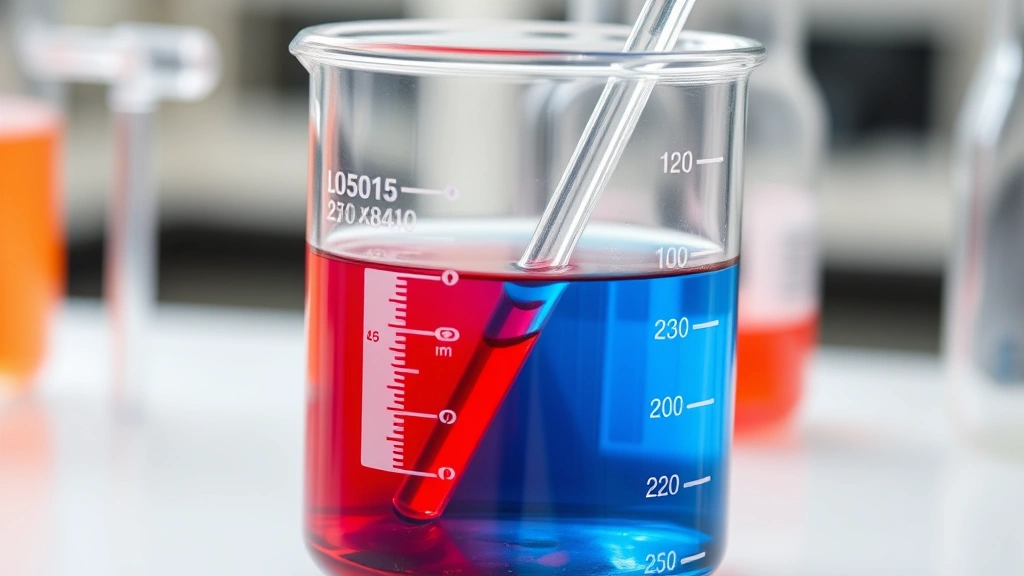
What Is a Limiting Reagent and Why Does It Matter
The limiting reagent is the reactant that is completely consumed in a chemical reaction before all other reactants are used up. Think of it like baking cookies: if your recipe calls for two cups of flour and one egg, but you only have one cup of flour and three eggs, flour is your limiting ingredient. You can only make half the batch because you’ll run out of flour first, regardless of how many eggs you have.
In chemistry, this concept directly affects your theoretical yield—the maximum amount of product you can produce based on the limiting reagent. Understanding which reactant limits your reaction is essential for:
- Predicting reaction outcomes in laboratory experiments
- Calculating theoretical yield accurately
- Determining percent yield when comparing experimental to theoretical results
- Planning industrial processes where cost efficiency matters
- Optimizing chemical reactions to minimize waste
Real-world applications extend beyond the classroom. In pharmaceutical manufacturing, identifying the limiting reagent ensures you maximize expensive compounds and minimize waste. In environmental chemistry, understanding limiting reagents helps predict pollutant formation and reactions in natural systems.
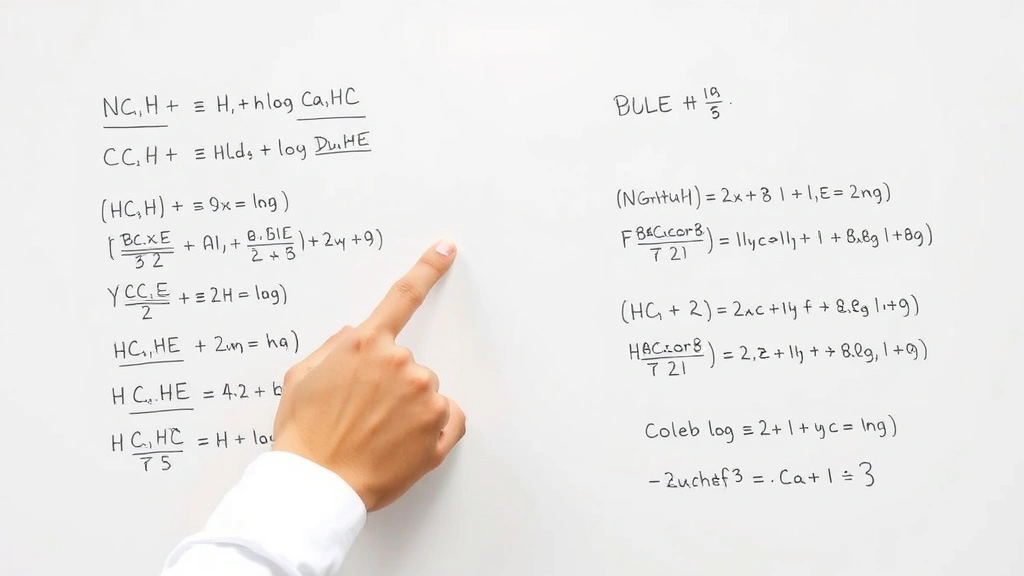
Step 1: Balance Your Chemical Equation
Before you can find the limiting reagent, you must start with a balanced chemical equation. A balanced equation shows the correct mole ratios between all reactants and products. If your equation isn’t balanced, your calculations will be incorrect, leading to the wrong identification of the limiting reagent.
To balance an equation, ensure the same number of each type of atom appears on both sides of the reaction arrow. For example:
Unbalanced: H₂ + O₂ → H₂O
Balanced: 2H₂ + O₂ → 2H₂O
The coefficients (the numbers in front of each compound) represent the mole ratios. In this balanced equation, two moles of hydrogen gas react with one mole of oxygen gas to produce two moles of water. These coefficients are absolutely crucial for your limiting reagent calculations.
If you need to refresh your equation-balancing skills, start with simple reactions containing only two or three compounds. Practice with combustion reactions, synthesis reactions, and decomposition reactions. Most chemistry textbooks provide extensive practice problems, and you can verify your work using online equation balancers as a checking tool.
Step 2: Convert All Quantities to Moles
The limiting reagent calculation requires all quantities to be in moles. Moles are the standard unit chemists use to measure amounts of substances because they relate directly to the coefficients in balanced equations.
You’ll likely receive quantities in different units—grams, liters, milliliters, or molar concentrations. Convert everything to moles using these methods:
- From grams: Divide mass by molar mass. Formula: moles = grams ÷ molar mass (g/mol)
- From molarity and volume: Multiply molarity by volume in liters. Formula: moles = Molarity × Volume (L)
- From gas volume at STP: Divide volume by 22.4 L/mol. Formula: moles = Volume (L) ÷ 22.4 L/mol
- From percent composition: Calculate mass first, then convert to moles
Let’s work through a concrete example. Suppose you have 10 grams of sodium (Na) reacting with oxygen. First, find sodium’s molar mass: 23 g/mol. Then calculate: 10 g ÷ 23 g/mol = 0.43 moles of sodium.
For solutions, if you have 2 liters of a 0.5 M hydrochloric acid solution, the calculation is: 0.5 mol/L × 2 L = 1 mole of HCl.
Double-check your molar masses using the periodic table. Small errors here compound throughout your calculation, potentially leading to incorrect limiting reagent identification. Many students make mistakes by using incorrect atomic masses, so verify each element’s value before proceeding.
Step 3: Calculate Mole Ratios from the Balanced Equation
The coefficients in your balanced equation tell you the mole ratio between reactants. This ratio is essential because it shows how many moles of one substance react with how many moles of another.
For the equation: 2H₂ + O₂ → 2H₂O
The mole ratios are:
- 2 moles H₂ : 1 mole O₂
- 2 moles H₂ : 2 moles H₂O
- 1 mole O₂ : 2 moles H₂O
These ratios allow you to determine how many moles of each reactant would be needed if one reactant were completely consumed. You’re essentially asking: “If I use up all of reactant A, how much of reactant B would I need?”
For a more complex example, consider: 2Fe + 3Cl₂ → 2FeCl₃
If you have 4 moles of Fe, the mole ratio tells you that you would need: 4 moles Fe × (3 moles Cl₂ / 2 moles Fe) = 6 moles of Cl₂ to react with all the iron.
This is where many students get confused. You’re not just looking at the coefficients—you’re using them to calculate how much of each reactant is required based on what you actually have.
Step 4: Divide Available Moles by Required Moles
Now comes the key calculation that identifies your limiting reagent. For each reactant, divide the moles you have by the moles required according to the stoichiometry.
Using our hydrogen and oxygen example with the balanced equation 2H₂ + O₂ → 2H₂O:
Suppose you have:
- 5 moles of H₂
- 3 moles of O₂
Calculate for each reactant:
- For H₂: 5 moles available ÷ 2 moles required (from coefficient) = 2.5
- For O₂: 3 moles available ÷ 1 mole required (from coefficient) = 3
The reactant with the smallest quotient is your limiting reagent. In this case, hydrogen (2.5) is smaller than oxygen (3), so hydrogen is limiting.
This calculation essentially answers the question: “Which reactant runs out first?” If you divide the available amount by the stoichiometric requirement, the substance with the smallest result will be completely consumed first.
Step 5: Identify Your Limiting Reagent
Once you’ve performed the division for all reactants, identifying the limiting reagent is straightforward: it’s the reactant with the smallest mole ratio result.
The limiting reagent is called “limiting” because it limits how much product you can make. The other reactants are “excess reagents” because you’ll have some left over after the reaction completes.
Using our previous example, hydrogen is the limiting reagent. This means:
- All 5 moles of hydrogen will be consumed
- Only 2.5 moles of oxygen will be consumed (out of the 3 available)
- 0.5 moles of oxygen will remain unreacted
- Your theoretical yield will be based on the 5 moles of hydrogen, not the 3 moles of oxygen
To calculate theoretical yield using the limiting reagent, multiply the moles of limiting reagent by the mole ratio to products, then convert to grams if needed. For our example: 5 moles H₂ × (2 moles H₂O / 2 moles H₂) = 5 moles of H₂O produced.
Common Mistakes When Finding Limiting Reagents
Even experienced chemistry students make errors when identifying limiting reagents. Understanding common pitfalls helps you avoid them.
Mistake 1: Using the largest mass or volume as the limiting reagent Many students assume the substance with the most grams or largest volume is limiting. This is incorrect. You must convert to moles and account for molar mass and density differences.
Mistake 2: Forgetting to balance the equation An unbalanced equation gives incorrect mole ratios, leading to wrong answers. Always verify your equation is balanced before proceeding.
Mistake 3: Incorrect molar mass calculations Double-check atomic masses from the periodic table. Using 16 instead of 16.0 for oxygen might seem minor but compounds through calculations.
Mistake 4: Confusing the division order Remember: divide moles available by moles required, not the reverse. The wrong order inverts your results and identifies the wrong limiting reagent.
Mistake 5: Ignoring stoichiometric coefficients The coefficients in balanced equations aren’t just numbers—they’re essential for calculating required moles. Many students skip this step and compare moles directly, which is incorrect.
Mistake 6: Rounding too early Keep extra decimal places throughout calculations and round only your final answer. Early rounding introduces errors that affect subsequent steps.
To avoid these mistakes, work through problems systematically using the five-step method outlined in this guide. Double-check each calculation and verify that your identified limiting reagent makes logical sense given the quantities you started with.
Practice Problems and Solutions
Problem 1: Simple Two-Reactant Reaction
Balanced equation: 2Na + Cl₂ → 2NaCl
You have: 10 grams of Na and 15 grams of Cl₂
Solution:
Step 1: Convert to moles
Na molar mass = 23 g/mol: 10 g ÷ 23 = 0.435 moles Na
Cl₂ molar mass = 71 g/mol: 15 g ÷ 71 = 0.211 moles Cl₂
Step 2: Calculate mole ratios
From equation: 2 moles Na : 1 mole Cl₂
Step 3: Divide available by required
Na: 0.435 ÷ 2 = 0.218
Cl₂: 0.211 ÷ 1 = 0.211
Step 4: Identify limiting reagent
Cl₂ has the smallest quotient (0.211 < 0.218), so chlorine gas is the limiting reagent.
Problem 2: Three-Reactant Reaction
Balanced equation: Fe + 2HCl → FeCl₂ + H₂
You have: 5 moles Fe, 8 moles HCl
Solution:
Fe: 5 moles ÷ 1 mole required = 5
HCl: 8 moles ÷ 2 moles required = 4
HCl is limiting (4 < 5). With HCl limiting, you can produce only 4 moles of FeCl₂ and 4 moles of H₂.
Problem 3: Converting from Molarity
Balanced equation: H₂SO₄ + 2NaOH → Na₂SO₄ + 2H₂O
You have: 500 mL of 0.5 M H₂SO₄ and 300 mL of 1.0 M NaOH
Solution:
Step 1: Convert to moles
H₂SO₄: 0.5 mol/L × 0.5 L = 0.25 moles
NaOH: 1.0 mol/L × 0.3 L = 0.3 moles
Step 2: Apply stoichiometry
H₂SO₄: 0.25 ÷ 1 = 0.25
NaOH: 0.3 ÷ 2 = 0.15
NaOH is limiting (0.15 < 0.25). You'll produce 0.15 moles of Na₂SO₄.
For more chemistry help, visit your FixWiseHub Blog for additional educational resources. You might also find our guide on how to find and replace in Word useful for organizing your chemistry notes.
FAQ
What is the difference between limiting and excess reagent?
The limiting reagent is completely consumed and controls the amount of product formed. Excess reagents have leftover amounts after the reaction completes. You determine which is which by comparing the mole ratios.
Can there be two limiting reagents?
In practical scenarios, yes, if two reactants have exactly equal mole ratios and both are completely consumed simultaneously. However, this is rare and usually only occurs in carefully designed stoichiometric problems.
How do I find the limiting reagent in a real laboratory reaction?
Use the same five-step method, but you’ll need to measure the actual quantities of reactants you’re using. Convert to moles using the same techniques and identify which runs out first based on stoichiometry.
Does temperature affect which reagent is limiting?
Temperature affects reaction rates and equilibrium, but it doesn’t change which reagent is limiting. The limiting reagent is determined purely by stoichiometry and initial quantities, not by reaction conditions.
What if the problem gives percentages instead of masses?
First convert the percentages to actual masses (assuming a convenient total like 100 grams), then proceed with the standard method of converting to moles and calculating mole ratios.
How does limiting reagent relate to percent yield?
Theoretical yield is calculated using the limiting reagent. Percent yield compares your actual experimental yield to this theoretical maximum: (actual yield ÷ theoretical yield) × 100%.
Can I identify the limiting reagent just by looking at the equation?
No. The coefficients only tell you the stoichiometric ratios. You must know the actual quantities of each reactant to determine which is limiting.
What resources can help me practice more problems?
Check This Old House for general learning approaches, or consult Family Handyman for practical problem-solving techniques. Your chemistry textbook and online chemistry tutoring sites offer extensive practice problems with solutions.
Is there a shortcut to finding the limiting reagent?
The five-step method is the reliable approach. Some students try mental shortcuts, but these often lead to errors. Following the systematic method consistently produces correct results and helps you understand the concept deeply.
How do I explain my limiting reagent calculation on an exam?
Show all five steps: balance the equation, convert to moles, identify mole ratios, divide available by required, and state which reactant is limiting. Clear documentation of each step demonstrates understanding and earns full credit even if you make minor arithmetic errors.

Related Posts

Superscript in Google Docs: Expert Tips

Strikethrough in Excel: Easy Steps for Beginners
