
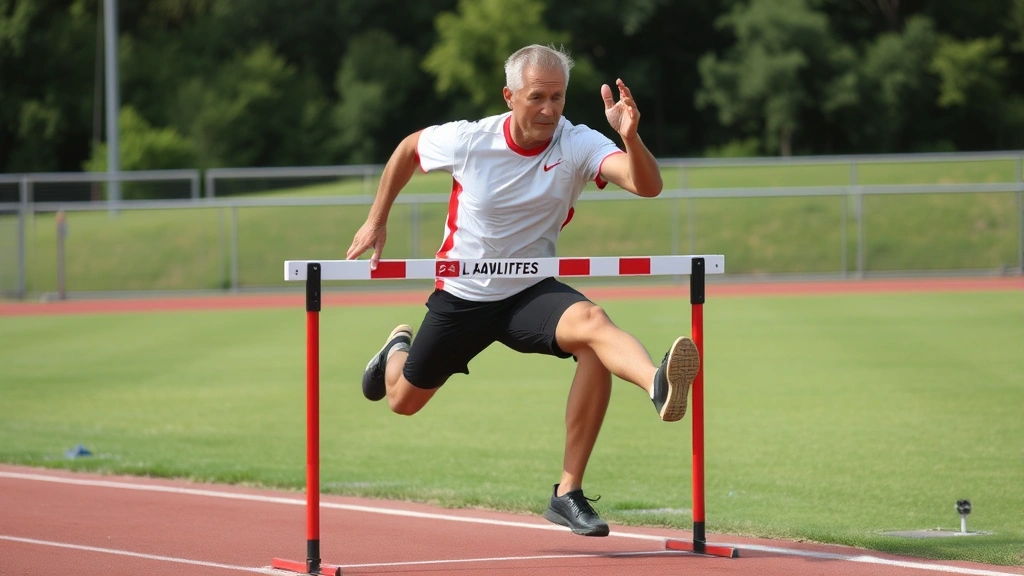
How to Teach Hurdle Techniques: Expert Guide
How to Teach Hurdle Techniques: Expert Guide
Teaching hurdle techniques is one of the most rewarding yet challenging aspects of track and field coaching. Whether you’re working with beginners taking their first leap or advanced athletes refining their form, the fundamentals remain the same: clear instruction, deliberate practice, and consistent feedback. Hurdling isn’t just about speed—it’s about efficiency, rhythm, and the ability to maintain momentum over obstacles.
The beauty of hurdling lies in its technical complexity. Unlike sprinting, where raw speed dominates, hurdling demands a specific set of skills that must be developed methodically. Athletes need to understand their body mechanics, learn proper takeoff and landing patterns, and develop the explosive power necessary to clear hurdles consistently. As a coach, your role is to break down these complex movements into digestible components and help athletes build confidence with each session.
This comprehensive guide will walk you through everything you need to know about teaching hurdle techniques—from foundational drills to advanced training methods that will help your athletes excel on the track.
Understanding Hurdle Fundamentals
Before diving into technique work, it’s essential to understand what makes hurdling different from regular sprinting. Hurdlers must cover ground while navigating obstacles, maintaining their speed throughout the race. This requires a unique blend of power, coordination, and mental focus that separates elite hurdlers from average sprinters.
The fundamental principle of hurdling is simple: clear the hurdle with minimal disruption to your running rhythm. Every millisecond lost over a hurdle compounds across the race, so efficiency is paramount. When teaching athletes, emphasize that hurdles are meant to be cleared, not feared. This psychological aspect is just as important as the physical technique.
Start by having your athletes understand the basic hurdle dimensions. Standard hurdles for high school and college are 39 inches (100 cm) for men and 33 inches (84 cm) for women in the 110m and 100m races respectively. Intermediate hurdles are 36 inches and 30 inches. Knowing these measurements helps athletes visualize what they’re working toward and builds confidence as they progress through training stages.
One crucial element many coaches overlook is teaching athletes about stride patterns. The space between hurdles is standardized—13 strides for the 110m hurdles and 13 strides for the 100m hurdles for most competitive athletes. However, beginners might need different counts. Understanding how many strides an athlete naturally takes between hurdles helps you tailor your instruction and identify areas for improvement.
Body Mechanics and Proper Form
Proper body mechanics form the foundation of effective hurdling. When athletes maintain correct posture and alignment, they maximize their power output and minimize energy waste. This is where your coaching expertise makes the biggest difference.
The ideal hurdling position involves an upright torso with a slight forward lean during the approach. Your athletes’ shoulders should remain relaxed and their head neutral, looking forward rather than down at the hurdle. Many beginners make the mistake of dropping their head or hunching their shoulders, which disrupts their balance and rhythm.
Arm movement is equally critical. The arms should work in opposition to the legs, just like in regular sprinting, but with more deliberate control. As the lead leg comes up to clear the hurdle, the opposite arm drives forward. This coordinated movement helps maintain momentum and provides the rotational force needed for efficient clearance.
When working on body mechanics, use mirrors or video analysis to show athletes their current form. Visual feedback is incredibly powerful—athletes often don’t realize they’re dropping their head or tensing their shoulders until they see it. Many coaches find that techniques to help athletes run faster also translate well to hurdling, particularly regarding stride efficiency and power generation.

Mastering the Takeoff Phase
The takeoff phase is where the magic happens. This is the moment when an athlete transitions from running to launching over the hurdle. The quality of the takeoff determines whether the clearance will be efficient or clumsy.
The takeoff foot—typically the same for each hurdle throughout the race—should be planted approximately 6-7 feet before the hurdle. This distance allows the athlete to generate sufficient power while maintaining forward momentum. The knee of the takeoff leg should drive upward explosively, creating the lift necessary for clearance.
Timing is everything during takeoff. Athletes should accelerate into the hurdle, not decelerate. A common mistake is for beginners to slow down as they approach the hurdle, which kills their momentum and makes the clearance harder. Teach your athletes to attack the hurdle with confidence, maintaining their sprinting speed throughout the approach.
The lead leg—the one that goes over first—should be driven up and forward aggressively. The knee comes up to approximately waist height, with the foot following naturally. The lead leg’s movement pulls the athlete’s center of mass forward and upward, facilitating the clearance. Timing the lead leg drive with the explosive push from the takeoff leg is the key to a smooth, efficient hurdle clearance.
Practice takeoff mechanics with low hurdles or even cones initially. Have athletes focus on the power generation and timing rather than clearing height. Once they develop consistency and confidence, gradually increase the hurdle height.
The Clearance and Flight Phase
Once the athlete has launched, the clearance phase determines how efficiently they’ll traverse the hurdle. The flight phase is brief—typically only 0.6 to 0.8 seconds—but it’s critical for maintaining speed and rhythm.
During the clearance, the lead leg should extend fully over the hurdle with minimal wasted motion. The trail leg follows, with the knee driving up and to the side. This creates a scissor-like motion that allows the athlete to clear the hurdle with their center of mass passing as close to the top as safely possible. The closer the center of mass is to the hurdle top, the less energy is wasted on upward motion.
Many beginning hurdlers make the mistake of jumping too high. Teach them that they should clear the hurdle at the lowest possible height while still maintaining a safe margin. This keeps their center of mass lower, which translates to faster times and more consistent performances.
The trail leg technique is particularly important. As the lead leg extends over the hurdle, the trail leg should drive the knee up and out to the side, then extend backward. This movement helps rotate the hips and maintain a forward-leaning posture during the flight phase. The trail leg should clear the hurdle before the lead leg lands, creating a smooth, continuous motion over the obstacle.

Landing and Recovery Techniques
The landing phase is where many hurdlers lose time and efficiency. A poor landing can disrupt rhythm, reduce speed, and set up a poor approach to the next hurdle. Teaching proper landing technique is essential for competitive success.
The ideal landing occurs when the lead leg contacts the ground just beyond the hurdle. The athlete should land on the ball of their foot, not their heel, allowing for a quick transition back into the sprinting motion. The landing leg should absorb the impact through the ankle, knee, and hip flexors, acting like a spring that propels the athlete forward.
Immediately after landing, the athlete should transition back into their regular sprinting stride. This is where rhythm becomes crucial. The better the landing, the smoother the transition, and the less time is lost between hurdles. Some athletes naturally have great rhythm, while others need to develop it through deliberate practice and repetition.
One effective drill for improving landing mechanics is having athletes practice running through hurdles at a controlled pace, focusing entirely on smooth landings. Start with low hurdles and gradually increase the height and speed. This builds muscle memory and helps athletes develop the confidence needed for competitive racing.
Recovery after landing should feel natural and continuous. Athletes shouldn’t feel like they’re restarting their sprint after each hurdle—instead, the hurdle should feel like just another part of the running motion. This mental shift often helps athletes perform better and feel more confident over obstacles.
Progressive Drills and Exercises
Teaching hurdle techniques effectively requires a systematic progression from simple to complex movements. Start with foundational drills and gradually increase difficulty as athletes develop competence and confidence.
Basic Hurdle Drills:
- High Knee marching: Have athletes march while driving their knees up to waist height. This builds the fundamental movement pattern needed for hurdling and helps develop hip flexor strength.
- Bounding: Bounding exercises develop explosive power and help athletes understand the rhythmic nature of hurdling. Have them bound for 20-30 meters, focusing on height and power.
- Single-leg hops: Hopping on one leg builds unilateral strength and balance, which is critical for maintaining control during the takeoff phase.
- Walking over low hurdles: Start with 12-18 inch hurdles and have athletes walk over them, focusing on lead leg mechanics and clearance patterns.
Intermediate Progressions:
- Jogging over low hurdles: Progress to jogging over 24-30 inch hurdles, gradually increasing speed as athletes develop confidence.
- Stride pattern work: Use cones or hurdles spaced appropriately to help athletes develop their stride pattern between hurdles.
- Approach sprints: Have athletes sprint to the first hurdle, focusing on acceleration and proper takeoff mechanics.
- Over-under drills: Set up hurdles at different heights, having athletes alternate between going over one and ducking under another (or jogging under at normal height). This develops adaptability and quick thinking.
Advanced Techniques:
- Full race simulation: Once athletes master the basics, have them run full distances over multiple hurdles at competition pace.
- Resistance training: Weighted vests or parachutes can build explosive power when used during hurdle work.
- Video analysis: Use slow-motion video to help athletes see exactly what their body is doing and identify areas for improvement.
- Competition drills: Set up competitive situations where athletes race against each other or against themselves, building racing confidence and speed.
The key to successful progression is never rushing athletes beyond their current ability level. Each step should feel manageable, allowing for confidence building and proper form development. When you notice an athlete struggling with a particular progression, don’t hesitate to regress back to earlier drills until they’re ready to advance again.
Common Mistakes and How to Fix Them
Even with excellent instruction, athletes will develop bad habits. Recognizing and correcting these mistakes quickly prevents them from becoming ingrained patterns that are hard to break.
Mistake 1: Over-striding before the hurdle
Many athletes try to take longer strides as they approach the hurdle, which disrupts their rhythm and puts them in a poor takeoff position. The fix: Teach them to maintain their natural stride length all the way to the hurdle. Use cones or marks on the track to help them visualize where their feet should be landing.
Mistake 2: Jumping instead of running through the hurdle
Some athletes approach hurdling like they’re jumping over an obstacle rather than continuing to run. This wastes energy and kills momentum. Emphasize that the hurdle is just part of the running motion. The approach to teaching your athletes should include the same principles used in comprehensive hurdle instruction that focuses on running mechanics first.
Mistake 3: Trail leg dragging
When the trail leg doesn’t clear the hurdle cleanly, it creates a catching sensation that disrupts rhythm. The fix: Practice specific trail leg drills. Have athletes practice the scissor motion without hurdles, then gradually introduce low hurdles while focusing entirely on that trail leg clearance.
Mistake 4: Poor posture during flight
Athletes who lean back during the flight phase waste energy and create a poor landing position. The fix: Emphasize maintaining a slight forward lean throughout the hurdle. Use visual cues like having them keep their chin forward or their chest over the hurdle.
Mistake 5: Inconsistent stride patterns between hurdles
Some athletes struggle to maintain the same number of strides between each hurdle, which makes the race harder and less efficient. The fix: Use rhythm drills and have athletes count their strides aloud. Gradually remove the counting as they develop the pattern naturally.
Mistake 6: Tensing up and losing relaxation
Tension kills efficiency. Athletes who tense up over hurdles waste energy and run slower. The fix: Teach relaxation techniques and have athletes practice maintaining the same arm and shoulder position they use in regular sprinting. Remind them that smooth is fast.
Building Effective Training Plans
A well-structured training plan is essential for developing consistent, confident hurdlers. The plan should progress through phases that build foundational skills before moving to competition-specific work.
Phase 1: Foundation Building (Weeks 1-4)
Focus on basic mechanics and building confidence with low hurdles. Incorporate high knee marching, bounding, and walking over 12-18 inch hurdles. Include general strength work like squats, lunges, and core exercises. Keep the intensity moderate and the focus on form rather than speed.
Phase 2: Technical Development (Weeks 5-8)
Progress to jogging and easy running over 24-30 inch hurdles. Introduce stride pattern work and have athletes focus on maintaining consistency between hurdles. Add plyometric exercises like box jumps and bounds to develop explosive power. Begin video analysis to provide detailed feedback on form.
Phase 3: Competition Preparation (Weeks 9-12)
Gradually increase hurdle heights toward competition standards. Introduce race-pace running and full distance work. Incorporate competition drills where athletes race against each other. Include recovery work and begin tapering volume as competitions approach.
Phase 4: Competition and Maintenance (Weeks 13+)
Maintain fitness and technique through regular competition and targeted maintenance work. Keep volume lower but maintain intensity. Use competitions to build confidence and identify areas needing adjustment.
Remember that individual athletes progress at different rates. Some will move through phases quickly while others need more time. Adjust your plan based on individual progress rather than forcing everyone through the same timeline.
When designing training plans, consider incorporating cross-training activities that support hurdle development. For example, understanding how to run faster through improved sprinting mechanics directly translates to better hurdling performance.
Frequently Asked Questions
What age should athletes start learning hurdle techniques?
Most athletes can begin basic hurdle training around age 12-14, starting with low hurdles and focusing on technique. However, younger athletes can benefit from the foundational movements like high knee marching and bounding. Always prioritize proper technique over speed or height, regardless of age.
How often should athletes practice hurdle drills?
For competitive hurdlers, 2-3 hurdle-specific sessions per week is ideal. Include both technical work and race simulation. Beginners should start with 1-2 sessions per week and gradually increase frequency as they develop competence.
What’s the best way to progress hurdle height?
Increase hurdle height gradually—typically 2-3 inches every 1-2 weeks—only after athletes demonstrate consistent, confident performance at the current height. Never rush this progression, as premature height increases can lead to bad habits and loss of confidence.
How important is strength training for hurdlers?
Strength training is crucial. Hurdlers need strong legs, hips, and core muscles to generate explosive power and maintain control. Include exercises like squats, lunges, deadlifts, and plyometrics 2-3 times per week alongside technique work.
What should I do if an athlete is afraid of hurdles?
Fear is common and understandable. Start very low—even cones if necessary—and gradually build confidence. Never force an athlete over a hurdle they’re not ready for. Use visualization and mental coaching to help them overcome fear. Sometimes breaking the movement into smaller components helps reduce anxiety.
How can I tell if an athlete has good hurdle potential?
Good hurdlers typically have strong sprinting ability, good coordination, explosive power, and confidence. They should be able to maintain their sprinting form under fatigue. However, technique can be taught, so don’t dismiss athletes who lack natural talent—with proper coaching, many can become excellent hurdlers.
What’s the most common reason athletes fail at hurdling?
Poor technique and loss of confidence are the top reasons. Many athletes try to progress too quickly without building a solid technical foundation. Take time to develop proper form before increasing intensity or competition level.

Related Posts

How Long to Boil Lobster Tails: Cooking Guide

How Long to Fly from New York to London? Travel Times
