
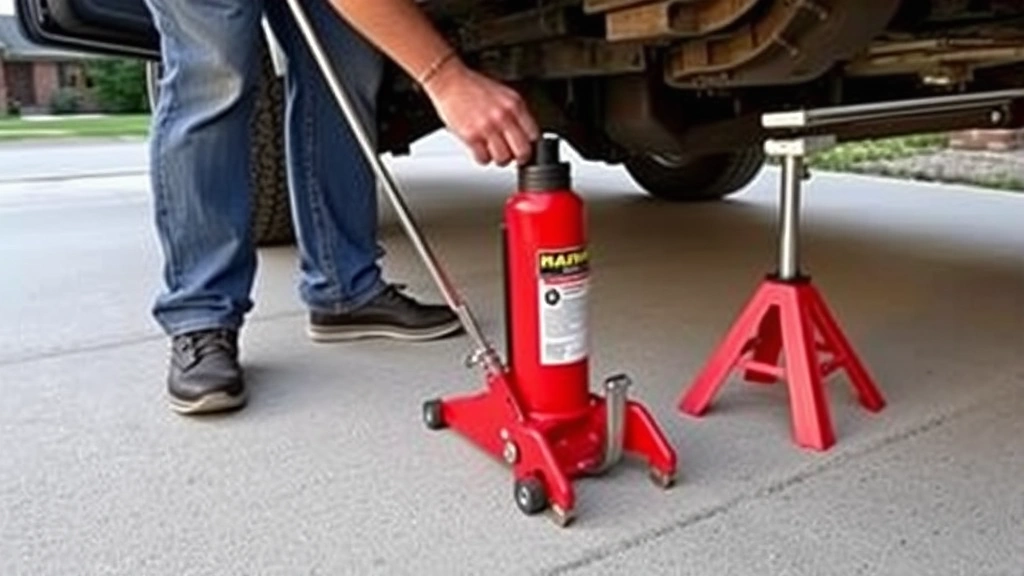
How to Rotate Tires: Expert Guide
How to Rotate Tires: Expert Guide to Extending Tire Life
Your tires are literally where the rubber meets the road, yet most vehicle owners treat tire maintenance like an afterthought. Rotating your tires is one of those unglamorous tasks that doesn’t require any special talent, expensive tools, or a trip to the dealership—but it absolutely pays dividends in tire longevity and vehicle safety. Think of it as preventative medicine for your car: a little effort now saves you from major expenses down the line.
The thing is, tire rotation isn’t complicated. It’s the kind of DIY project that takes about an hour and requires nothing more than a jack, jack stands, and a lug wrench. Yet somehow, it remains one of the most neglected maintenance routines. This guide will walk you through exactly how to rotate your tires like a pro, explain why it matters, and show you when you should do it.
Whether you’re a seasoned DIY enthusiast or someone who’s never popped open a toolbox before, rotating your tires is absolutely within your wheelhouse. Let’s get started.
Why Tire Rotation Matters
Before you grab your tools, let’s talk about why this matters. Tires don’t wear evenly. Your front tires handle steering, which means they experience different forces than your rear tires. The front wheels also bear more of your vehicle’s weight and handle more friction during turns and braking. This uneven wear pattern means your front tires typically wear out faster than the rear tires.
By rotating your tires regularly, you’re essentially evening out the wear across all four tires. This accomplishes several important things: it extends the overall lifespan of your tire set, improves fuel efficiency, enhances traction and handling, and keeps your vehicle safer. A tire that’s worn unevenly isn’t just shorter-lived—it’s also more prone to blowouts and reduces your grip on the road.
The financial case is simple. A set of four quality tires can easily cost $600 to $1,500 depending on your vehicle and tire quality. If rotating your tires every 5,000 to 7,000 miles can add 20% to their lifespan, that’s an extra $120 to $300 in value you’re protecting. Compare that to the cost of a jack and jack stands (one-time purchase of $50-$100), and you’re looking at a ridiculously good return on investment.
Additionally, understanding how often to rotate tires helps you establish a proper maintenance schedule. Most manufacturers recommend rotation every 5,000 to 8,000 miles, though some newer vehicles with advanced tire technology might recommend different intervals.
Understanding Tire Rotation Patterns
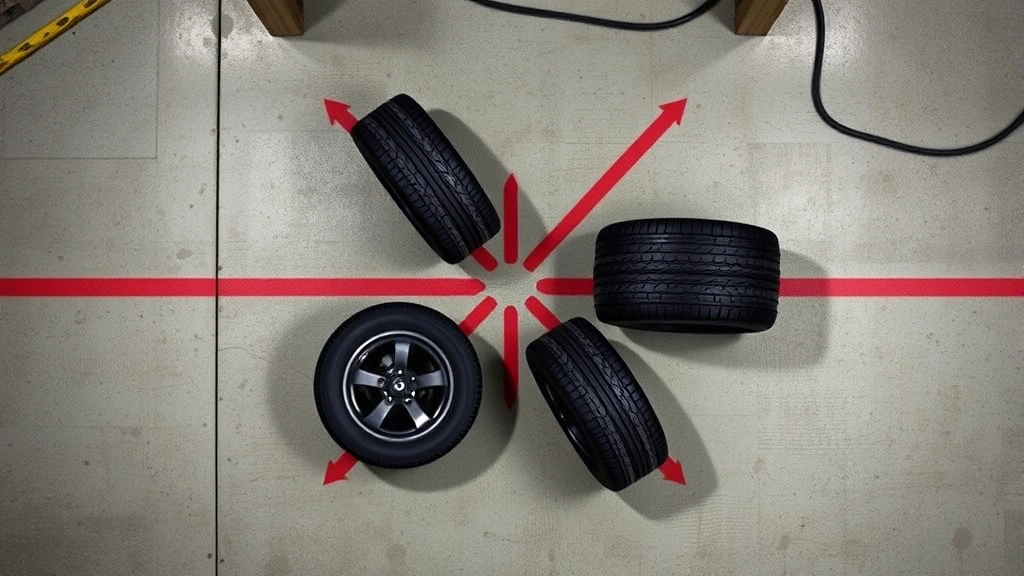
Not all tires rotate the same way. The pattern depends on whether you have a front-wheel-drive, rear-wheel-drive, all-wheel-drive vehicle, and whether your tires are directional or non-directional. Using the correct pattern ensures optimal wear distribution.
Forward Cross Pattern: This is the most common rotation pattern for front-wheel-drive vehicles. The front tires move straight back to the rear, while the rear tires cross diagonally forward to the front. So your front-left tire goes to the rear-left, your front-right goes to the rear-right, your rear-left goes to the front-right, and your rear-right goes to the front-left.
X-Pattern: Also called the cross pattern, this works for rear-wheel-drive and all-wheel-drive vehicles. Every tire moves diagonally: front-left to rear-right, front-right to rear-left, rear-left to front-right, and rear-right to front-left. This pattern provides the most balanced wear distribution for many vehicles.
Side-to-Side Pattern: This simpler pattern moves front tires to the back on the same side and rear tires to the front on the same side. It’s typically used for directional tires or vehicles where other patterns aren’t suitable. Front-left goes to rear-left, front-right goes to rear-right, and vice versa for the rear tires.
Check your vehicle’s owner’s manual to confirm which pattern suits your specific car. When in doubt, the forward cross pattern is generally the safest default choice for most vehicles.
Tools and Materials You’ll Need
The beauty of tire rotation is that you don’t need a fully stocked garage. Here’s what you actually need:
- Floor jack: A hydraulic floor jack rated for your vehicle’s weight. Don’t use a scissor jack for this job—it’s not stable enough for extended work.
- Jack stands: These are non-negotiable. Never work under a vehicle supported only by a jack. Get a pair rated for at least your vehicle’s weight.
- Lug wrench: A cross-shaped wrench works best, though your vehicle likely came with one. A 4-way lug wrench gives you four different socket sizes.
- Wheel chocks: Wooden blocks or commercial wheel chocks prevent your vehicle from rolling while you work.
- Torque wrench: Optional but recommended for ensuring lug nuts are tightened to the correct specification. This prevents over-tightening or under-tightening.
- Work gloves: Protect your hands from dirt, grease, and sharp edges.
- Eye protection: Especially important if anything falls during the process.
- Tire markers: A chalk pen or marker helps you track which tire goes where if you’re learning the process.
Step-by-Step Rotation Process
Preparation
Start by parking on a level surface away from traffic. Engage the parking brake and let your engine cool if you’ve been driving. Remove any heavy items from your vehicle—weight matters when you’re working with jacks.
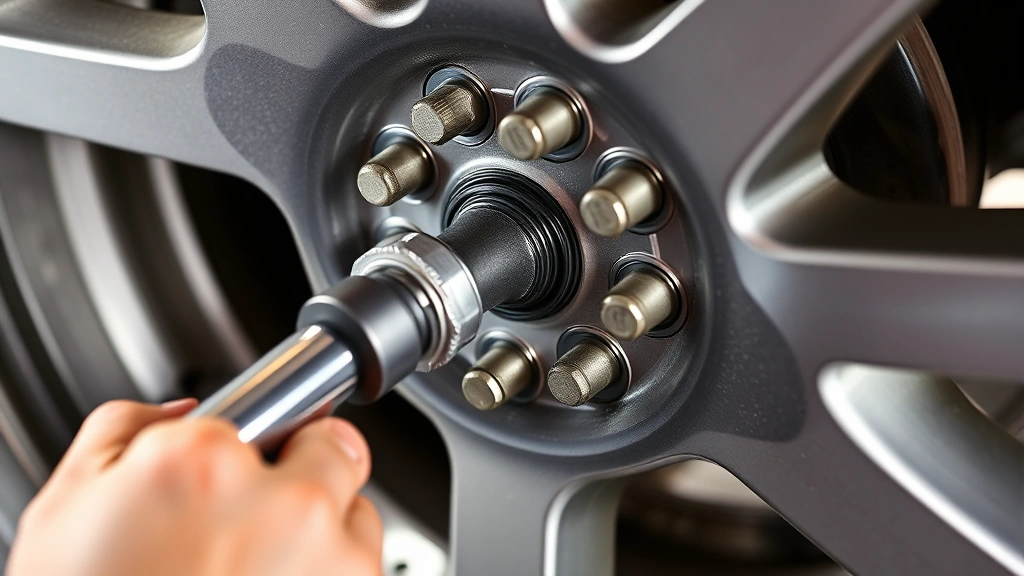
Loosen the lug nuts slightly before lifting the vehicle. This is crucial because once the tire is in the air, you won’t have any resistance to loosen them. Use the lug wrench and turn counterclockwise about a quarter turn on each nut. Don’t remove them completely yet—just break the seal.
Lifting and Support
Place wheel chocks behind the rear wheels (or in front of the front wheels if you’re starting with the rear). Position your floor jack at the recommended lift point on your vehicle’s frame. Consult your owner’s manual for the exact location—it’s typically marked with a small notch or triangle on the frame.
Raise the vehicle until the tire clears the ground by about 6 inches. Immediately place jack stands underneath the vehicle frame at a secure point. Lower the vehicle onto the jack stands until it’s resting securely. Never work under a vehicle supported only by a jack.
Removing and Rotating Tires
Now you can fully remove the lug nuts. Keep them in a safe place where they won’t roll away—a small container or cloth works perfectly. Remove the tire by pulling it straight toward you, then set it aside.
If you’re following a cross or X-pattern, this is where your mental map (or chalk markings) comes in handy. Install the new tire by aligning the valve stem with the valve stem hole and pushing it onto the lug studs. Hand-thread the lug nuts first to ensure they’re going on straight, then tighten them snugly by hand.
Lower the vehicle back onto the tire and tighten the lug nuts firmly in a star pattern. This ensures even pressure distribution. If you have a torque wrench, set it to your vehicle’s specification (typically 80-130 foot-pounds depending on the vehicle) and tighten each nut to that specification.
Completing the Rotation
Repeat this process for the remaining three tires. Move your floor jack to each corner, secure the vehicle with jack stands, remove the tire, install the rotated tire, and tighten the lug nuts in a star pattern.
Once all four tires are rotated, carefully lower your vehicle completely and remove the jack stands. Give each lug nut a final check with your wrench to ensure everything is tight. Take your vehicle for a short test drive to ensure everything feels right.
Safety Considerations
Safety isn’t negotiable when working on your vehicle. Here are the critical rules:
- Never work on a vehicle supported solely by a jack. Always use jack stands as backup.
- Ensure your workspace is level and stable. Uneven ground can cause instability.
- Wear appropriate safety gear including gloves and eye protection.
- Don’t work in traffic or on the side of a busy road.
- Keep children and pets away from your work area.
- If your vehicle has a spare tire and you’re rotating it into service, ensure it’s properly inflated to the correct PSI.
- Check your tire pressure after rotation. Tires can lose pressure during handling.
Additionally, if you’re maintaining your vehicle properly, you should also understand other maintenance routines. Learning how to check engine oil and understanding how to check transmission fluid are complementary skills that keep your vehicle running smoothly. While you’re working on tire maintenance, you might also consider learning how to change transmission fluid as part of a comprehensive maintenance approach.
Additional Tire Maintenance Tips
Tire rotation is just one piece of the tire maintenance puzzle. To maximize your tire investment, incorporate these practices into your routine:
Monitor Tire Pressure: Check your tire pressure monthly and before long trips. Proper inflation improves fuel efficiency, extends tire life, and enhances safety. Under-inflated tires wear faster and generate heat, while over-inflated tires wear unevenly.
Inspect Tread Depth: Use the penny test or a tread depth gauge. Insert a penny upside-down into the tread. If you can see the top of Lincoln’s head, your tread is too shallow and replacement is needed. Most tires should be replaced when they reach 4/32 inches of tread depth for safety.
Alignment Checks: If your tires wear unevenly despite regular rotation, misalignment might be the culprit. Professional alignment typically costs $100-$200 but prevents accelerated wear.
Balancing: When you replace tires, have them balanced. Unbalanced tires cause vibration and uneven wear. Balancing typically costs $15-$25 per tire.
Know When to Replace: Understanding how often to replace tires helps you plan ahead financially. Most tires last 3-5 years or 25,000-50,000 miles depending on driving habits and conditions.
Professional tire shops often rotate tires for $40-$80, which is reasonable if you prefer not to DIY. However, doing it yourself saves money and gives you valuable hands-on knowledge about your vehicle. Many tire shops also offer discounts on rotation if you purchased tires from them, so ask about their policies.
Frequently Asked Questions
How often should I rotate my tires?
Most manufacturers recommend tire rotation every 5,000 to 8,000 miles or every 6 months, whichever comes first. Some newer vehicles with advanced tire technology may have different recommendations, so check your owner’s manual. You can sync rotation with your oil changes to make it easier to remember.
Can I rotate my tires myself, or should I go to a professional?
You absolutely can rotate your tires yourself if you have basic tools and a safe workspace. However, if you lack tools, feel uncomfortable working under your vehicle, or prefer professional service, tire shops offer rotation for $40-$80. The choice depends on your comfort level and available time.
What’s the difference between tire rotation patterns?
Different rotation patterns serve different purposes based on your vehicle’s drivetrain and tire type. Front-wheel-drive vehicles typically use the forward cross pattern, while rear-wheel-drive and all-wheel-drive vehicles often use the X-pattern. Directional tires may require side-to-side rotation. Your owner’s manual specifies the correct pattern for your vehicle.
Do I need to balance my tires after rotation?
You don’t necessarily need to balance tires after rotation unless you notice vibration. However, if you’re replacing tires, balancing is essential. Balancing typically costs $15-$25 per tire and ensures smooth operation and even wear.
What if I can’t loosen the lug nuts?
Stuck lug nuts are frustrating but common. Try spraying them with penetrating oil like WD-40 and letting it sit for 15-30 minutes. Use a longer lug wrench for better leverage. If they’re still stuck, don’t force it—take your vehicle to a professional who has pneumatic tools. Stripping lug nuts creates bigger problems.
How tight should lug nuts be?
Lug nuts should be snug but not over-tightened. Most vehicles specify 80-130 foot-pounds of torque. Use a torque wrench to achieve the correct specification if you have one. Hand-tightening usually results in insufficient pressure, while over-tightening can strip threads or cause warping.
Can I rotate my spare tire into service?
Yes, if you have a full-size spare, it can be included in your rotation pattern. However, most vehicles come with temporary spares that aren’t designed for regular rotation. Check your owner’s manual. If you do rotate a spare, ensure it’s properly inflated before use.
What signs indicate my tires need replacement before normal wear?
Uneven wear, bulges, cracks, or objects embedded in the tire are warning signs. If you have tread depth below 4/32 inches, replacement is necessary for safety. Vibration or pulling to one side might indicate alignment issues rather than tire replacement needs, so diagnose before replacing.

Related Posts

How Long to Boil Lobster Tails: Cooking Guide

How Long to Fly from New York to London? Travel Times
