
How to Read Tabs: A Beginner’s Guide
How to Read Tabs: A Beginner’s Guide to Musical Notation
Learning to read tabs might seem intimidating at first, but it’s actually one of the most accessible ways to start playing music. Whether you’re picking up a guitar for the first time or exploring a new instrument, tabs offer a straightforward visual representation of where to place your fingers. Unlike traditional sheet music, which requires years of study to master, tabs get you making real music within minutes.
The beauty of tabs lies in their simplicity and universal appeal. Musicians across genres—from rock and metal to folk and pop—rely on tabs to communicate songs, share ideas, and learn from one another. If you’ve ever wondered how beginners jump into playing their favorite songs without extensive music theory training, tabs are the secret weapon. They bridge the gap between raw enthusiasm and actual musical ability.
In this guide, we’ll walk you through everything you need to know about reading tabs, from the basic symbols to more advanced techniques. By the end, you’ll confidently tackle any tab you encounter and start building your musical repertoire.
What Are Tabs and Why They Matter
Tabs, short for tablature, are a form of musical notation that shows you exactly where to place your fingers on an instrument. Rather than using abstract symbols on a staff like traditional sheet music, tabs use numbers and letters positioned on lines representing the strings of your instrument. This direct approach makes tabs incredibly intuitive for beginners.
The origins of tabs trace back centuries, used by lute players in the Renaissance. Modern guitar tabs exploded in popularity during the 1980s and 1990s with the rise of the internet, making them the de facto standard for sharing guitar music online. Today, tabs exist for virtually every stringed instrument—guitar, bass, ukulele, banjo, and more.
Understanding how to read tabs opens up a world of musical possibilities. You can learn songs from your favorite artists, collaborate with other musicians, and accelerate your learning journey. Many professional musicians still reference tabs when learning new material or collaborating with others. Tabs democratize music education by removing the barrier of expensive lessons and complex music theory requirements.
If you’re interested in comparing different notation systems, you might explore how to read sheet music as well, which offers a complementary skill set for more advanced musical pursuits.
Understanding the Basic Structure
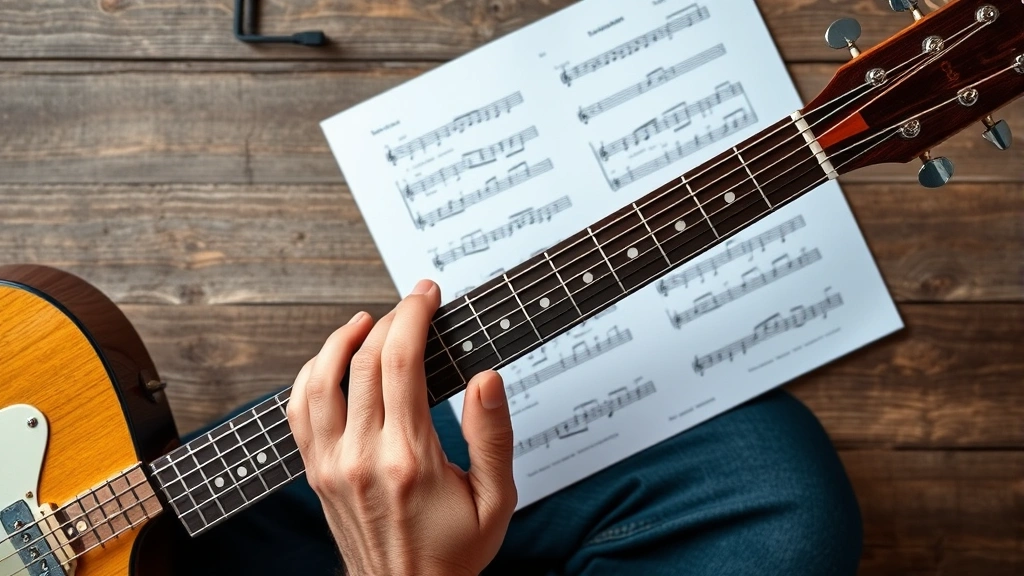
Every tab starts with the same fundamental layout: horizontal lines representing the strings of your instrument. For guitar, you’ll see six lines stacked vertically, with each line corresponding to a specific string. The top line represents the high E string, while the bottom line represents the low E string.
Numbers placed on these lines indicate which fret to play on that string. A zero means you play the open string without pressing any frets. The number 1 means you press down on the first fret, 2 on the second fret, and so on. It’s that straightforward—no abstract symbols or confusing notation to decode.
The horizontal progression of the tab flows from left to right, just like reading text. When you see numbers arranged vertically, they’re played simultaneously (as a chord). When they’re staggered horizontally, they’re played sequentially. This visual layout makes it intuitive to understand the timing and structure of a piece.
For those interested in the foundational skills needed before diving into tabs, learning how to tune a guitar is essential. A properly tuned instrument ensures your tabs sound correct from day one.
Decoding Numbers and Symbols
While numbers form the backbone of tab notation, various symbols communicate additional musical information. Understanding these symbols transforms you from someone who can merely find the right frets to someone who can truly interpret the music as intended.
Basic Fret Numbers: These are your primary tools. Each number tells you exactly which fret to play. Simple and effective. When you see a sequence like 0-2-3-5, you play those frets in order on the same string.
Vertical Alignment: When multiple numbers stack vertically, they form a chord played simultaneously. For example, if you see 0, 2, and 3 aligned vertically on different strings, you press all three frets at the same time.
The Hyphen and Dash: Horizontal lines between numbers indicate that notes are connected or represent sustained notes. A longer dash means the note continues to ring out longer than a single pluck.
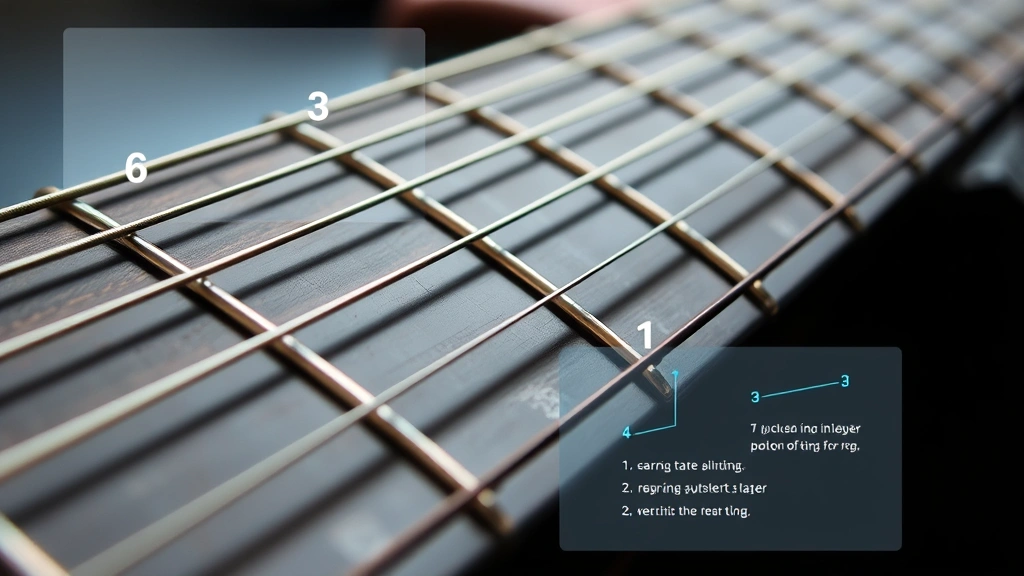
Slurs and Bends: An arcing line connecting two numbers indicates a slide between notes. The notation b means bend the string upward to match the pitch of the target note. A pb indicates a pre-bend, where you bend the string before even picking it.
For those looking to deepen their understanding of musical notation more broadly, how to read guitar tabs provides comprehensive details specific to the instrument.
Reading Rhythm and Timing
One limitation of basic tabs is that they don’t inherently convey rhythm and timing. Traditional sheet music solves this through note shapes and stems, but tabs require additional context. Many tab notations include rhythm indicators or rely on you listening to the song simultaneously.
Some advanced tabs include timing information above or below the standard notation. You might see quarter notes, eighth notes, and other rhythmic indicators. However, the most reliable way to understand timing is to listen to the original song while reading the tab. This combination of visual and auditory learning accelerates your progress dramatically.
Developing rhythm sensitivity is crucial for becoming a well-rounded musician. While tabs show you what to play, your ear and listening skills help you understand when to play it. This is why many musicians recommend learning songs by ear in conjunction with tabs, rather than relying solely on the visual notation.
Some online tab resources include audio playback features, allowing you to hear the exact timing while watching the notes highlighted in real-time. This technology has revolutionized music learning and made tabs even more powerful as a teaching tool.
Common Tab Symbols Explained
Beyond basic numbers, a standardized set of symbols appears across most tabs. Familiarizing yourself with these symbols ensures you can read virtually any tab you encounter:
- h (Hammer-on): Press the fret without picking the string again. Your finger literally hammers onto the fretboard to produce the note.
- p (Pull-off): Reverse of hammer-on. You pull your finger off the fretboard to play a lower note without picking again.
- b (Bend): Push the string upward to raise the pitch. The number after indicates the target pitch.
- r (Release): Return a bent string to its original pitch without picking again.
- / (Slide up): Move your finger up the fretboard to the target fret while maintaining contact with the string.
- \ (Slide down): Move your finger down the fretboard to the target fret while maintaining contact.
- ~ (Vibrato): Oscillate the string slightly to create a wavering, expressive sound.
- x (Muted note): Strike the string without fretting it, producing a percussive sound rather than a pitched note.
- PM (Palm mute): Lightly touch the strings with your picking hand’s palm to dampen the sound.
- | (Bar): A vertical line often indicates a measure or timing division.
These symbols might look confusing initially, but you’ll recognize them quickly through practice. Most tabs include a legend at the top explaining the specific symbols used in that particular notation.
Practical Tips for Tab Reading Success
Start with songs you love. Your motivation matters tremendously. Choose music that excites you, even if it seems slightly beyond your current skill level. The emotional connection drives persistence through frustration.
Listen while you learn. Tabs are visual tools, but music is auditory. Always have the original song playing as you read the tab. This trains your ear to recognize correct pitches and timing patterns.
Use reliable tab sources. Websites like Ultimate Guitar and Chordify have community rating systems. Prioritize tabs with high ratings and many user confirmations of accuracy.
Play slowly at first. Speed comes naturally with repetition. Begin at a comfortable tempo where you can read and execute each note clearly. Gradually increase speed as muscle memory develops.
Mark difficult sections. Use a highlighter or note app to flag passages that trip you up. Revisit these sections with extra focus until they become second nature.
Cross-reference with video tutorials. Many guitarists post YouTube videos demonstrating tabs note-by-note. Watching someone play while reading the tab reinforces proper technique and timing.
Understand the instrument setup. Ensure your instrument is properly tuned and maintained. A poorly tuned guitar will sound wrong regardless of how accurately you’re reading the tab. Consider exploring resources like Fender’s guitar guides for instrument-specific information.
If you’re exploring different musical avenues, even unconventional ones, understanding rhythm and timing through tabs applies everywhere. For instance, if you ever venture into percussion, how to play spoons involves similar rhythmic thinking, though without frets to guide you.
Join communities. Online forums and social media groups dedicated to musicians provide feedback, encouragement, and resources. Sharing your progress and asking questions accelerates learning exponentially.
For a more comprehensive exploration of musical literacy, you might also consider how to read manga if you’re interested in Japanese graphic novels that often feature music-related storylines—a fun cultural intersection for music enthusiasts.
Frequently Asked Questions
What’s the difference between tabs and sheet music?
Tabs show you where to place your fingers on an instrument using numbers on lines representing strings. Sheet music uses symbols on a musical staff to represent pitch and duration. Tabs are more beginner-friendly and instrument-specific, while sheet music is more universal but requires more training to read.
Can I learn to read tabs without learning music theory?
Absolutely. Tabs are designed specifically to bypass music theory requirements. You can play hundreds of songs using only tabs. However, understanding basic music theory eventually enhances your musicianship and allows you to improvise and compose.
Are tabs accurate for every song?
Tab accuracy varies. Community-contributed tabs may contain errors or multiple interpretations. Always cross-reference with the original song’s audio and check user ratings on tab websites. High-rated tabs are generally reliable, but your ear is the final authority.
Do tabs work for all instruments?
Tabs work for any stringed instrument with frets—guitar, bass, ukulele, banjo, mandolin, and more. Each instrument has its own tab format reflecting its string configuration. Non-fretted instruments like violin typically use standard sheet music instead.
How long does it take to get good at reading tabs?
Basic tab reading takes minutes to learn. Fluent reading with complex symbols takes weeks to months of regular practice. Becoming truly proficient—where you can instantly recognize patterns and symbols—takes several months to a year of consistent playing.
Should I print tabs or use digital versions?
Digital tabs offer playback features and are searchable, but printed tabs are less distracting during practice. Many musicians use both—printing tabs for focused practice sessions and using digital versions for reference and playback features.
What if I make mistakes while reading tabs?
Mistakes are part of learning. Your ear will quickly tell you when something sounds wrong. Use this feedback to adjust your playing. Over time, pattern recognition improves and errors decrease naturally.

Related Posts

How Long to Boil Lobster Tails: Cooking Guide

How Long to Fly from New York to London? Travel Times
