
How to Read Guitar Tabs: Beginner’s Guide
How to Read Guitar Tabs: Beginner’s Guide
Learning to play guitar is an exciting journey, but it can feel overwhelming when you’re staring at sheet music for the first time. Here’s the thing though—you don’t necessarily need to master traditional music notation to start playing songs you love. Guitar tablature, or tabs, offers a more intuitive way for beginners to jump right in and start making music. Whether you’re dreaming of playing classic rock anthems or fingerpicking folk tunes, understanding how to read guitar tabs is your ticket to unlocking countless songs without years of music theory study.
Think of guitar tabs as a visual map of your instrument. Instead of abstract musical symbols, tabs show you exactly where to place your fingers on the fretboard. It’s direct, practical, and honestly, it’s how millions of self-taught guitarists learned to play. The beauty of tabs lies in their simplicity—once you grasp the fundamentals, you’ll be able to tackle songs from your favorite artists within days, not months.
In this guide, we’ll break down everything you need to know about reading guitar tabs, from the basic anatomy of a tab to advanced techniques that’ll have you playing like you’ve been at it for years. Let’s dive in.
What Are Guitar Tabs?
Guitar tabs are a simplified form of musical notation specifically designed for guitarists. Unlike traditional sheet music, which requires years of training to decipher, tabs use numbers and symbols to indicate which frets to play and which strings to use. Each line in a tab represents one of your guitar’s six strings, and the numbers tell you exactly which fret to press down.
The brilliant part? You don’t need to understand music theory to use them. A guitarist who’s never read a single piece of sheet music can pick up a tab and start playing within minutes. This accessibility is why tabs have become incredibly popular online, with massive communities sharing tabs for thousands of songs on platforms like Ultimate Guitar and Chordify.
Tabs originated in the 1970s as an informal way for guitarists to share songs with each other. Before the internet, musicians would scribble tabs in notebooks and pass them along. Today, they’ve evolved into a standardized format that’s essential knowledge for any guitarist, whether you’re learning solo or taking lessons.
The Basic Structure of Guitar Tabs
At its core, a guitar tab consists of six horizontal lines, each representing one of your guitar’s strings. The top line is your high E string (the thinnest one), and the bottom line is your low E string (the thickest one). From top to bottom, the strings are: E, B, G, D, A, E.
Numbers placed on these lines indicate which fret you should press. A “0” means play the open string without pressing any fret. A “1” means press the first fret, a “2” means the second fret, and so on. When numbers are stacked vertically, they’re played simultaneously—that’s a chord. When they’re arranged horizontally, they’re played one after another—that’s a melody or sequence.
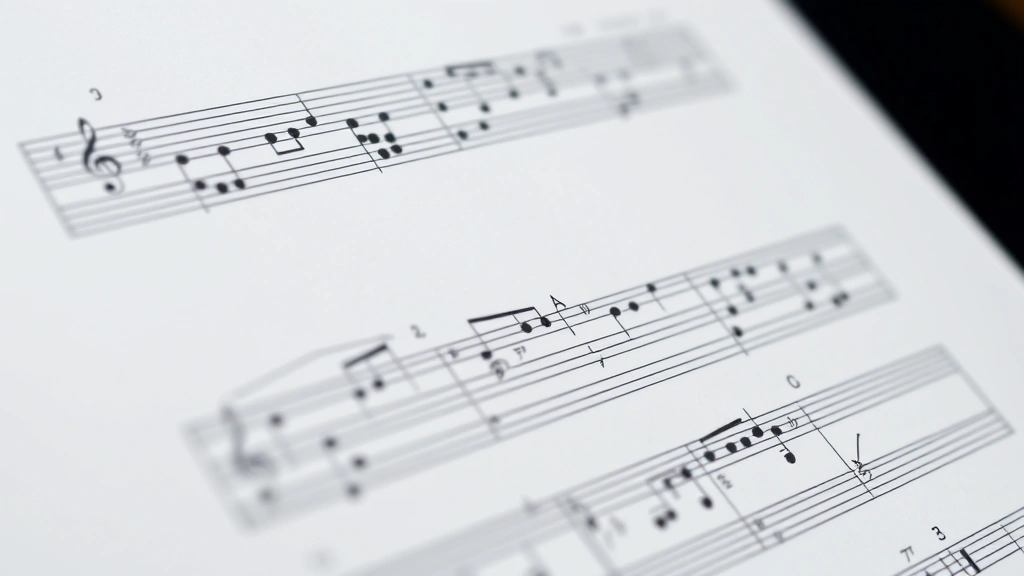
Let’s say you see a “3” on the top line. That means you’ll press down the third fret on your high E string and pluck it. Simple, right? Once you understand this basic concept, everything else builds from there. The visual layout of tabs makes it immediately clear what you need to do—no ambiguity, no abstract symbols to interpret.
One thing that makes tabs so powerful is their universality. Whether you’re learning rhythm patterns similar to how you’d learn percussion timing, or working through complex passages, the fundamental structure remains consistent. This consistency means that once you’ve learned the basics, you can apply them to virtually any song.
Understanding Tab Symbols and Notation
Beyond simple numbers, tabs use various symbols to indicate different playing techniques and effects. Understanding these symbols is crucial for capturing the nuance of a song. Here are the most common ones you’ll encounter:
- Hyphen (-): Represents the fret lines. It’s just spacing and rhythm guidance.
- Pipe (|): Marks measures or sections, helping you organize the music into manageable chunks.
- Slash (/): Indicates a slide—you play one fret and slide your finger up to another fret without lifting off the string.
- Backslash (\): Represents a slide downward, moving to a lower fret.
- h: Hammer-on—you play one fret, then press another fret without picking again, creating a smooth transition.
- p: Pull-off—the opposite of a hammer-on. You play a fret, then lift your finger to an open string or lower fret without picking.
- b: Bend—you push the string up to change the pitch, creating an expressive, vocal-like sound.
- r: Release—you’ve bent a string and now you’re releasing it back to its original pitch.
- v: Vibrato—you wiggle the string slightly to create a wavering effect.
- x: Muted note—you play the string but dampen it to create a percussive sound.
- ~ (tilde): Vibrato or tremolo effect.
These symbols might seem overwhelming at first, but you’ll quickly recognize them as you practice. Start with simple tabs that use basic numbers, then gradually work your way up to tabs with more complex techniques. There’s no rush—learning is a process, and each symbol you master opens up more possibilities.
When you’re learning how to calculate frequency and rhythm patterns, you’re building the same analytical skills that help you interpret these symbols in context. It’s all about recognizing patterns and understanding what each element means.
Reading Fret Numbers
The numbers on your tab are your roadmap. They’re arranged left to right, meaning you read them in the order they appear. If you see “3-5-7” on the high E string (top line), you’ll play the third fret, then the fifth fret, then the seventh fret, moving across the fretboard as you go.
Here’s where timing becomes important. While tabs show you which frets to play, they don’t always make the rhythm crystal clear. Some tabs include timing notation above the lines, but many don’t. This is where listening to the original song becomes invaluable. Play the song while reading the tab, and your ear will naturally pick up the rhythm. After a few run-throughs, you’ll internalize the timing.
One helpful tip: numbers that are vertically aligned should be played at the same time. If you see two numbers stacked on different strings, press both frets simultaneously and play them together. This creates chords and fuller sounds. Numbers that are horizontally separated are played sequentially, one after another.
Understanding fret numbers also helps you develop finger positioning. On a standard guitar, your index finger typically covers the first fret, your middle finger the second, your ring finger the third, and your pinky the fourth. As you progress, you’ll learn to stretch and position your fingers differently, but this basic framework helps beginners orient themselves on the fretboard.
Common Techniques in Tabs
As you dive deeper into tab reading, you’ll encounter various playing techniques that add color and emotion to songs. Let’s break down the most common ones:
Slides are incredibly expressive. When you see “3/5,” play the third fret and slide your finger up to the fifth fret smoothly. The slash indicates the direction and distance of the slide. Slides create a smooth, vocal-like transition between notes—think of blues guitar or classic rock.
Hammer-ons and pull-offs are essential for fast, fluid playing. A hammer-on (h) means you pick the first note, then press down on a higher fret without picking again. A pull-off (p) is the reverse—you pick a fretted note, then lift your finger to either an open string or a lower fret, and that lower note sounds without an additional pick. These techniques make your playing sound more connected and professional.
Bends are where guitar really shines. Instead of just pressing a fret and picking, you push the string upward to change its pitch. A “b” in the tab indicates a bend. The distance you push determines how much the pitch changes. Full bends raise the pitch by a whole step, while half-bends raise it by half a step. Bends add emotion and expression that’s impossible with standard picking.
Learning these techniques takes practice, but they’re absolutely worth the effort. They transform your playing from mechanical note-hitting into genuine musicality. Watch videos of experienced guitarists using these techniques, and try to replicate what you see. Your fingers will gradually develop the muscle memory needed to execute them smoothly.
Timing and Rhythm Clues
One of the biggest challenges beginners face with tabs is figuring out the rhythm. Unlike sheet music, which includes explicit timing information, tabs rely more on visual spacing and your ability to listen. However, there are strategies to decode timing:
First, understanding how to find the range of musical values helps you recognize when notes are long versus short. Numbers that are far apart horizontally often indicate longer gaps between notes. Numbers close together suggest faster-paced playing.
Second, look for measure markers (usually indicated by vertical lines with numbers). These divide the tab into sections, helping you understand the song’s structure. Most popular songs use 4/4 time, meaning four beats per measure. Knowing this helps you count out the rhythm as you play.
Third, and most importantly, listen to the original song while reading the tab. Your ear is your best teacher here. After hearing the song a few times with the tab in front of you, you’ll naturally start anticipating which notes come next and at what pace. This audio-visual learning method is incredibly effective and makes the learning process more enjoyable.
Many online tab resources now include playback features that sync the music with the tab notation. These tools are invaluable for beginners because they remove the guesswork and let you focus on finger placement and technique.
Practical Tips for Beginners
Now that you understand the fundamentals of reading guitar tabs, here are some practical strategies to accelerate your learning:
Start with simple songs. Don’t jump straight into complex tabs. Begin with songs that have straightforward melodies and minimal techniques. “Smoke on the Water” by Deep Purple and “Wonderwall” by Oasis are classic beginner choices because they use simple, repetitive patterns that help you develop muscle memory.
Practice slowly. Use a metronome or a slow-down app to reduce the song’s tempo. Learning at a slower pace ensures accuracy and prevents you from developing bad habits. As you become more comfortable, gradually increase the speed. This methodical approach builds genuine competence rather than just fumbling through songs.
Use reliable tab resources. Not all tabs online are accurate. Websites like Ultimate Guitar and Chordify have community ratings that help you identify the best tabs. High-rated tabs are usually more accurate and reliable.
Play along with recordings. Once you’ve learned a song, play it while listening to the original. This develops your sense of timing and trains your ear to recognize when you’re off. It’s also incredibly motivating to hear your playing blend with the artist’s version.
Don’t memorize—understand. Rather than memorizing every number, focus on understanding the patterns. Notice how certain finger positions repeat throughout the song. Recognize chord shapes and melodic patterns. This pattern recognition approach makes learning faster and helps you apply knowledge to new songs more easily.
Invest in quality instruction. While tabs are fantastic for self-teaching, consider supplementing them with structured online guitar lessons or finding a local instructor. Professional guidance helps you avoid technique mistakes that become harder to correct later. Think of it as accelerating your learning curve.
When you’re progressing through tabs, remember that understanding game strategy and pattern recognition applies to music learning too. You’re identifying patterns, anticipating sequences, and making strategic finger placements. The skills transfer across different learning domains.
Another valuable resource is the Fender learning hub, which offers comprehensive guides on reading tabs and developing your guitar skills. These authoritative sources provide validated information that complements your tab-based learning.
Finally, consider exploring learning other skill-based activities that develop patience and focus. The discipline you build in other pursuits directly translates to your guitar practice, making you a more dedicated and consistent learner.
Frequently Asked Questions
What’s the difference between guitar tabs and standard music notation?
Guitar tabs are specific to guitar and show you exactly where to place your fingers on the fretboard using numbers on six lines representing the strings. Standard music notation is a universal system used across all instruments and requires knowledge of music theory to read. Tabs are simpler and more intuitive for guitarists, while sheet music offers more detailed information about rhythm and timing in a standardized format.
Can I learn guitar using only tabs?
Absolutely! Many successful guitarists learned primarily through tabs. However, learning some basic music theory and rhythm notation will accelerate your progress and make you a more well-rounded musician. Tabs are perfect for beginners, but as you advance, understanding music theory opens up new possibilities for composing and improvising.
Where can I find reliable guitar tabs online?
Ultimate Guitar is the most popular and reliable source for tabs. The site has millions of user-submitted tabs with community ratings, so you can identify the most accurate versions. Other reputable sources include Chordify, Songsterr, and individual artist websites. Always check ratings and comments before choosing a tab.
How long does it take to learn to read guitar tabs?
Most beginners can grasp the basics of tab reading within a few hours of practice. However, becoming proficient enough to play songs fluently takes weeks or months of consistent practice. The timeline depends on your dedication, practice frequency, and the complexity of songs you’re attempting.
Do I need to understand music theory to read tabs?
Not at all! Tabs are designed specifically for people who don’t know music theory. The numbers and symbols tell you everything you need to know about finger placement and technique. That said, learning some theory later will deepen your understanding and make you a better musician overall.
What if a tab has mistakes?
This happens occasionally, especially with user-submitted tabs. If something doesn’t sound right, try comparing multiple versions of the same song’s tab. Listen carefully to the original recording and compare what you hear with what the tab indicates. Trust your ear—if it sounds wrong, it probably is. After playing a few songs, you’ll develop an intuition for spotting errors.
Should I learn tabs or sheet music first?
Tabs are the better starting point for most guitarists. They’re more intuitive and let you start playing songs immediately, which is incredibly motivating. Once you’re comfortable with tabs and have some playing experience, learning sheet music will be easier and more meaningful because you’ll already understand how music works on your instrument.

Related Posts

How Long to Boil Lobster Tails: Cooking Guide

How Long to Fly from New York to London? Travel Times
