
Pruning Basil: Expert Tips for Optimal Growth
Pruning Basil: Expert Tips for Optimal Growth
Basil is one of the most rewarding herbs to grow, whether you’re cultivating it in a sunny kitchen windowsill or a sprawling garden bed. However, many home gardeners don’t realize that proper pruning is essential to keeping their basil plants healthy, productive, and lush throughout the growing season. Regular pruning encourages bushier growth, delays flowering, and ensures you have a continuous supply of fresh leaves for cooking.
Learning how to prune basil correctly transforms your herb garden from a leggy, sparse plant into a dense, vibrant specimen that produces abundant foliage. Unlike many other plants that require specialized tools or complex techniques, basil pruning is straightforward and can be mastered by beginners. This comprehensive guide will walk you through everything you need to know about pinching, cutting, and maintaining your basil plants for maximum yield and longevity.
Why Prune Basil
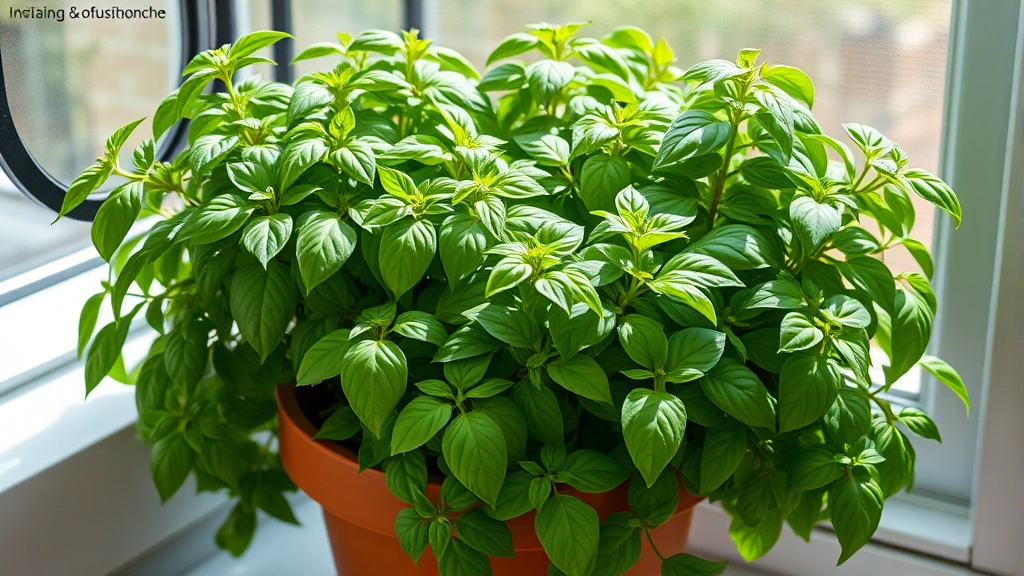
Pruning basil serves multiple critical purposes that directly impact plant health and productivity. When you remove the growing tip—the topmost portion of the stem—you trigger the plant to branch out laterally, creating a fuller, bushier plant rather than a tall, spindly one. This branching effect is crucial because it exponentially increases the number of leaves your plant produces.
Without regular pruning, basil naturally grows upward in a single main stem. While this growth pattern is natural, it’s inefficient for home gardeners who want maximum leaf production. The plant will eventually flower and set seed, which signals the end of active leaf production. By pruning strategically, you suppress flowering and keep the plant in its vegetative growth phase much longer, extending your harvest season by weeks or even months.
Additionally, pruning removes any diseased or damaged foliage, improves air circulation around the plant, and prevents pest infestations from taking hold. A well-pruned basil plant is more resilient to environmental stress, diseases, and insect damage. If you’re also interested in how to prune a rose bush, you’ll find similar principles apply regarding encouraging branching and removing dead material.
When to Start Pruning Basil
Timing is everything when it comes to basil pruning. You should begin pinching out the growing tips when your seedling or young plant has developed at least 6 to 8 true leaves. This typically occurs 3 to 4 weeks after germination or transplanting, depending on growing conditions and basil variety.
The key is to start pruning early in the plant’s life. Many gardeners make the mistake of waiting until the plant is already tall and leggy before they begin pruning. At that point, recovery takes longer. Starting early establishes good branching architecture from the beginning, resulting in a more productive plant overall.
For store-bought basil plants or transplants, begin pruning within a week or two of bringing them home. These plants are often grown in nurseries specifically to be tall and narrow for shipping purposes, not for optimal home production. Your first pruning session will dramatically improve the plant’s shape and productivity.
Temperature also influences pruning timing. Basil is a warm-season herb that thrives when nighttime temperatures are consistently above 50°F. Don’t prune if a cold snap is forecasted, as the new growth that emerges after pruning is tender and frost-sensitive. In spring, wait until nighttime temperatures reliably stay warm before beginning your pruning routine.
Tools You’ll Need
One of the beauties of pruning basil is that you don’t need expensive or specialized equipment. In fact, you can prune basil effectively with just your fingers, though having a few basic tools makes the job easier and cleaner.
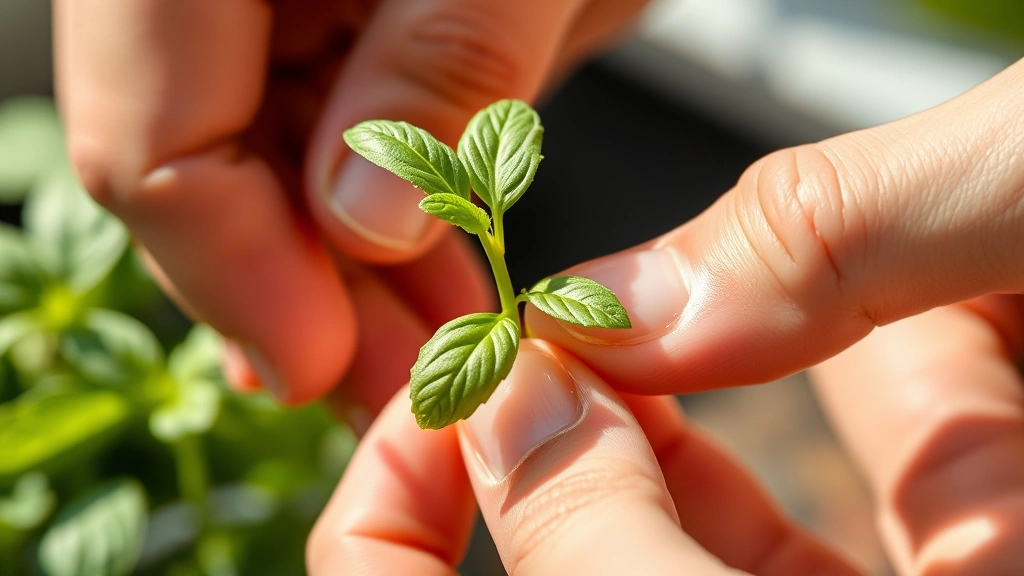
Finger Pinching: For young plants and routine maintenance, simply use your thumb and forefinger to pinch off the growing tip. This is the gentlest method and causes minimal stress to the plant. Pinching is ideal when you’re removing just the top inch or two of growth.
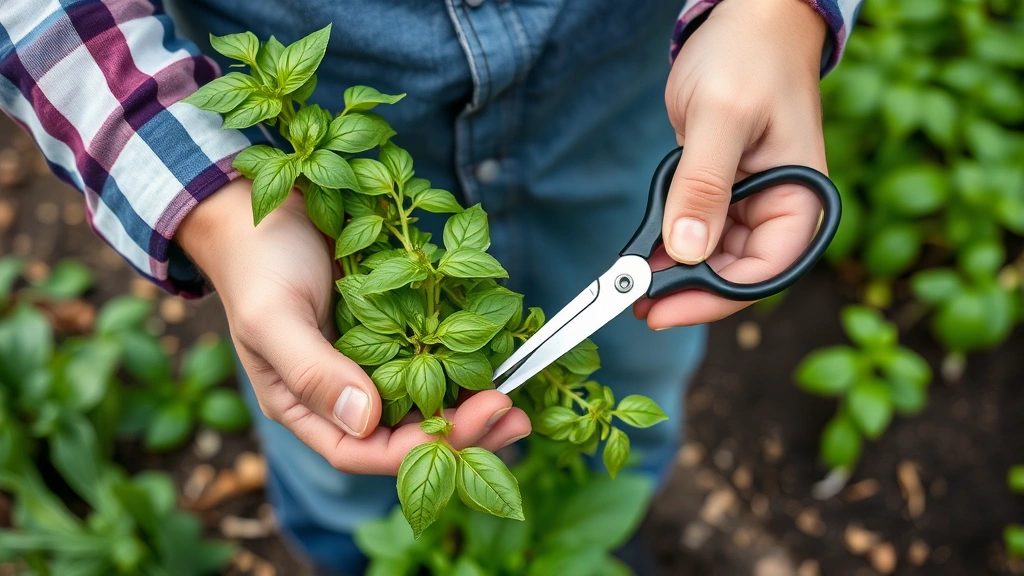
Clean Scissors: A pair of clean, sharp scissors or pruning shears is invaluable for removing larger sections of stems or harvesting multiple leaves at once. Dull blades crush the plant tissue, which can invite disease. Before each pruning session, wipe your blades with a clean cloth or disinfectant wipe.
Pruning Shears: For thicker, more mature stems, small hand pruners work well. Choose pruners with bypass blades rather than anvil-style, as they make cleaner cuts that heal faster.
Always clean your tools before and between plants if you’re working with multiple basil specimens. This prevents the spread of any potential fungal or bacterial issues. A simple wipe with rubbing alcohol or a 10% bleach solution is sufficient.
Pinching Out Growing Tips
Pinching is the foundational pruning technique for basil and should be your primary method during the plant’s establishment phase. The growing tip, also called the apical meristem, is the cluster of leaves at the very top of each stem. This is where the plant produces growth hormones that suppress lateral branching.
To pinch properly, locate the topmost set of leaves on your basil plant. These are usually the smallest, newest leaves. Just above this set, you’ll see the growing tip—a tiny point or very small leaves. Using your thumb and forefinger, gently pinch this tip off, removing approximately the top ½ inch to 1 inch of stem.
The pinched-off tip is completely edible and can go straight into your salad or cooking pot. You’ll notice that within 3 to 5 days, two new shoots will emerge from the leaf axils (the junction between the stem and the leaves) just below where you pinched. These two shoots will grow upward and outward, doubling your plant’s branching structure.
Continue pinching the growing tips on each of these new shoots when they’ve developed several sets of leaves. This repeated pinching creates an exponentially bushier plant. After 2 to 3 rounds of pinching, your basil plant will be significantly fuller and more productive than an unpruned specimen.
Cutting Basil Leaves Correctly
Once your basil plant has been pinched several times and has developed a good branching structure, you can transition to harvesting leaves while still maintaining the plant’s shape. The principle is simple: always cut or pinch from the top of the plant downward, removing the uppermost leaves and stems first.
When harvesting, pinch or cut just above a leaf node—the point where leaves emerge from the stem. This stimulates the two buds at that leaf node to develop into new branches. Never remove more than one-third of the plant’s total foliage at any single harvest.
The best leaves to harvest are the tender, young growth at the top of the plant. These are the most flavorful and tender for culinary use. As your basil plant matures, the lower leaves become larger but slightly tougher and less aromatic. Save the lower foliage for cooking applications where texture matters less, such as in pesto or dried basil.
If you need a large quantity of basil leaves for a specific recipe, you can remove up to one-third of the plant’s foliage at once, but do this selectively by cutting from multiple branches rather than completely stripping one side of the plant. This maintains the plant’s balance and encourages even growth.
Harvesting Techniques
Harvesting and pruning go hand-in-hand with basil. Every time you harvest leaves, you’re technically pruning the plant. The key is to harvest in a way that encourages continued branching and growth rather than depleting the plant.
Morning Harvesting: The best time to harvest basil is in the morning after the dew has dried but before the day gets hot. At this time, the leaves are fully hydrated and at their peak flavor. Afternoon harvesting, especially in intense heat, results in wilted leaves with reduced flavor compounds.
Continuous Harvesting: Rather than waiting until you need basil for cooking, harvest regularly—even if you don’t immediately need the leaves. Regular harvesting keeps the plant pruned, stimulates continued branching, and prevents flowering. Basil that’s harvested frequently produces more total foliage over the season than basil that’s left unpruned.
Pinch and Use Method: The simplest approach for home gardeners is to pinch off leaves as you need them for cooking. Grab a small stem with several leaves, pinch it off, and use it immediately. This casual approach, if done regularly, maintains a well-shaped plant and provides fresh basil whenever you need it.
If you’re similar to gardeners who also grow cilantro, you’ll appreciate that regular harvesting extends your basil’s productive season significantly.
Common Mistakes to Avoid
Even with good intentions, basil growers often make pruning mistakes that reduce plant productivity or health. Being aware of these pitfalls helps you avoid them.
Pruning Too Late: Waiting until your basil plant is already tall and woody before starting to prune is a common mistake. At that point, the plant has already invested significant energy in upward growth rather than branching. While you can still recover the plant, it takes longer. Start pinching early, when the plant is young and flexible.
Removing Too Much Foliage: Harvesting more than one-third of the plant’s foliage at once stresses the plant and slows recovery. If you need lots of basil, it’s better to harvest moderately from multiple plants rather than heavily from one plant.
Pruning Cold Basil: Never prune basil when temperatures are cool or when frost threatens. The tender new growth that emerges after pruning is highly susceptible to cold damage. Always prune basil in warm conditions.
Ignoring Flowering: Once basil flowers, the plant’s growth pattern changes dramatically. Flowering signals the end of the plant’s vegetative phase and the beginning of seed production. The leaves become less flavorful and production slows. Pinch off flower buds as soon as they appear to maintain leaf production. If you do let your basil flower, you can still use the flowers—they’re edible and attractive—but know that leaf production will decline.
Using Dull Tools: Crushing the plant tissue with dull tools opens the plant to disease. Keep your pruning tools sharp and clean. A clean cut heals much faster than a crushed stem.
Pruning During Stress: If your basil is struggling due to drought, pest infestation, or disease, hold off on heavy pruning. Light harvesting is fine, but wait until the plant recovers before doing major pruning. Stressed plants need all their foliage to recover.
Seasonal Pruning Guide
Basil’s pruning needs vary throughout the growing season. Understanding these seasonal patterns helps you prune at the optimal time for maximum productivity.
Spring (Establishment Phase): In spring, when you first plant basil or bring it home as a seedling, focus on establishing a good branching structure through regular pinching. Don’t worry about harvesting large quantities yet. Your goal is to build a strong, bushy foundation. Pinch the growing tips every few days as new growth emerges. This might seem aggressive, but it’s exactly what the young plant needs.
Early Summer (Peak Growth): As temperatures warm and days lengthen, basil enters its peak growth phase. At this point, you can transition from pinching to regular harvesting. The plant is growing so vigorously that you can remove more foliage without setback. Harvest frequently—every few days if possible—to keep the plant productive and prevent flowering.
Mid to Late Summer (Maintenance Phase): Continue regular harvesting to maintain leaf production and prevent flowering. In hot climates, basil may slow its growth during intense summer heat. If this happens, reduce harvesting slightly and focus on keeping the soil consistently moist. Resume heavier harvesting when temperatures cool slightly.
Fall (Extended Season): As days shorten and temperatures cool, basil growth naturally slows. Continue harvesting but be gentler with the plant. Avoid heavy pruning in fall, as the plant won’t have time to recover before frost arrives. If you live in a warm climate where basil overwinters, you can continue pruning through winter, though growth will be minimal.
For comparison, the principles of how to propagate roses involve understanding seasonal growth patterns similarly, though the specific techniques differ.
If you’re maintaining multiple herbs in your garden, consult your FixWiseHub blog for comprehensive guides on caring for different plants. Each herb has unique pruning and maintenance requirements.
FAQ
How often should I prune basil?
Prune basil every 3 to 5 days during the growing season by pinching off the growing tips. This frequent pruning encourages bushiness and prevents flowering. Once the plant is well-established, you can harvest leaves as needed for cooking, which doubles as pruning.
Can I prune basil in winter?
In most climates, basil is an annual that dies at the first frost, so winter pruning isn’t applicable. However, if you grow basil indoors or in a warm climate where it survives winter, you can prune it year-round, though growth will be much slower in winter months. Provide extra light and warmth for best results.
What should I do with the pruned basil?
All the basil you prune off is edible and flavorful, especially the tender growing tips. Use it fresh in salads, pasta, pesto, or any recipe calling for basil. You can also freeze basil by blending it with a bit of water and freezing in ice cube trays, or dry it for long-term storage.
Will pruning basil make it flower?
No, pruning actually delays flowering by keeping the plant in its vegetative growth phase. Unpruned basil naturally flowers as it matures. Regular pruning suppresses flower development, extending your leaf production season significantly. However, if you accidentally let flowers develop, pinch them off immediately to redirect energy back to leaf production.
Can I propagate basil from pruned cuttings?
Yes, basil cuttings root easily in water or moist soil. Take 4- to 6-inch cuttings from your pruned stems, remove the lower leaves, and place them in water or potting mix. Roots typically develop within 1 to 2 weeks. This is an excellent way to multiply your basil plants or create backup plants as insurance against cold weather.
Why is my basil getting leggy despite pruning?
If your basil remains tall and sparse even with pruning, it likely needs more light. Basil requires 6 to 8 hours of direct sunlight daily. Insufficient light causes elongated growth. If growing indoors, move the plant closer to a sunny window or provide supplemental grow lights. Ensure temperatures stay warm, as basil also slows its branching response in cool conditions.
Should I prune basil differently depending on the variety?
Most basil varieties respond similarly to pruning, though some varieties are naturally bushier than others. Sweet basil, the most common culinary variety, responds excellently to pinching and develops a compact form with regular pruning. Thai basil and African basil have slightly different growth habits but still benefit from the same pruning principles. Experiment with your specific variety to learn its growth patterns.

Related Posts

Superscript in Google Docs: Expert Tips

Strikethrough in Excel: Easy Steps for Beginners
