
How to Measure Ring Size at Home: Step-by-Step Guide
How to Measure Ring Size at Home: A Complete Step-by-Step Guide
There’s something deeply satisfying about finding the perfect ring—whether it’s an engagement piece, a cherished heirloom, or simply a statement accessory you’ve been eyeing. But here’s the catch: it only matters if it actually fits. Getting your ring size right is one of those deceptively simple tasks that can save you from the frustration of returns, resizing fees, and the disappointment of a ring that sits in a drawer unworn.
The beauty of measuring your ring size at home is that you don’t need to visit a jeweler or wait for an appointment. Armed with nothing more than a few household items and a bit of patience, you can determine your exact size with impressive accuracy. This guide walks you through multiple methods, each suited to different situations and preferences, so you can confidently order that perfect ring online or surprise someone special with the right fit.
Let’s dive into the practical world of ring sizing—because a beautiful ring deserves a perfect fit.
Why Accurate Ring Sizing Matters
Before we jump into the mechanics of measurement, let’s talk about why getting this right actually matters. A ring that’s too loose will slip off—potentially lost forever—while one that’s too tight will be uncomfortable and could restrict circulation. Neither scenario is ideal, especially if you’re investing in a meaningful piece.
The good news is that ring sizing is a skill you can master at home. Ring sizes typically range from 0 to 13 in the United States, with half sizes available for more precision. International sizing varies, so understanding your US size gives you a universal reference point. When you know your exact size, you eliminate guesswork and can shop with confidence.
Temperature, time of day, and even humidity can subtly affect finger size, which is why having multiple measurement methods in your toolkit is smart. If all your methods point to the same size, you can be virtually certain you’ve got it right.
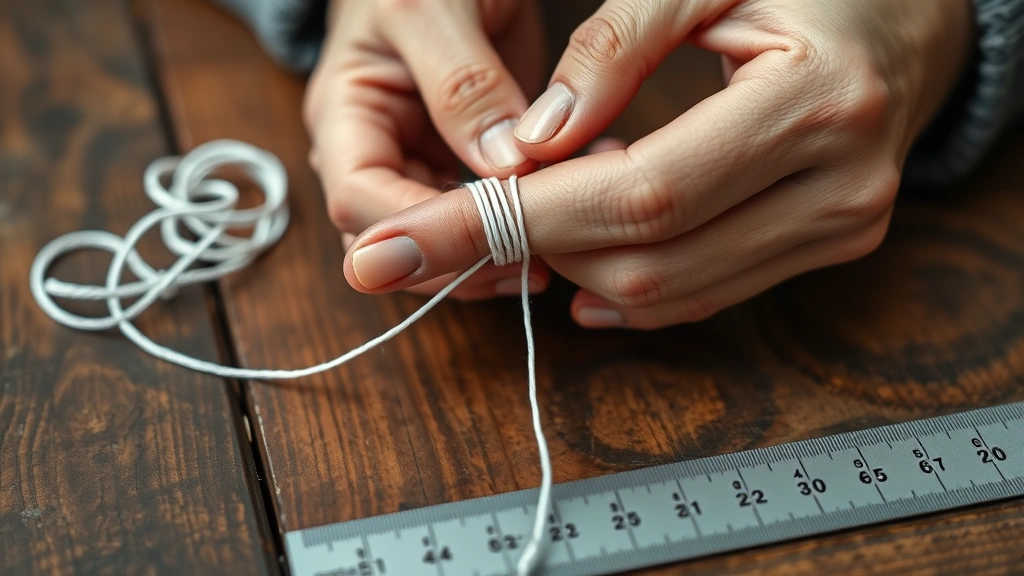
Method 1: The String or Floss Technique
This is perhaps the most accessible method because you likely have the materials already. Grab a piece of string, dental floss, or even a thin strip of paper—anything flexible that won’t stretch easily.
Here’s what you’ll do:
- Wrap the string snugly around the base of your finger, just below the knuckle. The fit should be comfortable—not so tight it cuts off circulation, but not so loose it slides around.
- Mark where the string meets itself with a pen or marker.
- Lay the string flat on a ruler and measure the distance in millimeters. This is your circumference.
- Consult a ring size conversion chart to match your circumference to your size. Most jewelers provide these charts online, or you can find them through This Old House’s home guides.
Pro tip: Measure multiple times throughout the day. Your fingers are slightly smaller in the morning and larger in the evening when you’ve been active. Take an average of your measurements for the most accurate result.

Method 2: The Paper Strip Method
Similar to the string method, but with a twist that some people find more intuitive. Cut a thin strip of paper (roughly the width of a ruler) and wrap it around your finger at the base.
The steps are straightforward:
- Wrap the paper around your finger snugly, ensuring it sits at the widest point of your knuckle.
- Mark where the paper overlaps with a pen.
- Lay the paper flat and measure from the starting edge to your mark in millimeters.
- Use your measurement to reference a sizing chart.
This method works particularly well if you’re someone who finds string difficult to handle. The paper gives you a more rigid surface to measure against, reducing the chance of measurement error. However, paper can tear or compress, so be gentle and repeat your measurement a few times to ensure consistency.
Method 3: Using an Existing Ring
If you already own a ring that fits perfectly, you’ve got a built-in measuring tool. This method is incredibly reliable because you’re measuring something you know works.
Here’s how to do it:
- Take a ring that fits comfortably on the finger where you want to wear your new ring.
- Place it on a ruler or measuring tape, measuring the inside diameter in millimeters.
- Use an online ring size calculator or conversion chart to match your diameter measurement to a size.
The key here is ensuring you’re measuring the correct finger. Ring sizes can vary slightly from finger to finger on the same hand, so use a ring from the specific finger you’re sizing for. If you’re measuring a ring for someone else, ask them to wear your test ring on that finger for a day to confirm it’s comfortable.
This method is particularly useful when you’re trying to find your ring size for online shopping. Comparing to a known ring eliminates variables and gives you concrete data.
Method 4: The Printable Ring Sizer
Welcome to the digital age of ring sizing. Many jewelry retailers and sizing websites offer free printable ring sizers that you can download and use at home.
Here’s the process:
- Download a printable ring sizer from a reputable jeweler’s website or sizing resource.
- Print it on standard paper at 100% scale (this is crucial—don’t resize or scale the document).
- Cut out the ring sizer carefully along the lines.
- Wrap it around your finger and slide it until it fits comfortably.
- Note the size indicated on the sizer.
The advantage of this method is its precision. Ring sizers are designed by professionals and account for the mathematical relationship between circumference and ring size. The downside is that you need a printer and must ensure you print at the correct scale. If your printer defaults to “fit to page,” the measurements will be off. Always double-check that your printer is set to print at 100% or actual size.

Factors That Affect Your Ring Size
Your ring size isn’t static. Several factors can cause fluctuations, and understanding them helps you choose the most accurate measurement.
Time of Day: Fingers swell slightly throughout the day due to fluid retention and activity. Morning measurements tend to be smaller than evening ones. The ideal time to measure is mid-morning, before you’ve been active but after your body has warmed up.
Temperature and Season: Cold weather causes fingers to constrict slightly, while warmth causes them to expand. If you’re measuring in winter, your size might be slightly smaller than it would be in summer. Consider your typical climate when deciding on a size.
Activity Level: Exercise, salt intake, and hormonal changes can all cause temporary swelling. If you’re an athlete or very active, measure on a typical day when your fingers are at their normal state.
Pregnancy: Expectant mothers often experience finger swelling due to increased fluid retention. If you’re pregnant and want a ring to wear during this time, measure during the swelling period. You may want to size down slightly if you plan to wear the ring after pregnancy as well.
Medications: Certain medications can cause water retention, affecting finger size. If you take medications regularly, measure while taking them to ensure accuracy.
Understanding these factors helps you make informed decisions. If you’re between sizes, consider the context. Will you wear the ring daily? In cold climates? During pregnancy? These questions help you choose whether to size up or down.
Common Mistakes to Avoid
Even with the best intentions, it’s easy to make errors when measuring ring size at home. Being aware of common pitfalls helps you sidestep them.
Measuring Too Tightly: The most common mistake is wrapping your string, floss, or paper too snugly. Remember, you need to be able to slide the ring on and off comfortably. Your measurement should feel snug but not restrictive. If you can’t slide your finger out of the string easily, it’s too tight.
Measuring at the Wrong Point: The ring should sit at the base of your finger, just below the knuckle. If you measure at the knuckle itself, your measurement will be too large. If you measure too far down near the palm, it might be too small. The sweet spot is where the ring will actually sit.
Ignoring Half Sizes: Many people round to the nearest whole size, but half sizes exist for a reason. If your measurement falls between sizes, don’t guess—find out which half size is appropriate. This precision can be the difference between a perfect fit and a ring that’s slightly off.
Using Inconsistent Methods: Don’t measure with string one day and a paper strip the next, then average the results. Use one method multiple times to build consistency, or use different methods and verify they all point to the same size.
Forgetting to Account for Seasonality: If you’re buying a ring in winter and plan to wear it year-round, remember that your fingers might swell in summer. A ring that fits perfectly in January might be tight in July. Consider sizing slightly larger if you’re a seasonal measurer.
Beyond measuring techniques, understanding how to measure accurately for other purposes teaches you precision skills that apply across DIY projects. The same attention to detail matters whether you’re sizing rings or measuring for clothing.
Frequently Asked Questions
What if I’m between two sizes?
If your measurements consistently fall between two sizes, you have a choice. For rings you’ll wear daily, sizing up slightly is generally safer—it’s easier to add sizing material inside a ring than to resize it smaller. However, if you prefer a snug fit and don’t mind occasional adjustment, you could go with the smaller size. When in doubt, contact the jeweler or retailer for their recommendation.
Can I measure someone else’s ring size without them knowing?
Absolutely! Borrow a ring they wear regularly on the finger you’re sizing for. Using the existing ring method, measure the inside diameter and convert to a size. This works beautifully for surprise proposals or gifts. Just ensure you measure a ring from the correct finger—ring sizes vary between fingers.
Do ring sizes differ internationally?
Yes, they do. The US uses sizes 0-13, but other countries use different systems. UK sizing uses letters, European sizing uses numbers (typically 40-70), and other regions have their own standards. When ordering internationally, always convert to the sizing system used by that country or retailer.
How often should I remeasure my ring size?
If your circumstances haven’t changed (weight, pregnancy status, medications), your ring size should remain stable. However, if you’ve experienced significant life changes, it’s worth remeasuring. Many jewelers will remeasure you for free if you’re unsure.
What’s the difference between ring size and ring fit?
Ring size refers to the numerical measurement (size 7, for example), while ring fit refers to how comfortable the ring is to wear. A correctly sized ring should slide over your knuckle with slight resistance and sit snugly at the base of your finger. Even if the size is correct, band width and metal type can affect how the ring feels.
Can I use an online ring size calculator?
Yes, many reputable jewelers offer free online calculators where you input your measurements and get a size recommendation. However, ensure you’re using a calculator from a trusted source. Family Handyman and similar resources sometimes link to reliable sizing tools.
Is there a standard ring size that fits most people?
No, ring sizes vary significantly. In the US, the average women’s ring size is around 7, and the average men’s is around 10, but this is just an average. Anywhere from size 4 to size 12 is common, and sizes outside this range aren’t unusual.
Should I measure with or without lotion on my fingers?
Measure with dry fingers. Lotion can make your fingers slightly slippery and affect the measurement. Wash your hands and dry them completely before measuring for the most accurate result.
What if I have knuckles significantly larger than my finger base?
This is common. Measure at the base of your finger where the ring will sit. Some people with this characteristic might need to size up slightly to get the ring over their knuckle, then have it sized down at the jeweler. Alternatively, discuss this with the jeweler when ordering—they can sometimes adjust the band to accommodate larger knuckles.
Can I return or exchange a ring if the size is wrong?
Most reputable retailers allow exchanges if the size doesn’t fit, though policies vary. This is another reason to measure carefully at home first. If you do need to exchange, having your measurements documented makes the process smoother. Many jewelers also offer free resizing within a certain timeframe of purchase.
When you’re ready to take your measurements seriously, remember that Home Depot’s measuring tools guide offers insights into precision measurement that applies to any DIY project, including ring sizing. The principles of accuracy remain consistent whether you’re measuring for a ring or a renovation.
Beyond rings, understanding proper measurement techniques applies to other areas of personal fitting. Just as you’d measure your waist for clothing, ring sizing requires the same attention to detail and methodology. And if you’re ordering custom apparel or accessories online, the same principles apply—accurate measurements lead to perfect fits.
For those interested in more comprehensive sizing guidance, resources like This Old House and Family Handyman often feature detailed measurement guides for various projects. While these focus on home improvement, the precision principles are universally applicable.
Finally, if you’re shopping for rings online, many retailers provide detailed sizing charts and measurement instructions. Major retailers’ sizing resources often include helpful visual guides and comparison tools that complement home measurements.
Taking the time to measure your ring size accurately at home transforms the entire shopping experience. You’ll browse with confidence, order without hesitation, and receive packages that fit perfectly. That’s not just convenience—it’s the foundation of a beautiful relationship with a piece of jewelry you’ll treasure for years to come.

Related Posts

How Long to Boil Lobster Tails: Cooking Guide

How Long to Fly from New York to London? Travel Times
