
Find Your Perfect Fit: Easy Steps to Measure Ring Size at Home
Finding the perfect ring size is crucial whether you’re planning a surprise proposal, shopping for yourself, or replacing a beloved piece of jewelry. Getting an accurate measurement at home can save you time, money, and the hassle of returns or resizing. With the right techniques and tools, you can determine your ring size with professional-level accuracy from the comfort of your own home.
Ring sizing can seem daunting, but it’s actually quite straightforward when you know the proper methods. From simple string measurements to printable ring sizers, there are multiple approaches to ensure you get the perfect fit. Understanding how to measure ring size correctly will help you make confident jewelry purchases and avoid common sizing mistakes that many people encounter.
Understanding Ring Sizes and Measurements
Ring sizes are standardized measurements that correspond to the circumference of your finger. In the United States, ring sizes typically range from 3 to 13, with quarter and half sizes available for more precise fitting. Each full size represents approximately 2.6mm difference in circumference, which might seem small but can significantly impact comfort and wearability.
The most accurate way to understand your ring size is to know that it’s based on the inner diameter of the ring band. A size 7 ring, for example, has an inner diameter of approximately 17.3mm or a circumference of about 54.4mm. This standardization allows jewelers worldwide to create rings that fit consistently across different brands and styles.
Different countries use various sizing systems, so it’s important to specify which system you’re using. The US sizing system is most common in North America, while the UK uses a letter-based system, and many European countries use numerical measurements in millimeters. When shopping online or from international retailers, always verify which sizing system they’re using.
The String and Paper Method
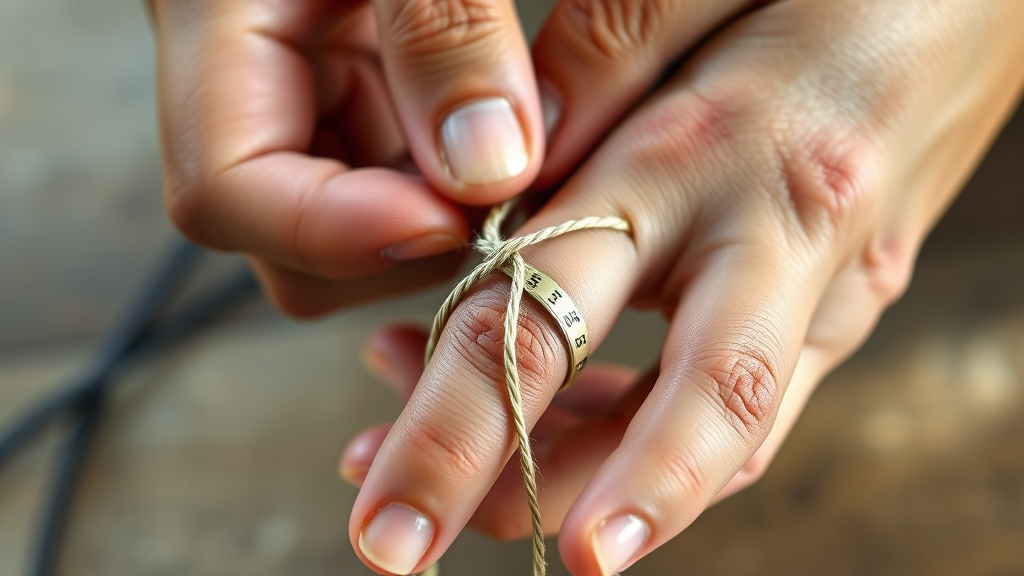
The string method is one of the most accessible ways to measure your ring size at home, requiring only materials you likely already have. Start by cutting a thin strip of paper about 6 inches long and ¼ inch wide, or use a piece of non-stretchy string or thread. The key is using materials that won’t stretch or compress during measurement.
Wrap the paper or string around the base of the finger you want to measure, ensuring it sits comfortably where the ring would normally rest. The material should be snug but not tight – you should be able to slide it over your knuckle with some gentle pressure. Mark the point where the paper or string overlaps, then carefully remove it from your finger.
Using a ruler, measure the length from the starting point to your mark in millimeters. This measurement represents your finger’s circumference. You can then use a ring size chart to convert this circumference measurement to your corresponding ring size. Most online jewelry retailers provide these conversion charts, or you can find them through reputable sources like the Gemological Institute of America.
For the most accurate results with this method, take measurements at least three times and use the average. Small variations in wrapping tension or marking placement can affect your results, so multiple measurements help ensure accuracy. If you’re between sizes, it’s generally better to size up slightly for comfort.
Measuring an Existing Ring
If you have a ring that fits well, you can use it as a reference to determine your size for other rings. This method is particularly useful when shopping for someone else or when you need to verify your size. However, keep in mind that different ring styles and widths can affect the perceived fit, so this method works best with rings similar to what you’re planning to purchase.
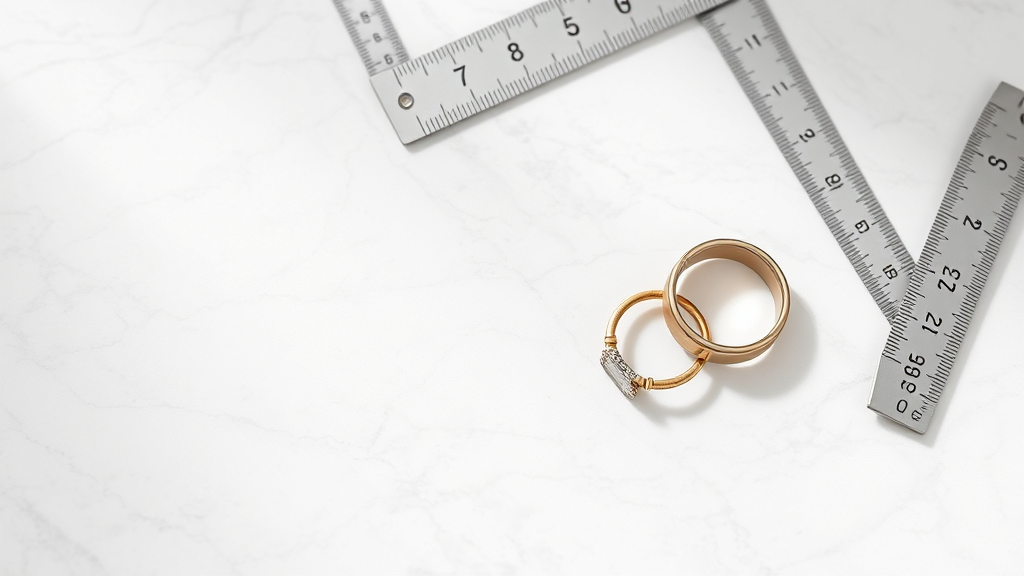
Place the existing ring on a ruler and measure the inner diameter from one inside edge to the opposite inside edge. Make sure you’re measuring the widest part of the ring’s interior circle for accuracy. This measurement in millimeters can then be converted to a ring size using standard conversion charts.
Alternatively, you can trace the inside of the ring on a piece of paper, creating a perfect circle outline. Then measure the diameter of this traced circle with a ruler. This method can be more accurate than trying to measure the actual ring, especially if the ring has an unusual shape or thick band that makes direct measurement difficult.
When using this method, ensure the reference ring fits the same finger you’re measuring for. Ring sizes can vary significantly between different fingers on the same hand, so using a ring from your middle finger to determine your ring finger size could lead to inaccurate results.
Using Printable Ring Sizers
Printable ring sizers offer a convenient and accurate way to measure ring size at home. Many jewelry websites and educational institutions like MIT provide free downloadable ring sizers that you can print on standard paper. These tools are designed to specific measurements and provide reliable results when printed and used correctly.
When using a printable ring sizer, ensure your printer is set to 100% scale with no automatic resizing. Most printable sizers include a test measurement or ruler to verify the print accuracy. After printing, cut out the sizer according to the provided instructions, typically creating a strip with size markings or circles.
For strip-style sizers, wrap the paper around your finger and slide the end through the provided slot until it feels comfortably snug. The number that aligns with the edge indicates your ring size. For circle-style sizers, try different sized circles until you find one that fits your finger perfectly – not too tight to slide over your knuckle, but not so loose that it spins freely.
The advantage of printable sizers is their precision, as they’re created using exact measurements used by professional jewelers. However, they rely on accurate printing, so always verify the test measurements before trusting your results. Some people find it helpful to laminate the sizer or print it on cardstock for durability and easier handling.
Professional Ring Sizing Tools
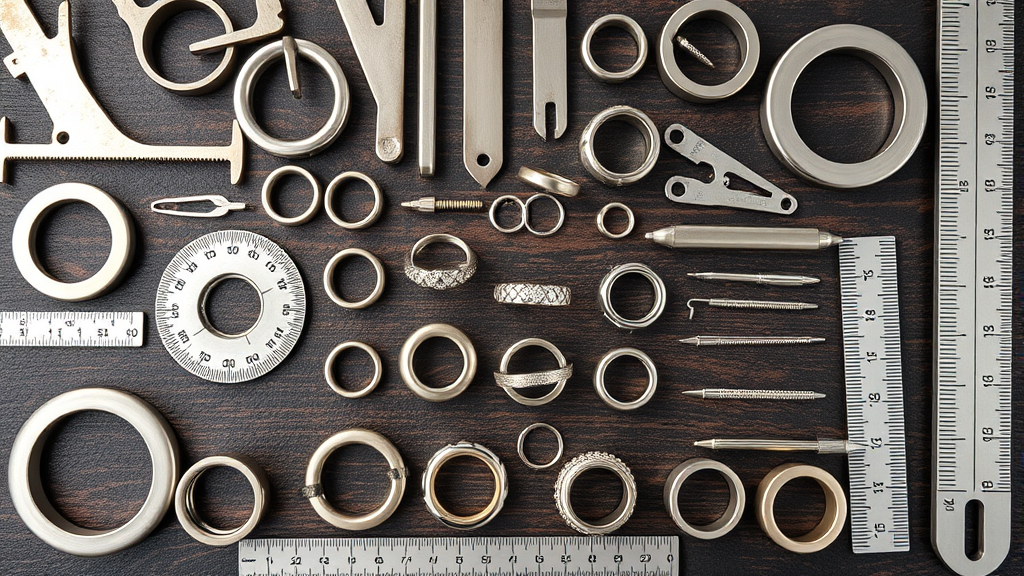
For those who frequently need to measure ring sizes or want the most accurate results possible, investing in professional ring sizing tools can be worthwhile. Ring mandrels, plastic ring sizers, and digital calipers are tools commonly used by jewelers that are also available for consumer purchase.
A ring mandrel is a tapered metal cone marked with ring sizes that allows you to measure both fingers and existing rings. To use a mandrel for finger measurement, you’ll need sizing rings or a flexible measuring tool that can be placed on the mandrel to determine size. For measuring existing rings, simply slide the ring onto the mandrel until it stops, and read the size marking.
Plastic ring sizers, also called ring size finders, consist of a set of plastic rings in various sizes. These tools provide the most accurate representation of how a ring will actually feel on your finger since they’re three-dimensional like real rings. Simply try different sizes until you find the one that slides over your knuckle comfortably but doesn’t spin excessively.
Digital calipers offer precise measurements for those who prefer exact millimeter readings. These tools can measure both the circumference of your finger and the inner diameter of existing rings with extreme accuracy. While more expensive than other options, calipers provide measurements that can be easily converted to any international ring sizing system.
Best Times to Measure Ring Size
Timing plays a crucial role in getting accurate ring size measurements, as fingers naturally fluctuate in size throughout the day due to various factors. Understanding when and why these changes occur can help you choose the optimal time for measurement and ensure a comfortable fit in all conditions.
Fingers are typically smallest in the morning when you first wake up and largest in the evening after a full day of activity. Temperature also significantly affects finger size – cold weather causes fingers to contract, while heat causes them to expand. For the most representative measurement, aim to measure your ring size during late morning or early afternoon when your fingers are at their average size.
Avoid measuring immediately after exercise, consuming alcohol, or eating salty foods, as these activities can cause temporary finger swelling. Similarly, don’t measure when you’re dehydrated or in extremely cold conditions, as these situations can make your fingers unusually small. The goal is to capture your finger size under normal, everyday conditions.
Pregnancy, medication, and health conditions can also affect finger size, sometimes permanently. If you’re experiencing any of these situations, consider waiting until your condition stabilizes before making important ring purchases, or factor in potential size changes when making your selection.
Common Sizing Mistakes to Avoid
One of the most common mistakes when learning how to measure ring size is measuring the wrong finger. Many people assume all fingers are the same size, but there can be significant differences even between adjacent fingers. Always measure the specific finger where you plan to wear the ring, and remember that your dominant hand is often slightly larger than your non-dominant hand.
Another frequent error is measuring too tightly or too loosely. The ring should slide over your knuckle with slight resistance but shouldn’t require force or cause discomfort. It should sit snugly at the base of your finger without spinning excessively, but still allow for natural finger movement and slight swelling.
Many people forget to account for the ring width when determining size. Wider bands (6mm and above) typically require a half to full size larger than narrow bands because they cover more surface area of your finger. If you’re measuring for a wide band, consider sizing up appropriately, or better yet, try on similar width rings to understand how they feel.
Measuring only once is another mistake that can lead to inaccurate results. Just like checking important measurements in other areas – similar to how you might verify steps when learning how to check engine oil – taking multiple ring size measurements helps ensure accuracy. Environmental factors, measurement technique, and even your grip can affect individual measurements, so always take at least three measurements and use the average.
Additional Tips for Accurate Measurements
Consider the style and design of the ring you’re planning to purchase when determining your size. Rings with wide bands, thick profiles, or decorative elements that extend below the band may require different sizing than simple, thin bands. When in doubt, visit a jewelry store to try on similar styles, even if you plan to purchase elsewhere.
Keep a record of your ring sizes for different fingers and different ring styles. This information becomes invaluable for future purchases and can help you notice if your ring size changes over time. Create a simple chart noting the finger, ring style, and size for easy reference.
If you’re purchasing a ring as a gift and can’t directly measure the recipient’s finger, look for creative alternatives. You might borrow one of their existing rings temporarily, ask a close friend or family member who might know their size, or consider adjustable rings or gift certificates that allow them to choose their own size.
For online purchases, always check the retailer’s sizing policy and return options. Many reputable online jewelers offer free sizing adjustments or exchanges within a certain timeframe. Some even provide free ring sizers or have try-at-home programs that let you test sizes before committing to a purchase.
Remember that professional jewelers can resize most rings if needed, though this service comes with additional costs and some limitations. Rings with continuous patterns, those made from certain materials like tungsten or titanium, or vintage pieces may be difficult or impossible to resize. Factor this into your decision-making process, especially for expensive or irreplaceable pieces.
Just as you might consult multiple sources when learning practical skills like how to clean a washing machine or how to unclog a toilet, don’t hesitate to use multiple methods to verify your ring size. Cross-referencing results from different measurement techniques can give you confidence in your final size selection.
Frequently Asked Questions
How accurate are home ring sizing methods compared to professional measurement?
Home ring sizing methods can be quite accurate when performed correctly, typically within a quarter to half size of professional measurements. The key is using proper technique and taking multiple measurements. Professional jewelers have specialized tools and experience, but home methods using printable sizers or existing rings can achieve similar accuracy. For expensive or custom rings, consider having your size verified professionally.
What should I do if I’m between two ring sizes?
If you’re between sizes, generally choose the larger size for comfort, especially for wider bands or if your knuckles are significantly larger than the base of your finger. A ring that’s slightly too large can often be adjusted with sizing beads or guards, while a ring that’s too small may require expensive resizing or could be uncomfortable to wear. Consider the ring style, your lifestyle, and the season when you’ll primarily wear the ring.
How much does temperature affect ring size measurements?
Temperature can significantly impact ring size, with fingers typically swelling in heat and contracting in cold. The difference can be as much as a full ring size between extreme temperatures. For most accurate results, measure at room temperature during moderate weather conditions. If you live in an extreme climate, consider measuring during the season when you’ll wear the ring most often.
Can I use the same ring size for all my fingers?
No, different fingers typically require different ring sizes, even on the same hand. Your ring finger is usually smaller than your middle finger, and your pinky is typically the smallest. Additionally, your dominant hand is often slightly larger than your non-dominant hand. Always measure the specific finger where you plan to wear the ring for the most accurate fit.
How often should I re-measure my ring size?
Ring size can change due to age, weight fluctuations, pregnancy, medical conditions, and seasonal changes. It’s wise to re-measure annually or whenever you notice existing rings feeling different. Major life changes, significant weight gain or loss, or health conditions affecting circulation may require more frequent measurements. Keep track of any changes to help inform future jewelry purchases.
What’s the difference between comfort fit and standard fit rings?
Comfort fit rings have a rounded interior that makes them easier to slide over knuckles and more comfortable for daily wear, but they may require sizing down by about a quarter size compared to standard fit rings. Standard fit rings have flat interior surfaces and typically provide a more secure fit. When measuring ring size, specify which type of fit you’re planning to purchase, as this affects the optimal size selection.
Are there any fingers I should avoid measuring on?
Avoid measuring fingers that are injured, swollen, or affected by medical conditions like arthritis, as these won’t give you accurate baseline measurements. Also, be cautious about measuring immediately after activities that cause swelling, such as exercise or flying. If you have circulation issues or conditions affecting finger size, consult with a healthcare provider about the best timing for accurate measurements.

Related Posts

How Long to Boil Lobster Tails: Cooking Guide

How Long to Fly from New York to London? Travel Times
