
How to Identify a Water Moccasin: Expert Guide
How to Identify a Water Moccasin: Expert Guide
Finding a snake near your home can set your heart racing, especially if you’re unsure whether it’s dangerous. Water moccasins, also known as cottonmouths, are one of North America’s most venomous snakes, and knowing how to spot one could literally save your life. These pit vipers are found throughout the southeastern United States, typically in wetlands, swamps, and areas near water sources—hence their memorable name.
The challenge? Water moccasins are often confused with harmless water snakes, and misidentification can lead to unnecessary panic or, conversely, dangerous underestimation of a genuine threat. This guide breaks down the physical characteristics, behavioral patterns, and habitat indicators that will help you confidently identify a water moccasin. Whether you’re a homeowner dealing with a backyard visitor or simply curious about local wildlife, understanding these distinctive features is essential knowledge for anyone living in snake country.
Beyond identification, we’ll explore what to do if you encounter one and how to get rid of snakes safely from your property. Let’s dive into the specifics that make water moccasins unique and potentially dangerous.
Physical Characteristics and Appearance
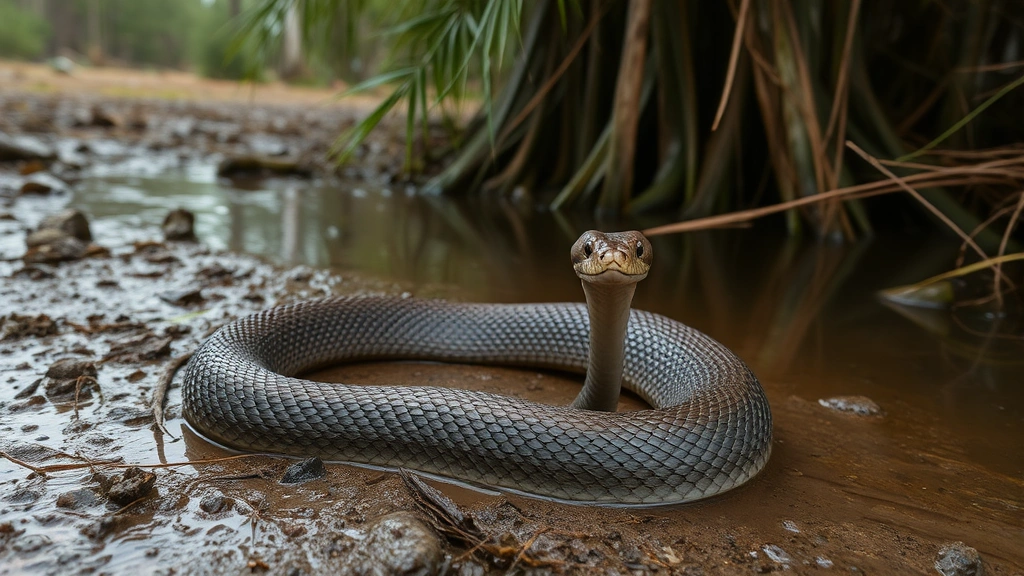
Water moccasins are medium to large-sized snakes, typically ranging from 24 to 48 inches in length, though some specimens can reach up to 60 inches. Their stocky, robust build is one of their most recognizable features—they’re noticeably thicker and more muscular than many other water snakes you might encounter. This heavyset body composition gives them a somewhat sluggish appearance, which actually contributes to their dangerous reputation since they’re less likely to flee from threats and more likely to stand their ground.
The coloration of water moccasins varies considerably depending on age, geographic location, and individual variation. Adults typically display dark browns, blacks, or olive tones, often with darker crossbands or blotches running across their bodies. Younger water moccasins tend to have brighter, more contrasting patterns with distinct bands, while older snakes may appear almost uniformly dark. This color variation is crucial to understand because it’s one of the main reasons people confuse them with harmless water snakes.
One of the most distinctive features is their scale texture. Water moccasins have keeled scales, which give them a somewhat rough or bumpy appearance compared to the smoother scales of many water snake species. When you observe a water moccasin from above, you’ll notice the scales create a somewhat dull finish rather than the glossy sheen you might see on other snakes.
Distinctive Head and Facial Features
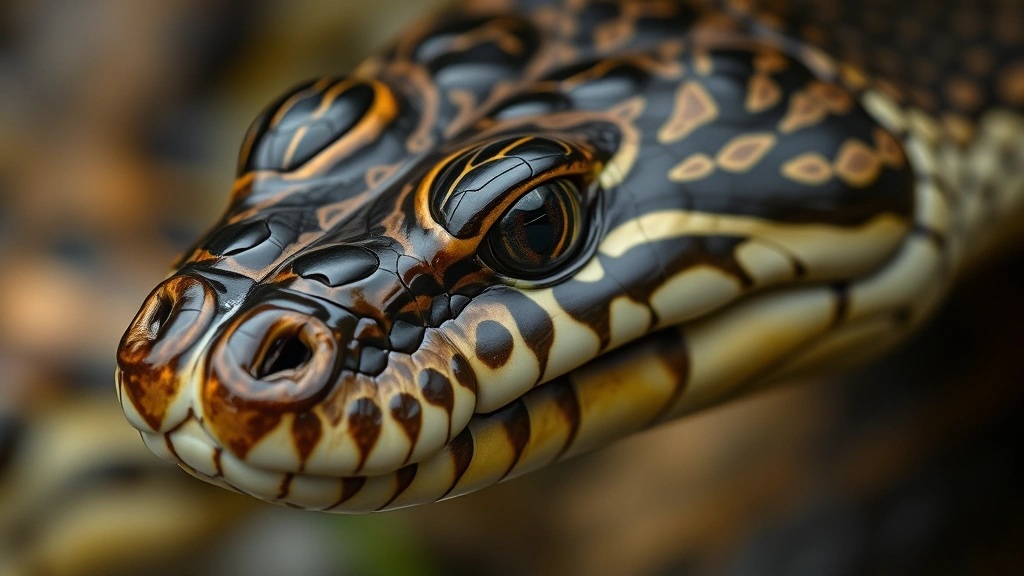
The head of a water moccasin is where you’ll find some of the most reliable identification markers. They possess a distinctly triangular or arrow-shaped head that’s noticeably wider than their neck—a characteristic shared with other pit vipers but less pronounced in harmless water snakes. This head shape is an adaptation that houses their venom glands, and it’s one of the quickest visual clues for identification.
Water moccasins have two heat-sensing pits located between their eyes and nostrils on each side of their head. These pits are sensory organs that allow the snake to detect warm-blooded prey in complete darkness. While you might not always see these clearly from a distance, they’re part of the pit viper family’s defining characteristics. The presence of these facial pits is a significant distinguishing feature from non-venomous water snakes, which lack them entirely.
The eyes of a water moccasin are another telling feature. They have a distinctive vertical pupil, similar to a cat’s eye, which is characteristic of pit vipers. Additionally, water moccasins have a light-colored line running from their eye to their jaw angle—sometimes described as an eye stripe or facial line. This marking is particularly visible in younger snakes and can help with identification even from a distance.
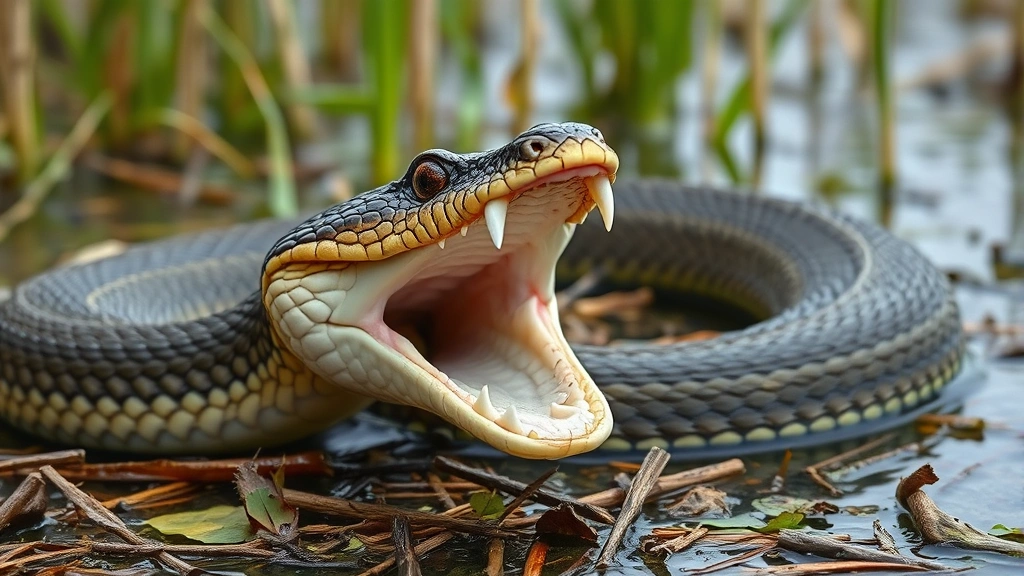
Perhaps the most dramatic feature is what happens when a water moccasin feels threatened. They open their mouths extremely wide, displaying the white or pale interior of their mouth—this is where the “cottonmouth” nickname originates. This defensive display is a warning signal and a clear indication that you’re dealing with a venomous snake. Few other North American snakes perform this behavior as dramatically.
Body Patterns and Coloration
Understanding the color patterns of water moccasins requires recognizing that they’re highly variable. Juvenile water moccasins are often brighter and more distinctly patterned than adults, featuring prominent crossbands in contrasting colors like orange-red, yellow, or bright brown against darker backgrounds. This vivid patterning serves as a warning to potential predators that these snakes are venomous.
As water moccasins mature, their patterns typically become less distinct. Many adult snakes develop a predominantly dark coloration that can appear almost black, particularly in certain geographic regions. Some adults retain faint crossbands throughout their lives, while others show only vague patterns or solid coloration. This gradual pattern fading is why age plays such a significant role in identification difficulty.
The belly or ventral surface of water moccasins is typically lighter than their dorsal (back) surface, often displaying a cream, yellow, or pale gray coloration with dark blotches or spots. This belly pattern is another distinguishing feature from certain water snakes. The tail of a water moccasin is typically darker than the body and may have a slightly flattened appearance, an adaptation for aquatic life.
Water moccasins also display what herpetologists call a “postocular stripe”—a dark line running backward from the eye. Combined with a pale-colored labial stripe (the line along the lips), these facial markings create a distinctive pattern that’s particularly useful for identification. When you observe a water moccasin head-on, these striping patterns create an almost mask-like appearance.
Behavior and Habitat Indicators
Geographic location is your first clue. Water moccasins are found exclusively in the southeastern United States, primarily in coastal regions and areas with significant water bodies. Their range extends from North Carolina south through South Carolina, Georgia, and Florida, and westward through Louisiana, eastern Texas, and into Arkansas. If you’re in the northern United States or western regions outside this range, you’re extremely unlikely to encounter a water moccasin, which immediately helps narrow down identification.
Habitat preference is another strong indicator. Water moccasins are semi-aquatic snakes that spend much of their time in or near water—swamps, marshes, cypress stands, river bottoms, and coastal areas. However, they’re also known to venture onto land, particularly during breeding season or when seeking new territory. Finding a snake near a pond, lake, swamp, or river in the appropriate geographic region significantly increases the likelihood of it being a water moccasin if other identification features match.
The behavior of water moccasins is distinctly different from harmless water snakes. They’re ambush predators that tend to hold their ground rather than flee. When threatened, a water moccasin will coil, raise its head, and perform that dramatic “cottonmouth” display. Harmless water snakes, by contrast, typically flee quickly or play dead. This behavioral difference can be a crucial identification tool, though obviously you should maintain a safe distance to observe any snake’s behavior.
Water moccasins are primarily nocturnal and crepuscular, meaning they’re most active during dawn, dusk, and nighttime hours. During the heat of the day, they often rest in shaded areas near water. If you encounter a snake in the middle of the day in your yard, it’s less likely to be a water moccasin, though this isn’t a definitive rule. During cooler months, water moccasins become less active and may remain in hibernacula (winter dens) for extended periods.
Common Lookalikes and How to Differentiate
The most common confusion occurs between water moccasins and various harmless water snakes, particularly the Northern Water Snake and the Banded Water Snake. Understanding the key differences is essential for accurate identification. Northern Water Snakes have more slender bodies compared to water moccasins’ stockier build. Their heads are more gradually tapered rather than distinctly triangular, and they lack the prominent heat-sensing pits visible on water moccasins.
Water snakes also have round pupils rather than the vertical slit pupils of water moccasins. The scales of water snakes are typically keeled but appear less pronounced than those of water moccasins, giving them a somewhat smoother appearance. Additionally, water snakes display more extreme behavioral differences—they’re notably skittish and will flee aggressively into water when threatened, rather than standing their ground with the defensive posturing of a water moccasin.
Garter snakes are another species sometimes confused with water moccasins, particularly by those unfamiliar with snake identification. However, garter snakes are significantly smaller (rarely exceeding 24 inches), have three light-colored stripes running the length of their bodies, and possess a completely different body shape. Their slender profile is unmistakable once you know what to look for.
To properly differentiate water moccasins from lookalikes, focus on the combination of features rather than relying on a single characteristic. The triangular head shape combined with heat-sensing pits, vertical pupils, distinctive facial striping, and stocky body composition create a unique profile. If you’re still uncertain, the safest approach is to assume any suspicious snake in water moccasin territory is venomous and treat it accordingly. When in doubt, contacting a local wildlife expert or herpetologist is always the wisest choice.
Safety and Response Protocol
If you encounter what you believe to be a water moccasin, the primary rule is simple: maintain distance and avoid interaction. Water moccasins are not aggressive in the sense of actively pursuing humans, but they will defend themselves if they feel threatened. Most snake bites occur when people attempt to capture, kill, or handle snakes. Your safety depends on respecting the snake’s space.
Maintain at least six feet of distance from any suspicious snake. Water moccasins can strike with surprising speed and accuracy, and their venom is potent enough to cause serious injury. Never attempt to kill the snake—this dramatically increases bite risk and is unnecessary for your safety. If the snake is in your immediate living space, calmly move away and contact a local wildlife removal service or animal control.
For those interested in how to get rid of snakes from your property, professional removal is the safest option. Wildlife professionals have the training, equipment, and experience to safely relocate snakes without harm to themselves or the animal. They can also provide advice on habitat modification to reduce the likelihood of future encounters.
Prevention is far superior to confrontation. Water moccasins are attracted to areas with rodent populations, so controlling rats and mice reduces snake attraction. Removing debris piles, tall grass, and other hiding spots eliminates shelter. Installing snake-proof fencing around pools or garden areas can provide additional protection. Sealing gaps and crevices around your home’s foundation prevents snakes from entering structures.
If you or someone else is bitten by a water moccasin, seek immediate medical attention. Call 911 or get to an emergency room without delay. Antivenom treatment is available and highly effective when administered promptly. Do not attempt home remedies, do not apply tourniquets incorrectly, and do not waste time trying to capture the snake for identification—medical professionals can determine appropriate treatment based on symptoms. Water moccasin venom can cause tissue damage, swelling, and systemic effects that require professional medical intervention.
Frequently Asked Questions
What time of year are water moccasins most active?
Water moccasins are most active during warmer months, particularly from late spring through early fall. Peak activity occurs during summer when temperatures are warmest. During winter months, they enter a hibernation-like state called brumation and are rarely seen. However, in southern Florida and coastal areas, they may remain active year-round due to milder temperatures.
Can water moccasins climb trees?
Water moccasins are primarily terrestrial and semi-aquatic snakes, though they can climb low vegetation and structures if necessary. They’re not strong climbers like some other snake species, but they can access low branches or man-made structures. Most of their time is spent on the ground or in water rather than in elevated positions.
How venomous is a water moccasin bite?
Water moccasin venom is hemotoxic, meaning it damages tissue and blood cells. A bite can cause severe pain, swelling, and tissue damage, potentially requiring hospitalization and antivenom treatment. While fatalities are rare with modern medical care, untreated bites can result in permanent damage or loss of limb tissue. The severity depends on factors including bite location, amount of venom injected, and how quickly medical treatment is received.
Are water moccasins found in all southern states?
No, water moccasins have a specific range limited to the southeastern United States. They’re found in coastal plains and wetland areas from North Carolina through South Carolina, Georgia, Florida, and westward through Louisiana and eastern Texas. They’re absent from inland mountain regions and areas outside their established range.
How can I tell if a water snake is harmless?
Harmless water snakes have slender bodies, round pupils, and lack heat-sensing pits. Their heads are not distinctly triangular, and they typically flee aggressively when threatened rather than standing their ground. They may display a defensive posture by flattening their bodies, but they don’t perform the dramatic “cottonmouth” display that water moccasins are famous for.
What should I do if I see a water moccasin in my yard?
Contact a local wildlife removal service or animal control. Do not attempt to capture, kill, or handle the snake yourself. Maintain distance and keep children and pets away from the area. A professional can safely remove the snake and provide advice on habitat modifications to prevent future encounters.
Do water moccasins have any natural predators?
Yes, water moccasins have several predators including larger snakes (like kingsnakes and racers), herons, egrets, alligators, and occasionally hawks and eagles. However, their venom provides significant protection, and most predators learn to avoid them. Young water moccasins are more vulnerable to predation than adults.
Can I use a snake repellent to keep water moccasins away?
Commercial snake repellents have limited effectiveness. The most reliable approach involves habitat modification—removing rodent populations, eliminating hiding spots, and sealing entry points to structures. These practical measures are far more effective than chemical repellents for preventing water moccasin encounters.

Related Posts

How Long to Boil Lobster Tails: Cooking Guide

How Long to Fly from New York to London? Travel Times
