
Dispose Old Gasoline Safely: Expert Tips
How to Dispose of Old Gasoline Safely: Expert Tips for Homeowners
Old gasoline sitting in your garage, shed, or storage area is a ticking time bomb. Whether it’s leftover fuel from last season’s lawn mower, an abandoned gas can, or fuel drained from equipment you no longer use, improperly stored gasoline poses serious fire hazards, environmental risks, and legal consequences. Many homeowners don’t realize that gasoline degrades over time, becoming more volatile and dangerous. The good news is that disposing of old gasoline safely is straightforward when you follow proper procedures and understand your local regulations.
This comprehensive guide walks you through every step of identifying old gasoline, assessing its condition, and disposing of it responsibly. We’ll cover EPA regulations, safe storage practices, and multiple disposal methods so you can eliminate this hazard from your property with confidence.
Why Old Gasoline Is Dangerous
Understanding the dangers of old gasoline is the first step toward taking it seriously. Gasoline is inherently unstable, and this instability increases dramatically as it ages. Fresh gasoline contains volatile compounds that evaporate quickly, but aged fuel becomes thicker, gummier, and more prone to spontaneous combustion.
When gasoline sits for months or years, several chemical changes occur. The lighter hydrocarbons evaporate, leaving behind heavier, more oxidized compounds. This process creates varnish and sediment that can damage small engine fuel systems. More importantly, old gasoline becomes increasingly flammable and can ignite at lower temperatures than fresh fuel.
The fire risk is particularly acute in garages and sheds where temperatures fluctuate and ignition sources exist. A single spark from a tool, electrical outlet, or static electricity can ignite old gasoline fumes. Additionally, old fuel leaking from corroded containers contaminates soil and groundwater, creating environmental hazards that can result in significant cleanup costs and legal liability.
For homeowners storing materials in the same space as old gasoline, the risk extends to family members and guests. Children and pets may accidentally contact contaminated containers, and the fumes alone can cause respiratory irritation and dizziness.

How to Identify Old or Bad Gasoline
Not all gasoline in your storage area is necessarily bad, but certain signs indicate fuel has degraded and should be disposed of immediately. Learning to identify problematic gasoline prevents you from accidentally using it in equipment, which could cause engine damage or failure.
Visual Inspection
Start by examining the gasoline’s appearance. Fresh gasoline is clear to pale yellow. Old or degraded gasoline often appears darker, cloudy, or has a brownish tint. These color changes indicate oxidation and the accumulation of varnish. Look for sediment at the bottom of the container—this debris indicates chemical breakdown and contamination.
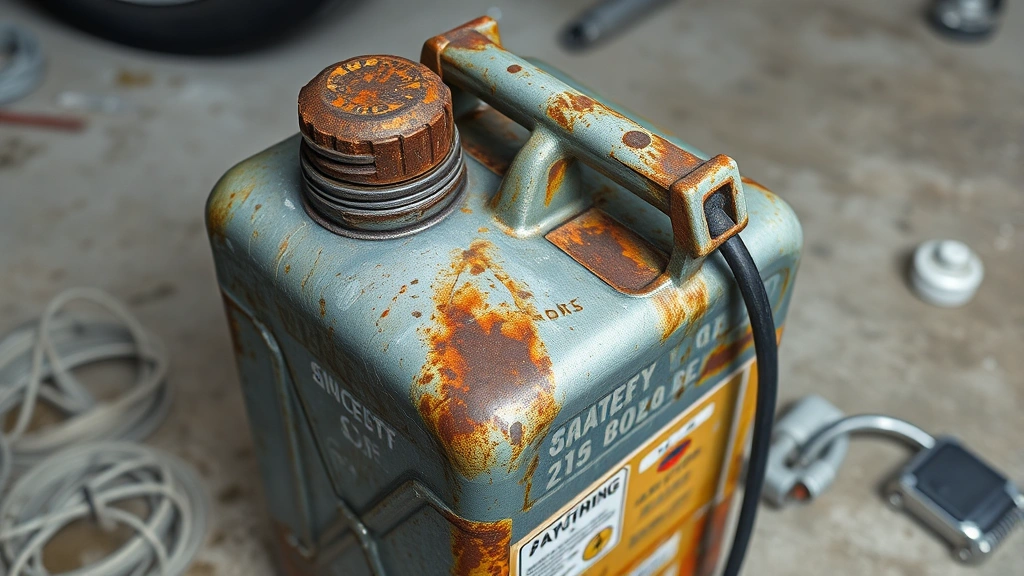
If the container itself shows rust, corrosion, or leaking, assume the gasoline inside is compromised. Metal containers exposed to moisture develop rust that flakes into the fuel, and any leakage means exposure to water and air, both of which accelerate degradation.
Smell Test
Fresh gasoline has a distinctive, pungent smell. Old gasoline develops a stale, sour, or varnish-like odor. If the smell is noticeably different from fresh fuel, the gasoline has likely degraded. However, never lean directly over old gasoline containers to smell them—fumes can cause dizziness or headaches. Instead, open the container slightly and waft the air toward your nose from a safe distance.
Age Assessment
If you can’t remember when the gasoline was stored, assume it’s old. Gasoline stored in an open container degrades in weeks. Sealed containers in cool conditions may last 6-12 months. Anything stored longer than a year is suspect. For equipment-specific fuel, check manufacturer recommendations—many specify fuel shouldn’t be stored more than 30-90 days without stabilizer additives.
Safe Storage Before Disposal
Once you’ve identified old gasoline that needs disposal, proper storage until disposal day is critical. Unsafe storage during this interim period can negate all your good intentions about proper disposal.
Container Selection
Never store gasoline in glass containers or unapproved plastic jugs. Use only approved metal gasoline containers or heavy-duty plastic containers specifically rated for fuel storage. These containers meet safety standards and prevent leakage. Ensure containers are clearly labeled “GASOLINE” or “FUEL” with large, visible text.
Storage Location
Store containers in a well-ventilated area away from living spaces, ignition sources, and electrical equipment. Garages are acceptable only if the fuel is stored far from water heaters, furnaces, or electrical panels. Sheds with good ventilation work well. Never store gasoline in basements, attics, or enclosed spaces without ventilation. Keep containers away from heat sources and direct sunlight, which accelerates degradation and increases vapor pressure inside containers.
Containment and Labeling
Place containers in a secondary containment area—a spill tray or shallow basin—to catch any leaks. This prevents soil contamination and makes cleanup easier. Ensure the container cap is tightly sealed to minimize vapor release and prevent contamination from water or debris. Keep containers away from children and pets, ideally in a locked storage cabinet.
Disposal Methods Explained
Several legal disposal options exist for old gasoline, and choosing the right one depends on your location, the quantity of fuel, and local resources.
Hazardous Waste Collection Events
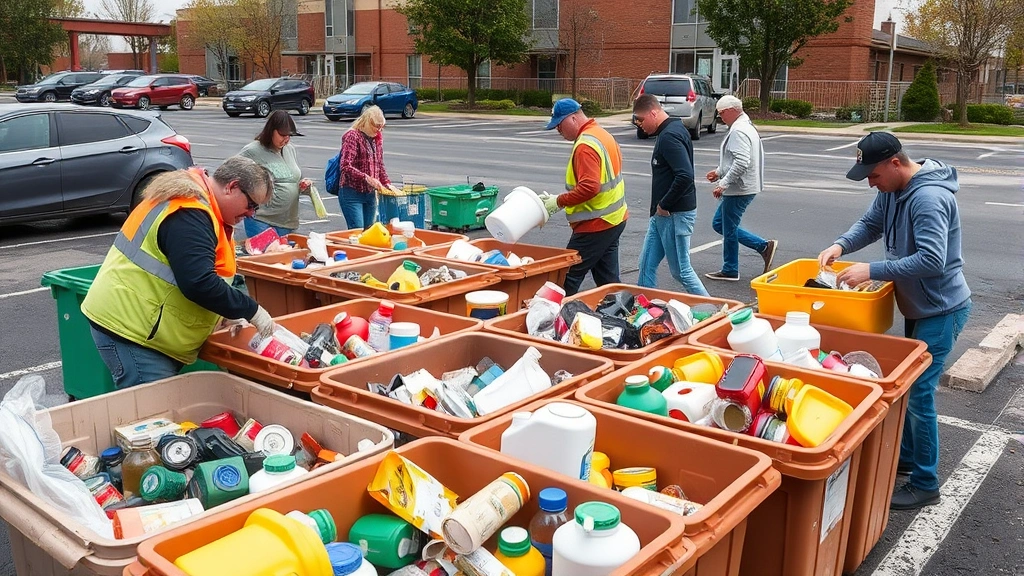
Most communities host annual or semi-annual hazardous waste collection days where residents can drop off old gasoline, paint, batteries, and other hazardous materials for free or minimal cost. These events are coordinated by local environmental agencies or solid waste departments. Contact your city or county waste management office to find collection dates and locations in your area. This is often the easiest and most responsible option for homeowners with small quantities of old fuel.
Permanent Hazardous Waste Facilities
Many communities maintain permanent hazardous waste drop-off centers that accept gasoline year-round. These facilities have trained staff and proper equipment for safe fuel handling. Call ahead to confirm they accept gasoline, learn their hours, and ask about any fees. Bring your container and documentation of the fuel’s origin if requested. This method works well if you need disposal outside collection event windows.
Recycling and Reclamation Centers
Some specialized recycling facilities reclaim and reprocess old gasoline for industrial use. These centers can extract usable fuel from degraded gasoline, making it an environmentally preferable option when available. Contact local environmental services or search online for “fuel recycling near me” to locate these facilities. They typically charge a small fee but ensure maximum environmental responsibility.
Service Stations and Auto Shops
Many full-service gas stations and automotive repair shops accept old gasoline for disposal or recycling. Call ahead to confirm, as policies vary. Some shops may charge a small fee, while others accept it free as part of their environmental responsibility programs. This option is convenient if you have a preferred service station or mechanic.
What NOT to Do
Never pour old gasoline down drains, into soil, or onto your property. This contaminates groundwater and violates federal environmental laws. Don’t burn old gasoline or attempt to dispose of it through regular trash collection—gasoline is classified as a hazardous waste and must be handled through proper channels. Never mix old gasoline with other substances hoping to neutralize it or make it safe—this creates unpredictable chemical reactions and increases danger.
When you need to handle other hazardous materials around your home, similar caution applies. Learning proper disposal methods for various household hazards protects your family and environment. For instance, if you’re also dealing with pest problems while managing your garage space, understanding how to get rid of mites or how to get rid of German cockroaches ensures comprehensive home safety.
Local Regulations and Legal Requirements
Gasoline disposal is heavily regulated at federal, state, and local levels. Understanding these regulations prevents legal problems and ensures you’re disposing of fuel responsibly.
EPA Regulations
The Environmental Protection Agency classifies gasoline as a hazardous waste under the Resource Conservation and Recovery Act (RCRA). This means all gasoline disposal must follow specific procedures. For homeowners generating small quantities—typically less than 100 kilograms (220 pounds) per month—you’re classified as a “conditionally exempt small quantity generator.” This classification provides some regulatory relief but doesn’t eliminate your responsibility to dispose of gasoline properly.
State and Local Requirements
States and localities often have stricter regulations than federal standards. Some states require gasoline to be disposed of only at certified facilities, while others allow broader options. Your state environmental agency’s website contains specific disposal requirements and approved facilities. Many states provide searchable databases of hazardous waste collection sites.
Documentation and Liability
When you dispose of gasoline at an approved facility, request documentation of the disposal. Keep receipts and any certificates provided. This documentation protects you legally by proving you disposed of the hazardous material properly. If the fuel later causes problems—such as contamination discovered on your property—documentation shows you took responsible action.
Property liability extends beyond your immediate property line. If gasoline from your property contaminates a neighbor’s well or soil, you may face liability for cleanup costs, which can reach tens of thousands of dollars. Proper disposal prevents these expensive scenarios.
Prevention Tips for Future Storage
The best approach to old gasoline is never accumulating it in the first place. Implementing smart storage and usage practices prevents future hazardous waste disposal needs.
Use Fuel Stabilizers
If you store gasoline for equipment like lawn mowers or generators, add EPA-approved fuel stabilizer before storage. These additives extend gasoline’s shelf life to 12-24 months by preventing oxidation. Follow product instructions carefully and mix stabilizer with gasoline before storing. This approach works well for seasonal equipment that sits unused for months.
Rotate Stock Regularly
If you maintain gasoline reserves, establish a rotation system. Use older fuel first, and replace it with fresh fuel. Label containers with storage dates so you know which fuel is oldest. This practice ensures you’re never storing fuel longer than necessary and reduces degradation risk.
Store in Appropriate Containers
Invest in high-quality, approved gasoline containers made of metal or heavy-duty plastic. These containers are engineered to prevent leakage and vapor loss. Avoid cheap plastic containers that degrade quickly and don’t seal properly. Quality containers cost more initially but prevent fuel loss, contamination, and environmental damage.
Maintain Optimal Storage Conditions
Store gasoline in cool, dark, well-ventilated areas away from temperature fluctuations. Avoid basements, attics, and enclosed spaces. Sheds, detached garages, or outdoor storage areas with proper ventilation are ideal. Keep containers away from direct sunlight, which heats fuel and increases vapor pressure. Stable, cool temperatures significantly extend fuel shelf life.
Use Fuel Before Expiration
For equipment-specific fuel, check manufacturer recommendations for maximum storage duration. Many recommend using fuel within 30-90 days for small engines. Plan your equipment use accordingly, and don’t store fuel longer than recommended. If equipment sits unused for extended periods, drain the fuel before storage and dispose of it properly.
Consider Equipment Alternatives
Modern electric lawn mowers, leaf blowers, and other yard equipment eliminate fuel storage entirely. While electric equipment requires battery charging, it eliminates the hassle and hazard of fuel storage and disposal. As technology improves and battery life extends, electric equipment becomes increasingly practical for homeowners.
For more home maintenance insights, explore our FixWiseHub Blog for comprehensive how-to guides covering various household topics.
FAQ
How long can gasoline be stored safely?
Fresh gasoline in a sealed container stored in cool conditions can last 6-12 months. With fuel stabilizer additives, it may extend to 24 months. Gasoline in open containers or poor conditions degrades in weeks. Always check for signs of degradation regardless of storage duration.
Can I use old gasoline in my lawn mower?
Old gasoline may damage small engines, causing performance problems, hard starts, or fuel system damage. It’s not worth risking equipment damage. Always dispose of old gasoline properly and use fresh fuel in your equipment.
What’s the cost of disposing of old gasoline?
Most hazardous waste collection events accept gasoline free of charge. Permanent facilities may charge $5-$20 depending on quantity and location. Some service stations accept it free as part of their environmental programs. Call ahead to confirm pricing and availability.
Is it legal to pour old gasoline down the drain?
No. Pouring gasoline down drains violates EPA regulations and state environmental laws. It contaminates water supplies and can result in fines up to $50,000 or more. Always dispose of gasoline through proper channels.
How do I find hazardous waste collection sites near me?
Contact your city or county waste management office, visit your state environmental agency’s website, or search Earth911.com’s hazardous waste database. Most communities maintain searchable directories of approved disposal facilities.
Can I mix old gasoline with new gasoline?
Mixing old and new gasoline contaminates the fresh fuel and doesn’t solve the disposal problem. Dispose of old gasoline separately through proper channels. Only combine gasoline if both batches are fresh and the same octane rating.
What should I do if gasoline spills?
Evacuate the area and avoid ignition sources. Open windows for ventilation. For small spills, use absorbent materials like kitty litter or absorbent pads to contain the spill. Place absorbed material in a sealed container and dispose of it as hazardous waste. For large spills, contact local hazmat teams or environmental agencies immediately.
External Resources for Additional Information:
For comprehensive guidance on hazardous waste disposal, visit the EPA’s Hazardous Waste page for federal regulations and resources. This Old House offers practical home maintenance advice including fuel storage safety. Family Handyman provides step-by-step guides for homeowners managing hazardous materials. Your local Earth911 database helps locate certified hazardous waste facilities in your area. Many home improvement retailers also provide disposal location information and fuel storage product recommendations.
Disposing of old gasoline safely protects your family, your property, and the environment. By understanding the dangers, identifying problematic fuel, and using approved disposal methods, you eliminate a serious hazard from your home. Take action today to locate your nearest hazardous waste collection site and schedule disposal of any old gasoline currently in storage. Your responsible action sets an example for neighbors and contributes to community environmental protection.

Related Posts

Superscript in Google Docs: Expert Tips

Strikethrough in Excel: Easy Steps for Beginners
