

How to Decrystallize Honey: Expert Tips
How to Decrystallize Honey: Expert Tips for Restoring Liquid Gold
There’s nothing quite like reaching for your favorite jar of honey only to find it’s turned into a thick, grainy paste. Crystallized honey might look unappetizing, but here’s the good news: it’s completely natural, totally safe, and remarkably easy to fix. In fact, honey crystallization is simply a sign that you’ve got genuine, pure honey on your hands. Most commercial honey is heavily processed to prevent this very occurrence, so if your honey has crystallized, you’re likely working with the real deal.
The frustration of solid honey is real, though. Whether you’re trying to drizzle it over your morning yogurt or use it in a recipe, crystallized honey can feel like an obstacle. But don’t toss that jar. With a few simple techniques, you can restore your honey to its smooth, pourable state in minutes. We’ve gathered expert methods that range from the gentlest approaches to faster alternatives, so you can choose what works best for your situation.
Beyond just solving the immediate problem, understanding why honey crystallizes and how to prevent it will help you keep your honey collection in perfect condition for years to come. Let’s dive into the science, the solutions, and the strategies that’ll keep your honey flowing smoothly.
Why Does Honey Crystallize?
Before we tackle the solution, let’s understand what’s actually happening to your honey. Crystallization isn’t spoilage or degradation—it’s a natural chemical process that occurs when glucose in honey separates from water and forms crystals. Raw honey contains about 17% water and 82% sugars, primarily glucose and fructose. When conditions align just right, glucose naturally wants to solidify, leaving behind a more liquid fructose-rich layer.
The speed of crystallization depends on several factors. Raw honey crystallizes faster than processed honey because it lacks the additives and heat treatments that prevent crystal formation. Temperature plays a significant role too; honey crystallizes most readily between 50-60°F, which is why your pantry might be the perfect culprit. Honey stored in a cool kitchen will crystallize faster than honey kept at room temperature or warmer.
The type of honey matters as well. Honey with higher glucose content, like clover honey, crystallizes faster than honey with higher fructose content, such as acacia honey. Pollen and fine particles in raw honey also serve as nucleation points where crystals preferentially form. This is actually another indicator that you’ve got quality, minimally processed honey worth preserving.
Understanding this process removes the anxiety many people feel about crystallized honey. It’s not broken—it’s just temporarily inconvenient. The flavor remains unchanged, the nutritional profile stays intact, and the honey is every bit as usable as it was before crystallization began.
The Warm Water Bath Method
This is the gentlest and most reliable approach for decrystallizing honey, and it’s the method preferred by beekeepers and honey experts worldwide. The beauty of this technique is that it requires minimal heat, which preserves all the beneficial enzymes and compounds that make raw honey special.
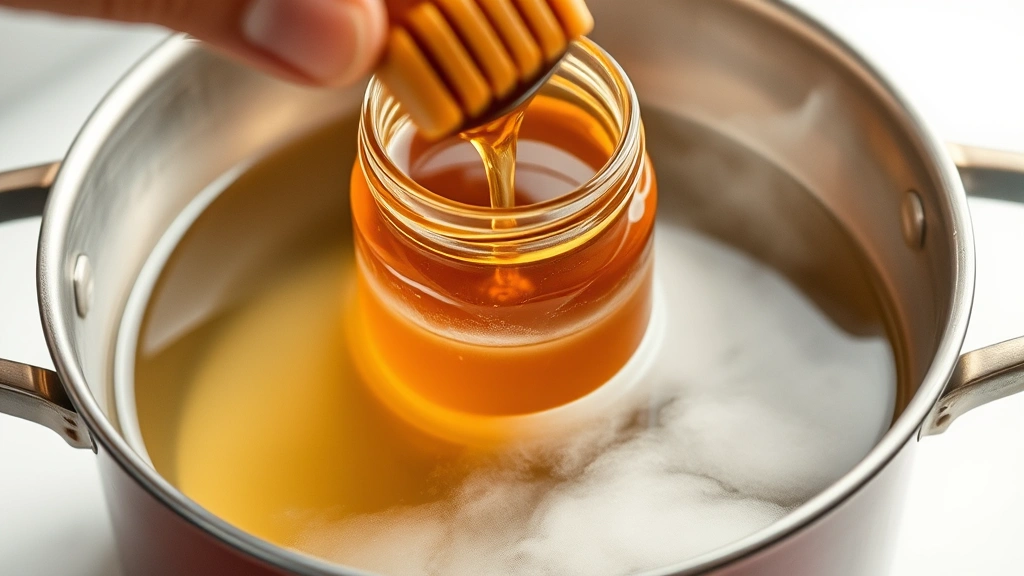
Here’s what you’ll need: your crystallized honey jar, a larger pot or container, warm water, and a thermometer (optional but helpful). The key principle is indirect heat—you’re never heating the honey directly, which could damage its delicate properties.
Step-by-step process:
- Fill a large pot with water and heat it to approximately 110-120°F. If you don’t have a thermometer, aim for water that’s warm to the touch but not uncomfortably hot—think bathwater temperature, not shower-scalding temperature.
- Place your sealed honey jar into the warm water. The jar lid should remain on to prevent water from contaminating your honey.
- Let it sit for 15-30 minutes, depending on how crystallized your honey is. Lightly crystallized honey might need just 15 minutes, while heavily crystallized jars may need the full 30 minutes or slightly longer.
- Check the progress by gently tilting the jar. If it still feels grainy, return it to the water bath and check again in 5-minute intervals.
- Once the honey reaches your desired consistency, remove it from the water and allow it to cool slightly before use.
The reason this method works so well is temperature sensitivity. At around 110-120°F, the glucose crystals begin to dissolve back into the honey’s liquid state without being exposed to temperatures that would degrade heat-sensitive compounds. This preserves the honey’s enzyme content, antioxidants, and other beneficial properties that make raw honey worth seeking out in the first place.
Using Your Oven Gently
If you prefer an oven-based approach, this method offers another low-temperature option, though it requires more attention than the water bath technique. The advantage here is that you’re not constantly checking on your honey, but you need to be precise with temperature control.
Set your oven to the lowest possible temperature—ideally between 105-110°F. Many modern ovens don’t go quite this low, so if yours bottoms out at 150°F or higher, this method isn’t ideal for you. Place your sealed honey jar on a middle oven rack and set a timer for 15 minutes. Check the honey’s consistency, and if it’s still crystallized, give it another 5-10 minutes.
The critical thing here is patience and restraint. You’re not trying to heat the honey quickly; you’re gradually raising its temperature to the point where crystallization reverses. Ovens with poor temperature regulation can overshoot, potentially overheating your honey. If your oven temperature fluctuates significantly, the water bath method becomes the safer choice.
One advantage of this approach is that it works beautifully when you need to decrystallize larger quantities. You can place multiple jars on the rack simultaneously, which isn’t as practical with the water bath method. Just ensure the jars don’t touch each other and that there’s adequate air circulation around each one.
The Microwave Approach
The microwave method is the fastest option, but it requires the most caution because it’s easy to overheat honey in seconds. This approach works best when you need immediate results and are willing to accept slightly more risk to your honey’s raw qualities.
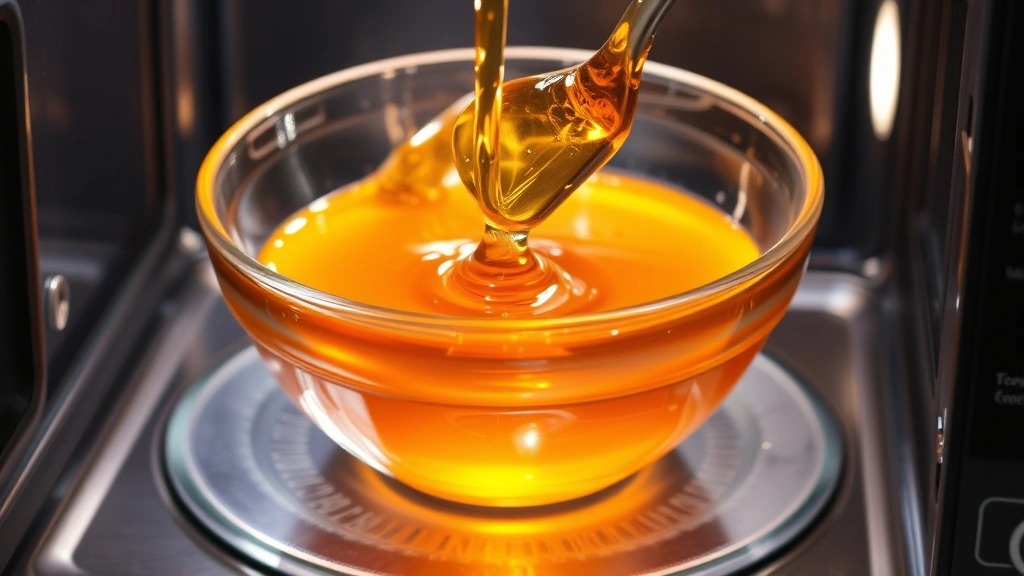
Transfer a portion of crystallized honey into a microwave-safe bowl—don’t heat it in the jar, as the glass can become dangerously hot. Microwave on 50% power (defrost setting) for 30 seconds. This is similar to how to defrost chicken fast, where lower power settings prevent damage to delicate structures.
Check the consistency and stir gently. If it’s still crystallized, give it another 15-20 seconds at 50% power. Most honey will fully decrystallize within 60 seconds total using this method. The key is using reduced power rather than full microwave strength, which can heat honey to temperatures that damage its beneficial compounds.
The microwave method is ideal when you’re preparing a single serving or small amount for immediate use. For larger quantities or if you’re committed to preserving every nutrient, the water bath remains superior. However, if you’re simply making a honey drizzle for your morning toast and need it ready now, the microwave delivers.
Prevention Tips for Long-Term Storage
Once you’ve successfully decrystallized your honey, you might want to prevent it from crystallizing again. While crystallization is natural and harmless, avoiding it altogether makes your honey more convenient to use. Understanding proper storage techniques can extend the time between crystallization cycles significantly.
Temperature management: Store honey at room temperature or slightly warmer—ideally between 70-75°F. Avoid storing it in cool pantries, basements, or refrigerators, as these promote crystallization. If you know how long it takes for water to boil, you understand that temperature changes matter significantly. The same principle applies to honey storage; consistency in temperature prevents crystallization better than fluctuating conditions.
Container selection: Use glass jars with tight-sealing lids rather than plastic. Glass doesn’t absorb moisture or flavors, and tight seals prevent humidity from entering the container. Humidity accelerates crystallization, so keeping your honey in a dry environment matters.
Avoid mixing: Don’t stir crystallized honey repeatedly while trying to use it. This actually encourages more crystallization by introducing air and creating more surface area for crystals to form. Use gentle scooping motions instead.
Storage location strategy: Keep honey away from windows and direct sunlight. Store it in a kitchen cabinet or pantry where temperature remains relatively stable. Avoid the refrigerator entirely—this is the fastest way to guarantee crystallization.
Blending honey types: If you have access to different honey varieties, mixing higher-fructose honey (like acacia or tupelo) with lower-fructose honey can slow crystallization in your storage jar. This works because fructose-rich honey stays liquid longer, diluting the glucose concentration that promotes crystal formation.
Troubleshooting Common Issues
Sometimes decrystallization doesn’t go perfectly smoothly. Here are solutions to common problems you might encounter:
Honey is still partially crystallized after treatment: This usually means the temperature wasn’t quite warm enough or the heating time was insufficient. Return it to your chosen heating method for another 5-10 minutes. Patience is more effective than aggressive heat here.
Honey has become watery or separated: You’ve likely overheated it. This is actually okay—the honey is still perfectly usable. Stir it gently to recombine any separated layers. Going forward, use lower temperatures and shorter heating times. Think of this like how to make almond milk where temperature precision prevents unwanted texture changes.
Crystallization returns within days: Your honey probably has a naturally high glucose content, which means crystallization is its default state. Instead of repeatedly decrystallizing, consider keeping a small serving jar at room temperature for daily use while storing the bulk of your honey somewhere slightly warmer.
Honey smells or tastes fermented: This isn’t from crystallization—it’s a separate issue indicating bacterial growth, likely from moisture contamination. This honey should be discarded. Prevent this by keeping your jar sealed and storing honey away from humid environments.
Jar is too large to fit in your water bath: Use a larger pot or container for the water bath, or transfer honey to a smaller jar temporarily. You can also use the oven method, which accommodates any jar size as long as it fits on your oven rack.
Frequently Asked Questions
Is crystallized honey safe to eat?
Absolutely. Crystallized honey is completely safe and maintains all its nutritional benefits. Crystallization is a natural process that doesn’t indicate spoilage or contamination. You can eat it directly as-is if you enjoy the grainier texture, or decrystallize it using the methods above.
Does decrystallizing honey destroy its health benefits?
When using low-temperature methods like the water bath (110-120°F), you preserve virtually all of honey’s beneficial enzymes and compounds. Even the microwave method at 50% power for under a minute causes minimal damage. Only high-heat methods (above 140°F for extended periods) significantly impact honey’s nutritional profile.
Can I decrystallize honey multiple times?
Yes, you can safely decrystallize honey multiple times throughout its lifespan. Each gentle decrystallization has minimal impact on quality. However, if you find yourself constantly cycling between liquid and crystallized states, adjusting your storage temperature might be more convenient long-term.
What’s the difference between raw honey and processed honey regarding crystallization?
Raw honey crystallizes much faster because it contains pollen, enzymes, and other particles that serve as crystallization nucleation sites. Processed honey is heated and filtered to remove these elements, which delays crystallization. Raw honey’s faster crystallization is actually a quality indicator—it means fewer additives and less processing.
How long does decrystallized honey stay liquid?
This depends entirely on your storage conditions. If you keep it at room temperature or warmer, it may stay liquid for weeks or months. If you return it to a cool environment, crystallization may begin again within days. Consistent, warm storage is your best bet for maintaining liquid honey long-term.
Can I use honey that’s partially crystallized?
Yes, partially crystallized honey works fine in recipes and beverages. If you need it liquid for pouring or drizzling, use one of the decrystallization methods. But if you’re baking or stirring it into hot tea, the partial crystallization won’t matter—it’ll dissolve into the mixture regardless.
Is there a way to prevent honey from ever crystallizing?
Complete prevention is difficult with truly raw honey, though proper storage at 70-75°F significantly slows the process. Some commercial honey operations use micro-filtration or heat treatment to eliminate crystallization entirely, but these methods remove some of honey’s beneficial properties. The trade-off between convenience and quality is worth considering based on your priorities.
Can I decrystallize honey in a slow cooker?
Yes, a slow cooker on the lowest setting works beautifully. Place sealed honey jars in the slow cooker and add enough water to come halfway up the jar sides. Set it to low and check every 15-20 minutes. This method is excellent if you’re decrystallizing larger quantities and want a hands-off approach.

Related Posts

How Long to Boil Lobster Tails: Cooking Guide

How Long to Fly from New York to London? Travel Times
