
DIY Shrimp Fried Rice: Chef-Approved Recipe
DIY Shrimp Fried Rice: Chef-Approved Recipe
Shrimp fried rice is one of the most versatile and rewarding dishes you can master in your home kitchen. Whether you’re looking to impress dinner guests or simply want a quick weeknight meal that tastes restaurant-quality, this chef-approved recipe delivers every single time. The beauty of making shrimp fried rice at home is that you control every ingredient, from the freshness of the shrimp to the quality of the oil and seasonings.
Many home cooks shy away from fried rice because they assume it requires special equipment or years of culinary training. The truth is far simpler: with the right technique, proper ingredient preparation, and a hot cooking surface, anyone can create authentic shrimp fried rice that rivals their favorite takeout spot. This comprehensive guide walks you through every step, from selecting your ingredients to mastering the wok toss that gives fried rice its signature texture and flavor.
Essential Ingredients for Shrimp Fried Rice
The foundation of excellent shrimp fried rice starts with quality ingredients. Unlike some dishes where you can substitute freely, fried rice benefits tremendously from using the right components in the right proportions. Let’s break down what you’ll need for a four-serving batch.
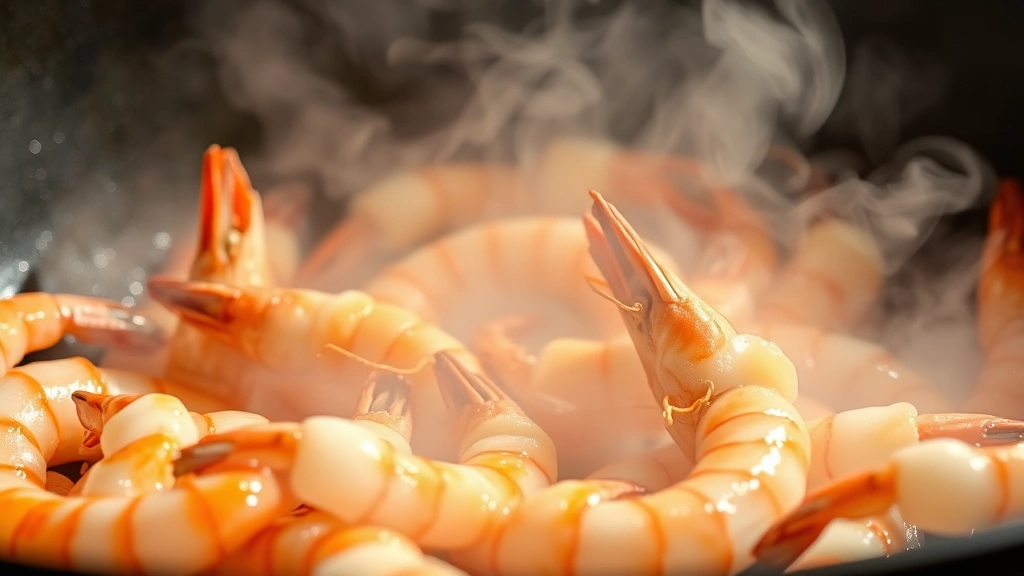
The Protein: You’ll need one pound of large shrimp, preferably wild-caught and fresh, though frozen shrimp that’s been properly thawed works well too. The size matters because larger shrimp cook more evenly and remain tender when cooked quickly over high heat. If you’re looking to add more protein variety, consider pairing your shrimp with other ingredients like the technique used in how to make ramen eggs, which adds a luxurious element to any rice dish.
The Rice: Three cups of cooked rice is essential, and here’s the critical part: use day-old rice that’s been refrigerated. Fresh, warm rice will create a mushy texture rather than the separated, individual grains you’re after. Long-grain jasmine or basmati rice works best because these varieties remain firm during the high-heat cooking process.
The Aromatics: You’ll need three cloves of minced garlic, one tablespoon of minced ginger, and four green onions cut into half-inch pieces. These aromatics build the flavor foundation that makes restaurant-quality fried rice possible.
The Vegetables: Prepare one cup of diced carrots, one cup of frozen peas, and half a cup of diced onion. Using frozen peas is actually preferable to fresh because they maintain their texture better during the quick cooking process.
The Seasonings and Liquids: Gather three tablespoons of soy sauce, one tablespoon of oyster sauce, two tablespoons of neutral oil with a high smoke point (vegetable or peanut oil), one teaspoon of sesame oil, and white pepper to taste. These seasonings create the authentic Asian flavor profile that defines great fried rice.
Preparing Your Ingredients
Proper mise en place—having all ingredients prepared and ready before cooking—is absolutely crucial for shrimp fried rice. Because the cooking process moves quickly, you won’t have time to chop vegetables or measure seasonings once you start cooking.
Preparing the Shrimp: Pat your shrimp completely dry with paper towels. Remove the shells and devein if they haven’t been already. Excess moisture on the shrimp will cause them to steam rather than sear, preventing the development of that desirable golden exterior. Season the shrimp lightly with salt and white pepper just before cooking.
Rice Preparation: If you don’t have day-old rice on hand, you can prepare fresh rice and spread it on a baking sheet to cool quickly in the refrigerator for about thirty minutes. Break up any clumps gently with your fingers so the rice is in individual grains rather than compressed clusters. This step determines whether your final dish will have that characteristic texture or turn into a mushy mess.
Vegetable Prep: Dice your carrots into quarter-inch pieces for even cooking. Cut your onion similarly, and mince your garlic and ginger finely so they distribute their flavor throughout the dish. Having all vegetables in a single bowl makes the cooking process seamless.
Mixing Your Sauce: Combine your soy sauce, oyster sauce, and sesame oil in a small bowl before you begin cooking. This allows the flavors to meld slightly and makes it easy to add the entire mixture at once during cooking.
Step-by-Step Cooking Instructions
Now comes the exciting part: actually making your shrimp fried rice. Follow these steps precisely for the best results.
Step One: Heat Your Wok or Large Skillet
Place your wok or large skillet over high heat for about two minutes. You want the surface extremely hot—this is non-negotiable for proper fried rice. When a drop of water immediately sizzles and evaporates, your cooking surface is ready.
Step Two: Cook the Shrimp
Add one tablespoon of your neutral oil to the hot wok. Immediately add your prepared shrimp in a single layer. Resist the urge to stir—let them sit undisturbed for ninety seconds to two minutes until the bottom develops a golden color. Flip and cook the other side for another minute until the shrimp are just cooked through. The shrimp should still be slightly translucent in the center. Remove them to a clean plate.
Step Three: Prepare the Aromatics
Add the remaining tablespoon of oil to the wok. Add your minced garlic and ginger immediately, stirring constantly for about thirty seconds. This blooms the aromatics and fills your kitchen with incredible fragrance. Be careful not to let them burn—if they begin to darken, add your vegetables immediately to cool things down.
Step Four: Cook the Vegetables
Add your diced onions and carrots to the wok. Stir-fry for about two minutes, until the carrots begin to soften slightly but still maintain some firmness. Add your frozen peas and continue cooking for another minute. The vegetables should be tender-crisp, not soft.
Step Five: Incorporate the Rice
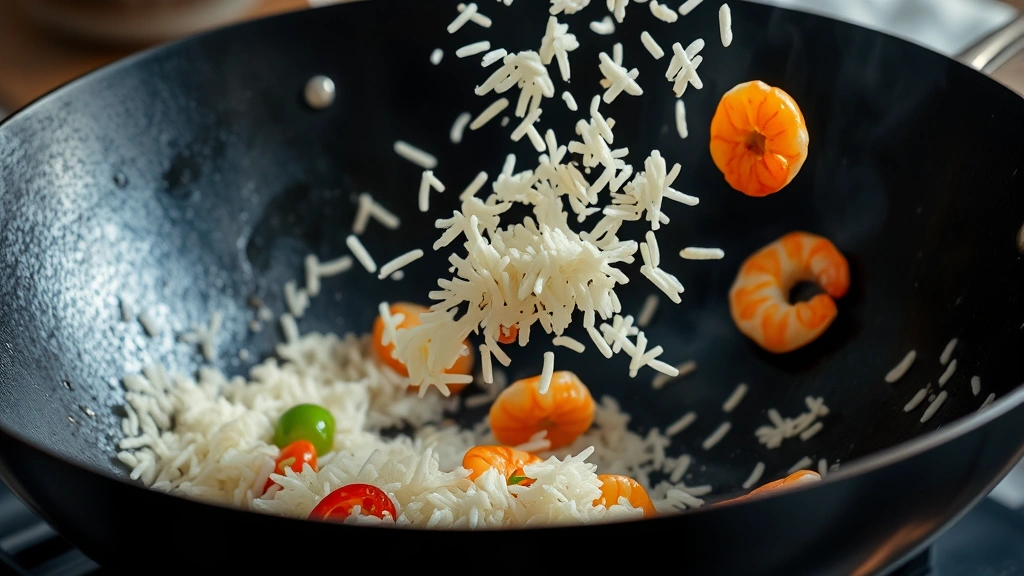
Add your prepared day-old rice to the wok. Break up any remaining clumps as you stir, working quickly to combine the rice with the vegetables and aromatics. This step takes about two to three minutes. You want every grain of rice to be separated and coated with the oil and flavors from the wok.
Step Six: Add Seasonings and Shrimp
Pour your prepared sauce mixture over the rice and stir constantly for about one minute, ensuring the sauce coats every grain. Return your cooked shrimp to the wok and toss everything together for another thirty seconds just to heat the shrimp through and combine all elements.
Step Seven: Finish with Fresh Garnish
Remove from heat and add your sliced green onions, reserving a small handful for garnish. Toss everything together one final time. Taste and adjust seasonings as needed—you may want additional soy sauce or a pinch more white pepper depending on your preference.
Transfer to serving bowls and garnish with remaining green onions. For extra richness, drizzle a tiny amount of additional sesame oil on top and add a sprinkle of white pepper.

Pro Tips from Professional Chefs
Professional chefs who specialize in Asian cuisine have shared several techniques that elevate home-cooked shrimp fried rice to restaurant quality.
Temperature Control is Everything: Maintaining high heat throughout the cooking process is crucial. If your wok or skillet cools down, the rice will absorb moisture and become mushy rather than achieving that light, separated texture. Professional kitchens use industrial burners partly because they maintain consistent high heat. At home, using a wok with a round bottom on a gas burner or a large flat-bottomed skillet on an electric range ensures better heat distribution.
The Two-Oil Method: Some professional chefs use a combination of neutral oil for cooking and sesame oil added at the end. The neutral oil has a higher smoke point and won’t burn at high temperatures, while the sesame oil adds authentic flavor without the risk of burning. This technique gives you the best of both worlds.
Sauce Application Timing: Rather than adding all your seasonings at once, some chefs recommend drizzling the sauce slowly while tossing constantly. This ensures even distribution and prevents any single area of the rice from becoming over-seasoned.
The Shrimp Texture Secret: Professional cooks often slightly undercook shrimp when using it as an ingredient in other dishes. Since the shrimp will be tossed back into the hot wok during the final stages, slight undercooking prevents them from becoming tough and rubbery.
Variations and Customizations
Once you’ve mastered the basic recipe, you can create endless variations by adjusting ingredients and flavor profiles.
Protein Variations: Substitute the shrimp with chicken, beef, or a combination of proteins. You can also add cashews or peanuts for texture and additional protein. Some cooks incorporate ramen eggs for richness and visual appeal.
Vegetable Swaps: Bell peppers, broccoli, snap peas, corn, and mushrooms all work wonderfully in fried rice. The key is keeping vegetable pieces uniform in size for even cooking and maintaining that tender-crisp texture.
Flavor Profile Changes: For a spicier version, add chili paste or sriracha to your sauce mixture. For a more aromatic version, add star anise or five-spice powder. Some cooks add a tablespoon of fish sauce for deeper umami flavor, though this is optional and adds a strong flavor that not everyone enjoys.
Complementary Sides: Serve your shrimp fried rice alongside pickled red onions for a bright, tangy contrast. You could also pair it with onigiri for a complete Japanese-inspired meal, or use the foundation techniques to create variations like gravy from drippings for other Asian-inspired dishes.
Common Mistakes to Avoid
Using Fresh Rice: This is the number one mistake home cooks make. Fresh, warm rice has too much moisture and will create a sticky, mushy texture rather than separated grains. Always use day-old refrigerated rice.
Overcrowding the Wok: If you’re cooking for more than four people, make the fried rice in batches rather than doubling the recipe in one wok. Overcrowding lowers the temperature and creates steam, which prevents the rice from achieving the proper texture.
Insufficient Heat: Fried rice requires high, consistent heat. If your burner can’t maintain high temperature or your wok isn’t hot enough, your results will suffer. Invest in a good wok or large skillet and give it adequate time to preheat.
Over-Saucing: It’s easy to add too much soy sauce and oyster sauce. Start with the recommended amounts and add more gradually if needed. Remember that soy sauce is quite salty, and you can always add more but can’t remove it once it’s in.
Overcooking the Shrimp: Shrimp cooks very quickly and becomes tough and rubbery when overdone. Cook until just opaque throughout—this usually takes only one to two minutes per side depending on size.
Not Tasting and Adjusting: Professional cooks taste their food at multiple stages and adjust seasonings accordingly. Your palate is unique, so don’t hesitate to add a pinch more white pepper, a splash more soy sauce, or a drizzle of sesame oil to match your preferences exactly.
FAQ
Can I make shrimp fried rice ahead of time?
Fried rice is best served immediately after cooking, but you can prepare components ahead. Cook your rice the day before, prep your vegetables and shrimp several hours in advance, and mix your sauce ingredients up to a day ahead. When you’re ready to eat, the actual cooking takes only about ten minutes.
What’s the best way to store leftover shrimp fried rice?
Store leftover fried rice in an airtight container in the refrigerator for up to three days. Reheat gently in a wok or skillet over medium heat, adding a splash of water or broth to restore moisture if needed. You can also reheat in the microwave, though the texture won’t be quite as good.
Can I use frozen shrimp?
Absolutely. Thaw frozen shrimp completely and pat them very dry before cooking. Frozen shrimp are often just as fresh as fresh shrimp from the grocery store, since they’re typically frozen immediately after being caught.
What type of rice is best for fried rice?
Long-grain varieties like jasmine, basmati, or regular long-grain white rice work best. Avoid short-grain or sticky rice varieties, which will create a mushy texture. Brown rice can work but requires slightly longer cooking time.
Can I make this recipe vegetarian?
Yes. Simply omit the shrimp and use additional vegetables or add tofu, cashews, or peanuts for protein. You may want to add a splash of extra soy sauce or fish sauce alternative to maintain the savory depth of flavor.
Why does my fried rice taste oily?
You’re likely using too much oil. The recipe calls for two tablespoons total for four servings, which is the right amount. If you’re adding more, reduce the quantity. Also ensure your wok or skillet is hot enough that the oil coats the rice rather than pooling at the bottom.

Related Posts

Superscript in Google Docs: Expert Tips

Strikethrough in Excel: Easy Steps for Beginners
