
How to Dice a Tomato? Chef’s Easy Method
How to Dice a Tomato: Chef’s Easy Method for Perfect Cuts Every Time
Dicing a tomato might seem like a simple kitchen task, but mastering the proper technique transforms your cooking results and saves you time in the kitchen. Whether you’re preparing fresh salsa, garnishing a dish, or building the foundation for a sauce, knowing how to dice a tomato efficiently ensures uniform pieces that cook evenly and present beautifully on the plate. This guide walks you through professional methods that any home cook can master, from selecting the right tomato to executing clean, consistent cuts.
The difference between amateur and polished kitchen work often comes down to knife skills and preparation. When you understand the anatomy of a tomato and use the correct cutting technique, you’ll notice your dishes look more refined and your prep work becomes faster. We’ll explore multiple approaches depending on your tomato type, kitchen tools available, and the specific size dice you need for your recipe.
Choosing the Right Tomato for Dicing
Not all tomatoes are created equal when it comes to dicing. The variety, ripeness, and firmness of your tomato dramatically affect how easily you can cut it and how uniform your pieces will be. Roma tomatoes, also called plum tomatoes, are the gold standard for dicing because they have fewer seeds, thicker walls, and a firmer structure that holds together during cutting. Their elongated shape also makes them easier to handle and cut into consistent pieces.
Beefsteak tomatoes offer another excellent option, particularly when you need larger dice pieces. Their substantial size means fewer cuts overall, and their meaty flesh produces minimal juice loss compared to other varieties. However, they do contain more seeds, so you may want to remove some of those before dicing if you prefer a drier final product.
Cherry and grape tomatoes present challenges due to their small size and high water content. If a recipe calls for diced tomatoes and you only have cherry tomatoes available, you can quarter or halve them rather than attempting true dicing. Heirloom varieties vary widely in structure, but generally work well for dicing if they’re firm enough to handle without falling apart.
Ripeness matters significantly. A perfectly ripe tomato cuts cleanly without crushing, while an overripe tomato becomes mushy and difficult to work with. Look for tomatoes that yield slightly to pressure but remain firm. The skin should be smooth without soft spots or blemishes. If your tomatoes are slightly underripe, they’ll actually perform better during dicing, though they may lack optimal flavor. Store tomatoes at room temperature rather than the refrigerator to maintain firmness and preserve flavor compounds.
Essential Tools and Equipment
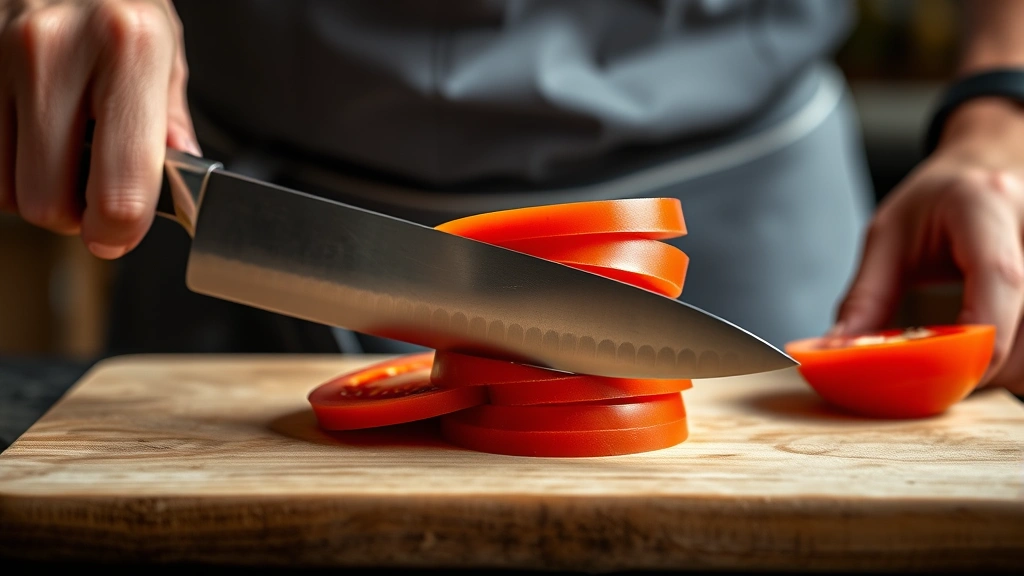
Your knife selection directly impacts your dicing success and safety. A sharp 8-inch chef’s knife serves as the workhorse for most home cooks tackling tomato prep. The blade length provides leverage and control, while the curved edge facilitates rocking motions. Sharpness is absolutely critical—a dull knife requires excessive pressure, increasing the risk of slipping and crushing the tomato rather than cleanly cutting through it.
A paring knife works well for smaller tomatoes or when you need to remove the core and seeds before dicing. Some cooks prefer a serrated knife for tomatoes because the teeth grip the skin and flesh, but a sharp smooth blade actually outperforms serrated edges for this task. A quality kitchen knife set should include both chef’s and paring options.
Beyond knives, gather a stable cutting board—wood or plastic with a non-slip base prevents the board from sliding during cutting. Wooden boards are gentler on knife edges and naturally antimicrobial, making them ideal for tomato work. Keep paper towels nearby to manage the inevitable juice that accumulates as you cut. A small bowl helps contain diced pieces, preventing them from scattering across your workspace.
Consider a tomato corer or small knife for removing the stem end and core. While not absolutely necessary, these tools make the preliminary step faster and cleaner. Some cooks use a mandoline for consistent, thin slices that can then be stacked and cut into dice, though this method requires careful hand positioning to avoid accidents.
Step-by-Step Dicing Method
Step 1: Prepare Your Workspace and Tomato
Start by placing your cutting board on a flat, stable surface. Position yourself comfortably with the board at a natural working height. Rinse your tomato under cool water and pat it dry completely—moisture makes the surface slippery and harder to control. Remove the stem end using a small knife, cutting at a slight angle to create a small circular indent. This step prevents the tomato from rolling and gives you a flat surface to work with initially.
Step 2: Stabilize the Tomato
Hold the tomato gently but firmly with your non-knife hand, using your fingertips to grip the sides rather than pressing into the flesh. Position the tomato so the cut stem end faces down on the cutting board. This creates a stable base and prevents the tomato from rolling during your first cuts. If working with a very round tomato, you can slice a thin piece from the bottom to create a flat surface.
Step 3: Create Vertical Slices
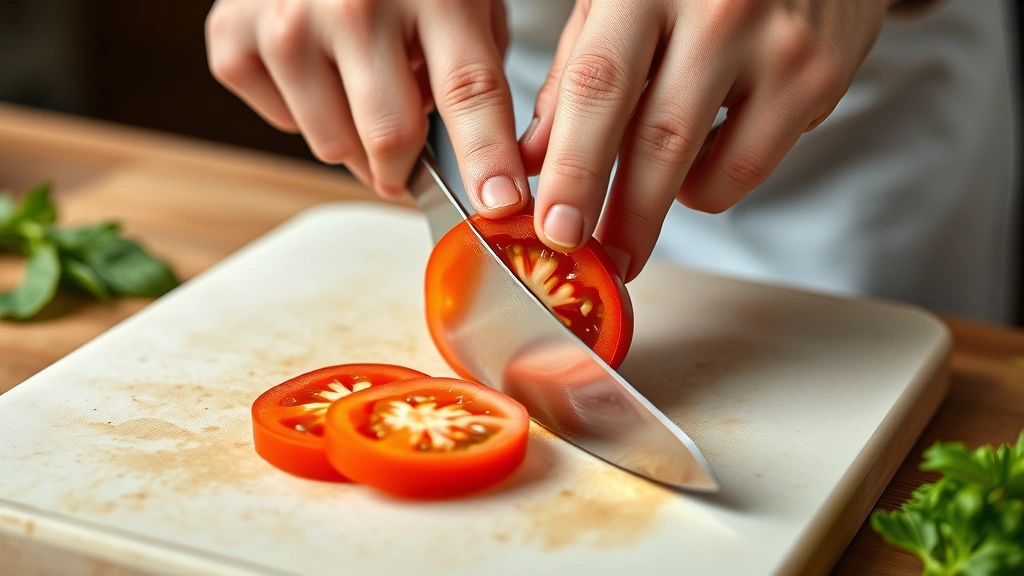
Using a rocking motion with your chef’s knife, slice the tomato from top to bottom, working your way around the circumference. Make parallel cuts about ¼ inch apart, depending on your desired dice size. The key is maintaining consistent spacing—this uniformity is what separates professional-looking results from amateur work. Let the knife do the work; don’t force the blade through the tomato. Your guide hand should curl your fingertips inward in a claw position to protect them from the blade.
After slicing around the tomato, you’ll have a center core with seeds. Set this aside—you can discard it or use it for stocks and sauces if you prefer.
Step 4: Stack and Slice Horizontally
Take a few of your vertical slices and carefully stack them on top of each other. Using the same rocking motion, make horizontal cuts perpendicular to your vertical slices. Again, maintain consistent spacing to ensure uniform pieces. Work slowly and deliberately—speed comes with practice, and accuracy matters more than velocity.
Step 5: Final Cross Cuts
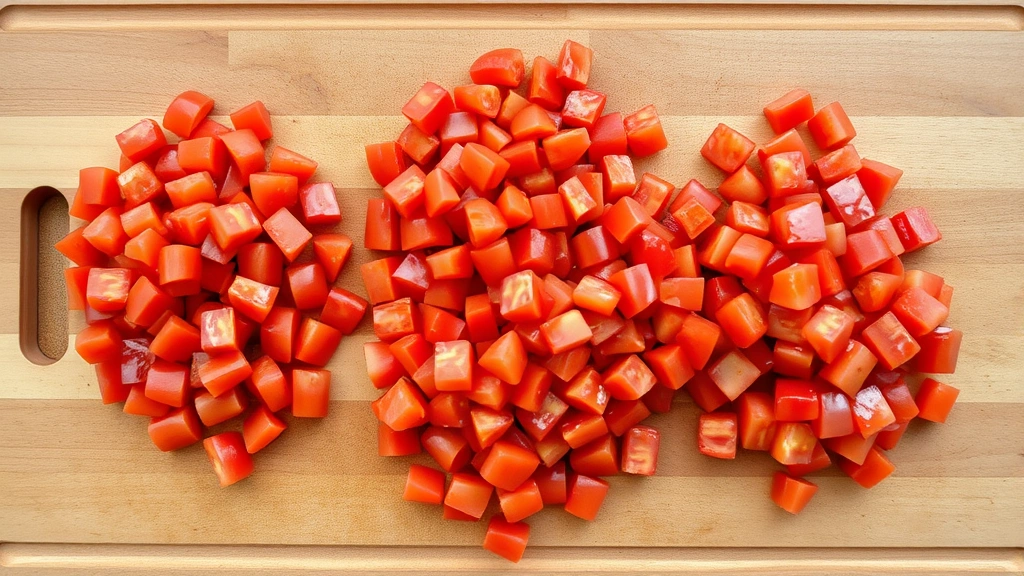
Once you’ve made your horizontal cuts, rotate your cutting board 90 degrees. Now slice perpendicular to your previous cuts, creating the final dice. The three-dimensional cuts from your vertical, horizontal, and cross cuts produce the uniform cubes you’re after. Work methodically from one end of your slices to the other, maintaining consistent spacing throughout.
Professional Techniques for Even Cuts
Professional chefs employ several techniques that home cooks can adopt to improve their dicing consistency. The claw grip mentioned earlier is essential—curl your fingertips inward and use your knuckles as a guide for the knife blade. This position protects your fingertips while creating a consistent distance between cuts. Your knuckles move backward slightly with each stroke, naturally maintaining uniform spacing.
The rocking motion maximizes control and safety. Rather than using a chopping motion that lifts the knife completely off the board, keep the knife tip on the cutting board and rock the blade up and down. This technique gives you better leverage, reduces fatigue, and minimizes the risk of the knife slipping. The blade stays in contact with the board, providing constant feedback about your cutting position.
Knife angle matters more than most home cooks realize. For standard dicing, maintain a 90-degree angle between your blade and the cutting board. Some chefs prefer a slight forward angle (about 10-15 degrees), which can reduce the effort required to push through the tomato. Experiment to find the angle that feels most natural and controlled for your hand strength and technique.
Moisture management during cutting prevents your hands and knife from becoming slippery. Keep a towel nearby and periodically wipe your hands and the knife blade. If your tomato releases excessive juice, you can drain the accumulated liquid from your diced pieces before using them in your recipe. This is particularly important if you’re making salsa or another dish where excess moisture would dilute flavors.
Dicing Different Tomato Varieties
Roma and Plum Tomatoes
These varieties respond beautifully to the standard dicing method outlined above. Their firm flesh and smaller seed cavities mean minimal juice loss and maximum control. Roma tomatoes’ elongated shape actually simplifies dicing—you can make your initial vertical cuts along the length, then proceed with horizontal and cross cuts. The process feels more intuitive than working with round tomatoes.
Beefsteak and Large Heirloom Tomatoes
Larger tomatoes benefit from a slightly different approach. Rather than trying to dice the entire tomato, cut it into quarters or eighths first, creating more manageable pieces. Then follow the standard three-directional cutting method on each section. This approach gives you better control and reduces the risk of the knife slipping on a large, round surface. The larger pieces also mean you’re making fewer total cuts, which reduces fatigue.
Cherry and Grape Tomatoes
These small varieties don’t lend themselves to traditional dicing. Instead, cut them in half lengthwise, then cut each half into thirds or quarters depending on your desired size. If a recipe specifically requires diced tomatoes and you’re substituting cherry tomatoes, aim for pieces roughly the size of small peas. Some recipes might work better with quartered cherry tomatoes than attempting to force them into a dicing pattern.
Canned and Crushed Tomatoes
When fresh tomatoes aren’t available, canned varieties offer convenience, though they lack the texture of fresh-diced tomatoes. Quality canned tomatoes work well in cooked applications like sauces and soups. If you need diced canned tomatoes, simply drain them in a colander and use as-is, or chop larger pieces into smaller dice if necessary.
Common Mistakes to Avoid
Using a Dull Knife
This is the most frequent error that undermines dicing quality. A dull blade crushes rather than cuts, resulting in uneven pieces, excessive juice loss, and a higher risk of the knife slipping. Sharpen your knife regularly using a honing steel or sharpening stone. A sharp knife requires minimal pressure and glides through the tomato with control.
Inconsistent Spacing
Rushing through cuts or not paying attention to spacing results in pieces of wildly different sizes. Larger pieces cook faster than small ones, creating uneven texture in your final dish. Slow down, use your knuckles as a guide, and maintain deliberate spacing. Consistency matters more than speed.
Cutting With the Blade Angled
Tilting your knife blade creates uneven cuts and shapes. Always maintain a perpendicular angle to the cutting board unless you’re intentionally creating angled cuts for a specific presentation. Consistency comes from deliberate, controlled technique rather than rushing.
Applying Excessive Pressure
Pushing hard on the knife crushes the tomato and causes the blade to slip. A sharp knife needs minimal downward pressure—let gravity and the blade’s sharpness do the work. This approach protects both your tomato and your fingers.
Working With a Wet Tomato or Hands
Moisture makes everything slippery. Pat your tomato completely dry before cutting, and keep your hands dry as you work. Periodically wipe the knife blade and your hands with a towel to maintain control and safety.
Attempting to Dice Overripe Tomatoes
Overripe tomatoes simply fall apart during cutting. If you’re stuck with soft tomatoes, consider using them for sauce or salsa where texture matters less. For applications requiring distinct diced pieces, choose firmer tomatoes. If you need to use what you have, refrigerate the tomato for 30 minutes to slightly firm the flesh before cutting.
Storage and Food Safety Tips
Fresh-diced tomatoes are best used immediately, but sometimes you need to prepare them in advance. Store diced tomatoes in an airtight container in the refrigerator for up to two days. The longer they sit, the more liquid they release and the softer they become. If you’ve drained excess juice from your diced tomatoes, don’t discard it—save the tomato juice for soups, sauces, or marinades.
For longer storage, consider freezing diced tomatoes. Spread them in a single layer on a baking sheet and freeze until solid, then transfer to freezer bags. Frozen diced tomatoes work well in cooked applications but become mushy when thawed and used raw. They’ll keep for up to three months in the freezer.
Food safety requires attention to your cutting board and knife. If you’re preparing other foods alongside tomatoes, use a dedicated cutting board for produce to prevent cross-contamination. Wash your hands before and after handling tomatoes, and clean your cutting board and knife with hot soapy water after use. The acidity in tomatoes actually helps prevent bacterial growth, but proper hygiene remains important.
If you’re canning or preserving diced tomatoes, follow tested recipes from reliable sources to ensure food safety. The acidity level of tomatoes varies by variety, and proper preservation techniques depend on this factor.
FAQ
What’s the difference between dicing and chopping?
Dicing creates uniform cubes of consistent size, typically ¼ inch or smaller. Chopping produces irregular pieces of varying sizes. Dicing requires more precision and technique, while chopping is faster and less formal. For presentations and dishes where texture matters, dicing is preferable. For soups and sauces where pieces will break down anyway, chopping works fine.
Can I use a food processor to dice tomatoes?
Food processors can chop tomatoes, but they don’t produce true dice. The blade tends to crush and pulverize rather than creating clean cuts, and you lose control over piece size. For small quantities, hand dicing is faster and produces better results. Food processors work better for larger quantities of tomatoes destined for sauce, where uniform texture matters less.
How do I remove tomato seeds before dicing?
Cut the tomato in half horizontally and gently squeeze each half over a bowl or sink. The seeds and much of the juice will release. Use a small spoon to scoop out any remaining seeds. Then proceed with dicing the remaining flesh. This technique works best with Roma tomatoes, which have more defined seed cavities.
What should I do if my tomato keeps rolling while I’m cutting?
Cut a thin slice from the bottom of the tomato to create a flat, stable base. This prevents rolling and gives you a secure surface to work from. Alternatively, cut the tomato in half first, then place the flat side down on the cutting board and dice each half separately.
Is there a specific knife brand recommended for tomato dicing?
Quality knife brands like Wüsthof, Victorinox, and Zwilling offer excellent chef’s knives suitable for tomato work. What matters more than brand is blade sharpness and comfort. Visit a kitchen store and hold different knives to find one that feels balanced and comfortable in your hand. A $40 sharp knife outperforms a $400 dull one.
Can I dice tomatoes in advance for meal prep?
Fresh-diced tomatoes are best used within a few hours, though they’ll keep refrigerated for up to two days. If you’re meal prepping, consider dicing tomatoes the morning of use rather than several days in advance. Alternatively, keep whole tomatoes and dice them as needed. For cooked dishes like soups and sauces, dicing in advance works fine since the tomatoes will break down during cooking anyway.
What’s the best way to prevent my hands from getting sticky while dicing?
Keep a damp towel nearby and periodically wipe your hands. Some cooks lightly dust their hands with flour or cornstarch to reduce stickiness, though this requires rinsing before moving on to other tasks. Proper knife technique—using the claw grip and keeping your guide hand position correct—minimizes contact between your hands and the tomato’s surface, naturally reducing stickiness.

Related Posts

Superscript in Google Docs: Expert Tips

Strikethrough in Excel: Easy Steps for Beginners
