

How to Bulk: Expert Guide for Optimal Gains
How to Bulk: Expert Guide for Optimal Gains
Building muscle mass isn’t just about hitting the gym hard—it’s about fueling your body with intention and strategy. Whether you’re a fitness newcomer or someone looking to break through a plateau, understanding how to bulk effectively can transform your physique and performance. The bulking phase is where dedicated lifters create the foundation for impressive strength gains and muscle development.
The concept of bulking often gets misunderstood as a license to eat everything in sight. In reality, a proper bulk is a calculated approach to consuming more calories than you burn while maintaining a structured training program. When done right, you’ll maximize muscle growth while minimizing excessive fat gain. This guide walks you through everything you need to know to bulk successfully.
From calculating your caloric needs to structuring your meals and optimizing your training, we’ll cover the science and practical application behind building muscle mass. You’ll learn how to eat smart, train hard, and recover properly—the three pillars of any successful bulk.
Understanding the Bulking Phase
A bulk is a dedicated period where you intentionally consume more calories than your body expends, creating an environment optimal for muscle growth. During this phase, your body has the energy surplus needed to repair and build new muscle tissue after your training sessions. Think of it as providing your muscles with extra building blocks to grow bigger and stronger.
The bulking phase typically lasts anywhere from 8 to 16 weeks, though some athletes extend it longer depending on their goals and body composition. The key is maintaining consistency in both nutrition and training throughout this period. Unlike random overeating, a strategic bulk follows specific guidelines designed to maximize muscle gains while keeping fat accumulation reasonable.
One critical distinction: bulking isn’t the same as dirty bulking. A dirty bulk means eating whatever you want without regard for nutrition quality, often resulting in excessive fat gain alongside muscle. A clean bulk, conversely, focuses on nutrient-dense foods that support muscle growth while maintaining relatively lean gains. The difference in body composition after 12 weeks can be dramatic between these two approaches.
Your ability to build muscle during a bulk depends on three critical factors: adequate caloric surplus, proper macronutrient intake, and consistent progressive overload in your training. Without any one of these elements, your results will suffer significantly.
Calculate Your Caloric Surplus
Before you start eating more, you need to know your baseline. Your Basal Metabolic Rate (BMR) is the number of calories your body burns at rest just maintaining basic functions. Your Total Daily Energy Expenditure (TDEE) accounts for all activity throughout the day. Understanding these numbers is foundational to bulking success.
To calculate your BMR, use the Mifflin-St Jeor equation or any reliable online calculator. Once you have that number, multiply it by your activity factor (typically 1.4 to 1.9 depending on exercise frequency and intensity). This gives you your TDEE—the calories you need to maintain current weight.
For bulking, aim for a caloric surplus of 300 to 500 calories above your TDEE. A 300-calorie surplus tends to produce slower, leaner gains with less fat accumulation, while a 500-calorie surplus accelerates growth but increases fat gain. Most athletes find a 400-calorie surplus to be the sweet spot, balancing muscle growth with manageable fat gain.
Track your intake for at least two weeks to establish your actual TDEE rather than relying solely on calculations. Your body composition, metabolism, and lifestyle create individual variations that generic formulas can’t capture perfectly. Apps like MyFitnessPal make this process straightforward and provide valuable data for adjustments.
Here’s the progression strategy: start with your calculated surplus, track diligently for two weeks, and assess results. If you’re gaining 0.5 to 1 pound per week, you’re in the ideal range. If gaining too quickly (2+ pounds weekly), reduce calories by 100-200. If gaining too slowly, increase by 100-200 calories.
Macronutrient Breakdown for Bulking
Calories matter, but macronutrients matter more when your goal is muscle growth. Protein, carbohydrates, and fats each play distinct roles in supporting your bulk. Getting the balance right separates impressive gains from disappointing results.
Protein is non-negotiable. Aim for 0.8 to 1 gram of protein per pound of bodyweight daily. Protein provides amino acids that repair muscle fibers damaged during training and builds new muscle tissue. If you weigh 180 pounds, target 144 to 180 grams of protein daily. This might sound high, but it’s the minimum for optimal muscle growth during a bulk. Quality protein sources include chicken, beef, fish, eggs, and dairy. Learning how to cook chicken efficiently opens up endless meal possibilities, and understanding how to make shredded chicken streamlines meal prep significantly.
Carbohydrates fuel your training and support recovery. During a bulk, carbs should comprise 45 to 55 percent of your total calories. They replenish glycogen stores depleted during workouts and provide energy for intense training sessions. Quality carbs include oats, rice, potatoes, quinoa, and whole grain bread. Timing carbs around your workouts—consuming them before and after training—maximizes their muscle-building benefits.
Fat plays a crucial hormonal role and shouldn’t be neglected. Aim for 20 to 30 percent of calories from fat sources like olive oil, nuts, avocados, and fatty fish. Adequate fat intake supports testosterone production and overall hormonal health, both essential for muscle growth.
A practical example: if your bulk requires 3,000 calories daily, that breaks down to approximately 225 grams protein (900 calories), 375 grams carbs (1,500 calories), and 100 grams fat (900 calories). These aren’t rigid requirements—adjust based on how you feel and perform in the gym.

Building Your Bulk Meal Plan
Theory is great, but execution determines results. Constructing a meal plan that hits your targets consistently requires planning and repetition. This is where how to meal prep becomes invaluable for maintaining consistency.
Start with anchor meals—reliable, repeatable meals that form the foundation of your plan. Your breakfast might always be oats with protein powder and banana. Lunch could be grilled chicken, rice, and broccoli. Dinner might be ground beef, sweet potato, and vegetables. By establishing these anchors, you remove decision fatigue and ensure consistent calorie and macronutrient intake.
Here’s a sample day hitting roughly 3,000 calories with appropriate macros:
- Breakfast: 3 whole eggs, 2 slices toast, 1 banana (650 calories, 25g protein)
- Snack 1: Protein shake with oats and peanut butter (400 calories, 30g protein)
- Lunch: 8oz chicken breast, 1.5 cups rice, vegetables (750 calories, 50g protein)
- Snack 2: Greek yogurt with granola (300 calories, 20g protein)
- Dinner: 8oz ground beef, sweet potato, broccoli (800 calories, 45g protein)
- Evening: Casein shake (100 calories, 25g protein)
This totals approximately 2,900 calories with 195 grams of protein. The exact foods matter less than hitting your targets consistently. Flexibility within your macros prevents diet fatigue and maintains adherence.
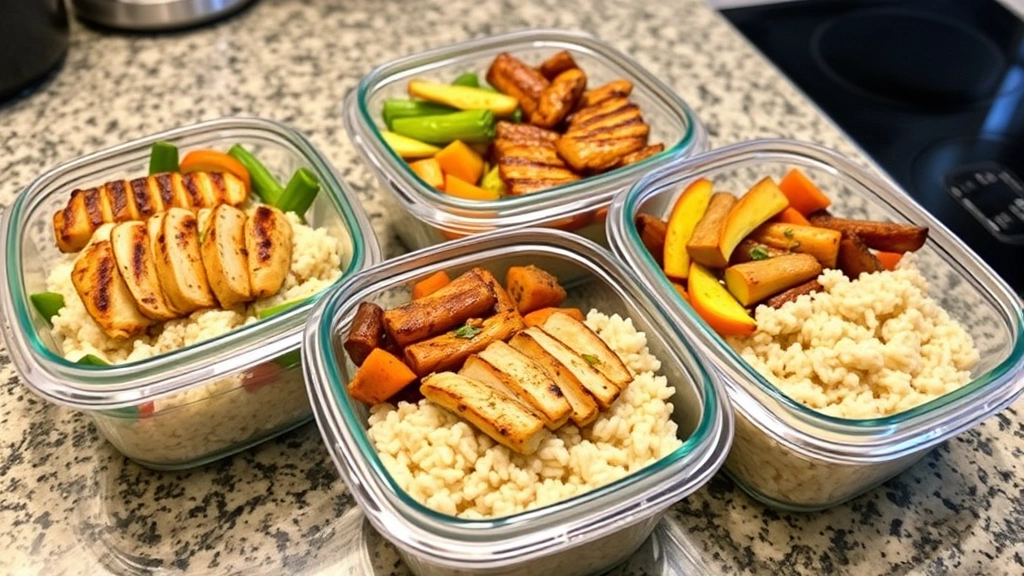
Batch cooking saves enormous amounts of time. Prepare several pounds of chicken, several cups of rice, and roasted vegetables on Sunday. Portion these into containers throughout the week. This approach to meal preparation removes the barrier between intention and execution.
Don’t obsess over perfection. If you hit your macros within 5 to 10 percent daily, you’re doing well. Life happens, and occasional deviations won’t derail your progress. Consistency over months matters infinitely more than perfection on individual days.
Training Strategy During a Bulk
Your training program drives everything. Without progressive overload—gradually increasing weight, reps, or volume—your body has no stimulus to build new muscle. Even with perfect nutrition, stagnant training produces stagnant results.
Focus on compound movements: squats, deadlifts, bench press, rows, and overhead press. These movements recruit multiple muscle groups and allow you to lift heavier weight, providing the mechanical tension necessary for muscle growth. Aim for 8 to 12 reps per set, which research suggests is optimal for hypertrophy (muscle growth).
Structure your training around progressive overload. Week one you might do 5 sets of 8 reps at 225 pounds on the bench press. Week two, attempt the same weight for 9 reps, or add 5 pounds for the same reps. This gradual progression, repeated over weeks and months, produces dramatic strength and size gains. Your ability to build muscle directly correlates with your capacity to progressively challenge your muscles.
Train each muscle group 2 to 3 times weekly. Full-body workouts three times per week or upper/lower splits four times weekly both work well. The key is sufficient frequency to stimulate growth while allowing adequate recovery between sessions.
Recovery is where growth actually happens. Aim for 7 to 9 hours of sleep nightly—this is non-negotiable for muscle growth and hormonal balance. Manage stress through meditation, walks, or hobbies. Excessive stress elevates cortisol, which inhibits muscle growth and promotes fat storage.
Don’t underestimate deload weeks. Every 4 to 6 weeks, reduce training volume by 40 to 50 percent. These lighter weeks allow your body to fully recover and adapt to the training stimulus, preventing overuse injuries and plateaus. You’ll return to heavy training refreshed and stronger.
Tracking Progress and Adjusting
Data-driven decisions beat guesswork. Track your weight, measurements, and strength progression weekly. Weigh yourself at the same time each day (morning, after bathroom, before eating). Track average weekly weight rather than obsessing over daily fluctuations—water retention, food timing, and hormones create normal daily variations.
Take progress photos every two weeks from the same angles and lighting. Photos reveal changes that the scale doesn’t capture. You might gain 2 pounds but look noticeably more muscular if that weight is muscle rather than fat. The scale alone tells an incomplete story.
Strength progression is perhaps the most reliable indicator of muscle growth. If you’re consistently getting stronger—adding weight, reps, or sets—you’re building muscle. Conversely, if your lifts stagnate while calories are high, you’re likely gaining fat without muscle growth.
Adjust your approach based on data. If gaining more than 1 pound weekly consistently, reduce calories by 100-200. If gaining less than 0.5 pounds weekly, increase calories by 100-200. If strength stagnates, examine your training program—you might need more volume, better recovery, or technique adjustments rather than dietary changes.
Reassess your TDEE every 4 to 6 weeks. As you gain weight, your absolute caloric needs increase. A calculation that was perfect at 180 pounds might be inadequate at 195 pounds. Adjust accordingly to maintain your desired surplus.
Common Bulking Mistakes to Avoid
Mistake 1: Excessive caloric surplus. Eating 1,000+ calories above maintenance might seem like it accelerates gains, but it primarily adds fat. You can only build so much muscle monthly—estimates suggest 0.5 to 2 pounds monthly depending on training experience. Excess calories beyond what supports this growth become body fat. Stick to 300-500 calorie surplus.
Mistake 2: Neglecting vegetables. Vegetables provide micronutrients, fiber, and volume without excessive calories. They support digestion, immune function, and overall health. Don’t treat vegetables as optional sides—prioritize them as part of your bulk.
Mistake 3: Inconsistent training. Missing workouts, reducing intensity, or constantly changing programs prevents progressive overload. Your muscles adapt to consistent stimulus over time. Commit to a program for at least 8 to 12 weeks before considering changes.
Mistake 4: Poor sleep and recovery. You don’t grow in the gym; you grow during recovery. Sacrificing sleep for extra training or work undermines everything else you’re doing. Prioritize 7 to 9 hours nightly as fiercely as you prioritize your workouts.
Mistake 5: Ignoring how to lose weight strategies for future cuts. While bulking, you’ll eventually cut. Establishing good habits now—tracking accurately, knowing your maintenance calories, understanding nutrition—makes future cuts infinitely easier. Don’t develop terrible eating habits during your bulk that become hard to break.
For additional guidance on training and recovery, check out This Old House’s wellness resources, and for detailed workout programming, Family Handyman provides lifestyle guidance. For supplement information, Home Depot’s health section offers various wellness products, though whole foods should always be your primary focus.
Frequently Asked Questions
How long should a bulk last?
Most bulks run 8 to 16 weeks. Shorter bulks (8-10 weeks) suit those sensitive to fat gain, while longer bulks (12-16 weeks) allow more time to accumulate strength and size. Some athletes bulk for 20+ weeks. The key is assessing your body composition progress and deciding when to transition to a cut.
Can I build muscle while in a caloric deficit?
Experienced lifters with adequate protein can build small amounts of muscle in a deficit, but it’s significantly slower than in a surplus. Beginners and intermediate lifters should prioritize bulking to maximize muscle growth potential.
Should I do cardio while bulking?
Light to moderate cardio (2-3 sessions weekly) supports cardiovascular health and aids recovery without significantly interfering with muscle growth. Excessive cardio (5+ hours weekly) burns excessive calories and can impair muscle growth. Keep cardio moderate and ensure adequate calories account for it.
What if I’m overweight? Should I cut first or bulk?
If you’re significantly overweight with higher body fat, a cut first makes sense to establish a leaner baseline. However, beginners often benefit from a slight surplus to build muscle and strength, then cutting later. The optimal approach depends on your starting point, training experience, and goals.
How do I know if I’m gaining too much fat during my bulk?
Monitor your body composition through progress photos and measurements. If gaining more than 1 pound weekly consistently or if your waist is expanding noticeably, reduce calories slightly. Ideally, you’re gaining 0.5 to 1 pound weekly with gradual waist increase.
Can I bulk without tracking calories?
Experienced lifters can estimate portions and maintain surplus through intuition, but tracking provides objective data. Beginners should track meticulously to learn portion sizes and develop accurate intuition. Even experienced lifters benefit from periodic tracking to verify assumptions.
What supplements should I take while bulking?
Protein powder for convenience, creatine monohydrate for performance and muscle growth, and a basic multivitamin for insurance cover the essentials. Everything else is optional and secondary to whole food nutrition. Don’t expect supplements to compensate for poor training or nutrition.

Related Posts

How Long to Boil Lobster Tails: Cooking Guide

How Long to Fly from New York to London? Travel Times
