
How to Find Neutrons: A Simple Guide
How to Find Neutrons: A Simple Guide
Whether you’re a student tackling chemistry homework, a science enthusiast curious about atomic structure, or someone brushing up on fundamental physics concepts, understanding how to find neutrons is essential knowledge. Neutrons are one of the three primary subatomic particles that make up atoms, yet they’re often overshadowed by their more famous cousins—protons and electrons. But here’s the thing: neutrons are absolutely crucial to understanding why atoms behave the way they do.
The good news? Finding the number of neutrons in an atom isn’t complicated. In fact, once you understand the basic formula and know where to look for the necessary information, you’ll be able to determine neutron counts faster than you can say “Dmitri Mendeleev.” This guide walks you through everything you need to know, from the fundamentals of atomic structure to practical methods for calculating neutrons in any element.
Think of this guide as your personal toolkit for neutron discovery. We’ll cover the theory, the practical steps, common misconceptions, and real-world applications. By the time you finish reading, you’ll have a solid grasp of how to find neutrons and understand why this knowledge matters in chemistry and physics.
Understanding Atomic Structure Basics
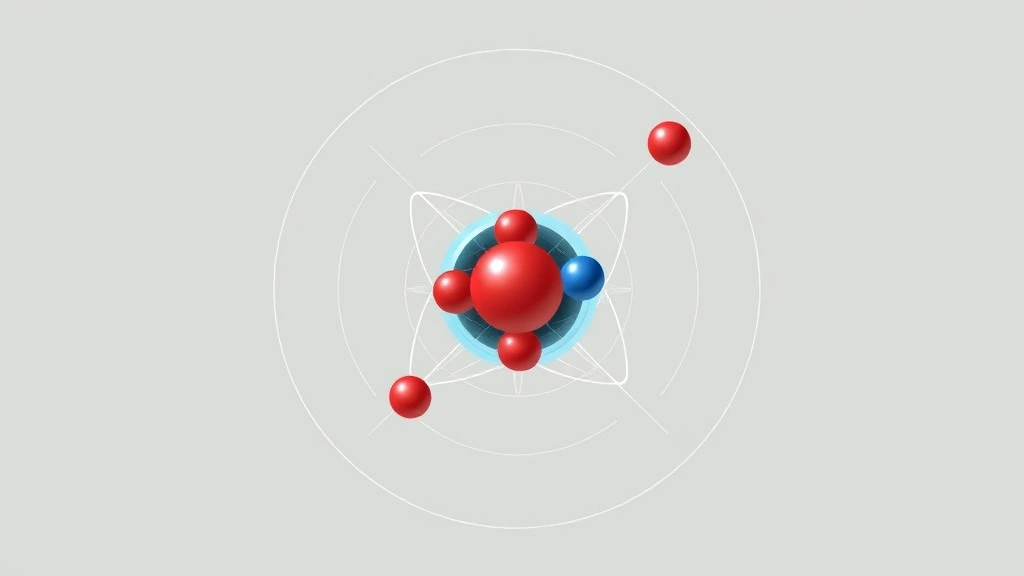
Before diving into how to find neutrons, let’s establish a foundation. Every atom consists of a nucleus surrounded by electrons. Inside that nucleus, you’ll find two types of particles: protons and neutrons. These two particles are bound together by the strong nuclear force, one of nature’s four fundamental forces.
Protons carry a positive electrical charge, while neutrons are electrically neutral—hence their name. Electrons, which orbit the nucleus, carry a negative charge. The number of protons in an atom determines what element it is. Carbon always has 6 protons, oxygen always has 8, and so on. But here’s where neutrons get interesting: different atoms of the same element can have different numbers of neutrons.
This is where the concept of isotopes comes in. Isotopes are variations of the same element with different numbers of neutrons. For example, carbon-12 has 6 neutrons, while carbon-14 has 8 neutrons. Both are carbon, but they have different atomic masses and slightly different properties. Understanding this relationship is key to grasping how to find neutrons effectively.
What Are Neutrons?
Neutrons are subatomic particles that exist in the nucleus of atoms alongside protons. They have a mass nearly identical to protons—about 1.675 × 10⁻²⁷ kilograms—but unlike protons, they carry no electrical charge. This neutrality is actually quite important for atomic stability.
The role of neutrons in atoms is multifaceted. First, they contribute to atomic mass. When you see that carbon has an atomic mass of approximately 12, that number comes from the combined mass of protons and neutrons. Second, neutrons play a crucial role in nuclear stability. Generally speaking, lighter elements need roughly equal numbers of protons and neutrons to be stable. Heavier elements need more neutrons than protons to maintain stability against the repulsive force between positively charged protons.
Third, the number of neutrons determines radioactivity. Some combinations of protons and neutrons create stable atoms that last indefinitely, while others create unstable atoms that decay over time, releasing radiation. This is why understanding how to find neutrons matters beyond just academic curiosity—it helps explain why certain elements are radioactive.
The Simple Formula for Finding Neutrons
Here’s the beautiful part: calculating neutrons requires just one simple formula. You don’t need complex mathematics or specialized equipment. The formula is:
Number of Neutrons = Mass Number − Atomic Number
Let’s break this down into its components:
- Mass Number: This is the total number of protons and neutrons in an atom’s nucleus. It’s sometimes called the atomic mass number.
- Atomic Number: This is the number of protons in an atom. It’s also what defines which element you’re dealing with.
So if you know the mass number and the atomic number, you can find the number of neutrons through simple subtraction. That’s genuinely all there is to it. The reason this works is because the nucleus contains only protons and neutrons—nothing else. Therefore, whatever remains after subtracting the protons must be neutrons.
Let’s work through a concrete example. Take oxygen-16. The mass number is 16 (that’s the number after the element name). Oxygen’s atomic number is 8 (the number of protons). Using our formula: 16 − 8 = 8. So oxygen-16 has 8 neutrons. Simple, right?
Reading the Periodic Table
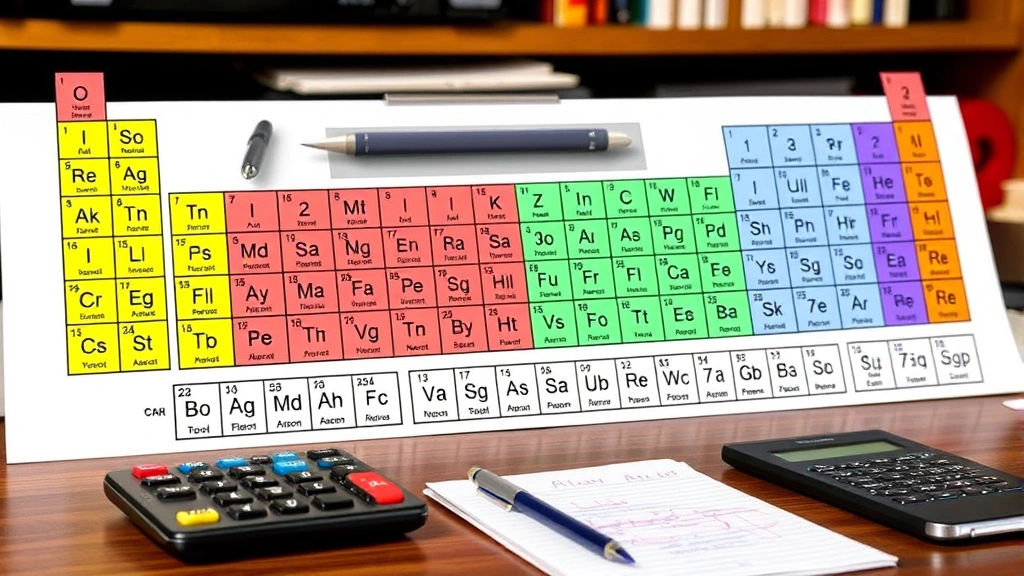
The periodic table is your best friend when you’re learning how to find neutrons. While it might look intimidating at first glance with its colorful boxes and seemingly random arrangement, it contains all the information you need.
Each element box on the periodic table typically shows:
- The element’s symbol (like O for oxygen, C for carbon)
- The atomic number (usually at the top or bottom left)
- The atomic mass or average atomic weight (usually at the bottom)
The atomic number is straightforward—it’s the number of protons. The atomic mass is a bit trickier because it’s usually an average of all naturally occurring isotopes of that element, weighted by their abundance. However, when you’re working with a specific isotope, you’ll use the mass number specific to that isotope, not the average atomic mass.
Here’s a practical tip: when you see a problem that says “carbon-12” or “uranium-235,” that number after the element name is your mass number. That’s the key piece of information you need. Grab the atomic number from the periodic table, subtract it from the mass number, and boom—you’ve found your neutrons.

Step-by-Step Calculation Methods
Now let’s walk through the actual process of finding neutrons with detailed, actionable steps. This method works for any atom or ion you encounter.
Step 1: Identify the Element and Mass Number
First, determine which element you’re working with and its mass number. This information might come from an isotope notation (like carbon-14), a chemistry problem, or a scientific paper. Write this information down clearly.
Step 2: Find the Atomic Number
Look up the element on the periodic table and find its atomic number. This number tells you how many protons the atom has. Write this number down as well. If you’re trying to find the range of neutrons across different isotopes of an element, you’ll need the atomic number for each calculation.
Step 3: Apply the Formula
Subtract the atomic number from the mass number. The result is your neutron count. Double-check your arithmetic—it’s easy to make silly mistakes under pressure.
Step 4: Verify Your Answer
Does your answer make sense? For most lighter elements, the number of neutrons should be roughly equal to or slightly greater than the number of protons. If you get a negative number, you’ve made an error. If the numbers seem wildly off, reconsider your mass number.
Practical Example Walkthrough
Let’s say you need to find the neutrons in sulfur-32. Here’s how you’d work through it:
- Element: Sulfur. Mass number: 32
- Look up sulfur on the periodic table. Atomic number: 16
- Calculate: 32 − 16 = 16
- Sulfur-32 has 16 neutrons
- Verify: Sulfur has 16 protons and 16 neutrons, which makes sense for a lighter element
Using Isotope Notation
Scientists have developed standardized notation systems to represent specific isotopes clearly. Understanding these notations makes finding neutrons even more straightforward.
Standard Isotope Notation
The most common format is:
Mass Number
Element Symbol
Atomic Number
For example, carbon-14 is written as:
¹⁴C or ¹⁴₆C
The superscript number is the mass number. The subscript number (when included) is the atomic number. With this notation, finding neutrons is literally just subtracting the subscript from the superscript.
Alternative Notation
Sometimes you’ll see isotopes written in text format, like “carbon-14” or “U-235.” In these cases, the number after the element name or symbol is the mass number. You then look up the atomic number separately using the periodic table or your knowledge of the element.
If you’re trying to find relative frequency of different isotopes in a sample, understanding isotope notation becomes even more critical because you need to know exactly which isotope you’re analyzing.
Common Mistakes to Avoid
Even with such a simple formula, students and learners often make predictable mistakes. Here are the most common ones and how to avoid them:
Mistake 1: Confusing Atomic Number with Mass Number
This is the most frequent error. Remember: atomic number = protons (defines the element). Mass number = protons + neutrons (specific to each isotope). If you accidentally subtract the mass number from the atomic number, you’ll get a negative number and immediately know something’s wrong.
Mistake 2: Using Average Atomic Mass Instead of Mass Number
The periodic table often shows average atomic mass for an element (like 12.01 for carbon). This is an average across all naturally occurring isotopes. When you’re working with a specific isotope like carbon-12, use 12 as your mass number, not 12.01. The average atomic mass won’t give you the correct answer for a specific isotope.
Mistake 3: Forgetting to Check the Periodic Table
If you don’t know the atomic number of an element, you can’t solve the problem. Always verify the atomic number from a reliable source like the periodic table. Don’t guess or rely on faulty memory.
Mistake 4: Misreading the Mass Number
When you see notation like “oxygen-16,” that “16” is critical. Write it down clearly. Misreading it as 15 or 17 will throw off your entire calculation. Take your time and read carefully.
Mistake 5: Not Considering Ions
When an atom gains or loses electrons to become an ion, the number of neutrons stays the same. The electron count changes, but the nucleus doesn’t. If you’re asked about neutrons in a negatively or positively charged ion, the answer is identical to the neutral atom. If you’re trying to find blocked numbers on iphone or similar data, you’re dealing with a completely different context, but when it comes to atomic neutrons, ions don’t change the neutron count.
Practical Applications
You might wonder: why does this matter? Why should anyone care how to find neutrons? The answer is that neutron knowledge has real-world importance across multiple fields.
Nuclear Medicine
Understanding isotopes and their neutron counts is fundamental to nuclear medicine. Radioactive isotopes are used in medical imaging and cancer treatment. Doctors need to know which isotopes are stable enough to be useful and which decay at rates that make them suitable for specific applications. Technetium-99m, for instance, is used in millions of medical scans annually because it has the right combination of protons and neutrons to emit useful radiation while having a short enough half-life to minimize patient exposure.
Radiocarbon Dating
Archaeologists and geologists use carbon-14 dating to determine the age of ancient artifacts and geological samples. This technique relies on understanding that carbon-14 (with 8 neutrons) is radioactive and decays at a predictable rate. By measuring how much carbon-14 remains in a sample compared to stable carbon-12 (with 6 neutrons), scientists can determine how long ago an organism died. Without understanding neutron counts, this entire field of study wouldn’t work.
Nuclear Energy
Nuclear power plants rely on specific isotopes, particularly uranium-235 and plutonium-239, which have just the right neutron-to-proton ratios to sustain chain reactions. Engineers must understand these atomic properties intimately to design safe and efficient reactors. If you’re interested in the physics behind this, the U.S. Department of Energy provides detailed explanations of nuclear power plant operations.
Materials Science
Different isotopes have different properties. For example, deuterium (hydrogen-2, with 1 neutron) behaves differently from regular hydrogen (with 0 neutrons) in certain chemical reactions. Scientists use different isotopes to study reaction mechanisms and trace molecular pathways. Understanding how to find and work with neutrons is essential for this research.
Astronomy and Astrophysics
Neutron stars are some of the most extreme objects in the universe—the remnants of massive stars that have collapsed. While that’s beyond the scope of basic neutron counting, understanding neutrons at the atomic level helps astrophysicists understand nuclear processes occurring in stars and during supernovae explosions.
For more information about how scientists use isotopes in research, the USGS provides comprehensive information about isotopes and their applications.
Frequently Asked Questions
Can an atom have zero neutrons?
Yes! Hydrogen-1, the most common form of hydrogen, has one proton and zero neutrons. It’s the only stable atom with no neutrons. Some heavier elements can also have isotopes with zero neutrons, but these are extremely unstable and decay almost instantly.
Do all atoms of the same element have the same number of neutrons?
No. This is precisely what isotopes are. Different isotopes of the same element have different numbers of neutrons. For example, all carbon atoms have 6 protons, but carbon-12 has 6 neutrons while carbon-14 has 8 neutrons. Both are carbon, but they’re different isotopes.
Why do heavier elements need more neutrons than protons?
This relates to nuclear force and electrostatic repulsion. Protons repel each other because they’re all positively charged. Neutrons don’t have this repulsive force. In heavier nuclei with many protons, you need extra neutrons to provide additional strong nuclear force to hold the nucleus together against the electromagnetic repulsion between protons.
How does knowing the number of neutrons help identify an element?
Actually, it doesn’t—the number of protons identifies an element. The number of neutrons identifies a specific isotope of that element. If you know only the neutron count, you can’t definitively identify what element something is without additional information.
Are neutrons important for chemical properties?
Generally, no. The chemical properties of an atom are determined primarily by its electrons and the number of protons (which defines the element). Different isotopes of the same element have nearly identical chemical properties because they have the same electron configuration. However, neutron count can slightly affect physical properties like density and radioactivity.
What’s the relationship between neutrons and radioactivity?
Certain combinations of protons and neutrons create unstable nuclei that decay, releasing radiation. The specific neutron count determines whether an isotope is stable or radioactive. For instance, carbon-12 is stable, while carbon-14 is radioactive. Understanding how to find neutrons helps predict which isotopes will be radioactive.
Can I find the number of neutrons using only the periodic table?
Only if you know the mass number. The periodic table provides the atomic number (protons) for each element, but to find neutrons, you need the mass number of the specific isotope you’re studying. The average atomic mass on the periodic table won’t give you an exact answer for a specific isotope.
Why is this formula so simple?
Because the nucleus contains only protons and neutrons. There’s nothing else in there. So if you know the total (mass number) and you subtract one component (protons/atomic number), you’re left with the other component (neutrons). It’s basic arithmetic applied to atomic structure.
For more detailed information about atomic structure and neutrons, Britannica’s article on neutrons provides comprehensive scientific background, and Khan Academy offers excellent video explanations of atomic components.
Understanding how to find neutrons opens doors to comprehending nuclear chemistry, isotope applications, and the fundamental nature of matter itself. While the calculation is simple—just one subtraction—the implications are profound. From medical imaging to energy production to archaeological dating, neutrons play essential roles in modern science and technology. Now that you know the method, you’re equipped to tackle any neutron-finding problem that comes your way.

Related Posts

How Long to Boil Lobster Tails: Cooking Guide

How Long to Fly from New York to London? Travel Times
