

Determine Kitten’s Age? Vet Insights Included
How to Tell How Old a Kitten Is: Vet Insights Included
Finding a kitten and wondering about its age? Whether you’ve rescued a young cat or adopted from a shelter, determining a kitten’s age is essential for proper care, nutrition, and veterinary planning. Unlike adult cats, kittens develop rapidly, with visible changes occurring almost weekly during their first months of life. Understanding these developmental milestones helps you provide appropriate feeding schedules, vaccination timelines, and socialization strategies tailored to your kitten’s specific life stage.
Veterinarians use multiple physical indicators to estimate kitten age with reasonable accuracy, though pinpointing an exact birth date is rarely possible without documentation. This comprehensive guide explores the most reliable methods for age determination, from tooth eruption patterns to behavioral cues, incorporating professional veterinary insights to help you care for your young feline companion properly.

Examining Teeth Development
Tooth eruption is one of the most reliable indicators of kitten age, as the timing of dental development follows a consistent pattern across all healthy cats. Kittens are born without visible teeth, but their deciduous (baby) teeth begin erupting around 2-3 weeks of age. By carefully examining your kitten’s mouth, you can narrow down their age within a few weeks of accuracy.
Newborn to 2 weeks: No visible teeth; gums appear smooth and pink. At this stage, kittens are entirely dependent on mother’s milk and require bottle feeding if orphaned.
2-3 weeks: Tiny incisors begin emerging through the gum line. These small front teeth appear first and are barely visible initially. Kittens this young still rely entirely on nursing or formula feeding.
3-4 weeks: More incisors become visible, and canines start erupting. You’ll notice the bottom incisors typically appear slightly before the top ones. Kittens may begin showing interest in solid food during this period, though nursing remains primary nutrition.
4-6 weeks: Most deciduous teeth have erupted, including incisors, canines, and premolars. All baby teeth should be visible by 6 weeks. This is when kittens typically begin weaning and eating wet food or specialized kitten formula mixed with wet food.
3-4 months: Adult teeth begin replacing baby teeth. You may notice loose baby teeth or find tiny teeth on your floor. The first molars appear, which are permanent teeth with no baby tooth predecessors. Your kitten may experience mild discomfort during teething.
4-6 months: Most baby teeth have been replaced by permanent adult teeth. By 6 months, nearly all permanent teeth should be present, though the process may extend slightly longer in some kittens. At this point, your kitten’s dental development is largely complete.
To examine your kitten’s teeth properly, gently lift their lip and look at the front incisors first, as these are easiest to assess. Check both upper and lower teeth, noting which are present and their size relative to gum tissue. If teeth appear loose or bleeding, contact your veterinarian, as this could indicate teething complications or other dental issues requiring professional evaluation.
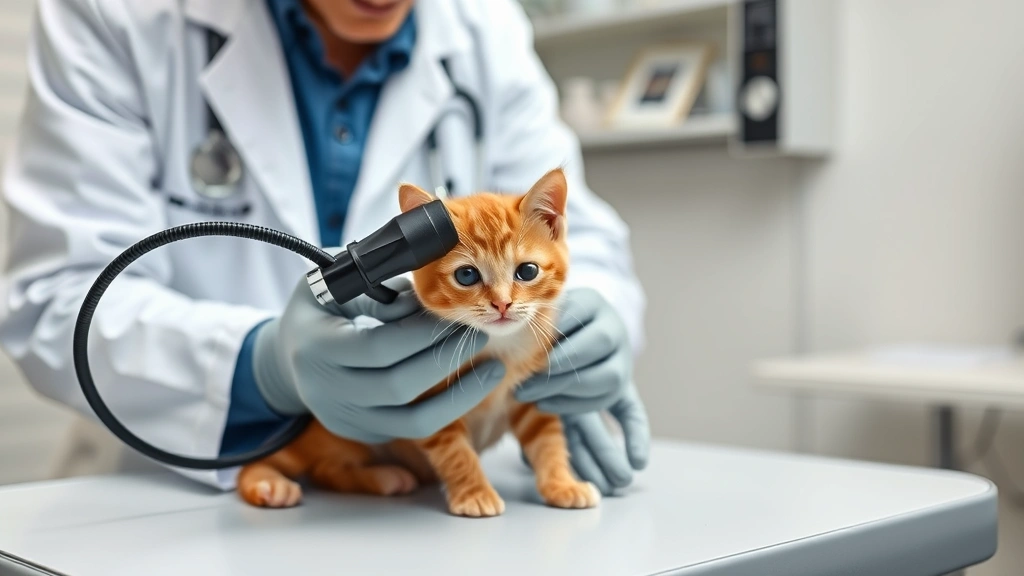
Assessing Eye Color Changes
Nearly all kittens are born with blue or blue-gray eyes, regardless of their final adult eye color. This temporary eye color is due to the absence of melanin pigment in the iris at birth. As kittens mature, melanin develops and deposits in the iris, causing permanent eye color changes. This transition provides another useful age-estimation tool, though the timeline varies among individual kittens and breeds.
Birth to 8 weeks: Kittens display bright blue or slate-blue eyes. This blue coloration is nearly universal in newborn kittens, making it a reliable indicator that a kitten is very young. If you encounter a kitten with blue eyes, you can confidently assume it’s less than 8-12 weeks old.
8-16 weeks: Eye color begins changing as melanin deposits in the iris. The blue may become less vibrant, and amber, green, or golden flecks may appear around the pupil. The transition happens gradually, with different kittens progressing at different rates.
16 weeks and older: Permanent eye color becomes apparent, though the final shade may continue deepening until 6-7 months of age. Some breeds retain lighter eye colors longer than others. By 6 months, eye color is typically permanent and won’t change significantly afterward.
Eye color alone shouldn’t be your sole age indicator, as the timeline varies considerably. Some kittens retain blue eyes longer than expected, while others transition quickly. Combine eye color assessment with other developmental markers for more accurate age estimation. If a kitten has completely amber, green, or yellow eyes, they’re likely at least 16 weeks old.
Evaluating Body Size and Weight
While less precise than dental development, body size and weight provide useful supplementary information for age estimation. Healthy kittens grow rapidly during their first year, gaining approximately one pound per month until reaching adult size. However, growth rates vary significantly based on breed, genetics, and nutrition quality, so use size assessment alongside other methods.
1-2 weeks: Kittens weigh 3-5 ounces and are small enough to fit in your palm. They’re barely mobile and spend most time sleeping or nursing.
2-4 weeks: Weight increases to 4-8 ounces. Kittens become noticeably more active and coordinated, though they’re still quite fragile. Their proportions remain somewhat ungainly with relatively large heads.
4-8 weeks: Kittens weigh 8-16 ounces and are increasingly mobile and playful. Their body proportions begin normalizing, and they appear more cat-like. This is the typical age for adoption, and kittens are sturdy enough for handling by most people.
8-12 weeks: Weight ranges from 1-2 pounds. Kittens display significant coordination and athletic ability. They’re fully weaned or nearly weaned and eating solid kitten food exclusively.
3-6 months: Weight increases from 2-4 pounds. Kittens continue rapid growth and development. Their features become more refined, and they resemble miniature adult cats rather than helpless infants.
6-12 months: Weight approaches adult range, typically 4-8 pounds depending on breed. Growth slows considerably. Kittens reach near-adult size by 12 months, though some breeds continue growing until 18 months.
Remember that breed significantly influences expected weight and growth rate. Large breeds like Maine Coons grow much faster and larger than petite breeds like Siamese or Singapuras. Nutrition quality also affects growth rates; kittens receiving premium kitten formulas typically grow faster than those on suboptimal diets. Always consult your veterinarian about whether your specific kitten’s growth is appropriate for their breed and genetics.
Observing Behavioral Milestones
Behavioral development follows predictable patterns in kittens, providing age-related clues when combined with physical assessments. Young kittens display different play styles, social behaviors, and independence levels depending on their developmental stage. These behavioral markers complement physical examination findings.
1-3 weeks: Kittens are primarily sleeping and nursing. They have minimal awareness of their surroundings and don’t engage in play or exploration. Their eyes may still be closed during the earliest days.
3-4 weeks: Kittens begin exploring their immediate environment with increased curiosity. They start interacting with littermates through gentle play-fighting. Their coordination remains clumsy, and they tire quickly.
4-8 weeks: Play behavior intensifies significantly. Kittens pounce, chase, and wrestle with littermates and objects. They show increasing independence from their mother and develop hunting instincts through play. Social interaction becomes increasingly important.
8-12 weeks: Kittens display sophisticated play behaviors including stalking, pouncing, and prey simulation. They’re highly social and interactive with both humans and other cats. They show improved coordination and can climb and jump with increasing confidence.
3-6 months: Play becomes more intense and complex. Kittens show clear personality development and individual preferences. They demonstrate independence while remaining playful and social. Training becomes increasingly possible as they develop better focus and impulse control.
Behavioral assessment works best when combined with physical examination. A kitten showing advanced play behavior but retaining blue eyes is likely 8-12 weeks old. Conversely, a kitten with permanent eye color but clumsy, less coordinated play is probably younger than behavioral cues suggest, indicating slower development or possible health issues worth investigating.
Checking Coat Development
Coat development and quality provide additional age indicators, particularly in long-haired breeds. Young kittens have fine, soft coats that gradually develop texture, density, and breed-specific characteristics as they mature. Coat changes often correlate with dental development and other age markers.
Newborn to 4 weeks: Kittens have extremely soft, fine coats that lack density. The fur lies flat and appears almost fuzzy. Long-haired kittens show minimal length development, while short-haired kittens appear quite sleek.
4-8 weeks: Coats develop increased density and texture. Fine fuzz is replaced by more substantial fur. Long-haired kittens show noticeably longer hair growth. The coat begins displaying breed-specific characteristics like curl patterns or texture variations.
8-16 weeks: Coat characteristics become increasingly evident. Long-haired kittens develop fuller, fluffier coats. Short-haired kittens show sleeker, denser coats. Coat color patterns may intensify or change as pigmentation develops.
4-6 months and older: Coats approach adult appearance and texture. Long-haired kittens develop their characteristic plush texture. Short-haired kittens display glossy, dense coats. Coat color reaches full saturation and pattern clarity.
Coat assessment alone is unreliable for precise age determination, as nutrition, breed genetics, and individual variation significantly influence coat development. However, combined with other indicators, coat quality helps confirm whether your age estimate is reasonable. A kitten with a very fine, fuzzy coat and blue eyes is definitely quite young, while one with a dense, full coat and permanent eye color is older.
Understanding Reproductive Maturity Signs
Sexual maturity represents a significant developmental milestone that helps determine if a kitten is approaching or has reached adolescence. However, this method is less precise for younger kittens and is more useful for distinguishing between kittens and young adults. Professional FixWiseHub guidance emphasizes examining multiple indicators rather than relying on single factors.
Pre-pubertal kittens (under 4 months): Show no signs of reproductive development. Genital areas appear small and underdeveloped. Kittens display no behavioral signs of sexual maturity.
Early puberty (4-6 months): Some kittens, particularly females, may begin showing early signs of sexual maturity. Testicles may become slightly more prominent in males. Some females may begin their first heat cycle, though this is uncommon before 5-6 months.
Established puberty (6+ months): Clear reproductive maturity signs appear. Males develop noticeably larger, more prominent testicles and may display male behaviors including territorial marking. Females experience estrus cycles, displaying behavioral changes like increased vocalization and affection-seeking.
Reproductive maturity varies significantly by individual kitten and breed. Some kittens reach puberty as early as 4 months, while others don’t mature until 8-12 months. This variation makes reproductive status less reliable for precise age determination compared to dental development. Additionally, spayed or neutered kittens won’t display these signs, limiting this assessment’s usefulness in many situations.
When to Consult Your Veterinarian
While the methods described above provide useful age estimates, professional veterinary assessment offers the most accurate and reliable age determination. Veterinarians examine multiple factors simultaneously and have extensive experience comparing individual kittens to developmental standards. Schedule a veterinary visit soon after acquiring a kitten, regardless of whether you know their age.
During your veterinary visit, your vet will:
- Perform comprehensive physical examination including dental assessment
- Evaluate overall health status and development appropriateness
- Provide accurate age estimate based on combined physical findings
- Recommend appropriate vaccination schedules based on age
- Discuss proper nutrition for your kitten’s specific age and growth rate
- Address any developmental concerns or health issues
- Provide parasite prevention recommendations
- Discuss appropriate timing for spay/neuter procedures
Veterinarians can also identify developmental abnormalities or health issues that might affect growth and development. If your age estimate seems inconsistent with your kitten’s apparent health or development, professional evaluation is particularly important. Kittens showing signs of malnutrition, illness, or developmental delays may appear younger than they actually are, requiring professional assessment to determine appropriate care.
According to ASPCA cat care guidelines, kittens should receive veterinary evaluation at 6-8 weeks old, with follow-up visits every 3-4 weeks until 16 weeks of age. These visits establish baseline health records and ensure your kitten receives appropriate care for their developmental stage. Your veterinarian can also provide breed-specific guidance, as some breeds develop more slowly or quickly than average.
If you’ve adopted a kitten from a shelter or rescue organization, ask staff for any available age information or medical records. Even rough estimates help your veterinarian provide more personalized care recommendations. If no information is available, don’t worry—your vet can still provide excellent guidance based on physical examination findings.
FAQ
Can I determine a kitten’s exact birth date?
Determining an exact birth date is rarely possible without documentation. Veterinarians can estimate age within 2-4 weeks using physical development markers, but pinpointing a specific date isn’t realistic. Once kittens reach 6 months old, age estimation becomes even less precise, as developmental changes slow considerably. For legal or medical purposes requiring exact dates, documentation from shelters, breeders, or previous owners is necessary.
What if my kitten’s age seems inconsistent across different assessment methods?
Inconsistency across assessment methods can occur due to various factors including malnutrition, illness, genetic variation, or individual developmental differences. If your kitten appears younger than expected based on some markers but older according to others, consult your veterinarian. Health issues, poor early nutrition, or genetic factors might explain the discrepancy. Professional evaluation helps identify any underlying concerns requiring attention.
How accurate are online age-calculation tools?
Online tools can provide rough estimates but shouldn’t replace professional veterinary assessment. These tools use average developmental timelines that don’t account for individual variation, breed differences, or health factors. Use online resources as starting points for estimation, then confirm with your veterinarian. Professional judgment considers your specific kitten’s unique characteristics and health status.
At what age can kittens be safely rehomed?
Kittens can be safely rehomed at 8-12 weeks of age, once they’re fully weaned and showing good health. However, many veterinarians and animal welfare organizations recommend waiting until 12-16 weeks when kittens are more independent and have received initial vaccinations. Early socialization during the 2-7 week period is crucial for behavioral development, so kittens benefit from remaining with littermates during this critical window if possible.
Why is accurate age determination important?
Accurate age determination ensures appropriate nutrition, vaccination schedules, and care protocols. Feeding amounts and formula types differ significantly between young kittens and older ones. Vaccination schedules depend on age, with different protocols for kittens under 12 weeks versus older kittens. Additionally, behavioral expectations and training approaches vary by developmental stage. Knowing your kitten’s accurate age helps you provide optimal care and identify any developmental concerns.
Can I estimate age based on weight alone?
Weight alone is unreliable for age estimation due to significant variation based on breed, genetics, and nutrition quality. A small-breed kitten at 4 months might weigh less than a large-breed kitten at 8 weeks. Always combine weight assessment with other physical markers like tooth development and eye color. Your veterinarian can evaluate whether your kitten’s weight is appropriate for their estimated age and breed.
What should I do if I find an orphaned kitten?
If you find an orphaned kitten, contact local animal shelters or rescue organizations immediately for guidance. They can assess the kitten’s age and health status while connecting you with resources for proper care. If professional help isn’t immediately available, keep the kitten warm, don’t attempt feeding for several hours (as stressed kittens may have difficulty digesting), and seek veterinary care as soon as possible. Very young kittens require specialized care including bottle feeding and temperature regulation.

Related Posts

Superscript in Google Docs: Expert Tips

Strikethrough in Excel: Easy Steps for Beginners
