Learn to Play Cribbage: Step-by-Step Guide
Learn to Play Cribbage: Step-by-Step Guide
Cribbage is a classic card game that combines strategy, math skills, and quick thinking into an engaging pastime enjoyed by millions worldwide. Whether you’re looking to master a new hobby or teach family members a timeless game, this comprehensive guide will walk you through every aspect of cribbage gameplay, from basic rules to advanced scoring strategies.
The beauty of cribbage lies in its perfect balance of luck and skill. Unlike purely chance-based games, cribbage rewards players who understand hand combinations, counting techniques, and strategic card play. Once you grasp the fundamentals, you’ll discover why this game has remained popular for nearly 400 years.
Game Overview and Setup
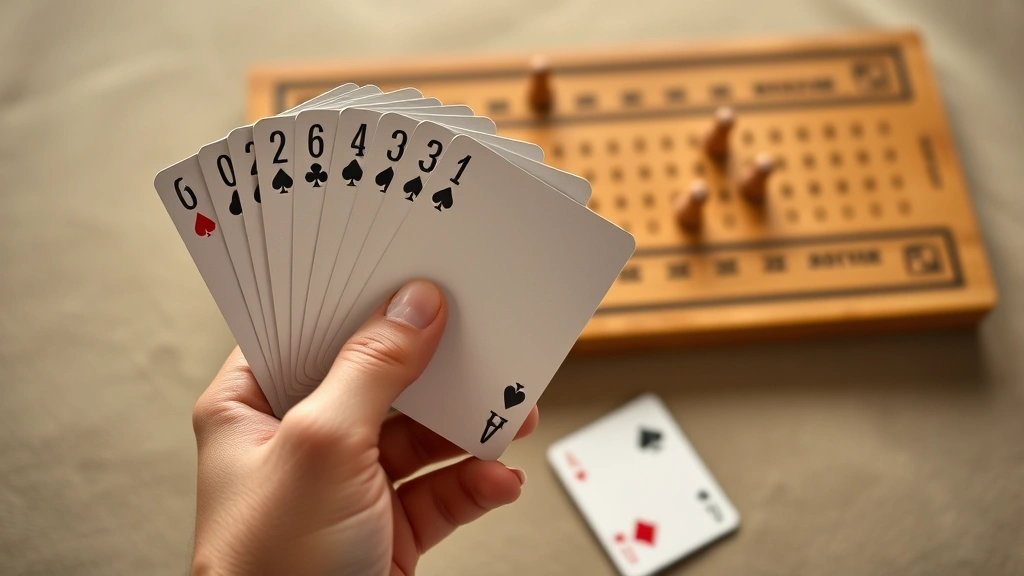
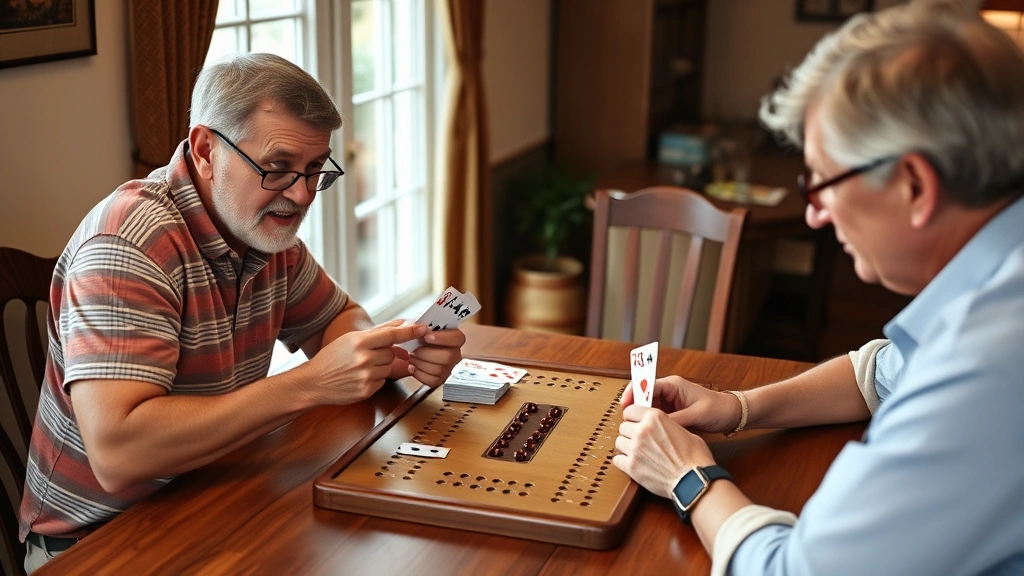
Cribbage is traditionally played with two players, though variations exist for three or four players. The game uses a standard 52-card deck and requires a cribbage board for score tracking. Before diving into gameplay, you’ll need to understand the basic objective: be the first player to reach 121 points (or 61 points in shorter games).
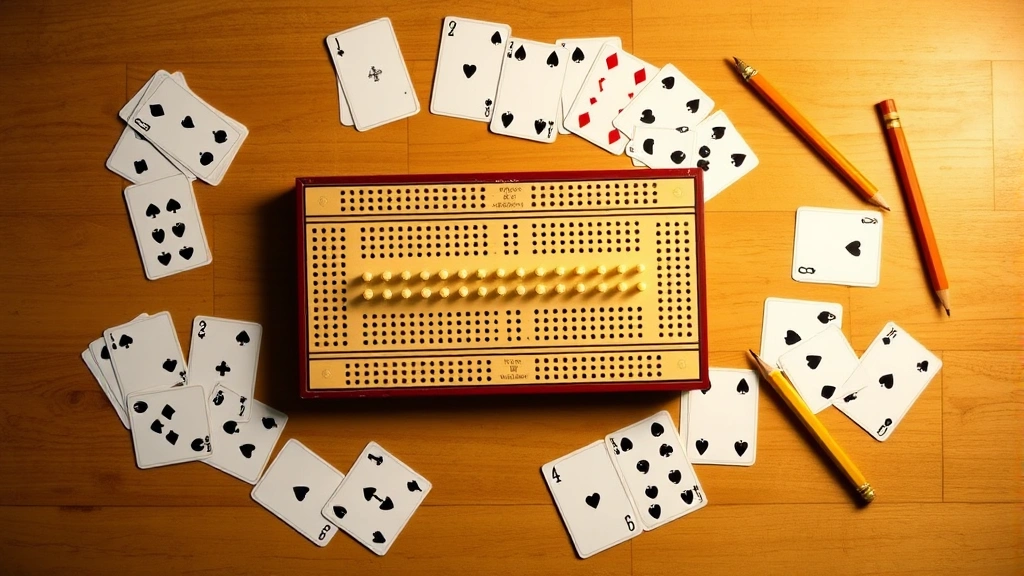
The cribbage board features a distinctive pegboard layout with holes for tracking scores. Each player has two pegs that move along the board’s winding path. The board’s design prevents disputes about scoring and makes gameplay more efficient than pencil-and-paper tracking.
To set up your game, shuffle the deck thoroughly and place it between both players. One player becomes the dealer, determined by cutting the deck—the player with the lowest card deals first. In subsequent hands, players alternate dealing responsibilities. This dealer position carries significance in cribbage since the dealer has certain scoring advantages during the hand.
Understanding Card Values and Rankings
In cribbage, card values differ from traditional poker rankings. Face cards (Kings, Queens, and Jacks) are worth 10 points each. Number cards carry their face value—a 5 is worth 5 points, a 7 is worth 7 points, and so forth. Aces are valued at 1 point, making them the lowest-value cards in the game.
Understanding these values is crucial because they directly impact both the play phase and scoring calculations. Unlike other card games where suit matters significantly, cribbage treats all suits equally. However, matching suits becomes important during the scoring phase when calculating flush combinations.
The card rankings for determining high/low cards remain standard: Ace (low), 2 through 10, Jack, Queen, King (high). This ranking system applies when comparing individual cards but doesn’t affect point values during play or scoring.
Dealing and Initial Hand Play
The dealer distributes six cards to each player, one at a time, alternating between players. After both players receive their six-card hands, each player must discard two cards into the crib—a separate hand that belongs to the dealer. This means each player keeps four cards for play, while the dealer will score the four-card crib after the play phase concludes.
Strategic discarding separates casual players from experienced competitors. When discarding to the crib, non-dealers should remove cards unlikely to form scoring combinations. Dealers, conversely, should discard cards that might contribute to high-scoring crib combinations. This decision-making phase requires foresight about potential card combinations and scoring opportunities.
After discards are complete, the non-dealer cuts the deck, and the dealer reveals the top card of the remaining deck—this card is called the starter or cut card. The starter card is crucial because it participates in all hand combinations during scoring. A particularly valuable starter card (like a 5) can dramatically increase a player’s score.
The Play Phase Explained
The play phase begins with the non-dealer playing any card face-up on the table. Players alternate playing cards, building a running total that cannot exceed 31. Each card’s point value contributes to this total. For example, if the non-dealer plays a 6, the running total is 6. If the dealer then plays a 5, the total becomes 11.
Players must play cards that keep the running total at or below 31. If a player cannot legally play a card without exceeding 31, they announce “go,” and their opponent plays additional cards. When no player can play without exceeding 31, the player who played the last card receives 1 point for reaching exactly 31 (or 2 points if the total is 31). The running total resets to zero, and play continues with the player who said “go” playing first.
During the play phase, players earn points through several mechanisms. Pairs score 2 points each—if your opponent plays a 7 and you play a 7, you score 2 points. Runs (three or more consecutive cards in sequence) score points equal to their length. A run of three consecutive cards scores 3 points, while a run of four scores 4 points. Fifteens (card combinations totaling exactly 15) score 2 points and can be scored immediately when played.
Understanding when points are scored during play versus during the scoring phase prevents confusion. Points earned through pairs, runs, and fifteens during the play phase are marked immediately on the cribbage board. This real-time scoring adds excitement and tension to the game.
Scoring Points in Cribbage
After the play phase concludes, players score their hands using the starter card. This is where cribbage’s complexity and appeal truly shine. Scoring involves calculating multiple point-generating combinations from the five-card hand (four cards plus the starter).
Fifteens are the primary scoring combination. Any two, three, four, or five cards totaling exactly 15 points score 2 points per combination. For instance, a hand containing a 10, a 5, and a 6 includes three fifteens: the 10 and 5, the 10 and 6, and the 5 and 6 together with the starter (if it’s a 4). Identifying all fifteens requires systematic checking of card combinations.
Pairs score 2 points each. Two cards of the same rank constitute one pair. Three cards of the same rank create three pairs (called a “pair royal”), scoring 6 points. Four cards of identical rank form six pairs (a “double pair royal”), worth 12 points. This multiplication happens because every possible pairing between the four cards is counted separately.
Runs (sequences of consecutive cards) score points equal to their length. A three-card run scores 3 points, a four-card run scores 4 points, and a five-card run scores 5 points. Multiple runs can exist in a single hand. If you hold three cards that form a run and two additional cards of the same rank, you’ve created multiple runs. For example, holding 3-4-5-5 creates two three-card runs, scoring 6 points total.
Flushes (four or five cards of the same suit) score points equal to the number of cards in the flush. A four-card flush scores 4 points, while a five-card flush (including the starter) scores 5 points. Importantly, if your four-card hand is all one suit but the starter is different, you score zero flush points—the starter must match your hand’s suit for any points.
Nobs (a Jack matching the starter’s suit) score 1 point. If your hand contains a Jack of the same suit as the starter card, you score this bonus point. This seemingly minor point can prove decisive in close games.
Scoring your hand requires patience and systematic checking. Many players develop a routine: count fifteens first, then pairs, then runs, then flushes, then nobs. This methodical approach prevents missing point-generating combinations and reduces counting errors.
Advanced Strategies for Winning
Mastering cribbage strategy elevates your game significantly. Experienced players focus on discarding wisely, understanding hand probability, and making strategic play decisions that block opponents while maximizing their own scoring potential.
When discarding to your opponent’s crib, avoid giving them cards that easily form fifteens. Fives are particularly valuable in cribbage because any five combines with face cards and tens to create fifteens. Discarding a 5 to your opponent’s crib is generally a poor strategy unless you have no alternative. Similarly, avoid discarding high cards (face cards and tens) unless they’re unlikely to pair or form runs with cards your opponent might hold.
Conversely, when building your own crib, prioritize cards that form multiple fifteens. Two fives and a ten-value card create multiple fifteens and score heavily. Pairs and cards that form runs also strengthen your crib. The dealer’s crib advantage makes strong discarding to your own crib a critical winning strategy.
During the play phase, track which cards have been played to estimate what cards remain in your opponent’s hand. If several high cards have been played, your opponent likely has lower cards remaining. This information influences whether you should play high cards to reach 31 or conserve them for future rounds.
Understanding probability helps predict likely card distributions. The 5 is the most valuable card in cribbage because it combines with more cards to create fifteens. Playing your 5s strategically—either capturing points immediately or holding them to prevent opponent scoring—significantly impacts game outcomes.
Learn about how to play Canasta to develop your overall card game strategy skills, which transfer well to cribbage mastery. Both games reward strategic thinking and probability assessment.
Common Mistakes to Avoid
New cribbage players often make preventable errors that cost them games. Understanding these mistakes helps you develop stronger play habits immediately.
Miscounting fifteens is the most common scoring error. Players frequently miss multiple fifteen combinations or miscount card values. Always double-check your fifteens before announcing your score. Develop a systematic approach: write down all possible two-card combinations, then check three-card combinations, and so forth.
Ignoring the starter card during strategy planning costs points. Some players focus exclusively on their four-card hand during play, forgetting that the starter card participates in all scoring combinations. This oversight leads to suboptimal play decisions and missed scoring opportunities.
Poor discard strategy undermines your overall game plan. Discarding randomly rather than strategically—either protecting your own hand or damaging your opponent’s crib—wastes the advantages that good discarding provides. Take time to consider which cards strengthen your hand and which might benefit your opponent.
Failing to track played cards reduces your ability to make informed play decisions. Casual players often play cards without noting what’s already been played. Maintaining mental awareness of played cards helps you predict remaining cards and make better strategic decisions.
Forgetting about board position changes strategy late in games. When you’re behind on the cribbage board, you should prioritize aggressive scoring and risk-taking. When ahead, conservative play minimizes your opponent’s opportunities. Many players use identical strategies regardless of board position, missing crucial strategic adjustments.
For more practice with strategic card games, explore how to play bocce ball or visit the FixWiseHub Blog for additional game guides that develop your overall strategic thinking.
Frequently Asked Questions
How many players can play cribbage?
While cribbage is designed for two players, three and four-player variations exist. In three-player cribbage, one player acts as the dealer while the other two compete against each other and the crib. Four-player cribbage typically involves partnerships where two players team against the other two. Two-player cribbage remains the standard and most popular format.
What happens if both players reach 121 points simultaneously?
The player who reached 121 first wins. In standard play, the non-dealer scores their hand first, then the dealer scores. If the non-dealer reaches 121 during their scoring phase, they win immediately, and the dealer doesn’t get to score their hand. This advantage gives the non-dealer a slight benefit, balancing the dealer’s crib advantage.
Can you score points during the play phase?
Yes, absolutely. Points scored during play—through pairs, runs, fifteens, and reaching exactly 31—are marked immediately on the cribbage board. These points count toward your total, separate from hand scoring. Many games are decided by play-phase points rather than hand-scoring advantages.
What’s the difference between a run and a sequence?
In cribbage terminology, “run” and “sequence” mean the same thing. Both refer to consecutive cards in ranking order (like 5-6-7). Some players use “sequence” interchangeably with “run.” Always ensure both players use the same terminology to avoid confusion.
How do you score multiple runs in one hand?
If you hold cards that form multiple distinct runs, you score each run separately. For example, holding 3-4-5-5 creates two three-card runs (3-4-5 twice), scoring 6 points total. The multiplication occurs because the duplicate card creates multiple valid sequences. Complex hands with multiple runs require careful counting to identify all valid combinations.
Is cribbage difficult to learn?
Cribbage has a moderate learning curve. Basic rules are straightforward—most beginners grasp fundamental gameplay within one or two hands. Mastering scoring combinations and developing advanced strategy takes longer. However, you can enjoy cribbage at a casual level while gradually improving your skills over time.
What’s the best strategy for a beginner?
Beginners should focus on understanding scoring rules thoroughly before worrying about advanced strategy. Play several practice hands to become comfortable with fifteens, pairs, runs, and flushes. Once scoring feels natural, concentrate on strategic discarding and tracking played cards. Advanced probability-based strategy can develop over time as you gain experience.
How long does a typical cribbage game last?
Most two-player games last 20-45 minutes, depending on player experience and speed. Beginners might take longer as they calculate scores carefully. Experienced players move quickly through hands. Games reaching 121 points typically involve 8-12 dealt hands. The pace accelerates as you become more comfortable with scoring and play decisions.
Can you play cribbage online?
Yes, numerous digital platforms offer online cribbage against computer opponents or other players. These platforms handle scoring automatically, which helps beginners learn the game’s structure without calculation pressure. However, playing with physical cards and boards develops better card-tracking skills and deeper game understanding.
What’s the origin of cribbage?
Cribbage was invented by the English poet Sir John Suckling in the early 1600s. He developed the game from an earlier game called “Noddy.” The cribbage board was created to track scores more efficiently than paper tallies. The game’s popularity has remained remarkably consistent for nearly 400 years, making it one of gaming’s most enduring classics.
Now that you understand how to play cribbage, gather a partner and a deck of cards to start playing. Begin with casual games to internalize the rules, then gradually incorporate strategic thinking as your confidence grows. The combination of skill, luck, and social engagement makes cribbage a rewarding game worth mastering. For additional game guides and how-to content, check out our paper airplane guide or explore other entertainment options on our main blog.

Related Posts

Prevent Razor Bumps: Tips from Dermatologists

Prevent Razor Bumps? Dermatologist Advice