

How to Craft Egg Flowers? Expert Tips Inside
How to Craft Egg Flowers: Expert Tips Inside
Egg flowers, also known as egg net flowers or lacy egg decorations, are delicate, elegant creations that transform simple eggs into stunning edible or decorative artwork. Whether you’re preparing for a special occasion, looking to impress dinner guests, or simply exploring creative culinary techniques, learning how to make egg flowers opens up a world of possibilities for both amateur cooks and seasoned chefs.
This comprehensive guide walks you through every step of the egg flower-making process, from selecting the right eggs to mastering advanced decoration techniques. You’ll discover professional tips, common mistakes to avoid, and creative variations that will elevate your presentation skills in the kitchen.
Understanding Egg Flowers and Their Purpose
Egg flowers are decorative elements created by carefully manipulating egg whites or yolks to form delicate, petal-like structures. These creations serve multiple purposes in culinary arts and home entertaining. They’re commonly used as garnishes for soups, salads, and Asian cuisine, particularly in Thai and Vietnamese cooking traditions where they’re considered a mark of culinary skill and attention to detail.
The beauty of egg flowers lies in their versatility. You can create them using boiled eggs, fried eggs, or even raw egg whites, depending on your intended use and the dish you’re preparing. Many professional chefs incorporate egg flowers into their plating techniques to add visual sophistication without requiring expensive ingredients. Beyond culinary applications, some people craft egg flowers as decorative pieces for special events or as a meditative, creative hobby.
Understanding the purpose of your egg flowers helps determine which technique to use. For hot soups, you’ll want a different approach than for cold appetizers. This foundational knowledge ensures your creations not only look beautiful but also complement your dish perfectly.
Essential Materials and Tools You’ll Need
Before you begin crafting egg flowers, gather the necessary materials and tools. Having everything prepared in advance, a practice chefs call mise en place, ensures a smooth creative process.
Basic Materials:
- Fresh eggs (large or extra-large work best for larger flowers)
- Water for boiling (if making hard-boiled egg flowers)
- Salt and pepper for seasoning
- Optional: food coloring for colored egg flowers
- Optional: edible glitter or herb garnishes for embellishment
Essential Tools:
- Sharp paring knife with a thin blade
- Cutting board (preferably one dedicated to non-meat items)
- Small spoon or melon baller for scooping
- Tweezers for delicate manipulation
- Paper towels for drying and handling
- Small bowl of ice water for cooling boiled eggs
- Egg slicing tool or mandoline (optional but helpful)
Investing in quality tools makes the process significantly easier. A sharp knife is particularly important—dull blades tend to crush rather than cut cleanly through egg whites, resulting in jagged, unattractive petals. Consider checking out guides on kitchen tool maintenance to keep your equipment in top condition.
[IMAGE_1]
Step-by-Step Guide to Making Basic Egg Flowers
The most common method for creating egg flowers involves hard-boiled eggs. This technique produces sturdy, long-lasting flowers perfect for soups, garnishes, and plated dishes.
Step 1: Boil Your Eggs Properly
Place eggs in a pot and cover them with cold water by about an inch. Bring the water to a rolling boil, then remove the pot from heat and cover it with a lid. Let the eggs sit for 10-12 minutes for large eggs, depending on how firm you want the yolks. Immediately transfer the eggs to an ice bath to stop the cooking process. This prevents the gray-green ring around the yolk that occurs with overcooking.
Step 2: Peel the Eggs Carefully
Once cooled, gently tap the egg all over to create cracks in the shell. Start peeling from the wider end where the air pocket is located. Peel under cool running water—this helps separate the membrane from the white and makes the process easier. Handle the peeled eggs gently to avoid damaging the delicate surface you’ll be carving.
Step 3: Create the Flower Base
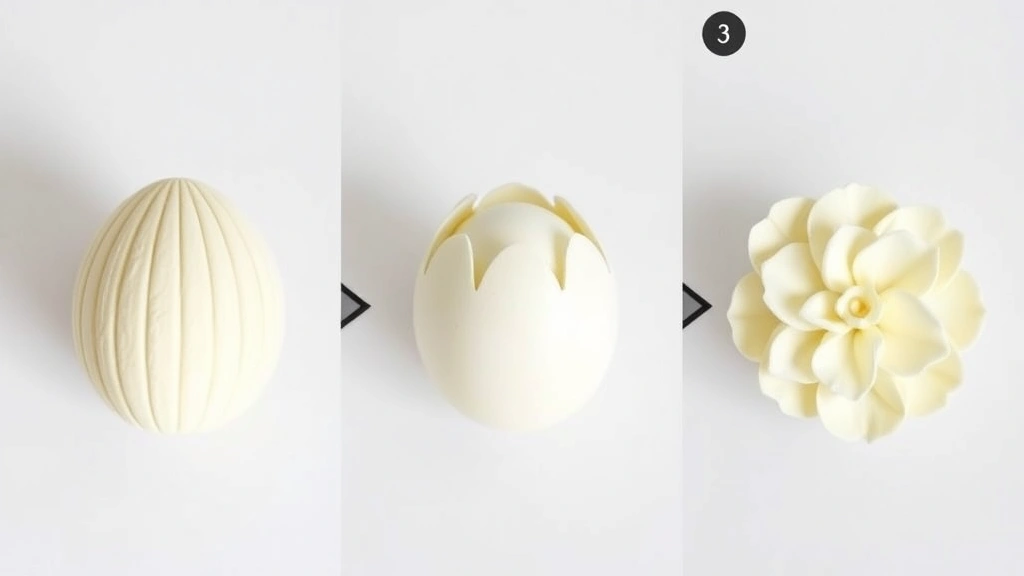
Place the peeled egg on a cutting board with the pointed end facing you. Using a sharp paring knife, make a small vertical cut about 1/4 inch deep at the top of the egg. This will be your flower’s center point. Rotate the egg slightly and make another cut next to the first, angling your knife to create a V-shaped groove. Continue this process all around the egg, working slowly and carefully.
Step 4: Form the Petals
Once you’ve created the basic grooves, use a small spoon or melon baller to gently scoop out small pieces between the grooves, creating petal shapes. The key is working patiently—rushing this step can result in broken pieces. Each petal should be roughly the same size for a balanced, professional appearance.
Step 5: Refine Your Design
Use a paring knife to smooth any rough edges and define the petal shapes more clearly. Some artisans use tweezers to gently separate and adjust individual petals. Step back frequently to assess your work from different angles.
For additional creative cooking inspiration, explore our guide on making crispy rice, which involves similar precision and technique.
Advanced Techniques for Professional Results
Once you’ve mastered basic egg flowers, several advanced techniques can elevate your creations to professional caliber.
The Fried Egg Flower Method
For a more delicate appearance, try creating egg flowers from fried eggs. Heat oil in a small pan and carefully crack an egg into it. Using a spoon, gently fold the egg white around the yolk, creating petal-like formations. This method produces flowers with vibrant color contrast and a more ethereal appearance. The technique requires practice but yields stunning results, particularly for Asian soups where the flower will be served in hot broth.
Layered Egg Flowers
Create multi-dimensional flowers by stacking thin egg slices in petal formations. Slice hard-boiled eggs very thin using a mandoline or sharp knife, then arrange the slices overlapping each other to form layered petals. This technique produces flowers that catch light beautifully and add significant visual interest to your dishes.
Colored Egg Flowers
Add food coloring to your boiling water to create naturally tinted egg whites. Use different colors for different petals or create an ombre effect by varying the intensity of color in each layer. This technique works particularly well for decorative displays and special event catering.
Egg Yolk Flowers
Separate yolks from whites and work with just the yolks to create delicate, golden flowers. Yolks are softer and more pliable than whites, allowing for more intricate petal designs. This method is particularly effective for creating flowers with a more organic, natural appearance.
Similar to how precision matters when making caramel popcorn, egg flower crafting requires attention to detail and timing.
Creative Variations and Design Ideas
The basic egg flower technique serves as a foundation for countless creative variations. Experiment with these ideas to develop your unique style.
Multi-Flower Arrangements
Create bouquets by arranging multiple egg flowers together on a plate or in a bowl. Combine flowers of different sizes and petal configurations for visual variety. Add fresh herbs like dill, parsley, or cilantro between flowers to enhance the botanical appearance and add complementary flavors.
Egg Flower Nests
Arrange thin strips of egg white in a circular pattern to create nest-like structures. Fill the center with caviar, diced vegetables, or a small dollop of sauce. This variation works beautifully as an appetizer or elegant garnish for special meals.
Marbled Egg Flowers
Create marbled patterns by carefully introducing food coloring or beet juice into eggs before boiling. The natural swirling creates unique, one-of-a-kind patterns in each flower. No two marbled eggs are identical, making this technique perfect for creating truly distinctive presentations.
Seasonal Variations
Adapt your egg flowers to complement seasonal cuisines. Spring flowers might feature delicate pastel colors and herb garnishes. Summer variations could incorporate bright, vibrant hues and lighter accompaniments. Fall and winter flowers might be richer in color and paired with heartier garnishes.
For more culinary creativity, check out our comprehensive guide on freezing strawberries, which demonstrates how to preserve ingredients for creative cooking year-round.
Troubleshooting Common Problems
Even experienced egg flower crafters encounter challenges. Here’s how to overcome common issues.
Petals Breaking or Crumbling
This usually indicates your eggs weren’t boiled long enough or the whites weren’t firm enough. Ensure you’re cooking large eggs for 12 minutes in the boiling water method. If petals still break, your knife may be dull—sharpen it regularly. Move slowly and use gentle pressure rather than forcing cuts.
Uneven Petal Size
Practice and patience resolve this issue. Use a ruler or measurement guide initially to ensure consistent spacing between cuts. As you develop muscle memory, you’ll naturally create more uniform petals. Watching tutorial videos and studying professional examples helps train your eye for proportion.
Yolk Breaking Through
If the yolk breaks through your carving, the egg was either undercooked or overcooked. Undercooked yolks are too soft; overcooked ones become brittle. Aim for the 10-12 minute sweet spot for firm but not rubbery yolks. Ice baths immediately after cooking are crucial for achieving the right texture.
Flowers Appearing Dull or Discolored
Gray-green discoloration around the yolk indicates overcooking. Use your ice bath immediately after the cooking time ends. If flowers appear dull, ensure they’re completely dry before plating—moisture reduces their visual appeal. Pat them gently with paper towels before serving.
Difficulty Creating Fine Details
This is a skill that develops with practice. Start with simpler designs featuring larger petals before attempting intricate patterns. Your hands need time to develop the fine motor control required. Consider practicing on less important occasions before attempting egg flowers for special events.
Storage and Presentation Tips
Proper storage and presentation ensure your egg flowers maintain their beauty and quality.
Short-Term Storage
Refrigerate finished egg flowers in an airtight container for up to three days. Place them on parchment paper to prevent them from sticking together. Keep them away from strong-smelling foods, as eggs absorb odors readily.
Freezing Egg Flowers
While fresh is always best, you can freeze completed egg flowers for up to two months. Place them on a baking sheet to freeze individually before transferring to freezer bags. Thaw them in the refrigerator before use. Frozen egg flowers work best as garnishes for hot dishes rather than cold preparations.
Presentation Strategies
Place egg flowers strategically on your plate to maximize their visual impact. Odd numbers (three or five flowers) create more pleasing compositions than even numbers. Position flowers at varying heights when possible to add dimension. Pair them with complementary colors—egg flowers look stunning against dark broths or colorful vegetable medleys.
For presentation inspiration, explore the techniques for making beverages, which similarly emphasize visual presentation and garnishing.
Consider the overall plate composition. Egg flowers should enhance your dish without overwhelming it. In soup presentations, float a single flower in the center of the bowl. For plated appetizers, create small clusters of two or three flowers with strategic herb placement.
Frequently Asked Questions
How long does it take to make an egg flower?
A basic egg flower typically takes 10-15 minutes once you’ve boiled and peeled the egg. As you gain experience, you’ll work faster. Complex, detailed flowers might require 20-30 minutes. The boiling and cooling process takes about 20 minutes total, but this happens while you prepare other elements of your dish.
Can I make egg flowers ahead of time?
Yes, you can prepare egg flowers up to three days in advance. Store them in an airtight container in the refrigerator. This makes them excellent for entertaining, as you can complete this decorative element before your guests arrive, reducing last-minute stress.
What’s the best type of egg to use?
Large or extra-large eggs work best for egg flowers. Larger eggs provide more surface area to work with and create more impressive flowers. The size of the egg white relative to the yolk is important—you want enough white to create distinct petals without it being too thin or fragile.
Do I need special tools to make egg flowers?
No, you don’t need specialized tools, though quality basics help significantly. A sharp paring knife is the most important tool. Tweezers, small spoons, and melon ballers are helpful but not essential. Many professional chefs create egg flowers with just a knife and steady hands.
Can I use raw eggs for egg flowers?
Yes, you can create flowers from raw eggs, though this requires careful handling and immediate consumption due to food safety concerns. Raw egg flowers work best for special presentations where they’ll be consumed immediately. For most applications, hard-boiled eggs are safer and more practical.
What cuisines use egg flowers most commonly?
Asian cuisines, particularly Thai and Vietnamese, feature egg flowers prominently as garnishes for soups and noodle dishes. However, egg flowers appear in French cuisine as part of classical garnishing techniques and have become popular in modern plating across many culinary traditions.
How do I prevent my knife from slipping while carving?
Keep your hands and the egg dry. Pat the egg with paper towels before beginning. Use a stable cutting board with a non-slip surface. Hold the egg gently but securely—too tight causes the knife to slip, too loose makes the egg move. Work slowly and deliberately rather than rushing.
Can I color egg flowers naturally?
Yes, natural food coloring works well. Beet juice creates red and pink tones, turmeric produces yellow, and spinach juice creates green hues. Add these to your boiling water to tint the eggs naturally. The intensity of color depends on how much coloring agent you use and the cooking time.
What should I do if my egg cracks while boiling?
A small crack is usually fine—the egg will cook normally. If the crack is large and egg white leaks out, you’ll end up with an egg that’s missing a section. To prevent cracking, bring water to a boil before adding eggs, avoid rapid temperature changes, and handle eggs gently. Some cooks add a pinch of salt to the boiling water to help prevent cracking.

Related Posts

Superscript in Google Docs: Expert Tips

Strikethrough in Excel: Easy Steps for Beginners
