
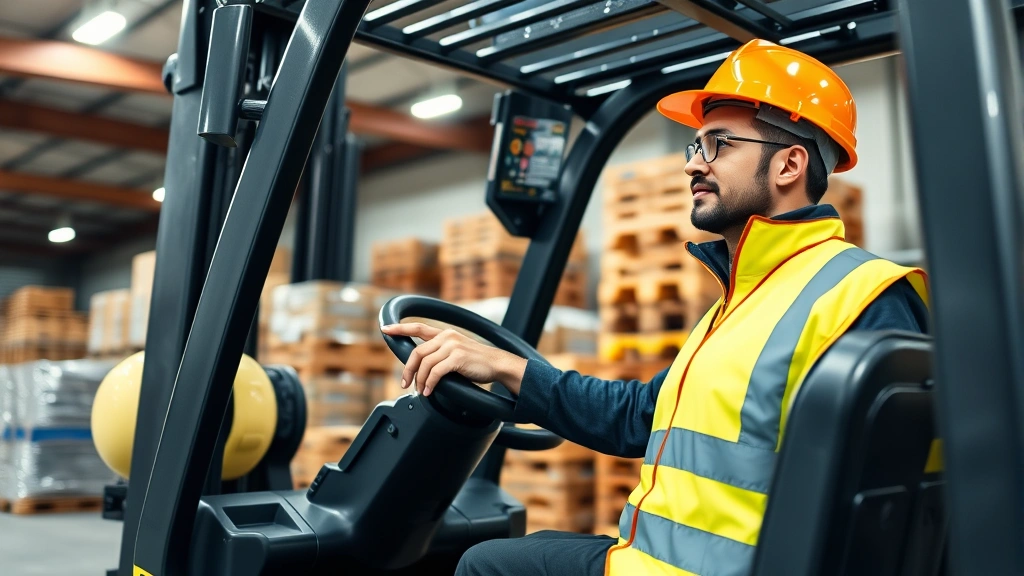
Forklift Certification: Essential Steps to Follow
Forklift Certification: Essential Steps to Follow
Operating a forklift is a specialized skill that requires proper training and certification. Whether you’re looking to advance your career in warehousing, construction, or manufacturing, understanding how to get forklift certified is crucial for workplace safety and legal compliance. Forklift operators handle heavy machinery that can cause serious injuries or fatalities if operated incorrectly, which is why employers and regulatory agencies take certification seriously.
The certification process involves both classroom instruction and hands-on practical training, culminating in a comprehensive evaluation. This guide walks you through every step of obtaining your forklift certification, from finding an accredited training provider to passing your final exam. By following these essential steps, you’ll be well-prepared to operate forklifts safely and professionally in any industrial setting.
Understanding Forklift Certification Requirements
Before enrolling in a forklift certification program, it’s important to understand what certification actually means and why it matters. Forklift certification is a credential issued by accredited training organizations that demonstrates you’ve completed the required safety training and passed competency assessments. OSHA (Occupational Safety and Health Administration) requires that all forklift operators complete formal training and be evaluated by their employer before operating equipment.
The certification process is designed to ensure operators understand the mechanical principles of forklifts, can identify hazards, and know how to operate equipment safely. Unlike driver’s licenses, forklift certifications don’t expire federally, but many employers require recertification every three years to stay current with safety standards and equipment updates. Some states and local jurisdictions have additional requirements, so check your local regulations before beginning training.
Age requirements typically mandate that operators be at least 18 years old, though some employers prefer 21. You’ll also need basic literacy skills to understand safety manuals and pass written exams. Physical capabilities are important too—you should be able to reach pedals, see clearly from the operator’s seat, and have the strength to control the equipment properly.

Finding an Accredited Training Provider
Selecting the right training provider is your first practical step toward certification. Look for organizations that offer OSHA-compliant training programs recognized by major industry bodies. Many providers offer flexible scheduling, including evening and weekend classes, making it easier to fit training into your schedule.
Several types of organizations offer legitimate forklift training:
- Community colleges and vocational schools often provide affordable, comprehensive programs with hands-on practice in controlled environments
- Private training companies specialize in forklift certification and may offer faster completion times
- Employers sometimes provide in-house training if you’re already employed in a warehouse or manufacturing facility
- Equipment manufacturers occasionally offer training on their specific models
- Trade unions provide training as part of apprenticeship programs
When evaluating providers, verify they’re accredited and their instructors hold valid certifications themselves. Ask about their pass rates, training materials, and whether they cover multiple forklift types. Compare costs carefully—while price matters, the cheapest option isn’t always the best value if training quality is compromised. Check online reviews and ask for references from recent graduates.
Most quality programs cost between $200 and $500, though prices vary by region and provider. Some employers offer tuition reimbursement or will cover training costs entirely if you commit to working for them afterward. Always ask about this possibility before enrolling.
Classroom Training Components
The classroom portion of forklift certification typically lasts 4-8 hours and covers essential safety and operational knowledge. This theoretical foundation is critical because it explains why certain procedures matter, not just what procedures to follow.
Core topics in classroom training include:
- Equipment fundamentals—Understanding forklift components, including the mast, load backrest, hydraulic systems, and steering mechanisms
- Load capacity and stability—Learning how weight distribution affects equipment behavior and tipping risk
- Workplace hazards—Identifying dangers like pedestrians, overhead obstacles, uneven surfaces, and blind spots
- Pre-operation inspections—Performing daily checks to ensure equipment is safe to operate
- Traffic patterns and communication—Understanding warehouse layouts and proper signaling methods
- Environmental conditions—Operating safely on ramps, wet surfaces, and in outdoor conditions
- Regulatory requirements—Knowing OSHA standards and employer-specific safety rules
Instructors will also discuss common accidents and near-misses in warehouse environments, using real-world examples to illustrate consequences. This contextual learning helps you understand that safety rules exist because people have been injured ignoring them. Pay close attention during this portion—the knowledge gained here directly applies to your practical exam.
Many training providers use videos, slideshows, and interactive elements to maintain engagement. Take detailed notes and ask questions about anything unclear. Some programs provide study materials you can review before your written exam.
Hands-On Practical Training
The practical component is where you actually operate a forklift under instructor supervision. This typically requires 4-8 hours of hands-on experience, though some programs offer extended practice periods. During practical training, you’ll perform essential tasks that demonstrate competency.
Key practical skills covered include:
- Starting and stopping—Properly engaging controls and bringing the equipment to safe stops
- Steering and maneuvering—Navigating tight spaces and understanding how forklifts turn differently than cars
- Picking up and setting down loads—Positioning the forks correctly and maintaining stability throughout the process
- Stacking operations—Raising loads to appropriate heights while keeping them level and centered
- Traveling with loads—Moving safely through warehouse environments with obstructed views
- Traveling without loads—Positioning the mast properly when carrying no cargo
- Operating on ramps and slopes—Maintaining control on inclined surfaces
- Negotiating obstacles—Maneuvering around barriers, pedestrians, and equipment
Your instructor will observe your performance, provide feedback, and identify areas needing improvement. They’re not trying to trick you—they want you to succeed safely. If you make mistakes during practice, that’s valuable learning opportunity. Ask your instructor to explain what you did wrong and how to correct it before your formal evaluation.
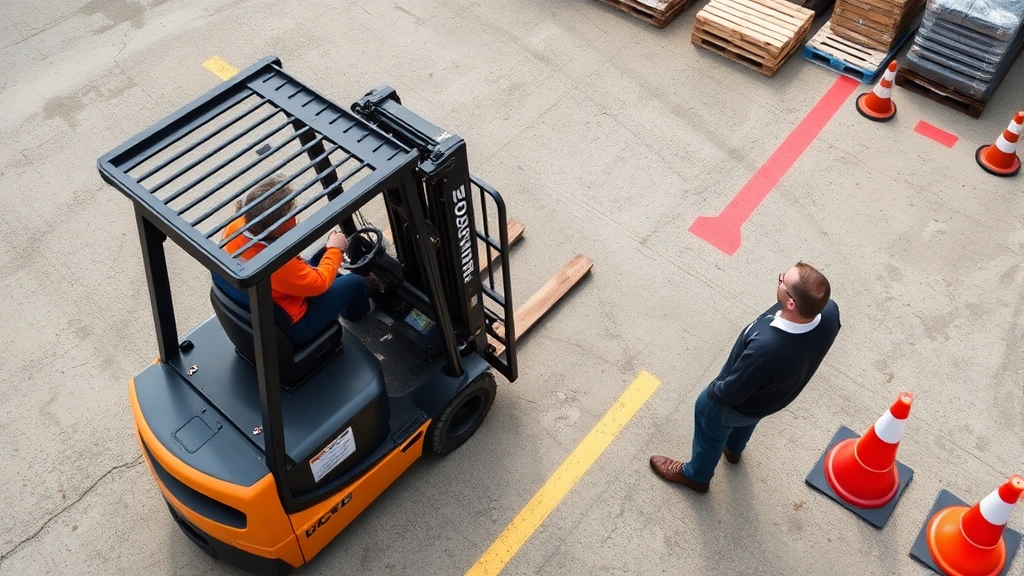
Practical training typically occurs in a designated training area with mock warehouse obstacles. You might practice on different forklift types if the program offers variety. Pay attention to how each model handles slightly differently—some have more responsive steering, others have different visibility, and load capacities vary significantly.
Written and Operational Exams
After completing classroom and practical training, you’ll face formal examinations. These assessments ensure you’ve mastered both theoretical knowledge and operational skills. Most providers require passing both components to award certification.
The written exam typically includes 20-50 multiple-choice questions covering topics from classroom instruction. Questions address equipment operation, safety procedures, hazard recognition, and regulatory requirements. You’ll usually need to score at least 70-80% to pass, depending on your provider. The exam is proctored to ensure integrity—you cannot reference notes or materials during the test.
Preparation strategies for the written exam include:
- Reviewing all classroom materials and handouts thoroughly
- Taking practice tests if your provider offers them
- Studying with classmates and discussing difficult concepts
- Asking your instructor which topics are most heavily emphasized
- Getting adequate sleep the night before your exam
The operational evaluation is conducted one-on-one with a certified examiner. You’ll demonstrate your ability to safely operate a forklift by completing a series of tasks. The examiner observes your pre-operation inspection, your ability to control the equipment, your load handling technique, and your hazard awareness. This isn’t a high-pressure performance—examiners understand you’re learning. However, they’re assessing whether you can operate safely and competently.
During your operational exam, you’ll likely:
- Perform a pre-operation safety inspection, identifying key components and checking for damage
- Navigate a course with obstacles, demonstrating steering control and spatial awareness
- Pick up, carry, and set down loads at various heights
- Stack loads to specified heights while maintaining stability
- Demonstrate proper communication and awareness of surroundings
Common reasons people fail operational exams include forgetting safety checks, hitting obstacles, losing load stability, or showing poor hazard awareness. If you don’t pass on your first attempt, most providers allow retesting after additional practice. There’s no shame in this—it means the system is working to ensure only competent operators are certified.
Obtaining Your Certification Card
Upon successfully completing both written and operational exams, you’ll receive your official forklift certification card. This document is your proof of qualification and is required to operate forklifts legally in most workplaces. Your card typically includes your name, certification date, expiration date (if applicable), and the issuing organization’s information.
Keep your certification card in a safe place and bring it to your workplace or job interviews. Many employers require seeing your card before allowing you to operate equipment. Some programs issue physical cards immediately, while others mail them within 1-2 weeks. Digital certificates are increasingly common and may be equally acceptable to employers—verify your provider’s format.
Your certification card serves as proof that you’ve met OSHA training requirements. While OSHA doesn’t require federal recertification, your card’s validity period depends on your provider and employer requirements. Many companies require renewal every three years, so mark your calendar and plan ahead for recertification training.
If you lose your certification card, contact your training provider immediately for a replacement. Keep documentation of your training completion, as you may need it for employment verification or if your original card is unavailable.
Maintaining Your Certification
Getting certified is an achievement, but maintaining that certification requires ongoing commitment to safe practices. Your employer is responsible for ensuring you receive refresher training if you haven’t operated a forklift in an extended period, or if you demonstrate unsafe practices.
Best practices for maintaining your certification include:
- Following all workplace safety procedures—Your training is only valuable if you actually apply it
- Reporting equipment problems—Never operate a forklift with mechanical issues; alert maintenance immediately
- Staying current with employer updates—Attend any refresher training your company requires
- Practicing safe habits consistently—Don’t develop lazy habits after years of operation
- Pursuing recertification before expiration—Plan ahead so you’re never operating with expired credentials
- Learning from near-misses—If something almost goes wrong, understand why and adjust your technique
Many employers conduct periodic evaluations of their forklift operators to ensure continued competency. These informal assessments help identify operators needing refresher training. Embrace these evaluations as opportunities to improve, not criticisms.
If you transition to a new job requiring forklift operation, your previous certification is typically recognized, but your new employer may require their own evaluation or refresher training specific to their equipment and procedures. This is standard practice and ensures you understand that particular workplace’s hazards and protocols.
FAQ
How long does it take to get forklift certified?
Most programs can be completed in one to three days. Classroom training typically takes 4-8 hours, and practical training requires 4-8 hours. Some providers offer accelerated programs completing in a single day, while others spread training over multiple weeks with fewer hours per session. Check with your chosen provider for their specific timeline.
How much does forklift certification cost?
Costs range from $200 to $500 depending on your location and training provider. Some employers cover all costs for employees, while others expect workers to pay upfront. Community colleges often offer more affordable programs than private companies. Always ask about employer reimbursement or payment plans before enrolling.
Do I need to renew my forklift certification?
OSHA doesn’t require federal recertification, but many employers mandate renewal every three years. Check your certification card for an expiration date and your employer’s specific requirements. Staying current with recertification demonstrates your commitment to safety and keeps your knowledge up-to-date.
Can I get forklift certified online?
The classroom portion can often be completed online, but hands-on practical training must be completed in person with actual equipment. Some providers offer hybrid programs combining online classroom learning with in-person practical sessions. Verify that any online program you choose is OSHA-compliant.
What if I fail my certification exam?
Failing doesn’t disqualify you from becoming certified. Most providers allow retesting after additional practice. Use your failed attempt as a learning experience—identify which areas you struggled with and focus on those during additional study. Many people pass on their second attempt.
Is forklift certification recognized nationwide?
While OSHA training requirements are federal, specific certifications are issued by individual training providers. Most employers recognize certifications from reputable, accredited organizations regardless of where you trained. If you move to a different state, your certification remains valid, though some employers may require state-specific refresher training.
What types of forklifts are covered by certification?
Standard forklift certification covers counterbalance forklifts, the most common type. Some programs also cover reach forklifts, pallet jacks, and other materials-handling equipment. If your job requires operating specific equipment types, ensure your training provider covers those models.

Related Posts

Superscript in Google Docs: Expert Tips

Strikethrough in Excel: Easy Steps for Beginners
