
Find Your Ring Size at Home: Expert Tips
Find Your Ring Size at Home: Expert Tips
Getting the perfect ring fit doesn’t require a trip to the jewelry store. Whether you’re shopping for an engagement ring, wedding band, or fashion statement piece, knowing your exact ring size is essential for comfort and security. A ring that’s too loose risks slipping off, while one that’s too tight can cause discomfort and restrict blood flow. The good news is that you can accurately determine your ring size at home using simple tools and methods that jewelers have trusted for decades.
This comprehensive guide walks you through multiple proven techniques to find your ring size with precision. From measuring an existing ring to using string and paper, we’ll cover every method so you can confidently order rings online or communicate your size to jewelers. We’ll also explain international sizing standards, how to account for temperature and time of day, and what to do if you’re between sizes.

Understanding Ring Sizing Standards
Ring sizes vary significantly depending on your geographic location. The United States uses a numerical system ranging from size 0 to 13, with half sizes available (like 7.5 or 8.5). Men’s rings typically fall between sizes 8 and 14, while women’s rings usually range from 3 to 9. The sizing is based on the inner diameter of the ring, measured in millimeters, which determines how comfortably it fits around your finger.
Different countries use entirely different sizing systems. The UK and Australia use letter designations (A through Z), while Europe uses numerical sizes based on the ring’s circumference in millimeters. Japan uses a unique system as well. Understanding which standard applies to your purchase is crucial for getting the right fit. When shopping internationally or ordering from overseas retailers, always verify which sizing system is being used before completing your purchase.
Ring size can fluctuate throughout the day and across seasons. Your fingers are typically smaller in the morning and larger in the evening due to natural fluid retention. Cold weather causes fingers to contract, while heat makes them swell. Additionally, factors like sodium intake, exercise, and hormonal changes can affect finger size. It’s best to measure your ring size in the afternoon when your fingers are at their normal size, avoiding extreme temperatures.

Method 1: Measure an Existing Ring
The easiest and most accurate way to find your ring size is to measure a ring you already wear comfortably on the same finger. This method eliminates guesswork because you’re using a ring that you know fits well. Gather a ruler with millimeter markings, a piece of paper, and a ring that fits your target finger perfectly.
Place the ring on a flat surface and position your ruler across the inside diameter of the ring, measuring from one inner edge to the opposite inner edge. Write down this measurement in millimeters. This internal diameter is what determines your ring size. Most rings fit comfortably when the internal diameter measures between 14mm and 21mm, depending on your finger size.
Once you have the millimeter measurement, you can convert it to your ring size using a conversion chart. A 17.35mm inner diameter corresponds to a US size 7, for example. Many jewelry websites provide free conversion tools where you simply input your millimeter measurement and receive your size instantly. If your measurement falls between two sizes, you’re a half size. For instance, if your measurement is between a 7 and 7.5, you should order a half size.
Pro tip: Measure multiple rings you wear regularly to ensure consistency. If measurements vary, use the most comfortable ring as your reference point. Also, be aware that different ring styles may fit differently—wide bands often feel tighter than thin bands at the same size, so consider the width of rings you plan to purchase.
Method 2: The String and Paper Technique
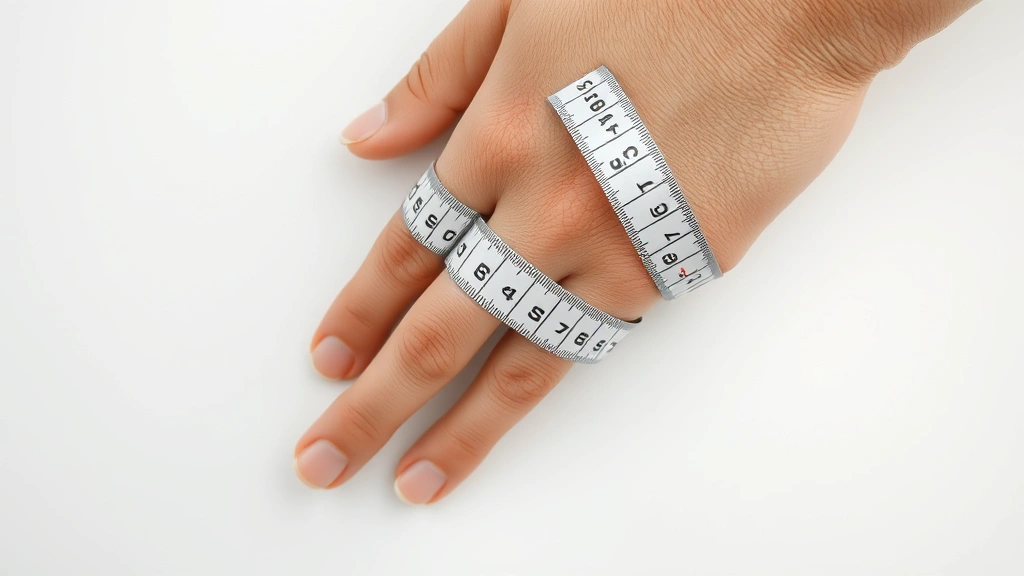
If you don’t have a ring to measure, the string method is a reliable alternative used by jewelry professionals worldwide. You’ll need a piece of string or flexible measuring tape, a ruler with millimeter markings, and a pen. This technique measures the circumference of your finger, which is then converted to a ring size.
Wrap the string snugly around your finger at the knuckle, where you’ll normally wear the ring. The fit should be comfortable—not too tight that it restricts circulation, but not so loose that it slides around. Mark where the string meets itself with a pen or by pinching it. Remove the string and lay it flat on a ruler, measuring from the starting point to your mark. Record this circumference measurement in millimeters.
To convert circumference to ring size, divide your millimeter measurement by 3.14159 (pi) to get the diameter. Then consult a ring size conversion chart to find your corresponding US size. For example, if your string measures 57mm in circumference, dividing by pi gives you approximately 18.1mm diameter, which corresponds to a US size 8.
The string method works best when you’re careful about tension. The string should slide easily over your knuckle but feel snug at the base of your finger. Practice wrapping it a few times to get consistent measurements. Some people prefer using dental floss or embroidery thread because they’re thinner and easier to mark precisely. Always measure in the afternoon when your fingers are at normal size, and measure multiple times to ensure accuracy.
Method 3: Using a Ruler and Ring Sizer
A ring sizer is a printable tool that provides a series of circular cutouts in graduated sizes, allowing you to find your perfect fit by trying different sizes against your finger. Many jewelry websites offer free downloadable and printable ring sizers. To use this method effectively, you need a printer and access to standard 8.5×11 inch paper.
Download a ring sizer from a reputable jewelry retailer and print it at 100% scale—this is crucial because any scaling will throw off your measurements. Cut out the different sized circles and try each one on your finger, starting with a size you think might be close. Slide the circle over your knuckle and check the fit at the base of your finger. The correct size should slide over your knuckle with slight resistance and fit snugly at the base without pinching.
Once you find the circle size that fits perfectly, note the corresponding ring size printed on the sizer. This method is particularly helpful because you can physically feel the fit rather than relying on measurements. The tactile feedback helps you understand whether you prefer a snug fit or a looser fit, which is valuable information when ordering rings with different band widths.
The limitation of printable ring sizers is that accuracy depends entirely on your printer’s calibration. Some printers add or remove small amounts of scaling automatically. If you’re unsure about your printer’s accuracy, print the sizer and compare one of the circles to an actual ring of known size before using it to determine your size. This simple verification step prevents ordering rings that don’t fit.
Method 4: Professional Ring Sizing Tools
If you want the highest level of accuracy, invest in a physical ring sizer set. These are inexpensive plastic or metal rings in every standard size that you can try on directly. Most sets include sizes ranging from 1 to 13, with half sizes included. You can purchase these from jewelry supply retailers, online marketplaces, or even some craft stores for under $15.
Using a professional ring sizer set is straightforward: simply try each ring on the finger where you’ll wear your actual ring. The correct size should slide over your knuckle with slight resistance and fit comfortably at the base. Unlike printable sizers, physical ring sizers are calibrated at the factory and don’t depend on printer accuracy. They provide definitive results and can be reused whenever you need to verify your size or help friends and family find theirs.
Many jewelry stores will size your finger for free if you visit in person, which is the gold standard for accuracy. However, if you prefer the convenience of ordering online or live far from jewelry stores, a physical ring sizer set is an excellent investment. Keep it in your home for future reference, as ring size can change over time due to aging, weight fluctuations, or medical conditions.
Some ring sizers include additional features like conversion charts printed directly on the rings or storage cases for organization. Higher-end professional sizers used by jewelers might include larger and smaller sizes for specialty rings. For most home users, a basic set covering standard US sizes 1-13 provides all the functionality you need.
Accounting for Fit Variables
Understanding how different factors affect ring fit helps you choose the right size with confidence. Ring width significantly impacts how a size feels on your finger. A wide band (4mm or wider) will feel tighter at the same size as a narrow band (2mm or less), because the wider band takes up more space around your finger. If you typically wear wide rings, you might want to size up half a size for maximum comfort.
The material of the ring also affects fit. Metal rings feel more rigid and secure, while softer metals might seem looser at the same size. Rings with gemstones or decorative elements on top can affect how the band sits on your finger. An engagement ring with a large stone might sit slightly higher, affecting the overall comfort level. Consider the specific style of ring you’re ordering when making your final size decision.
Temperature and time of day matter more than many people realize. Your fingers swell slightly as body temperature rises, which is why afternoon measurements are more reliable than morning measurements. If you’ll be wearing your ring in varying climates, measure during the season when you’ll wear it most. Someone living in a warm climate should measure in summer heat, while those in cold regions might measure during winter when their fingers are naturally smaller.
Swelling from activities like exercise, salt consumption, or hormonal changes can temporarily increase finger size. If you’re prone to swelling, measure your finger size when you’re in your normal state and haven’t exercised recently. Some people even take multiple measurements over a week and average them to account for natural fluctuations. This extra care ensures you get a size that remains comfortable throughout various daily activities and conditions.
International Ring Size Conversions
If you’re ordering from international jewelry retailers, you’ll need to convert between sizing systems. The US system is the most straightforward, using simple numbers and half sizes. The UK and Australia use letters (A-Z), with A being equivalent to US size 1 and Z equivalent to US size 13. European sizes are based on ring circumference in millimeters, typically ranging from 41mm to 76mm.
Japan uses its own numerical system that doesn’t directly correlate to US sizing. A Japanese size 7 is not the same as a US size 7. Always verify conversion charts from the specific retailer you’re ordering from, as some use slightly different standards. Most reputable international jewelry websites provide conversion tables, or you can use the millimeter measurement method as a universal standard.
When ordering from overseas, it’s crucial to check the retailer’s return and exchange policy. International shipping can be expensive and time-consuming, so verify sizing before ordering. Many international retailers offer free exchanges if you order the wrong size, which provides peace of mind. If you’re unsure between two sizes, contact the retailer’s customer service—they often provide expert guidance based on the specific ring style you’re interested in.
Some retailers in different countries use slightly non-standard sizing systems. European retailers might use half-sizes that don’t align perfectly with US half sizes, for example. When in doubt, providing your finger’s inner diameter in millimeters is the most universal way to communicate your size. This measurement transcends all regional sizing systems and ensures you get the correct fit regardless of where you order.
Common Mistakes to Avoid
One of the most common mistakes is measuring your ring size immediately after exercise or in hot conditions. Your fingers are naturally swollen at these times, which leads to ordering a size that’s too large. Similarly, measuring in the morning when your fingers are at their smallest can result in a size that’s too tight by evening. Always measure in normal conditions, ideally in the afternoon when your fingers are at their baseline size.
Many people make the error of measuring the outer diameter of a ring instead of the inner diameter. The outer diameter is larger and will give you an incorrect size. When using the string method, some people wrap it too loosely or too tightly, leading to inaccurate measurements. The string should slide over your knuckle with slight resistance but fit snugly at the base of your finger—this is the sweet spot for accurate sizing.
Trusting a single measurement is risky. Always measure multiple times and, if possible, measure multiple rings you wear comfortably. If measurements vary significantly, investigate why. Perhaps you’re measuring different fingers (ring finger vs. pinky), or measuring at different times of day. Consistency in measurement technique is essential for reliability.
Don’t assume that your ring size is the same on both hands. Many people have slightly different finger sizes on their left and right hands. If you’re ordering rings for both hands, measure each hand separately. Additionally, avoid ordering based on what you think your size should be. Some people are surprised to learn they wear a different size than they expected. Trust your measurements, not your assumptions.
Another mistake is ignoring the specific retailer’s sizing recommendations. Some brands run small or large, and retailers often provide guidance about whether to size up or down. Check customer reviews for sizing feedback before ordering. If a retailer consistently receives complaints about sizing, their sizing chart might not be accurate, and you might need to adjust accordingly.
FAQ
What if I’m between two ring sizes?
If your measurements fall between two sizes, order a half size if available. Most reputable retailers offer half sizes. If half sizes aren’t available, consider the width of the ring you’re ordering. For wide bands, size up slightly for comfort. For thin bands, you can usually go with the smaller size. Reading customer reviews about fit can help you decide which way to go.
Can ring size change over time?
Yes, ring size can change due to aging, weight fluctuations, pregnancy, medical conditions, or even prolonged ring wearing that reshapes your finger. It’s a good idea to recheck your ring size every few years, especially if you’ve experienced significant life changes. Pregnancy typically causes temporary swelling that subsides after delivery, so don’t order new rings based on pregnancy measurements.
How do I know if a ring fits correctly?
A properly fitting ring should slide over your knuckle with slight resistance and sit snugly at the base of your finger. You should be able to slide a thin piece of paper under the ring with slight friction. The ring shouldn’t spin around your finger, but it also shouldn’t be so tight that it restricts circulation or leaves a mark when removed. If you can’t remove the ring without using soap or lotion, it’s too tight.
Should I measure my ring size differently for different types of rings?
Your actual ring size doesn’t change, but comfort preferences might. Wide bands often feel tighter, so some people prefer sizing up half a size for wide engagement rings or wedding bands. Thin delicate rings might feel looser, so you might prefer the exact size. Measure your finger once to get your true size, then adjust based on the specific ring style you’re ordering.
Is it better to measure in the morning or evening?
Measure in the afternoon or evening when your fingers are at their normal size. Morning measurements are typically smaller because your fingers haven’t had time to swell from daily activity and fluid retention. For the most accurate measurement, avoid measuring immediately after exercise, after consuming salty foods, or in extreme heat or cold.
What’s the difference between ring size and ring width?
Ring size refers to the circumference or diameter of the ring—essentially how large the opening is. Ring width refers to how wide the band is (measured in millimeters from front to back). Both affect comfort and fit. A size 7 ring with a 2mm band feels different from a size 7 ring with a 6mm band, even though they’re technically the same size.
Can I exchange a ring if it doesn’t fit?
Most reputable jewelry retailers offer exchanges or returns if a ring doesn’t fit. However, policies vary significantly. Always check the return policy before purchasing. Some retailers offer free exchanges, while others charge a fee. International orders might have longer exchange times and higher costs. Reading reviews about a retailer’s exchange process can help you choose where to shop.
How accurate are online ring sizers?
Printable ring sizers are accurate if printed at 100% scale without any scaling adjustments. However, printer calibration varies, so there’s always a small margin of error. Physical ring sizer sets are more reliable because they’re factory-calibrated. If you’re using a printable sizer, verify accuracy by comparing one circle to a ring of known size before using it to determine your size.

Related Posts

Superscript in Google Docs: Expert Tips

Strikethrough in Excel: Easy Steps for Beginners
