
Find Triangle’s Missing Side? Expert Tips Here
How to Find the Missing Side of a Triangle: Expert Tips and Methods
Finding a missing side of a triangle is one of the most practical geometry skills you’ll encounter, whether you’re tackling a homework problem or measuring dimensions for a home project. Understanding the different methods available—from the Pythagorean theorem to the law of cosines—empowers you to solve virtually any triangle problem with confidence. This guide walks you through each technique step-by-step so you can determine missing measurements accurately.
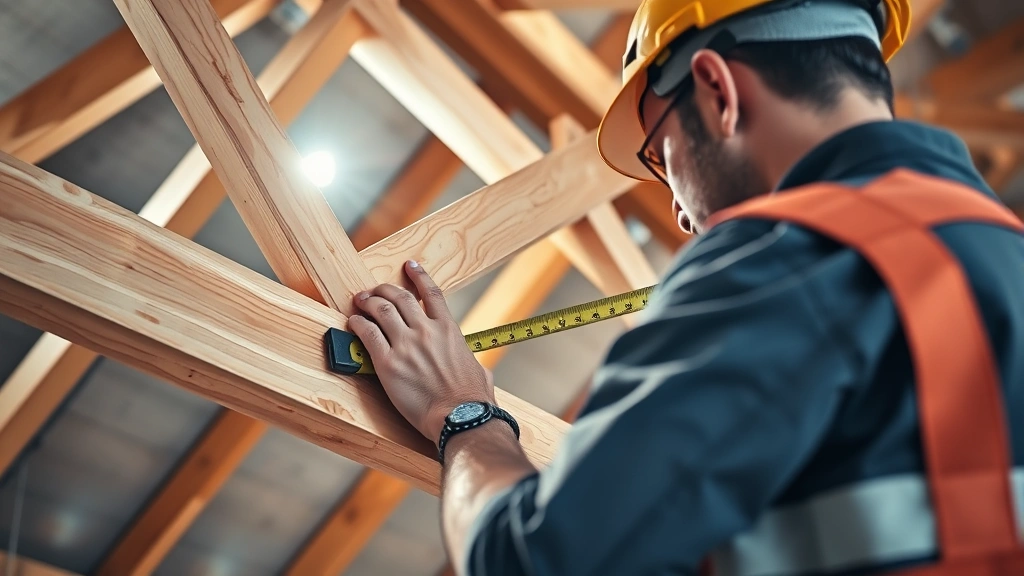
Triangles appear everywhere in construction, carpentry, and structural design. Carpenters use triangle calculations when building roof trusses, framing walls at angles, and creating diagonal bracing. Knowing how to find a missing side quickly can save time on the job and ensure your measurements are precise. Whether you’re working with right triangles or oblique triangles, the methods in this guide will help you get exact results every time.
Understanding Triangle Basics
Before diving into calculations, it’s essential to understand the fundamental properties of triangles. Every triangle has three sides and three angles, and the sum of all angles always equals 180 degrees. The relationship between sides and angles determines which calculation method you’ll use to find a missing side.
Triangles fall into two main categories: right triangles (containing one 90-degree angle) and oblique triangles (containing no right angles). Right triangles are typically easier to solve because you can use the Pythagorean theorem, while oblique triangles require the law of cosines or law of sines. Identifying which type of triangle you’re working with is your first step toward finding the missing side.
The sides of a triangle have specific names based on their position. In a right triangle, the longest side opposite the right angle is called the hypotenuse, while the other two sides are called legs. In oblique triangles, sides are often labeled as ‘a’, ‘b’, and ‘c’, with corresponding opposite angles labeled ‘A’, ‘B’, and ‘C’. Understanding this naming convention helps you apply formulas correctly.
The Pythagorean Theorem Method
The Pythagorean theorem is the most straightforward method for finding missing sides in right triangles. The theorem states that in any right triangle, the square of the hypotenuse equals the sum of the squares of the other two sides. The formula is expressed as: a² + b² = c², where ‘c’ is the hypotenuse and ‘a’ and ‘b’ are the legs.
To find a missing side using the Pythagorean theorem, follow these steps:
- Identify which side is missing. Determine whether you need to find the hypotenuse or one of the legs.
- Write out the formula. Use a² + b² = c² and substitute the known values.
- Solve for the unknown. If finding the hypotenuse, add the squares of the legs and take the square root. If finding a leg, subtract the known leg’s square from the hypotenuse’s square and take the square root.
- Double-check your work. Verify that your answer makes sense by ensuring the hypotenuse is the longest side.
Example: If a right triangle has legs measuring 3 inches and 4 inches, the hypotenuse would be: 3² + 4² = 9 + 16 = 25, so c = √25 = 5 inches. This is the famous 3-4-5 triangle ratio used frequently in construction and framing.
The Pythagorean theorem also works in reverse. If you know the hypotenuse and one leg, you can find the other leg. For instance, if the hypotenuse is 10 and one leg is 6: 6² + b² = 10², which gives 36 + b² = 100, so b² = 64, and b = 8. This method is incredibly useful for home improvement projects where precise angles matter.
One practical application involves roof framing. If you’re installing a roof with a 12-foot span and a 6-foot rise, the rafter length (hypotenuse) would be: 12² + 6² = 144 + 36 = 180, so the rafter length is √180 ≈ 13.42 feet. This calculation ensures your materials are cut to the exact length needed.
Using the Law of Cosines
The law of cosines is essential for solving oblique triangles where you know two sides and the included angle, or all three sides. Unlike the Pythagorean theorem, which only works for right triangles, the law of cosines works for any triangle. The formula is: c² = a² + b² – 2ab·cos(C), where C is the angle opposite side c.
To use the law of cosines effectively:
- Identify what you know. You need either two sides and the included angle, or all three sides.
- Set up the formula correctly. Ensure the angle you’re using is opposite the side you’re solving for.
- Substitute the values. Plug in your known measurements carefully.
- Calculate step-by-step. Square the known sides, multiply and apply the cosine, then combine terms.
- Take the square root. Find the square root of your final result to get the missing side length.
Example: Suppose you have a triangle with sides a = 5 and b = 7, and the included angle C = 60 degrees. To find side c: c² = 5² + 7² – 2(5)(7)cos(60°). Since cos(60°) = 0.5, this becomes c² = 25 + 49 – 70(0.5) = 25 + 49 – 35 = 39. Therefore, c = √39 ≈ 6.24.
The law of cosines is particularly valuable in surveying and land measurement. If you’re determining the distance between two points on a property where you know two distances and the angle between them, the law of cosines provides the solution. This method also helps when determining ranges of measurements for construction projects.
Another advantage of the law of cosines is finding angles when you know all three sides. Rearranging the formula to solve for the angle: cos(C) = (a² + b² – c²) / (2ab). This reverse application helps verify your triangle measurements are correct before proceeding with construction or fabrication work.
Applying the Law of Sines
The law of sines is useful when you know one side and two angles, or two sides and a non-included angle (SSA situation). The formula states: a/sin(A) = b/sin(B) = c/sin(C), where lowercase letters represent sides and uppercase letters represent their opposite angles.
Using the law of sines involves these steps:
- Verify you have sufficient information. You need at least one complete side-angle pair plus one more piece of information.
- Set up the proportion. Write the equation with your known values and unknown.
- Cross-multiply. Solve the proportion to isolate the unknown side.
- Calculate carefully. Use a calculator for sine values and verify your angle measurements are in degrees or radians as appropriate.
Example: If side a = 10, angle A = 30 degrees, and angle B = 45 degrees, find side b. Using a/sin(A) = b/sin(B): 10/sin(30°) = b/sin(45°). Since sin(30°) = 0.5 and sin(45°) ≈ 0.707, this becomes 10/0.5 = b/0.707, so 20 = b/0.707, and b ≈ 14.14.
The law of sines is particularly useful in surveying triangulated land measurements and determining distances in archaeological or geographical mapping. When you measure angles from two observation points to a distant object, the law of sines helps calculate the actual distance without direct measurement.
One important caveat with the law of sines is the ambiguous case, which occurs in SSA situations. When you know two sides and a non-included angle, there might be two possible triangles, one triangle, or no triangle at all. Always check whether your given measurements produce a valid triangle before finalizing your calculations.
Special Triangle Formulas
Certain triangles have special properties that simplify calculations. Isosceles triangles, with two equal sides, allow you to use symmetry properties. If you know the base and the equal sides, or the base and the apex angle, you can find any missing measurement.
For isosceles triangles, if you know the two equal sides (a) and the angle between them (C), use the law of cosines: base² = a² + a² – 2a²·cos(C) = 2a²(1 – cos(C)). Alternatively, if you know the base (b) and the equal sides (a), you can find the apex angle using: cos(C) = (2a² – b²) / (2a²).
Equilateral triangles have all three sides equal and all angles equal to 60 degrees. If you know one side length, all measurements are determined. The height of an equilateral triangle with side length s is: h = (s√3) / 2. The area is: A = (s²√3) / 4.
30-60-90 triangles and 45-45-90 triangles are right triangles with special side ratios that allow quick calculations. In a 45-45-90 triangle, if the legs have length x, the hypotenuse has length x√2. In a 30-60-90 triangle, if the shortest side (opposite the 30° angle) has length x, the hypotenuse has length 2x, and the other leg has length x√3.
These special triangles appear frequently in construction. Roof pitches often create 30-60-90 or 45-45-90 triangles, allowing carpenters to quickly calculate rafter lengths without detailed calculations. Understanding these ratios speeds up on-site work significantly.

Practical Application Examples
Let’s work through real-world scenarios where finding a missing triangle side matters. Scenario 1: Roof Framing – You’re installing a roof with a 20-foot span and want a 6-foot rise. Using the Pythagorean theorem, the rafter length is √(10² + 6²) = √(100 + 36) = √136 ≈ 11.66 feet per half-span.
Scenario 2: Diagonal Bracing – A wall frame is 8 feet tall and 12 feet wide. To add diagonal bracing, you need the diagonal length. Using the Pythagorean theorem: √(8² + 12²) = √(64 + 144) = √208 ≈ 14.42 feet. This measurement ensures your bracing material is cut to the correct length.
Scenario 3: Angled Deck Stairs – Your deck stairs need to span 12 feet horizontally with a 3-foot vertical rise. The stair tread length (hypotenuse) is √(12² + 3²) = √(144 + 9) = √153 ≈ 12.37 feet. This helps determine the number of steps needed and their exact dimensions.
Scenario 4: Property Surveying – You’re surveying a triangular property lot. You measure two sides as 150 feet and 200 feet with an included angle of 75 degrees. Using the law of cosines: c² = 150² + 200² – 2(150)(200)cos(75°) = 22,500 + 40,000 – 60,000(0.259) ≈ 46,460, so c ≈ 215.5 feet. This gives you the exact perimeter for fencing estimates.
These examples demonstrate why accurate triangle calculations matter in home improvement, construction, and property work. Small errors in missing side calculations can compound into significant material waste or structural issues. Always double-check your work and verify measurements match physical reality.
Common Mistakes to Avoid
When finding missing triangle sides, several errors commonly occur. Using the wrong formula is the most frequent mistake. Ensure you’ve correctly identified whether you have a right triangle (use Pythagorean theorem) or an oblique triangle (use law of cosines or law of sines).
Angle measurement errors cause significant problems, especially with the law of cosines or law of sines. Verify whether your angles are in degrees or radians, and ensure your calculator is set to the correct mode. A single degree of error can produce noticeably incorrect results in longer measurements.
Incorrect angle identification happens when using the law of cosines. Remember that the angle must be opposite the side you’re solving for, or the angle must be between the two sides you know. Using the wrong angle produces completely incorrect results.
Rounding too early reduces accuracy in your final answer. Keep full decimal precision throughout your calculations and only round the final result. This is especially important in construction where fractions of an inch matter.
Forgetting to take the square root is surprisingly common. After calculating c², remember to take the square root to find c. Many mistakes result from stopping one step short of the complete solution.
Not verifying the triangle inequality theorem can lead to accepting invalid triangles. The sum of any two sides must be greater than the third side. If your calculated side violates this rule, recalculate and check your work.
Confusing sides and angles in the law of sines causes errors. Ensure you’re matching each side with its opposite angle. Using a side with the wrong angle produces incorrect proportions.
To avoid these mistakes, develop a habit of checking your calculations by working backward. If you found side c, use your result to verify your original equation still holds true. This validation step catches errors before they impact your project.
FAQ
What’s the simplest way to find a missing triangle side?
If you have a right triangle, the Pythagorean theorem (a² + b² = c²) is the simplest method. It requires only knowing two sides. For other triangles, the method depends on what information you have available.
Can I use the Pythagorean theorem for non-right triangles?
No, the Pythagorean theorem only works for right triangles. For non-right triangles, use the law of cosines or law of sines instead. Using the Pythagorean theorem on an oblique triangle produces incorrect results.
How do I know which method to use?
Identify what information you have: If you have a right triangle and know two sides, use the Pythagorean theorem. If you know two sides and the included angle, use the law of cosines. If you know one side and two angles, use the law of sines. For special triangles like 30-60-90 or 45-45-90, use the special ratio formulas.
What if I only know one side and one angle?
One side and one angle aren’t sufficient to find another side in most cases. You need at least two pieces of information (two sides, or one side and two angles, or two sides and an angle). The exception is special triangles where the properties are predetermined.
How accurate do my measurements need to be?
For construction projects, measure to at least 1/8-inch accuracy. For property surveying, use at least 1-foot accuracy or better depending on the lot size. Always verify measurements twice before cutting materials or making permanent installations.
Can calculators help with these calculations?
Yes, scientific calculators are essential for these calculations. Ensure your calculator has functions for square roots, trigonometric functions (sine, cosine, tangent), and angle conversion capabilities. Many smartphones have calculator apps with these functions.
What’s the ambiguous case in the law of sines?
The ambiguous case occurs when you know two sides and a non-included angle (SSA). Depending on the specific measurements, there might be two valid triangles, one triangle, or no valid triangle. Always check your results carefully in these situations.
How does finding a missing triangle side apply to home improvement?
Finding missing triangle sides is crucial for roof framing, diagonal bracing, stair construction, deck building, and any project involving angles. Accurate calculations ensure materials are cut to the correct length and structures are properly aligned and stable. Visit This Old House for additional home improvement guidance on structural projects.

Related Posts

Superscript in Google Docs: Expert Tips

Strikethrough in Excel: Easy Steps for Beginners
