
Clean Glass Stove Top? Expert Tips Revealed
How to Clean Glass Stove Top: Expert Tips Revealed
A sparkling glass stove top is the crown jewel of any modern kitchen, but keeping it pristine requires knowledge and the right approach. Unlike traditional coil or gas burners, glass cooktops demand specific cleaning techniques to maintain their clarity and functionality without causing permanent damage. Whether you’re dealing with stubborn burnt-on food, water spots, or everyday grease buildup, understanding the proper methods will save you time and protect your investment.
This comprehensive guide walks you through everything you need to know about cleaning glass stove tops effectively. You’ll discover which products work best, which ones to avoid, and step-by-step techniques that professional appliance cleaners use. By following these expert tips, you can restore your cooktop to showroom condition and prevent future damage that could compromise its performance or appearance.
Why Glass Stove Tops Need Special Care
Glass cooktops represent a significant investment in your kitchen, typically costing between $500 and $2,000 depending on the model and brand. Unlike traditional stovetops, the glass surface is susceptible to thermal shock, scratching, and permanent discoloration if not cleaned properly. Understanding the vulnerabilities of your cooktop is the first step toward maintaining it correctly.
The smooth glass surface conducts heat efficiently, which is why these cooktops are popular in modern kitchens. However, this same smoothness makes them vulnerable to visible scratches and marks. When food particles or debris sit on the surface during cooking, they can become fused to the glass, creating stubborn stains that require careful removal. Additionally, mineral deposits from water and hard-to-remove burnt residue can accumulate over time, dulling the surface’s appearance.
Temperature fluctuations pose another risk to glass cooktops. Rapid temperature changes—such as pouring cold water on a hot surface—can cause thermal shock and potentially crack the glass. This is why patience and proper technique matter significantly when cleaning these appliances. The good news is that with the right approach, your glass stove top can remain beautiful and functional for years to come.
Essential Supplies and Tools You’ll Need
Before you begin cleaning your glass stove top, gather the proper supplies. Using the wrong materials can scratch the surface or leave residue that’s harder to remove than the original mess. Here’s what every homeowner should have on hand:
- Microfiber cloths – These are gentler than paper towels and won’t scratch the glass surface
- Soft-bristled brushes – Avoid wire brushes or abrasive scrubbers
- Baking soda – A natural abrasive that’s gentle enough for glass
- White vinegar – Cuts through grease and mineral deposits effectively
- Dish soap – A mild degreaser for everyday cleaning
- Glass cooktop cleaner – Purpose-made products designed specifically for this task
- Plastic or silicone scrapers – Never use metal scrapers that can scratch
- Spray bottle – For applying cleaning solutions evenly
Consider keeping these supplies in a dedicated cleaning caddy near your kitchen. This ensures you’re always prepared to tackle spills immediately, which prevents them from becoming harder to remove later. For cleaning other appliances, similar gentle approaches often work best.
Daily Cleaning Routine
The easiest way to maintain a beautiful glass stove top is to clean it daily. This simple routine takes just five minutes but prevents buildup that requires intensive scrubbing later. Establish this habit immediately after cooking, once the surface has cooled completely.
Step 1: Cool and Clear
Always allow your cooktop to cool completely before cleaning. Attempting to clean a hot glass surface can cause thermal shock and may result in burns. Once cool, wipe away loose crumbs and debris with a dry microfiber cloth. This prevents particles from scratching the glass when you begin wet cleaning.
Step 2: Spray and Wipe
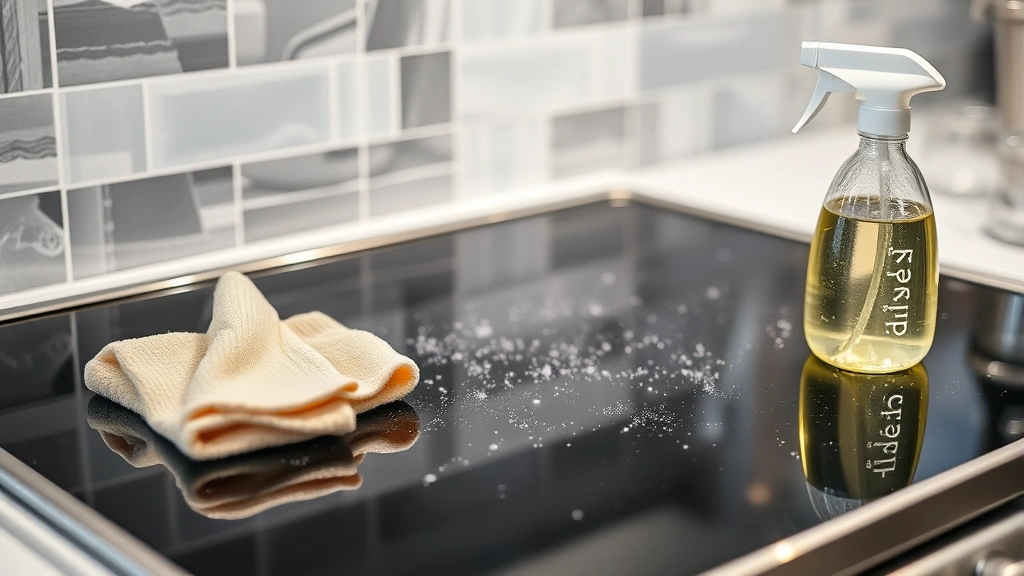
Fill a spray bottle with a solution of equal parts white vinegar and water. Spray this mixture across the entire cooktop surface and let it sit for one minute. The vinegar cuts through light grease and helps dissolve mineral deposits. Wipe thoroughly with a clean microfiber cloth, using circular motions. For stubborn spots, spray again and let sit for two to three minutes before wiping.
Step 3: Final Polish
After removing the vinegar solution, spray the cooktop with clean water and wipe dry with a fresh microfiber cloth. This removes any vinegar residue and leaves the surface streak-free. The entire process should take no more than five minutes, and your cooktop will sparkle.
Removing Burnt-On Food and Stubborn Stains
Burnt-on food represents one of the most frustrating cleaning challenges for glass cooktop owners. Whether it’s melted sugar, scorched food residue, or baked-on grease, these stubborn deposits require a more aggressive approach than daily cleaning. The key is using the right technique without damaging the glass.
The Baking Soda Method
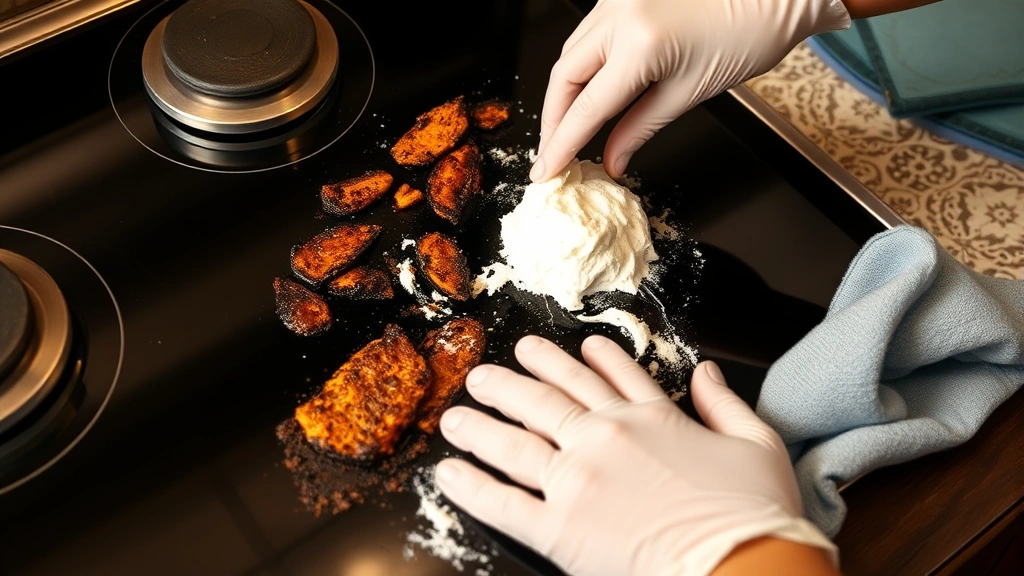
Baking soda is an excellent natural abrasive for removing burnt-on food. Make a paste by combining three parts baking soda with one part water. Apply this paste directly to the burnt areas and let it sit for 15 to 20 minutes. The baking soda begins breaking down the burnt residue without scratching the glass. Using a plastic scraper held at a 45-degree angle, gently scrape away the loosened food. Work slowly and deliberately—rushing this step can scratch the surface.
After scraping, spray the area with your vinegar-water solution. The vinegar reacts with the baking soda residue, creating a fizzing action that helps lift remaining debris. Wipe clean with a microfiber cloth and repeat if necessary.
The Vinegar and Baking Soda Combination
For extremely stubborn stains, combine vinegar and baking soda for maximum cleaning power. Sprinkle baking soda across the affected area, then spray with white vinegar. Allow the fizzing reaction to continue for several minutes. This combination breaks down tough residue more effectively than either ingredient alone. Once the fizzing subsides, use your plastic scraper carefully to remove the loosened material. This method works particularly well on stubborn food deposits.
Commercial Glass Cooktop Cleaner
Purpose-made glass cooktop cleaners offer another effective option for burnt-on stains. These products are specifically formulated to work on glass surfaces without causing damage. Follow the manufacturer’s instructions carefully, as application methods vary. Generally, you’ll apply the cleaner to the affected area, let it sit briefly, and then wipe clean. These products often contain mild abrasives that remove burnt food more quickly than natural solutions.
Deep Cleaning Methods That Work
Beyond daily maintenance and spot cleaning, periodic deep cleaning keeps your glass cooktop looking like new. Deep cleaning addresses mineral deposits, water spots, and buildup that accumulates over weeks or months. Reserve this intensive cleaning for once monthly or quarterly, depending on your usage and water hardness.
The Steam Method
Steam cleaning is surprisingly effective for glass cooktops and requires minimal supplies. Simply boil water in a pot or kettle and carefully pour it over the cooktop surface (ensure the cooktop is cool first). The steam loosens grime and burnt-on food naturally. After a few minutes, use your plastic scraper to gently remove loosened debris. This method is particularly effective for mineral deposits and light grease buildup. Follow up with your standard vinegar-water spray and microfiber cloth for a final polish.
The Razor Blade Technique
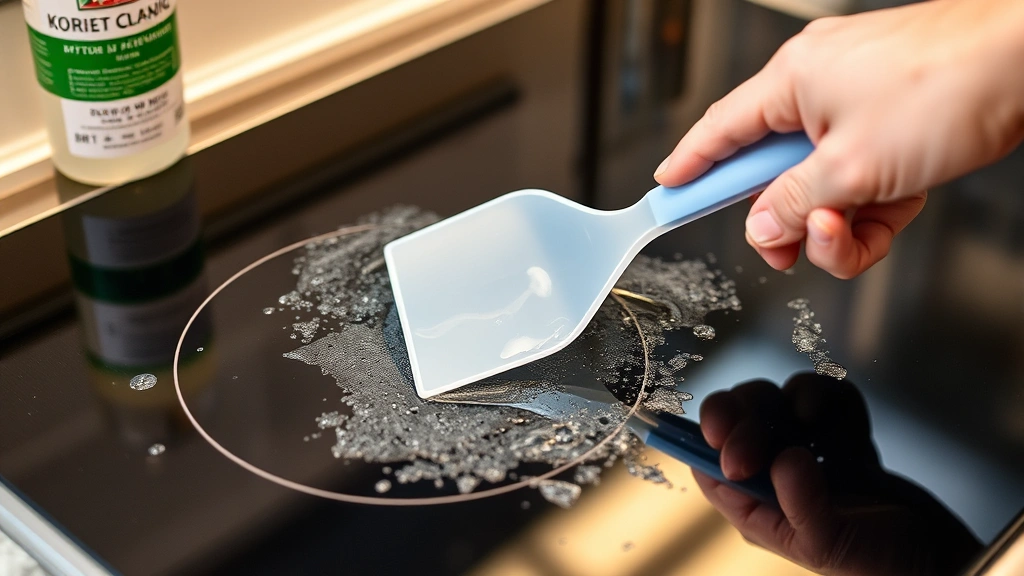
For extremely stubborn residue, a single-edge razor blade or glass scraper held at a 45-degree angle can remove burnt food without scratching the glass—when used correctly. This technique requires patience and a steady hand. Never apply pressure directly downward; instead, use gentle, controlled scraping motions at an angle. This method works because the blade removes material along the glass surface rather than digging into it. Always test on a small, inconspicuous area first.
Cream-Based Cleaners
Cream-based glass cooktop cleaners combine mild abrasives with cleaning agents. Apply a small amount directly to the cooktop and work it in with a soft cloth or brush. These cleaners often include protective agents that leave a slight coating, making future cleaning easier. They’re particularly effective for water spots and mineral deposits. After using cream-based cleaners, always finish with a vinegar spray and microfiber cloth to remove any residue.
Products to Avoid
Understanding what NOT to use on your glass cooktop is just as important as knowing what to use. Many common household products can permanently damage the surface or leave difficult-to-remove residue. Here’s a comprehensive list of products to keep away from your cooktop:
- Abrasive scouring pads and steel wool – These will scratch the glass permanently
- Oven cleaner – Contains harsh chemicals that can damage glass and leave residue
- Bleach or ammonia-based cleaners – These can discolor the glass or cause etching
- Harsh scrubbing brushes – Wire brushes and stiff-bristled brushes cause scratches
- Metal scrapers or knives – Will gouge the glass surface
- Wax-based polishes – Create a slippery surface and attract dust
- Acidic cleaners in high concentrations – Undiluted vinegar or lemon juice can etch the glass
Many people assume that stronger cleaners work better, but this isn’t true for glass cooktops. The gentle approach using natural ingredients and proper technique consistently outperforms harsh chemical products. This is similar to the approach used when cleaning delicate appliances with vinegar.
Preventing Future Damage
Prevention is far easier than intensive cleaning or damage repair. Implementing these preventive measures will keep your glass cooktop looking beautiful and functioning properly for years to come.
Use Cookware Wisely
Always ensure your cookware has smooth, clean bottoms before placing it on the cooktop. Rough or dirty bottoms can scratch the glass surface. Wipe the bottoms of pots and pans regularly, especially if you’ve moved them around your kitchen. Use flat-bottomed cookware that makes complete contact with the cooktop for even heat distribution and to prevent scratching.
Clean Spills Immediately
The moment something spills on your cooktop, let it cool slightly and wipe it away. Spills that sit and cook onto the surface become exponentially harder to remove. Keep a microfiber cloth nearby while cooking so you can quickly address accidents. This simple habit prevents 90% of stubborn stain problems.
Avoid Thermal Shock
Never pour cold water on a hot cooktop or place a cold pot on a hot surface. These actions can cause thermal shock and potentially crack the glass. Similarly, don’t place a hot pot directly from the stove onto a cold surface. Allow cookware and the cooktop to reach compatible temperatures before contact. Patience in this area prevents catastrophic damage.
Use Protective Covers
When not in use, consider using a glass cooktop protector or cover. These protective barriers prevent accidental scratches from cookware, utensils, or other kitchen items. They also prevent dust and debris from settling on the surface, reducing the need for frequent cleaning.
Maintain Proper Ventilation
Ensure your kitchen has adequate ventilation while cooking. Proper ventilation reduces grease and moisture buildup on the cooktop. Install or maintain a range hood to capture cooking vapors before they settle on your glass surface. This simple step significantly reduces the cleaning frequency needed.
Regular Maintenance Schedule
Establish a cleaning routine and stick to it. Daily five-minute cleanings prevent the need for intensive deep cleaning. Monthly deep cleaning prevents buildup that becomes difficult to remove. This consistent approach maintains the cooktop’s appearance and functionality. For more household maintenance tips, visit the FixWiseHub Blog for additional how-to guides.
FAQ
Can I use vinegar on my glass cooktop?
Yes, vinegar is safe for glass cooktops when diluted properly. Mix equal parts white vinegar and water in a spray bottle. Never use undiluted vinegar, as the acidity can etch the glass over time. Always dilute vinegar before applying to your cooktop surface.
Is it safe to use a razor blade on a glass cooktop?
A razor blade can be safe when used correctly, but it requires skill and caution. Hold the blade at a 45-degree angle and use gentle, controlled motions. Never apply direct downward pressure. Always test on a small area first, and consider alternative methods if you’re uncomfortable with this technique.
How often should I deep clean my glass cooktop?
Deep cleaning frequency depends on usage and water hardness. Most homeowners benefit from deep cleaning monthly or quarterly. If you cook frequently or have hard water, monthly deep cleaning is recommended. Light users may need deep cleaning only quarterly.
What causes white spots on glass cooktops?
White spots are typically mineral deposits from hard water or cleaning solution residue. These spots are purely cosmetic and don’t affect cooktop function. Remove them using the baking soda paste method or a commercial glass cooktop cleaner. Always dry the surface completely after cleaning to prevent new spots.
Can I use window cleaner on my glass cooktop?
Window cleaners often contain ammonia, which can damage glass cooktops over time. It’s best to avoid window cleaners and instead use solutions specifically designed for cooktops or natural alternatives like vinegar and water. Purpose-made cleaners are formulated to be safe for cooking surfaces.
My cooktop has a permanent scratch—what can I do?
Unfortunately, deep scratches in glass cannot be repaired without professional refinishing, which is often cost-prohibitive. However, many scratches are less noticeable when the cooktop is clean. Focus on prevention going forward by using proper cookware and cleaning techniques. If scratches are extensive, contact the manufacturer about replacement options.
Is baking soda safe for all glass cooktops?
Baking soda is safe for virtually all glass cooktops when used as a paste with water. It’s a mild abrasive that won’t scratch glass when applied correctly. However, always test on a small area first if you have concerns about your specific cooktop model.
How do I remove burnt sugar from my cooktop?
Burnt sugar is one of the toughest residues to remove. Use the baking soda paste method and let it sit for 20 minutes. For extremely stubborn sugar, apply a cream-based cooktop cleaner and use gentle scraping with a plastic tool. Multiple applications may be necessary for complete removal.

Related Posts

Superscript in Google Docs: Expert Tips

Strikethrough in Excel: Easy Steps for Beginners
