
Cleaning a Couch? Expert Tips Inside
How to Clean a Couch: Expert Tips for a Fresh, Spotless Sofa
Your couch is one of the most-used pieces of furniture in your home, which means it accumulates dust, crumbs, pet hair, and mysterious stains on a regular basis. Whether you’re dealing with a stubborn wine spill, everyday dirt buildup, or just want to refresh your upholstery, knowing how to clean a couch properly can extend its lifespan and keep it looking like new. The good news is that you don’t always need expensive professional cleaners—with the right techniques and tools, you can tackle most couch cleaning challenges yourself.
In this comprehensive guide, we’ll walk you through everything you need to know about couch cleaning, from identifying your fabric type to removing set-in stains. Whether your sofa is made of leather, microfiber, linen, or velvet, we’ve got expert-approved methods that work. You’ll learn preventative maintenance strategies, DIY cleaning solutions, and when it’s time to call in the professionals. Let’s dive into making your couch look and feel brand new again.
Identify Your Couch Fabric Type
Before you start scrubbing, it’s critical to identify what your couch is made of. Different fabrics require different cleaning methods, and using the wrong approach could damage your furniture permanently. Check the manufacturer’s tag on your couch—it should display a fabric content label and cleaning code.
Common cleaning codes include:
- W: Water-based cleaning solutions are safe
- S: Solvent-based cleaners only (no water)
- WS: Both water and solvent-based cleaners work
- X: Vacuum and dry brush only; no wet cleaning
If you can’t find a tag or it’s illegible, test any cleaning solution on a hidden area of the couch first. Look at your sofa’s texture and color—microfiber tends to be soft and uniform, while linen has a more textured appearance. Leather is obviously distinct and requires specialized care. When in doubt, err on the side of caution and use the gentlest method possible.
Understanding your fabric also helps you determine whether you should pursue DIY cleaning methods or professional services. Delicate fabrics like silk or velvet often benefit from professional cleaning to avoid permanent damage.
Gather Your Cleaning Supplies
Having the right tools and products on hand makes the cleaning process much smoother. You don’t need expensive specialty products—many effective solutions come from your kitchen pantry. Here’s what to assemble:
Essential cleaning supplies:
- Vacuum with upholstery attachment
- Soft-bristled brush or old toothbrush
- Clean white cloths or microfiber towels
- Spray bottle for solution application
- Baking soda
- White vinegar
- Dish soap (mild, unscented)
- Rubbing alcohol
- Water (distilled is preferred)
Optional but helpful items:
- Enzyme-based stain remover
- Upholstery cleaner (store-bought)
- Steam cleaner for deep cleaning
- Lint roller
- Carpet rake for fluffing fibers
Before investing in expensive products, check what you already have at home. Many household items like baking soda and white vinegar are surprisingly effective for couch cleaning. If you need professional-grade products, check This Old House’s home improvement recommendations for trusted brands and techniques.
Vacuum and Remove Debris
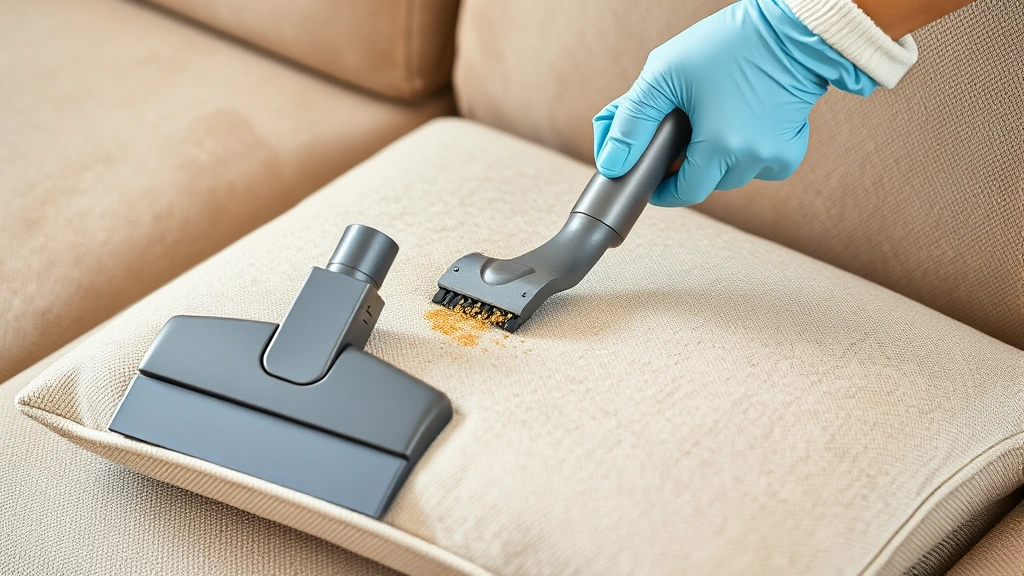
Vacuuming is the foundation of any successful couch cleaning routine. This step removes surface dust, crumbs, pet hair, and debris before you apply any wet cleaning solutions. Skipping this step can lead to muddy residue and ineffective spot cleaning.
Step-by-step vacuuming process:
- Use the upholstery attachment on your vacuum cleaner
- Start at the top of the couch and work downward
- Pay special attention to seams, crevices, and cushion edges where debris accumulates
- Vacuum between cushions thoroughly—this is where the most dirt hides
- Flip cushions and vacuum the underside if possible
- Vacuum the couch frame and legs
- Use a lint roller to catch any remaining pet hair or fibers
For stubborn pet hair that won’t vacuum up, try using a slightly damp rubber glove. Run your hand over the fabric and the hair will cling to the glove. This method works particularly well on microfiber and velvet surfaces. Attention to detail in maintenance prevents small problems from becoming big ones, and the same principle applies to furniture care.
Once you’ve removed all loose debris, your couch is ready for spot cleaning or deep cleaning treatments. Never skip this step—it makes everything that follows more effective and prevents dirt from being pushed deeper into the fibers.
Spot Clean Stains
Spot cleaning is the most important skill for keeping your couch looking fresh between deep cleans. The key is acting quickly—fresh stains are always easier to remove than set-in ones. Always blot stains rather than rub, as rubbing can push the stain deeper into the fabric fibers.
Basic spot cleaning technique:
- Blot the stain with a clean, dry cloth to remove excess liquid
- Mix your cleaning solution (see recipes below)
- Apply the solution to a cloth, not directly to the couch
- Gently dab the stained area, working from the outside edges toward the center
- Blot with a clean, damp cloth to remove cleaning solution
- Blot dry with a fresh cloth
- Allow to air dry completely before using the couch
DIY cleaning solution recipes:
- General purpose: Mix 1/4 teaspoon mild dish soap with 1 cup warm water
- Tougher stains: Combine 1 tablespoon baking soda, 1/2 cup white vinegar, and 2 cups water
- Greasy stains: Use rubbing alcohol on a cloth to dab the affected area
- Protein-based stains: Mix 1 tablespoon enzyme-based cleaner with 1 cup cool water
For stubborn stains that resist initial attempts, let your cleaning solution sit for 5-10 minutes before blotting. This gives the solution time to break down the stain. However, don’t oversaturate your couch—excess moisture can lead to mildew and water stains. If you’re working on valuable furniture, learning proper cleaning techniques prevents costly damage.

Deep Clean Your Couch
Deep cleaning goes beyond spot treating and refreshes the entire couch surface. This process removes embedded dirt, odors, and stains that regular vacuuming and spot cleaning can’t address. Most couches benefit from a deep clean every 6-12 months, depending on usage and household factors.
Method 1: Baking soda treatment
- Vacuum the entire couch thoroughly
- Sprinkle baking soda generously over all cushions and surfaces
- Let it sit for 15-30 minutes to absorb odors and break down stains
- Use a soft brush to work the baking soda into the fabric gently
- Vacuum thoroughly to remove all baking soda residue
- Follow with a light mist of water if desired, then air dry
Method 2: Vinegar and water solution
- Combine equal parts white vinegar and water in a spray bottle
- Lightly mist the couch surface (don’t oversaturate)
- Use a soft brush to work the solution into the fabric
- Blot with clean cloths until the couch is mostly dry
- Allow to air dry completely with windows open for ventilation
Method 3: Steam cleaning
If you have access to an upholstery steam cleaner, this is one of the most effective deep cleaning methods. Rental steam cleaners are available at most hardware stores, or you can hire professionals. Steam cleaning removes dirt, allergens, and odors while sanitizing the fabric. Follow the manufacturer’s instructions carefully, and always test on a hidden area first.
Deep cleaning can take several hours, so plan for this when your couch won’t be needed. Make sure to allow adequate drying time—typically 24 hours—before using the couch again. Proper ventilation speeds up drying; open windows and use fans if possible.
Address Specific Stain Types
Different stains require different approaches. Knowing how to treat specific stain types increases your success rate significantly. Here’s a detailed guide to common couch stains:
Red wine and dark beverages: Blot immediately with white cloth. Mix 1 tablespoon dish soap, 1 tablespoon white vinegar, and 2 cups warm water. Apply with cloth, blotting frequently. For set-in stains, try rubbing alcohol on a cloth.
Coffee and tea: Treat similarly to wine stains. The baking soda and vinegar solution works particularly well. If the stain persists, an enzyme-based stain remover is effective.
Pet accidents: Blot excess liquid first. Apply an enzyme-based cleaner designed for pet stains—these break down the proteins causing odors. Let sit per product instructions, then blot and rinse. For old stains, sprinkle baking soda, let sit overnight, then vacuum.
Grease and oil: Don’t use water initially, as it can spread the stain. Sprinkle baking soda or cornstarch to absorb the oil. Let sit for 15-20 minutes, then vacuum. Follow with rubbing alcohol on a cloth to remove remaining residue.
Chocolate: Let it dry completely, then scrape off dried residue gently. Treat the remaining stain with cool water (hot water can set it). Use the general-purpose cleaning solution if needed.
Ink and permanent marker: Test rubbing alcohol on a hidden area first. Dab the stain with alcohol on a cloth, working gently. This won’t always completely remove ink, but it minimizes it. Avoid water-based solutions initially.
Mud: Let it dry completely. Vacuum or brush away dried mud gently. Then treat any remaining stain with the general-purpose cleaning solution.
Chewing gum: Freeze the gum with ice cubes until hard, then scrape away gently with a dull object. Remove remaining residue with rubbing alcohol on a cloth.
When dealing with tough stains, patience is key. Multiple gentle applications often work better than one aggressive attempt. Always test solutions on hidden areas first, and when in doubt, consult Family Handyman’s expert advice before attempting advanced treatments.

Preventative Maintenance Tips
The best way to keep your couch clean is to prevent excessive soiling in the first place. Implementing preventative measures reduces the frequency of deep cleaning and extends your furniture’s lifespan significantly.
Daily and weekly maintenance:
- Vacuum cushions and crevices weekly to prevent dirt accumulation
- Use a lint roller regularly to remove pet hair and fibers
- Fluff and rotate cushions to distribute wear evenly
- Avoid eating on the couch to prevent food-related stains
- Use coaster for drinks and keep beverages away from the furniture
- Enforce a no-shoes policy on upholstered furniture
Protective measures:
- Apply fabric protector spray after cleaning—this creates a barrier against stains and spills
- Use throw blankets to cover high-traffic areas and protect from wear
- Consider furniture covers for households with pets or small children
- Place the couch away from direct sunlight to prevent fading
- Maintain humidity levels between 30-50% to prevent mildew and odors
Pet-specific prevention:
If you have pets, take extra precautions to keep your couch clean. Wash pet bedding regularly, keep pets groomed to minimize shedding, and consider using a furniture protector specifically designed for pet owners. A washable slipcover is an excellent investment if your pets frequently sit on the couch. Regular vacuuming becomes even more important in pet-owning households—aim for 2-3 times per week.
For leather couches, condition the material every 6-12 months with appropriate leather conditioner. This prevents cracking and keeps the surface supple. Never use water-based cleaners on leather; instead, use a leather-specific cleaner. Proper maintenance prevents the need for major repairs, and the same principle applies to furniture care.
Fabric couches benefit from regular brushing with a soft-bristled brush to restore the nap of the fabric and remove surface dust. This simple step keeps your couch looking fresher between deep cleans and helps maintain the fabric’s appearance.
FAQ
How often should I deep clean my couch?
Most couches benefit from deep cleaning every 6-12 months, depending on usage. Households with pets, children, or heavy couch usage should aim for every 6 months. Lightly-used couches can go longer between deep cleans. Regular vacuuming and spot cleaning extend the time between deep cleanings.
Can I use bleach on my couch?
Bleach is generally not recommended for couches unless the fabric is white or cream-colored and specifically marked as bleach-safe on the care tag. Bleach can cause yellowing, discoloration, and fiber damage. For light-colored couches, oxygen-based cleaners are a safer alternative for tough stains.
What’s the difference between spot cleaning and deep cleaning?
Spot cleaning targets specific stains and is done as needed using minimal water and solution. Deep cleaning treats the entire couch surface, removing embedded dirt and odors. Spot cleaning is maintenance; deep cleaning is restoration. Both are important for keeping your couch in top condition.
My couch has a weird smell. How do I remove it?
Sprinkle baking soda over the entire couch, let sit for 15-30 minutes, then vacuum thoroughly. Baking soda absorbs odors effectively. For persistent smells, leave windows open for ventilation and place bowls of white vinegar nearby—vinegar neutralizes odors. If the smell persists after these steps, professional cleaning may be necessary.
Is professional couch cleaning worth it?
For valuable couches, delicate fabrics, or persistent stains that DIY methods haven’t removed, professional cleaning is worth the investment. Professionals have industrial-grade equipment and specialized knowledge. For regular maintenance cleaning, DIY methods are usually sufficient and more economical.
Can I wash couch cushion covers?
Check your couch’s care tag first. If the covers are removable and marked as machine-washable, you can wash them separately. Use cold water, gentle cycle, and mild detergent. Air dry completely before reattaching. Many covers are not removable or machine-washable, so always verify before attempting.
What should I do about permanent stains?
If a stain has been on your couch for months or years, it may be set permanently. Try enzyme-based stain removers or consult a professional cleaner. As a last resort, use a furniture marker that matches your couch color, or cover the area with a throw blanket or furniture protector. Sometimes accepting a stain is more practical than risking damage through aggressive cleaning attempts.
How do I prevent water stains after cleaning?
Use distilled water rather than tap water for rinsing, as it doesn’t leave mineral deposits. Blot thoroughly with dry cloths to remove as much moisture as possible. Allow the couch to air dry in a well-ventilated area. If water stains do appear, dampen the entire affected area with distilled water and blot again—this often helps blend the stain into the surrounding fabric.

Related Posts

Superscript in Google Docs: Expert Tips

Strikethrough in Excel: Easy Steps for Beginners
