
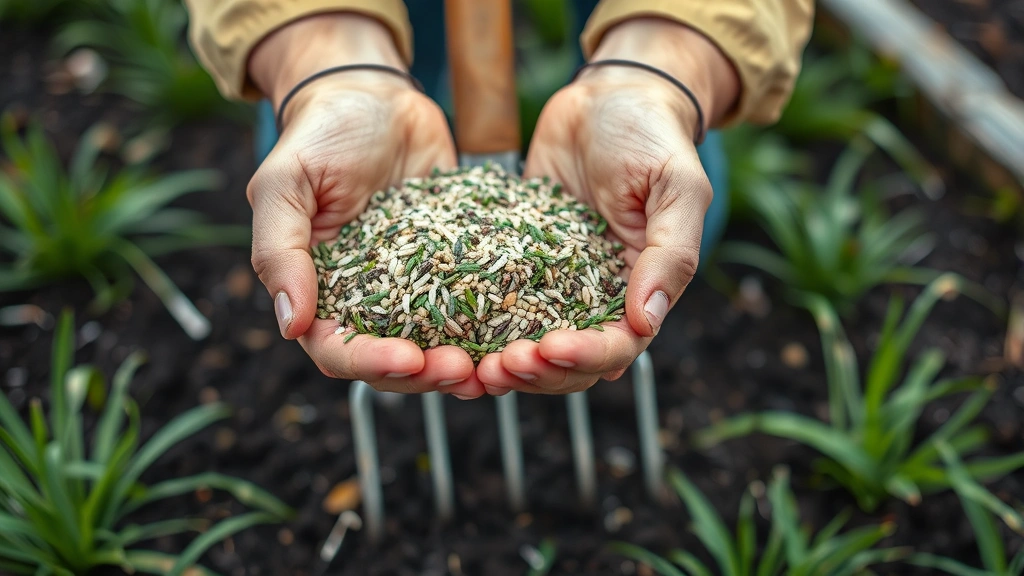
Planting Grass Seed: Expert Tips and Tricks
Planting Grass Seed: Expert Tips and Tricks
A lush, green lawn is the dream of most homeowners, but achieving it requires more than just scattering seeds and hoping for the best. Whether you’re overseeding an existing lawn, repairing bare patches, or starting from scratch, knowing how to plant grass seed properly is essential for success. This comprehensive guide will walk you through every step of the process, from soil preparation to maintenance, ensuring your grass seed germinates and thrives.
Planting grass seed at the right time with proper technique can transform your outdoor space into a vibrant green oasis. The difference between a patchy, struggling lawn and a thick, healthy one often comes down to understanding the fundamentals of seed selection, soil conditions, and ongoing care. With the right knowledge and approach, you’ll be well on your way to enjoying the beautiful lawn you’ve always wanted.
Choosing the Right Grass Seed
The foundation of a successful lawn begins with selecting the appropriate grass seed for your climate and growing conditions. Not all grass varieties perform equally in every region, so understanding your climate zone and local conditions is crucial. Grass varieties are generally categorized into cool-season and warm-season grasses, each with distinct advantages and optimal growing periods.
Cool-season grasses, such as fescue, bluegrass, and ryegrass, thrive in northern climates and are ideal for regions with cold winters and moderate summers. These varieties germinate quickly and can tolerate frost, making them perfect for early fall or spring planting. Warm-season grasses, including Bermuda, zoysia, and St. Augustine, flourish in southern climates with hot summers and mild winters. These grasses grow more slowly but are more drought-tolerant once established.
When selecting seed, check the label for the seed’s germination rate, purity percentage, and weed content. A high-quality seed should have a germination rate of at least 85-90 percent. Consider purchasing a seed blend rather than a single variety, as blends offer better disease resistance and can adapt to varying lawn conditions. For shaded areas, look for shade-tolerant varieties, and for sunny spots, choose sun-loving cultivars.
Soil Preparation and Testing
Before planting any grass seed, you must prepare your soil properly. A soil test is the first step in this process and provides invaluable information about your lawn’s pH level, nutrient content, and organic matter composition. You can request a soil test through your local cooperative extension office or use an at-home testing kit available at most garden centers.
The ideal soil pH for most grass varieties ranges from 6.0 to 7.0. If your soil is too acidic or alkaline, you’ll need to amend it accordingly. Adding lime raises pH for acidic soils, while sulfur lowers pH for alkaline soils. Additionally, your soil test will reveal nutrient deficiencies, allowing you to add appropriate fertilizers before planting.
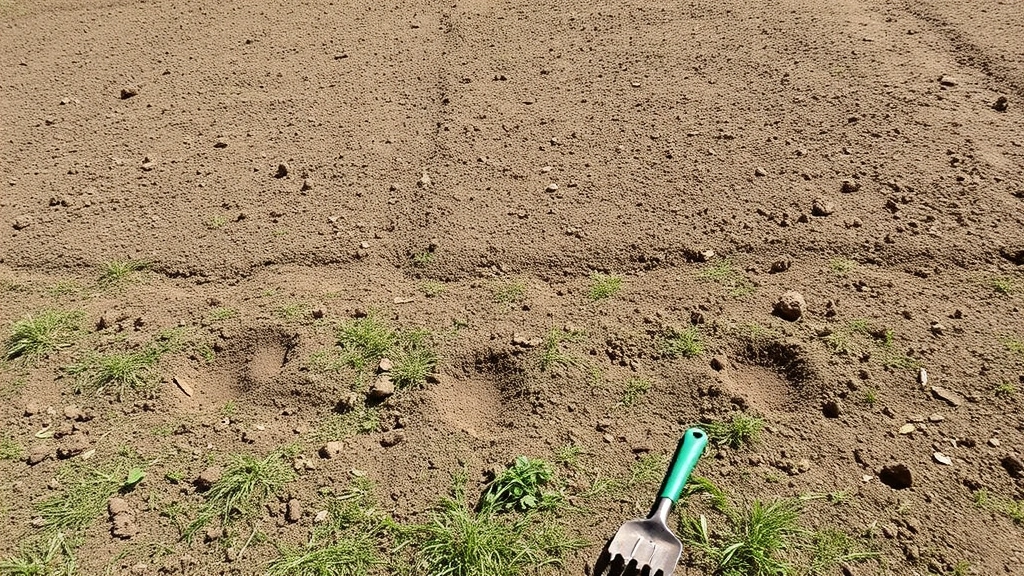
Once you understand your soil composition, begin the physical preparation process. Remove any debris, rocks, dead grass, and weeds from the area. For bare patches on an existing lawn, you’ll need to loosen the soil to a depth of at least 2-3 inches using a rake or tiller. For new lawn areas, till the entire space to break up compacted soil. Compacted soil prevents seed-to-soil contact and inhibits root development, so this step is critical. If your soil is extremely poor or contaminated, consider adding 1-2 inches of quality topsoil to improve growing conditions.
After tilling, rake the area smooth and level. Remove any remaining rocks, sticks, and debris. A smooth surface ensures even seed distribution and better germination rates. If you’re dealing with significant slopes, you may need to add erosion control measures to prevent seed wash-away during watering.
” alt=”Close-up of hands spreading grass seed over prepared soil bed” />
Best Time to Plant Grass Seed
Timing is everything when it comes to planting grass seed. The best time depends on your grass type and local climate. For cool-season grasses in northern regions, early fall (late August through September) is ideal because soil temperatures are warm enough for germination, but air temperatures are cooling, reducing heat stress on young seedlings. Spring planting (April through early June) is also viable for cool-season grasses, though summer heat may stress newly sprouted grass.
Warm-season grass seeds should be planted in late spring (May through June) when soil temperatures consistently reach 65-70°F. Planting too early risks seed rot in cool, wet soil, while late planting leaves insufficient time for establishment before winter dormancy.
Avoid planting grass seed during extremely hot, dry periods or during heavy rain forecasts. Check your local weather patterns and plan planting for a time when you can provide consistent moisture without flooding. Most seeds require 7-10 days of consistently moist soil to germinate successfully.
Step-by-Step Planting Process
Now that you’ve prepared your soil and chosen the right seed, it’s time to plant. Follow these detailed steps for optimal results:
Step 1: Calculate Seed Quantity
Determine the square footage of your lawn area by measuring length and width. Most grass seed packages indicate coverage rates—typically 3-4 pounds per 1,000 square feet. Buy slightly more seed than calculated to account for overlapping areas and potential waste. Having extra seed allows you to overseed sparse areas after germination.
Step 2: Choose Your Seeding Method
There are three primary methods for distributing grass seed: hand broadcasting, drop spreaders, and broadcast spreaders. Hand broadcasting works well for small areas under 1,000 square feet but requires practice for even distribution. Drop spreaders provide precise control and are excellent for small to medium lawns, dispensing seed in a narrow band. Broadcast spreaders cover large areas quickly and are ideal for lawns over 2,500 square feet, though they require careful overlap management to avoid uneven coverage.
For the most even distribution, divide your seed in half and make two passes over your lawn at right angles to each other. This cross-pattern application helps ensure complete coverage and prevents gaps.
Step 3: Apply Seed at Correct Depth
Once you’ve distributed the seed, you need to ensure proper soil contact. Most grass seeds require light—they should not be buried deeply. Lightly rake the area to work seed into the top 1/8 to 1/4 inch of soil. Alternatively, use a lawn roller filled partially with water to press seed into soil without burying it too deeply. This step is crucial because seeds need light exposure to germinate properly.
Step 4: Mulch for Protection
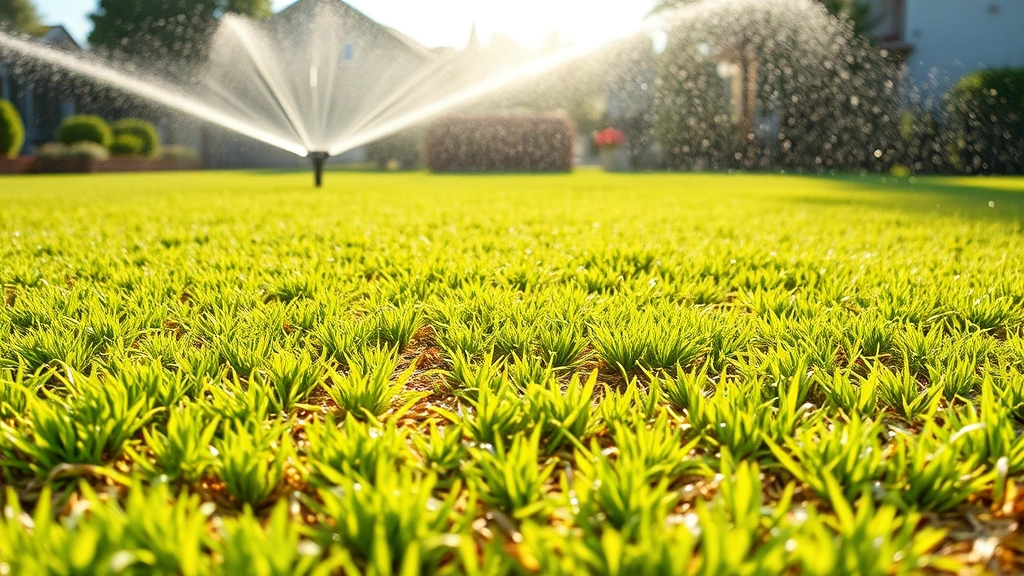
Consider applying a thin layer of mulch to protect seeds and retain moisture. Straw, wood fiber mulch, or erosion control blankets work well. Spread mulch so you can still see patches of soil beneath—typically 1/4 to 1/2 inch thick. This protects seeds from birds and harsh weather while maintaining moisture. If using straw, ensure it’s weed-free straw, not hay, which contains weed seeds.
” alt=”Freshly seeded lawn area with light mulch application and irrigation setup” />
Watering and Initial Maintenance
Proper watering is absolutely critical for seed germination and establishment. Seeds must remain consistently moist—not waterlogged, but never allowed to dry out—for the first 3-4 weeks. This typically requires light watering multiple times daily, especially in hot or windy conditions.
Water in early morning and late afternoon to minimize evaporation. Use a gentle spray that doesn’t wash seeds away. If you notice water running off rather than soaking in, your soil may be compacted or water-repellent. In these cases, water in shorter intervals with breaks between them, allowing water to penetrate gradually.
After germination begins (usually 7-14 days depending on seed type and conditions), gradually reduce watering frequency while increasing the amount per watering session. This encourages deeper root development. Once grass reaches 2-3 inches tall, you can reduce watering to once daily or every other day, depending on rainfall and temperature.
Avoid walking on newly seeded areas until grass is established (at least 4-6 weeks old). Foot traffic compacts soil and damages tender seedlings. Keep pets and children away from the area during establishment. Once grass reaches 3 inches tall, you can begin light foot traffic, but avoid heavy use until the lawn is fully established.
The first mowing should occur when grass reaches 3-4 inches tall and the soil has firmed up enough that mower wheels don’t sink in. Use a sharp mower blade and set it high—remove no more than one-third of the blade height in a single mowing. Continue this “one-third rule” throughout the first season to minimize stress on young grass.
Common Mistakes to Avoid
Even with the best intentions, many homeowners make preventable mistakes when planting grass seed. Understanding these pitfalls helps you achieve better results:
Using Poor-Quality Seed
Buying the cheapest seed available often results in poor germination rates, excessive weeds, and disappointing results. Invest in quality seed with high germination rates and minimal weed content. The small additional cost pays dividends in lawn quality.
Inadequate Soil Preparation
Skipping soil testing and preparation is perhaps the most common mistake. Poor soil prevents proper seed germination and root establishment. Take time to test, amend, and prepare your soil thoroughly before planting.
Overwatering or Underwatering
Both extremes cause problems. Overwatering leads to fungal diseases and poor root development, while underwatering causes seed death and patchy germination. Maintain consistent, moderate moisture during the critical germination period.
Planting at Wrong Time
Planting warm-season seed in spring or cool-season seed in summer often results in poor germination and struggling grass. Understand your grass type and plant during the optimal season for your region.
Burying Seed Too Deeply
Grass seed needs light to germinate. Burying it too deeply prevents germination entirely. Keep seed in the top 1/4 inch of soil for best results.
Uneven Seed Distribution
Thick patches and bare spots result from uneven seeding. Use proper equipment and the cross-pattern application method to ensure uniform coverage.
Mowing Too Early or Too Short
Mowing before grass is established or cutting too short weakens young plants. Wait until grass is 3-4 inches tall and always follow the one-third rule.
For more detailed guidance on lawn care and home improvement projects, visit the FixWiseHub Blog for comprehensive how-to guides.
FAQ
How long does grass seed take to germinate?
Germination time varies by grass type and conditions. Cool-season grasses typically germinate in 7-14 days, while warm-season varieties may take 14-21 days. Soil temperature, moisture, and seed quality all affect germination speed. Consistent warmth and moisture accelerate the process.
Can I plant grass seed in summer?
Summer planting is generally not recommended because intense heat and dry conditions stress young seedlings. Cool-season grasses struggle in summer heat, and warm-season grasses require spring planting for adequate establishment time. If you must plant in summer, choose heat-tolerant varieties and provide extra irrigation.
What’s the difference between overseeding and starting a new lawn?
Overseeding involves spreading seed over existing grass to fill in thin or bare areas, requiring less soil preparation. Starting a new lawn means completely removing old grass or working with bare ground, requiring extensive soil preparation and tilling. Both processes follow similar seeding and watering principles, but new lawns demand more preliminary work.
How do I know if my soil needs amendment?
A professional soil test reveals pH levels, nutrient content, and organic matter composition. You can request testing through your local cooperative extension office or use an at-home kit. Most grass prefers slightly acidic to neutral soil (pH 6.0-7.0), and tests show exactly what amendments your specific soil needs.
When can I apply fertilizer to newly seeded lawn?
Wait until grass is at least 4-6 weeks old before applying fertilizer. Young seedlings are sensitive to chemical fertilizers. If your soil test indicated nutrient deficiencies, incorporate amendments before planting. Once established, follow a regular fertilization schedule appropriate for your grass type.
Why is my grass seed not germinating?
Common reasons include poor soil contact, incorrect moisture levels, wrong planting season, seed buried too deeply, or poor seed quality. Ensure soil is loose and seed is in the top 1/4 inch, maintain consistent moisture without waterlogging, plant during the correct season, and use quality seed with high germination rates.
How often should I water newly seeded lawn?
Water lightly 2-3 times daily during the germination period (first 3-4 weeks) to keep soil consistently moist. Once grass is established and growing, reduce frequency but increase the amount per watering to encourage deep root development. Adjust watering based on rainfall and temperature.

Related Posts

Superscript in Google Docs: Expert Tips

Strikethrough in Excel: Easy Steps for Beginners
