
How to Make French Press Coffee: Expert Guide
How to Make French Press Coffee: Expert Guide
There’s something undeniably ritualistic about brewing coffee in a French press. It’s not just about caffeine delivery—it’s about taking five minutes out of your morning to engage with the process, to smell the bloom of fresh grounds, to hear that satisfying hiss of hot water meeting coffee. If you’ve been intimidating yourself with the idea of mastering this classic brewing method, stop. We’re about to demystify the entire thing.
The French press has been around since 1929, and for good reason. It’s simple, elegant, and produces a cup of coffee that’s rich, full-bodied, and genuinely delicious. Unlike automatic drip machines that separate you from your brew, a French press puts you in control of every variable. Water temperature, steeping time, grind size—you decide it all. That’s the beauty of it, and honestly, once you understand the fundamentals, you’ll wonder why anyone settles for less.
Whether you’re a coffee novice or someone who’s been intimidated by this brewing method, this guide walks you through everything. We’ll cover equipment selection, the exact steps, troubleshooting, and pro tips that transform a decent cup into something genuinely special.
What You Need to Get Started
Let’s talk equipment, because a French press is refreshingly straightforward. You need the press itself, obviously. These come in various sizes—typically 3, 8, 12, and 35-ounce capacities. For home use, an 8-ounce (single cup) or 12-ounce (two cups) works perfectly. Look for one with a sturdy glass carafe, a metal frame that provides stability, and a plunger mechanism that moves smoothly without wobbling.
Beyond the press itself, you’ll want a burr grinder. This is non-negotiable. Blade grinders create inconsistent particle sizes, which leads to uneven extraction and muddy coffee. A burr grinder—whether blade or conical—gives you uniform grounds, which is essential for controlling your brew.
You’ll also need a kettle, ideally one that lets you control water temperature. A gooseneck kettle gives you precision pouring, which helps with even saturation of grounds. If you don’t have one yet, knowing how long water takes to boil helps you time your brewing. A kitchen scale is optional but recommended for consistency—measuring by weight rather than volume eliminates guesswork.
Finally, grab a timer and a spoon for stirring. That’s genuinely it. The beauty of this method is its simplicity.
Choosing the Right Coffee Beans
The French press method is forgiving, but it rewards quality beans. Because you’re steeping grounds directly in water—rather than running water through them quickly—you taste everything. Every flaw, every nuance, every note.
Look for beans roasted within the past two to four weeks. Check the roast date on the package. Beans that are too fresh (less than a week) can taste sour and grassy. Beans that are too old (more than a month) taste flat and stale. You want that sweet spot where the flavors have developed but haven’t deteriorated.
For French press specifically, a medium to dark roast works beautifully. These roasts have deeper, more pronounced flavors that shine through the immersion brewing method. Light roasts can work too, but they’re less forgiving if your technique isn’t perfect. Single-origin beans from places like Ethiopia, Colombia, or Kenya showcase interesting flavor profiles. Blends are equally valid—experiment and find what you genuinely enjoy.
Store your beans in an airtight container away from light, heat, and moisture. A pantry works better than the refrigerator (moisture is coffee’s enemy). Grind only what you need immediately before brewing. Pre-ground coffee loses its magic within hours.
The Water Temperature Sweet Spot
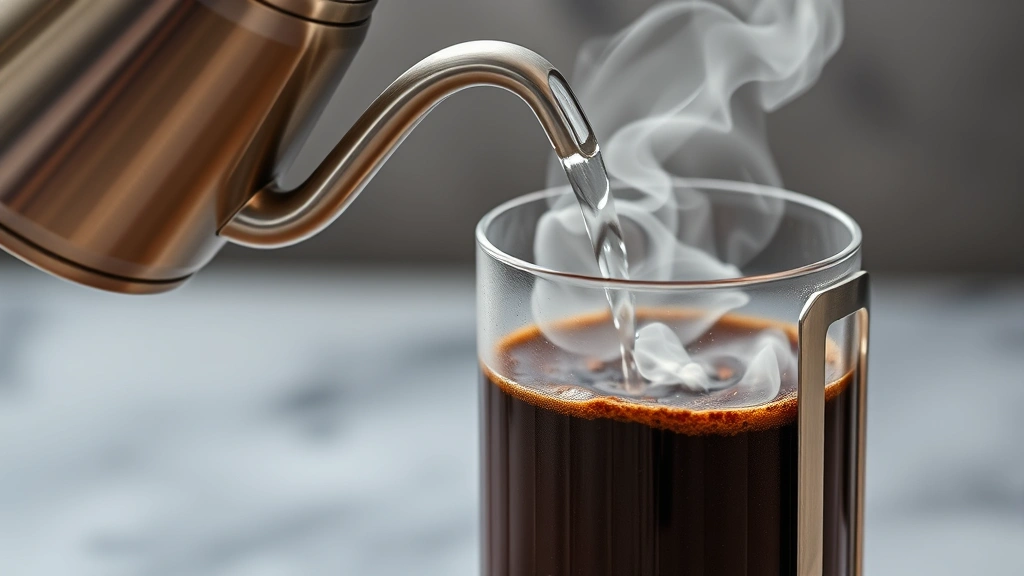
Water temperature is where many people stumble. Too hot, and you over-extract, creating bitter, harsh coffee. Too cool, and you under-extract, resulting in weak, sour coffee. The ideal range is 195–205°F (90–96°C).
If your kettle doesn’t have a temperature gauge, here’s a practical trick: let boiling water cool for about 30 seconds before pouring. That typically brings it into the ideal range. Some people let it cool for a full minute, which is also fine—the coffee will just brew slightly slower.
This is why understanding how long water takes to boil matters. You’re not just boiling water; you’re controlling its temperature to optimize extraction. If you’re using filtered or distilled water, the heating time might vary slightly based on mineral content, but the principle remains the same.
Pro tip: preheat your French press by rinsing it with hot water before brewing. This keeps your coffee from cooling too quickly during the steeping process.
Step-by-Step Brewing Instructions
Here’s where everything comes together. This method works for most French presses, but if you need detailed guidance specific to your model, check out the full guide on how to use a French press.
Step 1: Measure Your Coffee
The standard ratio is 1:15 coffee to water by weight. This means for every 1 gram of coffee, use 15 grams of water. If you’re not using a scale, aim for roughly 1 tablespoon of ground coffee per 4 ounces of water. For a 12-ounce French press, that’s about 3 tablespoons of coffee.
Step 2: Grind Your Beans
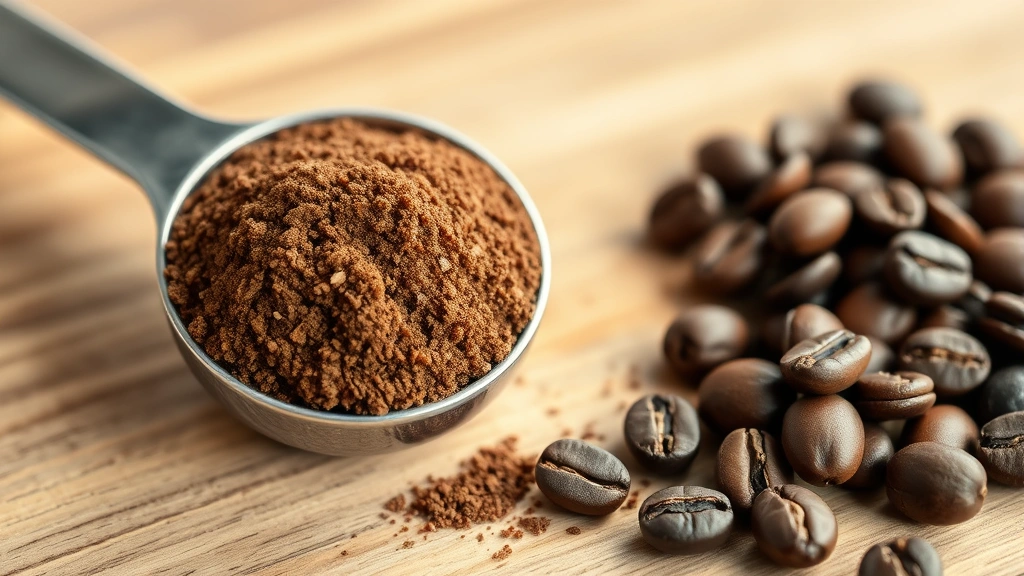
You want a coarse grind—think sea salt, not sand. Fine grinds clog the mesh filter and create sediment in your cup. Coarse grounds allow water to flow through while still extracting flavor. This is crucial. If you’re unsure, ask your local coffee shop to grind a small batch for you and use that as a reference.
Step 3: Preheat and Add Grounds
Rinse your French press with hot water, then add your ground coffee. Level it out gently—you’re not tamping like you would for espresso. Just create an even surface.
Step 4: Bloom the Coffee
Pour just enough hot water to saturate the grounds (about twice the weight of your coffee). Wait 30 seconds. This allows CO₂ to escape and promotes even extraction. You’ll see the grounds bubble slightly—that’s the bloom happening. This step transforms your coffee from good to genuinely excellent.
Step 5: Add Remaining Water
Slowly pour the remaining water until you reach your desired level. Stir gently to ensure all grounds are submerged. The entire process from water addition to this point should take about 10 seconds.
Step 6: Steep
Place the lid on top (without pressing down yet) and let it steep for 4 minutes. This is your baseline. If you like stronger coffee, go 4.5 minutes. If you prefer it lighter, try 3.5 minutes. Experiment and find your preference.
Step 7: Break the Crust and Skim
After 4 minutes, remove the lid and gently stir the top layer of grounds. You’ll see a crust of floating grounds. Skim off any loose grounds with a spoon and discard them. This prevents sediment in your cup.
Step 8: Press and Pour
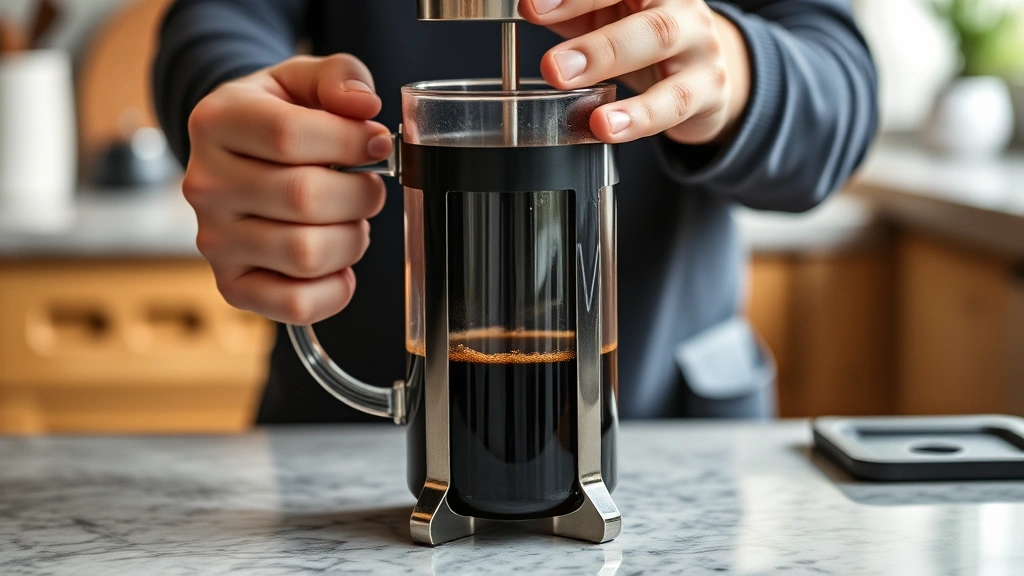
Place the lid back on and slowly press the plunger down. This should take about 30 seconds. You’re not racing—gentle pressure ensures a cleaner cup. Pour immediately into your cup. Any coffee left in the press continues to steep and becomes over-extracted.
That’s it. From start to finish, you’re looking at about 5–6 minutes. Once you’ve done it a few times, it becomes automatic.
Common Mistakes and How to Avoid Them
Mistake 1: Using Pre-Ground Coffee
Pre-ground coffee loses its flavor compounds quickly. It’s convenient, but it’s not worth the trade-off in taste. Invest in a grinder and grind immediately before brewing. Your morning ritual just became slightly longer and infinitely better.
Mistake 2: Wrong Grind Size
Too fine, and you get sediment and bitterness. Too coarse, and your coffee tastes weak and sour. Coarse is your target—similar to breadcrumbs or sea salt. If your current grinder doesn’t offer enough control, upgrading to a burr grinder is worth every penny.
Mistake 3: Inconsistent Water Temperature
This throws off extraction. Invest in a simple thermometer or kettle with temperature display. It eliminates guesswork and creates consistency batch after batch.
Mistake 4: Leaving Coffee in the Press
After plunging, pour immediately. Leaving coffee sitting on the grounds continues extracting, making it progressively more bitter. If you’re not ready to drink it, pour it into a separate carafe or mug.
Mistake 5: Skipping the Bloom
Thirty seconds feels unnecessary, but it genuinely matters. Blooming allows CO₂ to escape and promotes even extraction. It’s the difference between good coffee and great coffee.
Maintenance and Care
Your French press is simple, but it deserves basic maintenance to last decades.
Daily Care
After brewing, discard the grounds immediately. Rinse the carafe and plunger with hot water while they’re still warm—dried coffee residue is harder to remove. Use a soft brush or cloth, never abrasive scrubbers on glass.
Weekly Deep Clean
Once a week, soak the entire press (disassembled) in hot water with a bit of dish soap for 15 minutes. Use a soft brush to clean the mesh filter thoroughly. Any trapped coffee oils create rancid flavors over time. Rinse completely and air dry.
Mesh Filter Replacement
Mesh filters wear out over time, becoming less effective at catching sediment. Most manufacturers sell replacement filters for $5–15. Replace yours every 1–2 years, depending on use frequency.
Handling the Glass
French press carafes are glass, so they’re breakable. Handle gently, especially when hot. Avoid sudden temperature changes (don’t pour cold water into a hot carafe). If yours breaks, replacement carafes are readily available.
For those integrating this into a broader cooking routine, understanding how to make white rice and how to make sour cream shows the same attention to detail and process-oriented thinking that elevates everyday cooking and beverages.
Frequently Asked Questions
Why is my French press coffee bitter?
Bitterness typically comes from over-extraction. This happens when water is too hot, steeping time is too long, or grounds are too fine. Try reducing brew time by 30 seconds, ensuring water is in the 195–205°F range, or using a coarser grind. Also, make sure you’re pouring immediately after plunging.
Why is my French press coffee weak or sour?
Weak coffee usually means under-extraction. Water might be too cool, steeping time too short, or grounds too coarse. Sour coffee suggests the same issues. Increase brew time by 30 seconds, ensure water temperature is correct, or use a slightly finer grind. Also verify you’re using enough coffee—the 1:15 ratio is your baseline.
How much coffee should I use?
The standard is 1 tablespoon per 4 ounces of water, or 1:15 by weight. For an 8-ounce press, use 2 tablespoons. For a 12-ounce press, use 3 tablespoons. Adjust based on your preference—stronger drinkers might use 1 tablespoon per 3 ounces.
Can I make cold brew in a French press?
Absolutely. Use a 1:4 coffee-to-water ratio and let it steep in the refrigerator for 12–24 hours. Plunge and pour over ice. The extended steeping extracts different flavor compounds, creating a smooth, less acidic concentrate.
What’s the difference between French press and pour-over?
French press uses immersion brewing (grounds steep in water), while pour-over uses percolation (water flows through grounds). French press produces a fuller-bodied cup with more oils. Pour-over creates a cleaner cup with brighter flavors. Both are excellent; it’s about preference.
How long does French press coffee stay fresh?
Drink it within 15–20 minutes for best flavor. After that, the oils begin oxidizing and flavors deteriorate. If you can’t drink it immediately, pour it into a separate carafe to stop extraction.
Do I need a special kettle?
A gooseneck kettle with temperature control is ideal but not essential. Any kettle works if you can monitor water temperature. A simple kitchen thermometer solves this if your kettle doesn’t have a gauge.
Can I use tap water?
Yes, but filtered water produces better results. Tap water contains minerals and chlorine that can affect flavor. If you’re interested in water quality, learning how to make distilled water gives you options for experimentation.
Why does my coffee have sediment?
Sediment comes from fine particles passing through the mesh filter. This happens when your grind is too fine or you haven’t skimmed the crust properly. Use a coarser grind and always skim loose grounds before plunging.
How often should I replace my French press?
A quality French press lasts decades. Replace it only if the glass breaks or the plunger mechanism becomes damaged. Mesh filters should be replaced every 1–2 years.

Related Posts

How Long to Boil Lobster Tails: Cooking Guide

How Long to Fly from New York to London? Travel Times
