
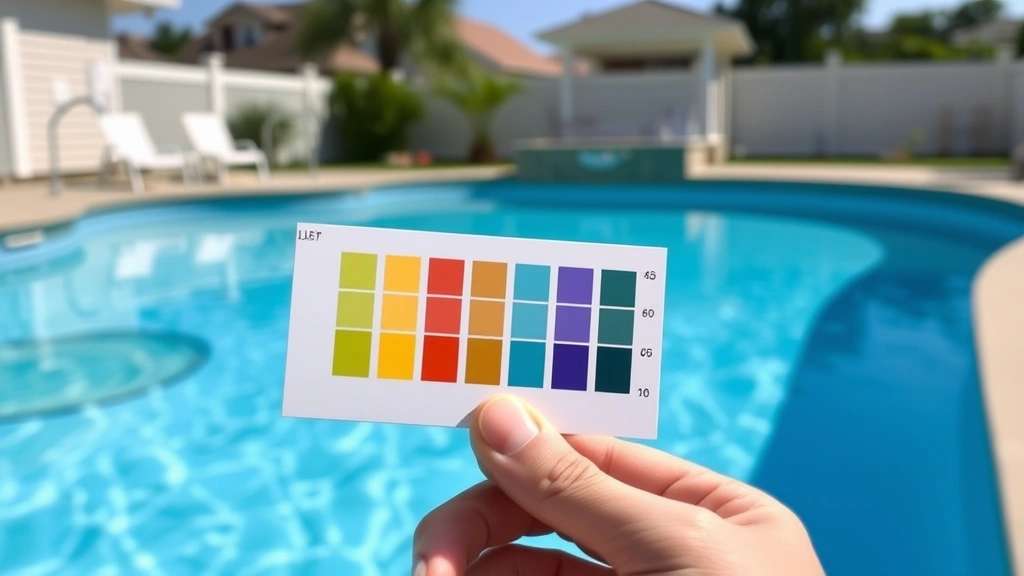
Raise Pool Alkalinity? Expert Tips Inside
How to Raise Alkalinity in Pool: Expert Tips Inside
Maintaining proper pool alkalinity is one of the most critical aspects of pool chemistry that many homeowners overlook. Alkalinity acts as a buffer for pH levels, preventing rapid fluctuations that can damage your pool equipment, irritate swimmers’ eyes, and promote algae growth. When alkalinity drops below the ideal range of 80-120 ppm (parts per million), your pool becomes unstable and difficult to manage.
If you’ve noticed cloudy water, difficulty maintaining pH balance, or corrosive conditions eating away at your pool surfaces, low alkalinity is likely the culprit. The good news is that raising pool alkalinity is a straightforward process that any pool owner can master with the right knowledge and products. This comprehensive guide walks you through everything you need to know about restoring your pool’s alkalinity to optimal levels.
Understanding Pool Alkalinity and Why It Matters
Alkalinity represents the total concentration of alkaline substances in your pool water, primarily bicarbonates and carbonates. Think of it as a chemical sponge that absorbs pH-changing compounds, keeping your water stable and balanced. Without adequate alkalinity, even small additions of chemicals can cause wild pH swings that compromise water quality and comfort.
The relationship between alkalinity and pH is symbiotic. While pH measures how acidic or basic the water is on a scale of 0-14, alkalinity determines how resistant the water is to pH changes. A pool with proper alkalinity maintains consistent pH levels even when chlorine is added or when environmental factors like rain or sunlight affect the water. This stability protects your pool’s plumbing, equipment, and surfaces from corrosion or scaling.
Low alkalinity creates several problems: water becomes corrosive to metal equipment and concrete surfaces, pH becomes difficult to control, chlorine becomes less effective at sanitizing, and swimmers may experience eye irritation. Conversely, excessively high alkalinity makes pH difficult to lower and can cause cloudy water and scale buildup on surfaces. The sweet spot of 80-120 ppm ensures your pool operates efficiently and safely.
Testing Your Current Alkalinity Levels
Before you can raise alkalinity, you must accurately measure your current levels. Testing is simple, inexpensive, and takes just minutes. You have several testing options, each with varying degrees of accuracy and convenience.
Liquid Test Kits are the gold standard for accuracy. These kits use reagents that change color when mixed with pool water. You compare the resulting color to a chart to determine your alkalinity level. Liquid kits typically cost $20-40 and provide reliable results. The downside is they require a bit more effort than other methods.
Test Strips offer convenience and speed. Simply dip the strip into your pool and compare the color-coded results to the provided chart within seconds. Test strips are affordable ($15-25 for a multi-pack) but slightly less accurate than liquid kits, with a typical margin of error around 10 ppm.
Digital Testers provide precise readings instantly using electronic sensors. These devices cost $30-100 but eliminate guesswork and human error. Many pool professionals prefer digital testers for their accuracy and ease of use.
For the most accurate results, test your water in multiple locations at least 12 inches below the surface, away from the skimmer and return jets. Test during morning hours before direct sunlight affects readings. If using a test kit from a pool supply store, ensure the reagents are fresh and not expired, as old chemicals produce inaccurate results.
Choosing the Right Alkalinity Increaser Product
The primary chemical used to raise pool alkalinity is sodium bicarbonate, commonly known as baking soda. Most commercial alkalinity increaser products are sodium bicarbonate-based, making them safe, affordable, and effective. You’ll find these products at any pool supply store, home improvement retailer, or online under various brand names.
Sodium Bicarbonate Advantages: It’s specifically formulated for pools, raising alkalinity without significantly affecting pH (though slight pH increase occurs). It dissolves quickly, doesn’t require special handling, and is budget-friendly at approximately $10-15 per 10-pound bag. One pound of sodium bicarbonate raises alkalinity by roughly 10 ppm in 10,000 gallons of water.
You can technically use food-grade baking soda from your kitchen pantry, though pool-grade alkalinity increaser is preferable because it’s manufactured to pool specifications without additives. Pool-grade products also often include anti-caking agents for easier dissolution.
When shopping, check product labels for sodium bicarbonate percentage and specific instructions for your pool size. Quality brands like This Old House’s recommended pool products ensure consistent quality and reliable results. Avoid products combining alkalinity increaser with other chemicals unless you’re certain your pool needs multiple adjustments simultaneously.
Step-by-Step Process for Raising Alkalinity
Once you’ve determined your alkalinity is low and selected your product, follow this systematic approach to safely raise it to optimal levels.
Step 1: Calculate Your Pool Volume You need to know your pool’s water volume in gallons. For rectangular pools, multiply length × width × average depth × 7.5. For circular pools, multiply diameter × diameter × average depth × 5.9. For irregularly shaped pools, sketch it divided into sections and calculate each separately. If unsure, check your pool’s documentation or calculate based on the pump’s flow rate and refill time.
Step 2: Determine Required Dosage Calculate how many ppm you need to raise alkalinity. If current alkalinity is 60 ppm and you want 100 ppm, you need to raise it 40 ppm. Using the general rule that one pound of sodium bicarbonate raises alkalinity 10 ppm per 10,000 gallons: for a 20,000-gallon pool needing a 40 ppm increase, you’d need eight pounds of alkalinity increaser.
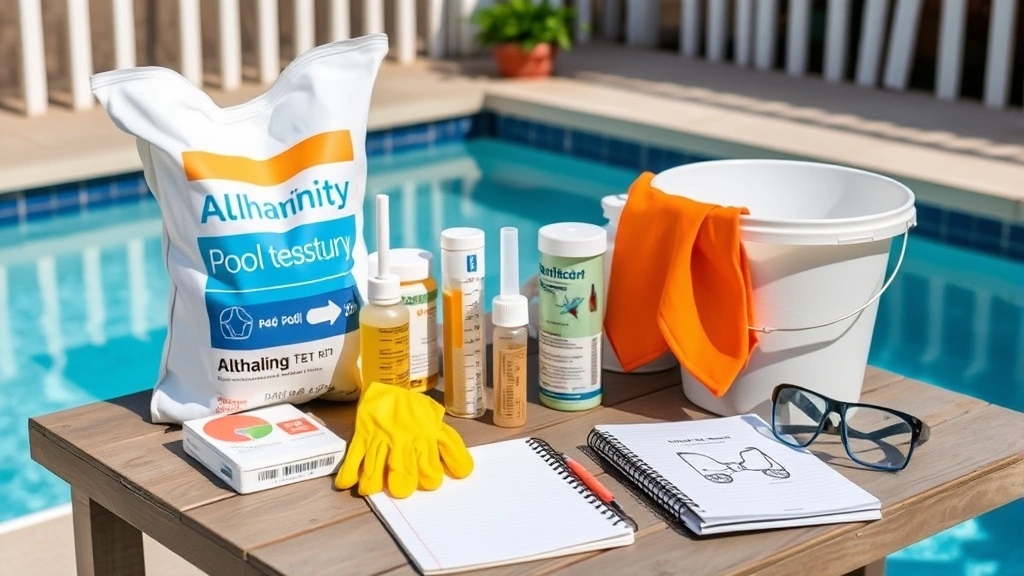
Step 3: Prepare the Chemical Pour the calculated amount of alkalinity increaser into a clean bucket. Do not mix with other chemicals. If using powder, let it settle slightly to avoid inhaling dust. Wear gloves and eye protection as a safety precaution, even though sodium bicarbonate is relatively safe.
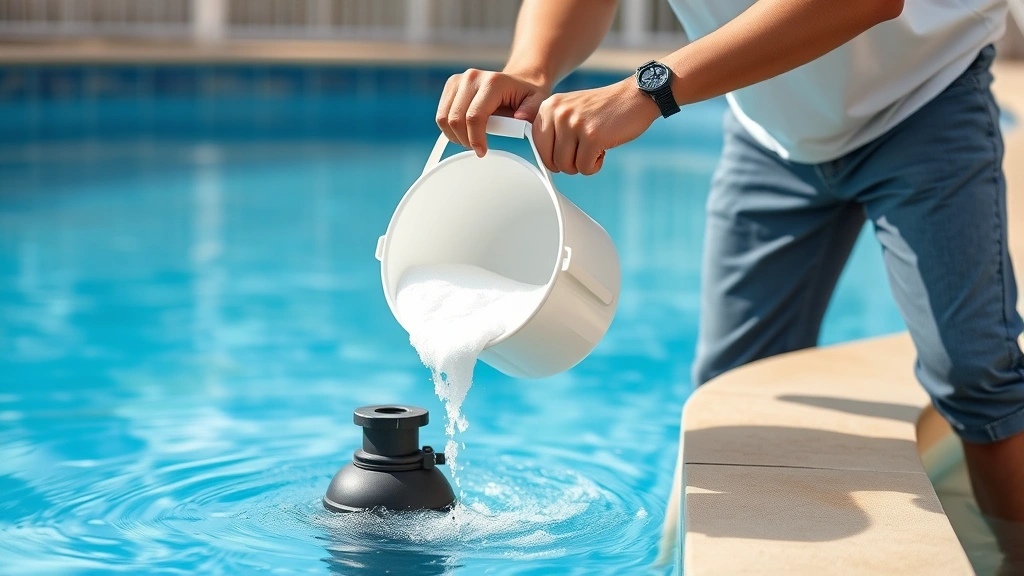
Step 4: Dissolve the Chemical Add a small amount of pool water to the bucket to create a slurry, stirring thoroughly until completely dissolved. This ensures even distribution when added to the pool. Never add dry chemical directly to the pool, as it may not dissolve properly and could damage equipment.
Step 5: Add to Pool Water With the pump running, slowly pour the dissolved alkalinity increaser around the perimeter of your pool, avoiding the skimmer. The circulation system distributes it evenly. Pour gradually to prevent localized concentration spikes that could temporarily affect pH.
Step 6: Wait and Retest Allow the chemical to circulate for at least 4 hours (preferably overnight) before retesting. This gives the sodium bicarbonate time to fully dissolve and distribute throughout the water. Retest using the same method as your initial test for consistency.
Step 7: Make Adjustments if Needed If alkalinity is still below target, repeat the process. Never add more than 50% of your calculated dose at once, as overshooting is easier than correcting excessively high alkalinity. Small adjustments over multiple days are safer than large single additions.
Calculating Proper Dosage Amounts
Accurate dosage calculations prevent wasting chemicals and minimize the risk of over-correction. The formula for raising alkalinity is straightforward, but understanding the math ensures success.
Basic Formula: (Desired ppm – Current ppm) × Pool volume in gallons ÷ 10,000 = Pounds of sodium bicarbonate needed
Example Calculation: Your 15,000-gallon pool currently has 65 ppm alkalinity, and you want 100 ppm.
- Desired increase: 100 – 65 = 35 ppm
- Pool volume: 15,000 gallons
- Calculation: 35 × 15,000 ÷ 10,000 = 52.5 pounds
- Dosage: Add approximately 52-53 pounds of alkalinity increaser
For smaller pools or minor adjustments, this formula still applies. A 5,000-gallon pool needing a 20 ppm increase would require: 20 × 5,000 ÷ 10,000 = 10 pounds.
When you can’t source exact quantities, round up slightly rather than down. It’s easier to lower slightly elevated alkalinity later than to repeatedly add more chemical. Most pool owners keep extra alkalinity increaser on hand for seasonal adjustments and unexpected fluctuations.
Temperature affects dissolution rates and chemical effectiveness. In cooler weather, chemicals dissolve more slowly, so allow extended circulation time before retesting. In extremely hot conditions, more frequent testing helps catch rapid alkalinity changes caused by increased evaporation.
Common Mistakes to Avoid
Even experienced pool owners occasionally make errors that complicate alkalinity management. Learning from these mistakes saves time, money, and frustration.
Mistake 1: Adding Chemicals Without Testing Never guess at your pool’s chemical levels. Adding alkalinity increaser to water that’s already properly balanced wastes product and creates imbalances. Always test first and know your current levels before adding anything.
Mistake 2: Over-Correcting Rapidly Adding excessive alkalinity increaser at once often results in overshooting your target, requiring dilution or acid additions to correct. This creates a frustrating chemical seesaw. Conservative, gradual adjustments are always preferable.
Mistake 3: Ignoring pH Relationship While sodium bicarbonate raises alkalinity with minimal pH impact, significant pH changes still occur with large alkalinity additions. Monitor pH levels after raising alkalinity and adjust if necessary. The two chemicals work together, and ignoring either creates problems.
Mistake 4: Using Expired Test Kits Old reagents in test kits produce inaccurate results, leading to incorrect chemical dosing. Replace test kits annually and store them in cool, dark locations away from direct sunlight. Check expiration dates before testing.
Mistake 5: Not Circulating Water Properly Adding chemicals with the pump off prevents even distribution. Always run your circulation system when adding alkalinity increaser and for several hours afterward. Proper circulation ensures the chemical distributes uniformly throughout the pool.
Mistake 6: Neglecting Seasonal Changes Alkalinity naturally fluctuates with seasons, weather patterns, and pool usage. Heavy rain dilutes chemicals, while evaporation concentrates them. Regular testing throughout the year catches problems early before they become severe.
Maintaining Alkalinity Long-Term
Raising alkalinity is a one-time fix, but maintaining it requires ongoing attention. Establishing a maintenance routine prevents future alkalinity problems and keeps your pool in excellent condition year-round.
Testing Schedule Test alkalinity weekly during swimming season and bi-weekly during off-season. Consistent testing reveals trends and allows you to make small preventive adjustments rather than large corrective ones. Keep a log of test results to track patterns and identify what factors affect your specific pool.
Weekly Adjustments If alkalinity drifts slightly below the ideal range, add small amounts of alkalinity increaser weekly rather than waiting for levels to drop significantly. This prevents pH swings and maintains water stability. A 5-ppm drift requires minimal chemical addition and causes no disruption.
Environmental Factors Heavy rain dilutes chemicals, so test after significant rainfall. Leaves, debris, and organic matter can affect alkalinity, making regular skimming and cleaning important maintenance tasks. High-bather load (many swimmers) increases chemical consumption, requiring more frequent testing and adjustments.
Seasonal Considerations Spring opening and fall closing require thorough testing and balancing. Summer heat accelerates chemical breakdown, while winter cold slows reactions. Adjust your testing frequency based on seasonal demands on your pool.
Equipment Maintenance Clean your filter regularly, as clogged filters reduce circulation effectiveness and prevent proper chemical distribution. Well-maintained pumps and filters ensure chemicals distribute evenly and your pool stays balanced. Regular equipment maintenance is as important as chemical management.
For comprehensive guidance on pool maintenance beyond alkalinity, consult Family Handyman’s pool maintenance guide and check local pool supply retailers for seasonal recommendations specific to your climate.
FAQ
What’s the fastest way to raise pool alkalinity?
The fastest method is dissolving alkalinity increaser in a bucket before adding it to the pool with the pump running. This ensures rapid dissolution and distribution. However, “fast” still means allowing 4+ hours of circulation before retesting. There’s no safe way to instantly raise alkalinity, and attempting to rush the process leads to over-correction.
Can I use baking soda from my kitchen?
Yes, food-grade baking soda works chemically identically to pool-grade alkalinity increaser. However, pool-grade products are formulated specifically for pools and often contain anti-caking agents for easier use. If cost is a concern, kitchen baking soda is a budget-friendly alternative, though you may need slightly more due to purity differences.
How long does it take for alkalinity increaser to work?
Sodium bicarbonate dissolves quickly, usually within 1-2 hours, but it requires 4+ hours of circulation to distribute evenly throughout your pool. For accurate testing, wait overnight before retesting to ensure complete distribution and stabilization. Rushing the testing timeline produces inaccurate results.
Will raising alkalinity affect my pH?
Sodium bicarbonate slightly increases pH (typically 0.2-0.5 points), but the effect is minimal compared to other chemicals. If you’re adding significant amounts of alkalinity increaser, monitor pH and adjust if it rises above 7.8. Most of the time, the slight pH increase is negligible and self-corrects naturally.
What if I added too much alkalinity increaser?
If alkalinity exceeds 120 ppm, you have two options: dilute the pool by draining and refilling with fresh water, or use a pH decreaser (muriatic acid or sodium bisulfate) which lowers alkalinity while lowering pH simultaneously. Dilution is safer for beginners. Always add acid slowly and carefully, following product instructions precisely, as acid is caustic and dangerous.
How does alkalinity relate to hardness?
Alkalinity and hardness are different measurements. Alkalinity measures buffering capacity (bicarbonates and carbonates), while hardness measures calcium and magnesium content. Both are important for pool chemistry, but they’re adjusted independently. You can have high alkalinity with low hardness or vice versa. Testing determines which adjustments your pool actually needs.
Should I test alkalinity before or after chlorine treatment?
Test alkalinity before adding chlorine for the most accurate readings. Chlorine doesn’t directly affect alkalinity, but testing before treatment prevents confusion about what caused any changes. Establish a routine (test in morning before any chemical additions) for consistency and accurate trend tracking.
What’s the ideal alkalinity range for different pool types?
The 80-120 ppm range applies to all standard chlorine pools. Saltwater pools and pools with alternative sanitizers may have slightly different recommendations—consult your system’s documentation. Most residential pools use standard chlorine and follow the 80-120 ppm guideline.

Related Posts

Superscript in Google Docs: Expert Tips

Strikethrough in Excel: Easy Steps for Beginners
