
Find Your Ring Size at Home: Expert Tips
Find Your Ring Size at Home: Expert Tips for Perfect Fit
Finding the right ring size doesn’t require a trip to the jewelry store. Whether you’re shopping for an engagement ring, wedding band, or fashion jewelry, measuring your ring size accurately at home is easier than you think. This comprehensive guide walks you through multiple methods to determine your exact ring size, ensuring any ring you purchase fits perfectly the first time.
A properly fitting ring should slide over your knuckle with slight resistance and sit snugly on your finger without cutting off circulation. Many people guess their size or rely on outdated measurements, only to discover their new ring doesn’t fit. By following these expert-approved techniques, you’ll have confidence in your ring size and can shop online or in-store with accuracy.
Why Accurate Ring Sizing Matters
Purchasing a ring without knowing your exact size can lead to costly mistakes. A ring that’s too tight causes discomfort, restricts blood flow, and may require professional resizing. A ring that’s too loose risks falling off and getting lost. Beyond comfort, resizing jewelry can be expensive—often costing $25 to $100 depending on the metal and complexity. Some rings, particularly those with intricate designs or gemstones, cannot be resized at all.
Getting your size right the first time saves money, time, and frustration. This is especially important for special occasions like engagements or weddings, where timing matters. When you explore our how-to guides and tutorials, you’ll find that precision in measurement applies to many home projects, and ring sizing is no exception.
Ring sizes vary by country and jewelry brand. In the United States, sizes typically range from 3 to 13, with half and quarter sizes available. Understanding which sizing system your jeweler uses ensures you get the correct fit. International ring sizes differ significantly—a U.S. size 7 might be a different number in the UK, Europe, or Australia.
Method 1: The String or Paper Method
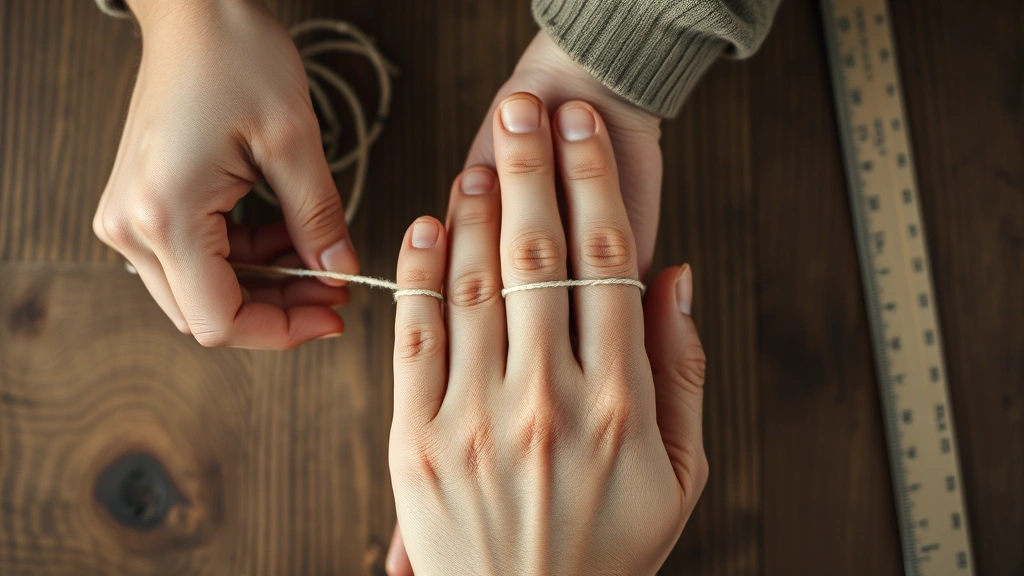
This is the most accessible method for measuring ring size at home using items you likely already have. You’ll need a piece of string or thin paper, a ruler or measuring tape, and a pen. This technique works best when you’re measuring a finger without an existing ring.
Step-by-step instructions:
- Cut a strip of string or paper approximately 6 inches long
- Wrap the string around the base of your finger (the widest part, typically just below the knuckle)
- Mark where the string overlaps using a pen
- Lay the marked string on a ruler and measure the distance in millimeters
- Use a ring size conversion chart to determine your size
For the most accurate results, perform this measurement multiple times and average the results. Measure both the finger you’re sizing and its counterpart on your other hand, as fingers can vary slightly in size. The best time to measure is in the afternoon or evening when fingers are slightly swollen from daily activity—this ensures your ring will fit comfortably even when your fingers are at their largest.
Temperature affects finger size significantly. Cold temperatures cause fingers to shrink, while warm temperatures cause them to swell. Always measure in a normal room temperature environment. If you’re measuring for a winter wedding, account for the fact that your fingers may be smaller on the actual day.
Method 2: Using an Existing Ring
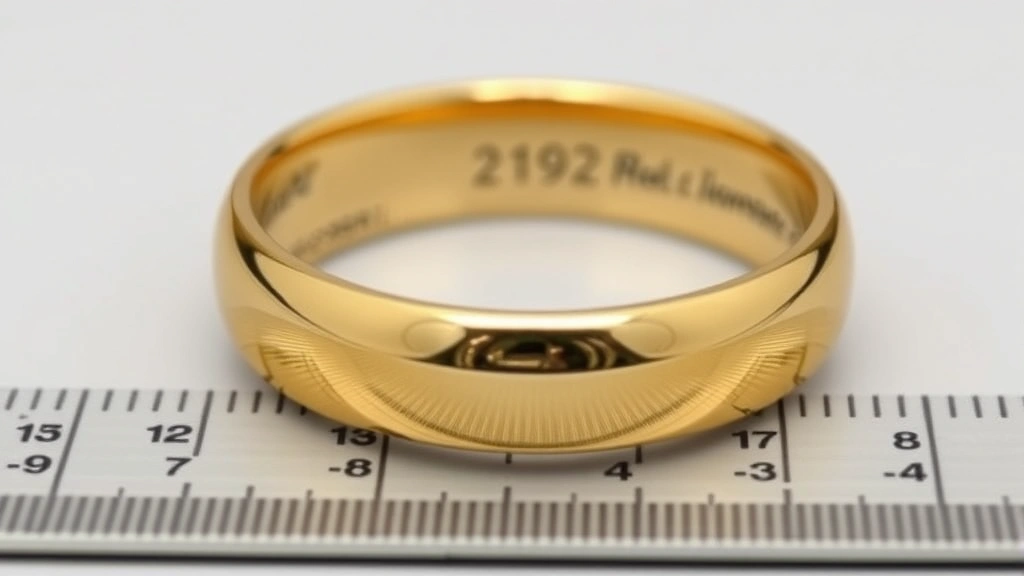
If you have a ring that fits comfortably on the finger you’re sizing, this method provides excellent accuracy. You’ll need a ruler with millimeter markings and the existing ring.
Steps to measure an existing ring:
- Place the ring on a ruler with the inside edge aligned at the zero mark
- Measure across the inside diameter of the ring to the opposite edge
- Record the measurement in millimeters
- Consult a ring size conversion chart matching your measurement to your size
This method works because each ring size corresponds to a specific inside diameter. A size 7 ring, for example, has an inside diameter of approximately 17.4mm. By measuring your existing ring’s diameter, you can directly determine its size.
For best results, use a ring you wear daily on the same finger you’re sizing. Rings that fit loosely or tightly won’t give you accurate information. If you’re borrowing someone else’s ring, make sure it belonged to the person whose size you’re trying to determine.
Digital calipers provide even greater accuracy than a standard ruler. If you have access to calipers—tools commonly used for measuring chest size and other precise home measurements—use them to measure the inside diameter of your existing ring for the most exact result.
Method 3: The Printable Ring Sizer
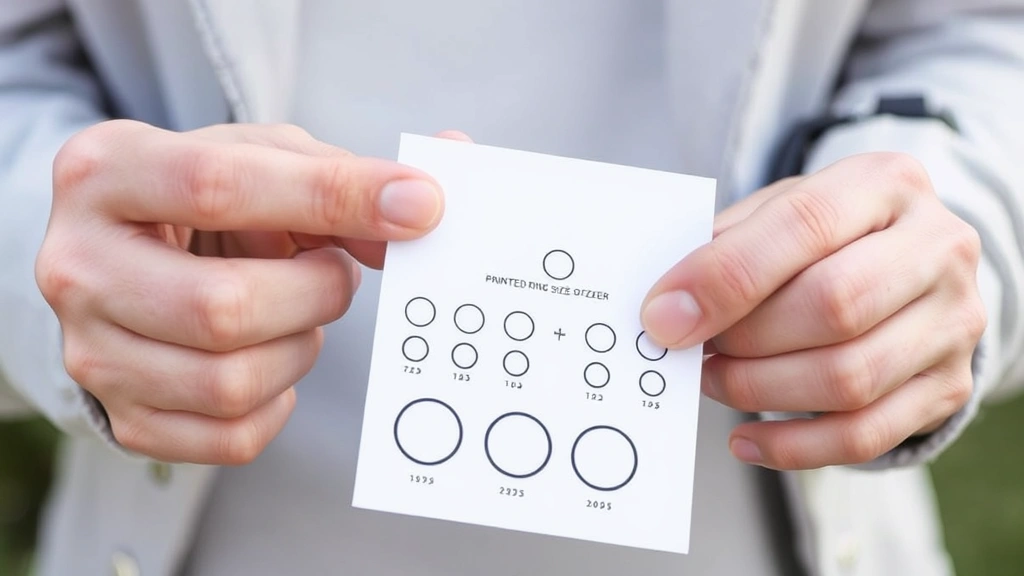
Many jewelry retailers offer free printable ring sizers online. These PDF files print to exact specifications and provide multiple ring size options on a single page. This method combines accuracy with convenience.
How to use a printable ring sizer:
- Download a ring sizer PDF from a reputable jewelry retailer like This Old House or similar resources
- Print the document on standard 8.5″ x 11″ paper without scaling or adjusting page settings
- Carefully cut out the ring size options following the printed guidelines
- Slide each ring sizer onto your finger until you find the one that fits snugly
- Note the corresponding size number
The advantage of this method is that you’re testing actual ring-sized circles against your finger. The printable sizers are manufactured to precise specifications matching official ring size standards. Ensure your printer settings are correct—printing at 100% scale is critical. If your printer defaults to “fit to page,” the sizes will be inaccurate.
Test multiple sizers to confirm your size. Your ring should slide over your knuckle with moderate resistance and sit at the base of your finger without gaps or tightness. Some people find they’re between sizes—in these cases, choose the larger size for comfort.
Understanding Ring Size Charts
Ring size charts serve as the bridge between your measurements and actual ring sizes. However, different countries use different systems, which can cause confusion when shopping internationally or from foreign retailers.
Common ring sizing systems:
- United States: Sizes 3-13 with half sizes (3, 3.5, 4, 4.5, etc.)
- United Kingdom: Letter-based system (A, B, C through Z)
- Europe: Numerical system typically ranging from 47-68
- Japan: Different numerical system not directly comparable to Western sizes
When purchasing rings online, always verify which sizing system the retailer uses. Many international jewelry companies provide conversion charts. If you measure your ring diameter as 17.4mm, for example, this converts to a U.S. size 7, UK size N, and European size 54.
Some jewelry stores offer free ring sizing services. If you’re uncertain about your measurements, visit a local jeweler who can professionally size your finger. This is particularly important before purchasing expensive jewelry. Family Handyman and similar trusted resources often include jewelry care guides that reference proper sizing.
Tips for Accurate Measurements
Achieving accuracy requires attention to detail and proper technique. These expert tips help ensure your measurements are reliable.
Environmental considerations: Measure your ring size in the afternoon when your fingers have reached their daily maximum size. Morning measurements may show smaller sizes since fingers tend to swell throughout the day. Avoid measuring immediately after exercise or when your hands are particularly cold.
Multiple measurements: Measure your ring size at least three times using different methods. If all measurements agree, you can confidently purchase your ring. If measurements vary, the average of your results provides the most reliable size.
Consider your dominant hand: Fingers on your dominant hand are often slightly larger due to increased activity. If you’re sizing for your left hand but typically wear rings on your right, account for this potential difference.
Account for finger variation: Your fingers aren’t all the same size. Your ring finger might be different from your pinky or index finger. Measure the specific finger you plan to wear the ring on, not just any finger.
Test the fit: Once you receive your ring, test it immediately. It should slide over your knuckle with slight resistance and sit snugly at the base of your finger. You should be able to move it slightly side to side but not rotate it freely. If it’s uncomfortable, contact the retailer about resizing or exchanging it.
Factors That Affect Ring Fit
Beyond your basic finger measurements, several factors influence how a ring actually fits on your finger. Understanding these variables helps you choose the right size even in challenging situations.
Ring width: Wider rings fit differently than narrow bands. A wide ring (5mm or more) may feel tighter than a narrow ring of the same size because it covers more of your finger. Some people prefer to go up a half size when purchasing wide rings. Conversely, very thin rings might feel loose at your normal size.
Ring material: Metal type affects how a ring feels and wears. Gold, platinum, and silver all have different densities and weights. A platinum ring feels heavier and may seem tighter than a gold ring of the same size. This psychological effect shouldn’t change your sizing, but it’s worth noting.
Gemstone settings: Rings with large gemstones or intricate settings may catch on your skin or feel different than plain bands. If you’re sizing for an engagement ring with a significant stone, try on similar styles in-store to understand how the setting affects the fit.
Hand and finger swelling: Pregnancy, arthritis, and other medical conditions cause temporary or permanent finger swelling. If you’re currently experiencing swelling, measure when your fingers are at their normal size. If you have chronic swelling, size for your swollen fingers to ensure the ring fits comfortably throughout the day.
Seasonal variations: Winter cold causes fingers to shrink, while summer heat causes them to swell. If you’re purchasing a ring for a specific season, measure during that time of year. For year-round wear, measure during average temperature conditions and choose a size that accommodates both seasonal extremes.
Just as proper measurement matters in other home projects—like when you’re learning how to measure arm length for custom clothing—precision in ring sizing prevents costly mistakes and ensures satisfaction with your purchase.
FAQ
What’s the average ring size for men and women?
The average ring size for women in the United States is between 6 and 7. The average for men is between 9 and 10. However, these are just averages—your personal size may differ significantly. Always measure your individual finger rather than assuming a standard size.
Can I resize a ring after purchase?
Most rings can be resized by a professional jeweler, though the cost varies. Simple bands typically cost $25-50 to resize. Rings with gemstones or intricate designs may cost $50-100 or more. Some rings cannot be resized, including those made from certain materials or designs. Always ask your jeweler about resizing possibilities before purchasing.
How much should a ring move on my finger?
A properly fitting ring should have minimal movement. You should be able to rotate it slightly on your finger, but it shouldn’t slide freely. If you can pull the ring off without sliding it over your knuckle, it’s too loose. If you can’t get it past your knuckle, it’s too tight.
Why do my fingers feel different sizes on different days?
Finger size fluctuates due to hydration levels, salt intake, hormone cycles, temperature, and physical activity. This is completely normal. To account for this variation, measure your ring size multiple times and choose a size that accommodates your finger at different states of swelling.
Should I buy a ring online or in-store?
If you’re confident in your measurements, online shopping offers convenience and often better prices. However, if you’re purchasing an expensive item or uncertain about your size, in-store shopping allows you to try on rings and get professional sizing assistance. Many retailers offer free returns, so online shopping carries minimal risk if the size doesn’t work.
What’s the difference between ring size and ring diameter?
Ring size is a standardized designation (like size 7) that corresponds to a specific inside diameter. Ring diameter is the actual measurement in millimeters. A size 7 ring has approximately a 17.4mm inside diameter. Jewelry retailers use size numbers for convenience, but the underlying measurement is diameter.
Can I use a ring sizer from a different country?
Ring sizing systems vary internationally, so using a sizer from another country may give you an incorrect size. Always use a sizer that matches your local sizing system, or use a conversion chart if you’re purchasing from an international retailer. When in doubt, contact the retailer for clarification on which system they use.
How long does it take to resize a ring?
Most simple resizing jobs take 1-2 weeks, though rush services may be available for an additional fee. Complex resizing with gemstones may take longer. Always ask your jeweler for an estimated timeline before leaving your ring for resizing.

Related Posts

Superscript in Google Docs: Expert Tips

Strikethrough in Excel: Easy Steps for Beginners
