
How to Cut Leeks? Chef’s Proven Techniques
How to Cut Leeks? Chef’s Proven Techniques
Leeks are a versatile and delicious vegetable that deserve a place in any home cook’s kitchen. Whether you’re preparing a creamy leek and potato soup, adding them to a stir-fry, or using them as a side dish, knowing how to cut leeks properly makes all the difference. Improper cutting techniques can result in uneven cooking, wasted portions, and a less-than-ideal eating experience. This comprehensive guide will walk you through professional chef-approved methods for cutting leeks, ensuring you get the most out of this nutritious ingredient.
Leeks look intimidating at first glance, but they’re actually quite simple to work with once you understand their structure. The white and light green parts are tender and flavorful, while the darker green tops are tougher but still edible and useful for making stock. Learning the right cutting techniques will help you maximize usability and create consistently sized pieces that cook evenly. Whether you’re a beginner or looking to refine your skills, these proven methods will elevate your vegetable prep game.
Understanding Leek Structure
Before you start cutting, it’s essential to understand the anatomy of a leek. A typical leek consists of several distinct parts: the white base, the light green middle section, and the dark green tops. The white and pale green portions are the most tender and flavorful, making them ideal for most cooking applications. These sections have a mild, slightly sweet flavor that works beautifully in soups, braised dishes, and sautés.
The dark green tops, while tougher and more fibrous, aren’t waste—they’re incredibly valuable for making vegetable stock or broth. Many professional chefs save these trimmings specifically for this purpose. Understanding this structure helps you decide which parts to use for different recipes and ensures nothing goes to waste. The layered nature of leeks means you’ll need to be careful when cleaning them, as sand and dirt often hide between the layers.
Each leek is essentially a bundle of tightly wrapped leaves, similar to an onion but with a different flavor profile. This structure means that when cutting, you’re actually slicing through multiple layers at once. Depending on your cutting technique and the recipe you’re preparing, you may cut across these layers or along them. Professional chefs understand these nuances and adjust their technique accordingly.
Essential Tools for Cutting Leeks
Having the right tools makes cutting leeks much easier and safer. The most important tool is a sharp chef’s knife, typically 8 inches long. A dull knife requires more pressure, which increases the risk of slipping and cutting yourself. A sharp blade glides through the leek cleanly, creating even pieces. You might also want to invest in a high-quality kitchen knife set that includes various blade sizes for different tasks.
A cutting board is equally important—use one that’s sturdy and won’t slip around on your counter. Many professionals prefer wooden or plastic boards for vegetables. You’ll also want a vegetable peeler for removing the outermost layer if needed, and a bowl of water for cleaning. Some cooks prefer a mandoline slicer for creating uniform thin slices, though this requires careful handling to avoid injury.
A colander is helpful for rinsing cleaned leeks, and a sharp paring knife can be useful for detailed work, such as removing any remaining dirt or damaged outer layers. Keep a damp towel nearby to wipe your knife frequently—leeks release moisture that can make your blade slippery. These simple tools, when maintained properly, will serve you well for years of vegetable preparation.
How to Clean Leeks Before Cutting
Cleaning is perhaps the most critical step in preparing leeks. Because leeks grow in soil and are harvested with dirt trapped between their layers, thorough cleaning is non-negotiable. Start by trimming the dark green tops, cutting off about one-third to one-half of the leek. Save these trimmings in a freezer bag for making stock—they’re too valuable to waste. Next, trim the root end, cutting just enough to remove the hairy roots without removing so much that the leek falls apart.
Make a lengthwise cut from the top of the white section down to where it meets the root, cutting only deep enough to expose the layers but not cutting all the way through. Hold the leek under cold running water and use your fingers to separate the layers, rinsing between each one. This removes trapped dirt and sand effectively. Some cooks prefer to slice the leek first, then rinse the pieces in a colander, which also works well. The key is ensuring every layer is clean before you proceed with your recipe.
After cleaning, pat the leeks dry with paper towels or a clean kitchen towel. Excess moisture can make cutting more difficult and may affect cooking times. If you’re preparing leeks in advance, store the cleaned leeks in the refrigerator wrapped in plastic wrap or in a sealed container. They’ll keep for several days, making prep work easier when you’re ready to cook.
Basic Leek Cutting Techniques
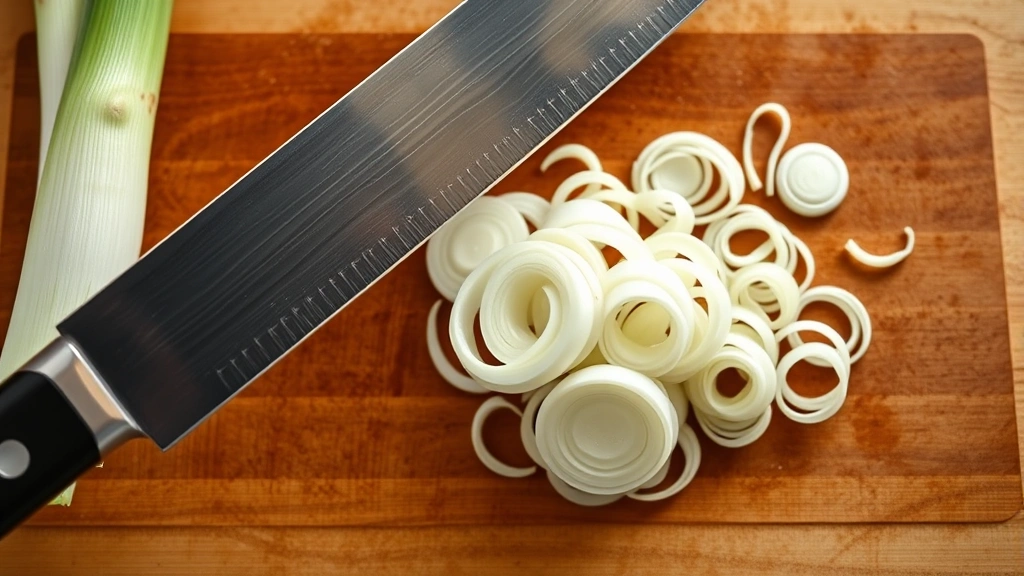
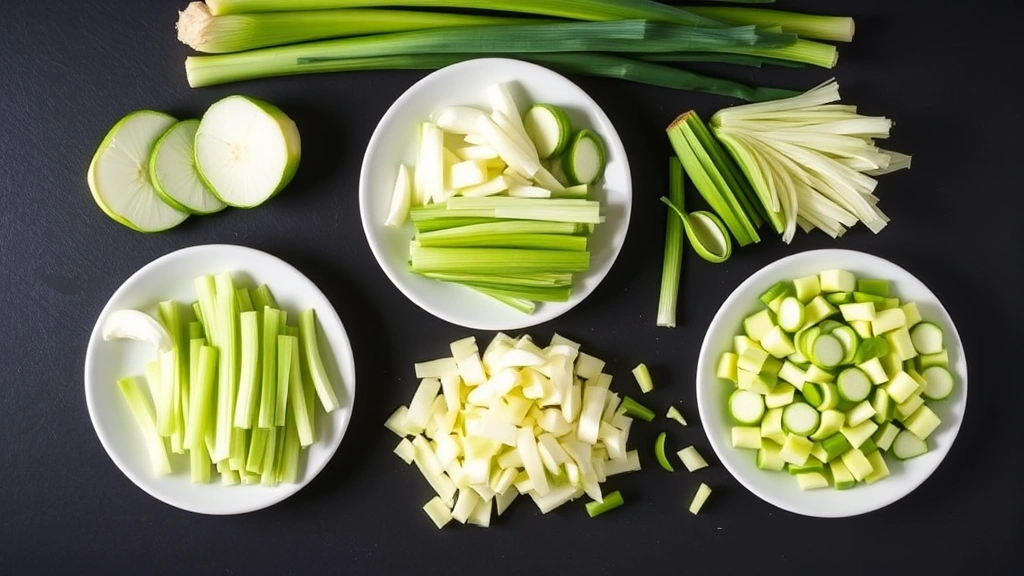
The most common cutting method is the slice cut, ideal for soups, stews, and sautés. After cleaning and trimming, lay the leek on your cutting board. Using a sharp chef’s knife, cut the leek into rounds, typically about one-quarter inch thick. Start at one end and use a smooth, forward-cutting motion. Let the knife do the work—don’t saw back and forth. This technique creates uniform pieces that cook evenly and look attractive on the plate.
For the half-moon cut, slice the leek lengthwise first, then cut those halves into half-moon shaped pieces. This method is excellent when you want larger pieces that maintain their shape during cooking. It’s particularly useful for braised leek dishes where you want the vegetable to remain somewhat intact. The half-moon shape also provides more surface area for browning, which develops deeper flavors.
The julienne cut involves slicing the leek lengthwise into thin strips, then cutting those strips into matchstick-sized pieces. This technique is perfect for stir-fries or when you want leeks to cook very quickly. Julienned leeks are also visually appealing in finished dishes. This cut requires a bit more knife skill and precision, but with practice, it becomes second nature.
For bias or diagonal cuts, hold your knife at a 45-degree angle to the leek and slice. This creates attractive elongated pieces that cook quickly and look elegant on the plate. This technique is often used in Asian cuisine and for restaurant-quality presentations. The increased surface area created by the diagonal cut helps the leek absorb flavors and cook more evenly.
Advanced Cutting Methods
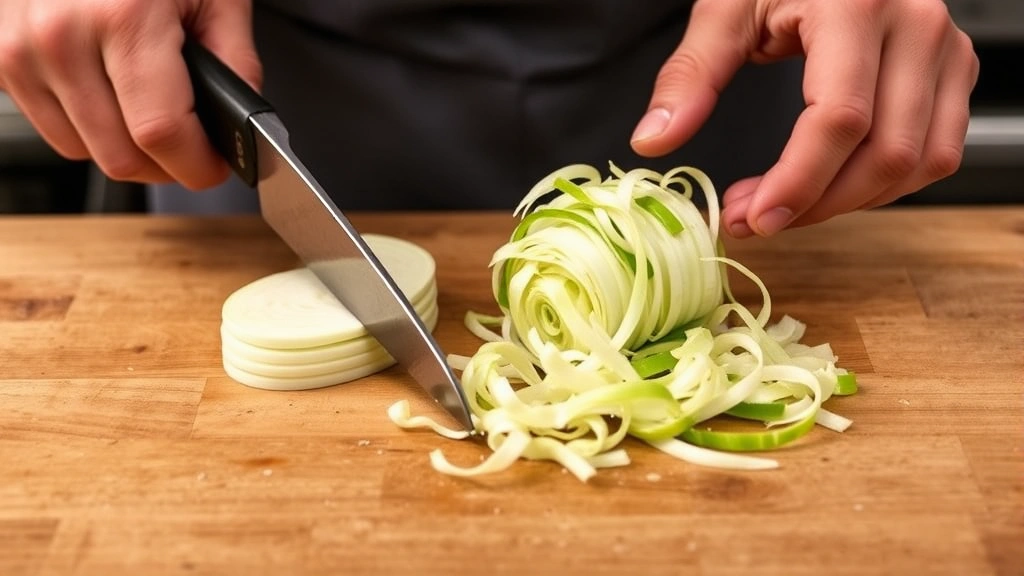
Professional chefs employ several advanced techniques for specific applications. The chiffonade cut involves stacking leek slices, rolling them, and cutting thin ribbons. This creates delicate, ribbon-like pieces perfect for garnishing soups or finished dishes. While it requires some practice, the elegant presentation is worth the effort. This technique works best with the white and light green portions of the leek.
For brunoise, a fine dice used in refined cuisine, you first cut the leek into thin strips, stack them, and cut them into small cubes. This tiny, uniform cut is perfect for refined sauces, elegant vegetable medleys, or as a garnish. It requires precision and a sharp knife but creates a professional appearance that impresses dinner guests. This cut is often seen in Michelin-starred restaurant preparations.
The paysanne cut creates small, flat, decorative pieces by cutting thin slices at an angle. This technique is both functional and visually appealing, making it popular in French cuisine. The angled cuts create more surface area and ensure even cooking while maintaining an elegant presentation.
When working with the dark green tops, many chefs create a rough chop for stock-making. Simply cut the tops into 2-3 inch pieces—uniformity isn’t critical since they’ll be strained out later. This rough preparation maximizes surface area for flavor extraction without requiring precision.
Common Mistakes to Avoid
One frequent mistake is cutting leeks before cleaning them thoroughly. This traps dirt inside the cut pieces and makes cleaning much more difficult. Always clean whole leeks first, then cut them. Another common error is using a dull knife, which requires excessive pressure and increases injury risk. Maintain your knife with regular honing and occasional professional sharpening.
Many home cooks discard the dark green tops entirely, wasting a valuable ingredient. As mentioned, these are perfect for stock and add tremendous flavor to broths. Save them religiously. Additionally, cutting leeks too far in advance can cause them to oxidize and lose flavor. While cleaned leeks store well, cut leeks are best used within a day or two.
Inconsistent cutting is another issue that affects cooking. Pieces of different sizes cook at different rates, resulting in some pieces being overcooked while others remain undercooked. Take time to cut uniform pieces, especially when preparing multiple leeks. This attention to detail makes a noticeable difference in the final dish.
Some cooks fail to account for leek shrinkage during cooking. Leeks contain significant water content and will reduce substantially when cooked. If a recipe calls for four cups of sliced leeks, remember that this will reduce to perhaps one-and-a-half to two cups after cooking. Understanding this helps you prepare the correct quantity for your recipes.
Storage Tips for Cut Leeks
Proper storage extends the life of your prepared leeks. Cut leeks should be stored in an airtight container in the refrigerator and will keep for three to four days. Avoid storing them in direct contact with other strong-smelling foods, as leeks can absorb and transfer odors. Keep them away from fruits like apples and bananas, which release ethylene gas and can accelerate spoilage.
For longer storage, consider freezing cut leeks. While they won’t work well raw after thawing, they’re excellent for soups, stews, and cooked dishes. Blanch the cut leeks for two to three minutes, cool them in ice water, drain thoroughly, and freeze them in airtight containers or freezer bags. They’ll keep for up to three months. Blanching helps preserve color, texture, and flavor.
If you’ve made vegetable stock from the green tops, store it in the refrigerator for up to five days or freeze it for up to three months. Frozen stock is incredibly convenient for future cooking. Many cooks freeze stock in ice cube trays, creating portion-sized cubes perfect for adding to recipes. This approach to storage and preparation ties into kitchen efficiency and organization, making meal preparation smoother overall.
To preserve the fresh flavor of leeks, always ensure they’re completely dry before storage. Excess moisture encourages mold growth and decay. Pat them thoroughly with paper towels before storing. Additionally, keep your refrigerator at the proper temperature—around 40 degrees Fahrenheit—to slow deterioration and maintain quality.
FAQ
What’s the difference between cutting leeks for soup versus stir-fry?
For soups, you want thicker slices (about one-quarter inch) that will soften and blend into the broth while maintaining some texture. For stir-fries, cut them thinner and into bias cuts to ensure quick, even cooking. The thinner pieces also absorb flavors better in high-heat cooking applications. Consider the cooking method and time when deciding on your cut size.
Can you eat the dark green part of leeks?
Yes, the dark green tops are entirely edible, though they’re tougher and more fibrous than the white and light green sections. They’re excellent for making stock or broth, where their flavor shines through. You can also braise them or include them in soups where they’ll soften during cooking. Simply clean them thoroughly and cut appropriately for your intended use.
How do you prevent leeks from falling apart when cutting?
Ensure your knife is very sharp—a dull blade requires more pressure and causes more damage. Cut with smooth, confident strokes rather than sawing motions. Keep the leek stable on your cutting board, and use the claw grip with your non-knife hand to hold it steady. Properly cleaned and dried leeks are also less likely to slip or fall apart during cutting.
What’s the best way to cut leeks if you’re making a creamy leek soup?
For soup, use the basic slice cut, creating rounds about one-quarter inch thick. This size is ideal because the pieces will soften and break down slightly during the long, gentle cooking process, contributing body and flavor to the soup. The uniform thickness ensures even cooking throughout. Some cooks prefer slightly thicker slices for a chunkier soup or thinner slices for a more refined, smooth texture.
How should leeks be cut for a composed salad?
For composed salads, use the chiffonade or thin slice cut to create delicate, elegant pieces. Blanch the leeks first, then chill them before adding to your salad. This technique creates an impressive presentation and ensures the leeks are tender but still maintain some structure. The thin pieces also allow dressing to coat them evenly, distributing flavors throughout the salad.
Can you use a food processor to cut leeks?
While technically possible, a food processor isn’t ideal for leeks. It often creates inconsistent pieces and can crush rather than cleanly cut the vegetable, affecting both texture and appearance. For best results, use a sharp knife and cut by hand. This gives you complete control over piece size and ensures clean cuts that cook evenly and look attractive.

Related Posts

Superscript in Google Docs: Expert Tips

Strikethrough in Excel: Easy Steps for Beginners
