
Ensure Freshness: The Ultimate Guide to Cleaning Strawberries
Strawberries are among the most beloved fruits worldwide, offering a perfect balance of sweetness and tartness that makes them ideal for everything from fresh snacking to elaborate desserts. However, their delicate nature and porous surface make proper cleaning essential for both food safety and optimal taste. Learning how to clean strawberries effectively ensures you remove dirt, pesticide residues, and harmful bacteria while preserving their natural flavor and nutritional value.
Whether you’re preparing strawberries for immediate consumption, storing them for later use, or incorporating them into recipes, the cleaning process can significantly impact their quality and shelf life. This comprehensive guide will walk you through various cleaning methods, timing considerations, and best practices to ensure your strawberries are as fresh and safe as possible.
Why Proper Strawberry Cleaning Matters
Strawberries require thorough cleaning due to their unique growing conditions and physical characteristics. Unlike fruits with protective peels, strawberries grow close to the ground and have a textured surface with tiny seeds that can harbor contaminants. The FDA emphasizes the importance of washing all fresh produce, including strawberries, to reduce the risk of foodborne illness.
The primary concerns when cleaning strawberries include removing soil particles, pesticide residues, and potential pathogens like E. coli and Salmonella. Commercial strawberries often contain pesticide residues, with the Environmental Working Group consistently ranking strawberries among the “Dirty Dozen” fruits with the highest pesticide contamination levels.
Additionally, proper cleaning helps extend the shelf life of your strawberries by removing bacteria and mold spores that can cause rapid deterioration. This is particularly important when you’re planning to store strawberries for several days, much like knowing how to tell if eggs are bad helps prevent food waste and ensures freshness.

When to Clean Your Strawberries
Timing is crucial when it comes to cleaning strawberries. The general rule is to clean them just before consumption or use, rather than immediately after purchase. Strawberries are highly perishable and moisture can accelerate spoilage, so washing them too early can lead to premature deterioration.
If you plan to eat strawberries within a day or two of purchase, store them unwashed in the refrigerator and clean them right before serving. However, if you’ve purchased a large quantity or notice some berries showing early signs of spoilage, you might consider cleaning and properly drying them immediately to extend their usable life.
For meal preparation purposes, clean strawberries no more than 2-3 hours before you plan to use them. This timing allows you to have clean, ready-to-use fruit while minimizing the risk of moisture-related spoilage. The same principle applies to other fresh produce preparation, similar to timing considerations when learning how long to steam broccoli for optimal results.
The Basic Water Rinse Method
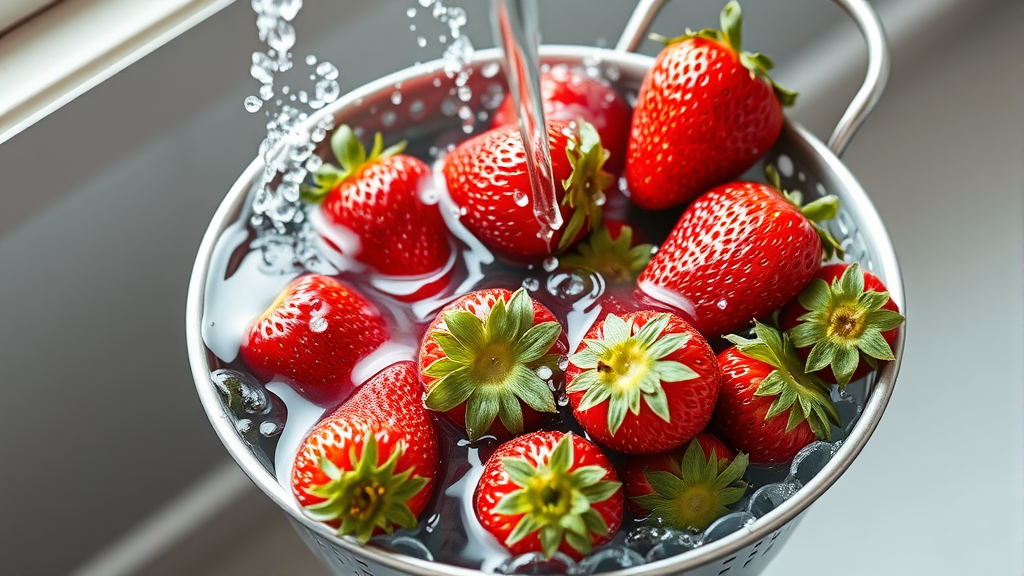
The simplest and most commonly used method for cleaning strawberries is the cold water rinse. This method effectively removes surface dirt, debris, and some bacteria while being gentle enough to preserve the fruit’s delicate structure.
Start by removing strawberries from their container and discarding any that show signs of mold, excessive softness, or damage. Place the remaining berries in a colander or mesh strainer. Rinse them under cool, running water for 10-15 seconds, gently moving them around to ensure all surfaces are cleaned. The water temperature should be cool rather than warm, as warm water can cause the berries to break down more quickly.
During the rinse, avoid scrubbing or applying pressure to the berries, as this can damage their delicate skin and create entry points for bacteria. Instead, let the water pressure do most of the work, occasionally turning the berries gently with your hands. After rinsing, remove the green tops and stems, as these can harbor additional dirt and bacteria.
Deep Cleaning Methods for Maximum Safety
For enhanced cleaning, especially when dealing with conventionally grown strawberries or when serving to vulnerable populations like young children or pregnant women, consider these more thorough cleaning methods.
The vinegar solution method involves creating a mixture of one part white vinegar to three parts cool water. Soak the strawberries in this solution for 5-10 minutes, then rinse thoroughly under cool running water. This method is particularly effective at removing pesticide residues and killing bacteria. Research from the National Institutes of Health shows that vinegar solutions can significantly reduce pesticide residues on fresh produce.
Another effective method is the salt water soak, using one teaspoon of salt per cup of cool water. This solution helps draw out small insects and dirt while providing gentle antimicrobial action. Soak the berries for 2-3 minutes, then rinse thoroughly with clean water to remove all salt residue.
Commercial fruit and vegetable washes are also available and can be effective, though they’re not necessarily superior to the homemade solutions mentioned above. If using commercial products, always follow the manufacturer’s instructions and ensure thorough rinsing afterward.

Proper Drying and Storage Techniques
Proper drying is crucial after cleaning strawberries to prevent rapid spoilage and maintain quality. After cleaning, gently pat the berries dry with clean paper towels or a soft kitchen towel. Avoid rubbing or applying pressure; instead, use a dabbing motion to absorb excess moisture.
For air drying, spread the cleaned strawberries on a clean kitchen towel or paper towel-lined tray, ensuring they don’t touch each other. Allow them to air dry for 10-15 minutes before storing or using. This step is particularly important if you plan to store the berries for any length of time.
When storing cleaned and dried strawberries, use a clean, dry container lined with paper towels to absorb any residual moisture. Avoid overcrowding the container, as this can lead to bruising and accelerated spoilage. Store in the refrigerator and use within 2-3 days for best quality. This attention to proper storage timing is similar to considerations when preparing other fresh ingredients, such as knowing how long to boil chicken breast for food safety.
Common Mistakes to Avoid
Several common mistakes can compromise the effectiveness of strawberry cleaning or damage the fruit. One of the most frequent errors is removing the green tops before washing, which can allow water and contaminants to enter the berry through the exposed top. Always wash first, then remove the stems and leaves.
Using warm or hot water is another mistake that can cause strawberries to become mushy and lose their firm texture. Cool water is always preferred for maintaining fruit quality while still providing effective cleaning.
Soaking strawberries for too long can lead to waterlogged, mushy fruit. Most cleaning methods should involve brief soaking periods of 10 minutes or less, followed by thorough rinsing. Extended soaking can also cause the berries to lose flavor and nutritional value.
Finally, avoid using soap or detergent to clean strawberries. These products are not intended for food use and can leave residues that are harmful if consumed. Stick to food-safe cleaning methods using water, vinegar, or salt solutions.
Special Considerations for Different Uses
The intended use of your strawberries may influence your cleaning approach. For fresh eating or serving to guests, the basic water rinse method is typically sufficient and preserves the best texture and appearance.
When preparing strawberries for cooking or baking applications, you might opt for more thorough cleaning methods since the fruit will be cooked, which provides additional pathogen destruction. This is particularly relevant when making desserts that require heavy cream or powdered sugar as accompaniments.
For baby food or serving to immunocompromised individuals, consider using the vinegar solution method for maximum safety. The CDC recommends extra precautions when preparing fresh produce for vulnerable populations.
If you’re planning to freeze strawberries, clean and dry them thoroughly before freezing. Remove stems and leaves after washing, and consider slicing larger berries to ensure even freezing and easier use later.
Frequently Asked Questions
Should I wash strawberries immediately after buying them?
No, it’s best to wash strawberries just before eating or using them. Washing them immediately after purchase can introduce moisture that accelerates spoilage. Store unwashed strawberries in the refrigerator and clean them only when you’re ready to consume them.
Is it safe to eat strawberries without washing them?
It’s not recommended to eat unwashed strawberries. They can harbor bacteria, pesticide residues, and dirt particles that pose health risks. Always wash strawberries under cool running water before consumption, even if they look clean.
Can I use baking soda to clean strawberries?
While baking soda can be effective for cleaning some produce, it’s not the best choice for delicate strawberries. The abrasive nature of baking soda can damage the soft skin of strawberries. Stick to water, vinegar solutions, or salt water for gentler yet effective cleaning.
How long can I store strawberries after washing them?
Properly washed and dried strawberries can be stored in the refrigerator for 2-3 days. Ensure they are completely dry before storing and use a container lined with paper towels to absorb any residual moisture.
Do organic strawberries need to be washed?
Yes, organic strawberries should still be washed before eating. While they may have fewer synthetic pesticide residues, they can still contain bacteria, dirt, and natural contaminants. Organic doesn’t mean sterile, so proper cleaning is still essential for food safety.
What’s the white film that sometimes appears on strawberries?
The white film is typically mold growth, which can occur when strawberries are stored in humid conditions or have been damaged. Berries with visible mold should be discarded immediately, and surrounding berries should be inspected carefully before use.
Can I clean strawberries with apple cider vinegar instead of white vinegar?
While apple cider vinegar can work, white vinegar is preferred for cleaning strawberries because it’s more acidic and has a neutral flavor that won’t affect the taste of the berries. If using apple cider vinegar, ensure thorough rinsing to remove any residual flavor.

Related Posts

How Long to Boil Lobster Tails: Cooking Guide

How Long to Fly from New York to London? Travel Times
