
Cutting Cantaloupe: Expert Tips for Perfect Slices
Cutting Cantaloupe: Expert Tips for Perfect Slices
Learning how to cut cantaloupe properly transforms this refreshing fruit from intimidating to effortless. Whether you’re preparing it for a summer breakfast, packing it in lunch boxes, or serving it at a dinner party, mastering the right technique ensures you get the most flesh with minimal waste while maintaining perfect presentation. A cantaloupe’s tough, netted exterior and round shape can seem challenging at first, but with the right approach and tools, you’ll be slicing through these melons like a professional in no time.
The key to successful cantaloupe cutting lies in understanding the fruit’s structure, using appropriate kitchen tools, and following proven techniques that professional chefs and home cooks rely on. This comprehensive guide walks you through everything you need to know, from selecting a ripe melon to creating beautiful, uniform slices and cubes. We’ll also explore safety considerations, storage tips, and creative serving suggestions that make your cantaloupe preparation both efficient and enjoyable.
Selecting a Ripe Cantaloupe
Before you even think about cutting, choosing the right cantaloupe is essential. A ripe cantaloupe will yield better results in terms of sweetness, flavor, and texture. Look for melons that feel heavy for their size, indicating good water content and ripeness. The exterior should display a golden-tan color beneath the netted pattern, not bright green.
Press gently on the blossom end (opposite the stem) with your thumb. It should yield slightly to pressure but not feel mushy or soft. A ripe cantaloupe should also emit a sweet, fragrant aroma when you smell the stem end. If the melon smells sour or fermented, it’s overripe. Avoid melons with soft spots, cracks, or bruises, as these indicate damage or decay that could affect the entire fruit.
The size of your cantaloupe matters too. Medium-sized melons (about 4-5 pounds) tend to be sweeter than very large ones. If you’re unsure about ripeness, ask your produce manager or look for melons that were harvested recently, as these are more likely to be at peak ripeness. At home, you can also place an unripe cantaloupe in a paper bag with a banana or apple to speed up the ripening process using ethylene gas.
Essential Tools and Equipment
Having the right tools makes cantaloupe cutting safer and more efficient. Your primary tool should be a sharp chef’s knife—ideally 8 inches long with a sturdy blade. A dull knife requires more pressure and is more likely to slip, creating a safety hazard. Keep your knife sharp using a proper sharpening technique or professional sharpening service.
Beyond the chef’s knife, consider having these additional tools on hand:
- Melon baller: A specialized tool with two spherical scoops at each end, perfect for creating decorative melon balls from the flesh
- Vegetable peeler: Useful for removing the outer skin if you prefer thin strips
- Paring knife: A smaller knife ideal for detailed work and removing seeds
- Cutting board: Use a large, stable cutting board with a groove to catch juices and prevent the melon from rolling
- Paper towels: Cantaloupes release moisture, so have these ready for cleanup
- Kitchen towel: Place this under your cutting board to prevent slipping
A non-slip cutting mat or damp towel underneath your cutting board is crucial for safety. The natural moisture from the cantaloupe can make surfaces slippery, and a stable work surface prevents accidents during cutting.
Step-by-Step Cutting Guide
Now let’s break down the fundamental process of cutting a cantaloupe. This basic technique forms the foundation for all the slicing and cubing variations you’ll learn.
Step 1: Wash the Melon
Start by rinsing your cantaloupe under cool running water. Use your hands or a soft vegetable brush to gently scrub the netted exterior. This removes dirt, bacteria, and debris that could contaminate the flesh when you cut into it. Pat it dry with paper towels. This step is often overlooked but critically important for food safety.
Step 2: Create a Stable Base
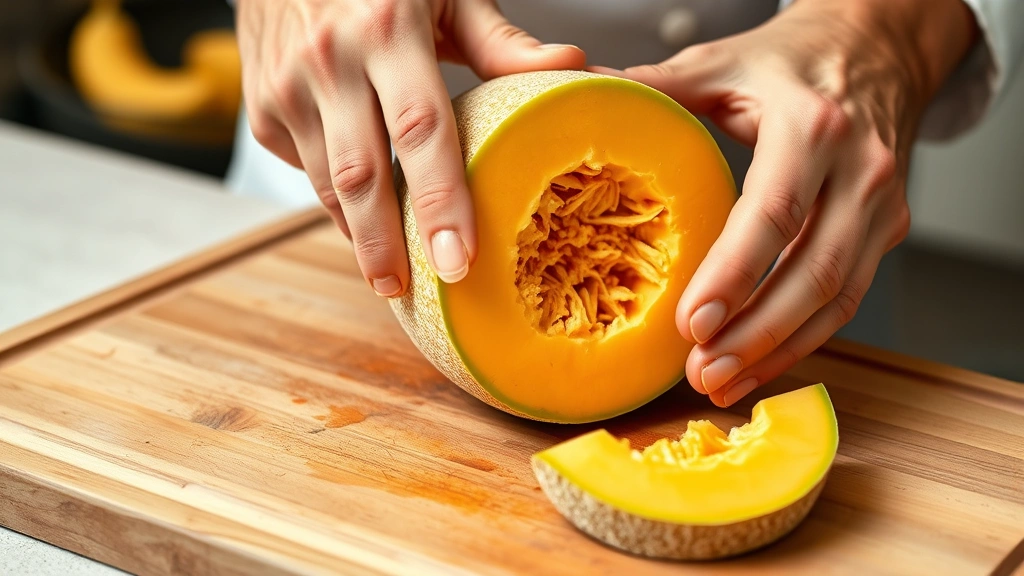
Place the cantaloupe on your cutting board and use a sharp chef’s knife to carefully cut a thin slice from the top (stem end) and bottom of the melon. These flat surfaces create stability, preventing the melon from rolling during cutting. Use gentle sawing motions rather than forcing the knife straight down—this gives you better control.
Step 3: Cut the Melon in Half
Position your knife vertically at the center of the melon, running from the top flat surface to the bottom. Apply steady, even pressure while using a gentle sawing motion. Let the sharp blade do the work—don’t force it. Once you’ve cut through the entire melon, carefully separate the two halves.
Step 4: Remove the Seeds
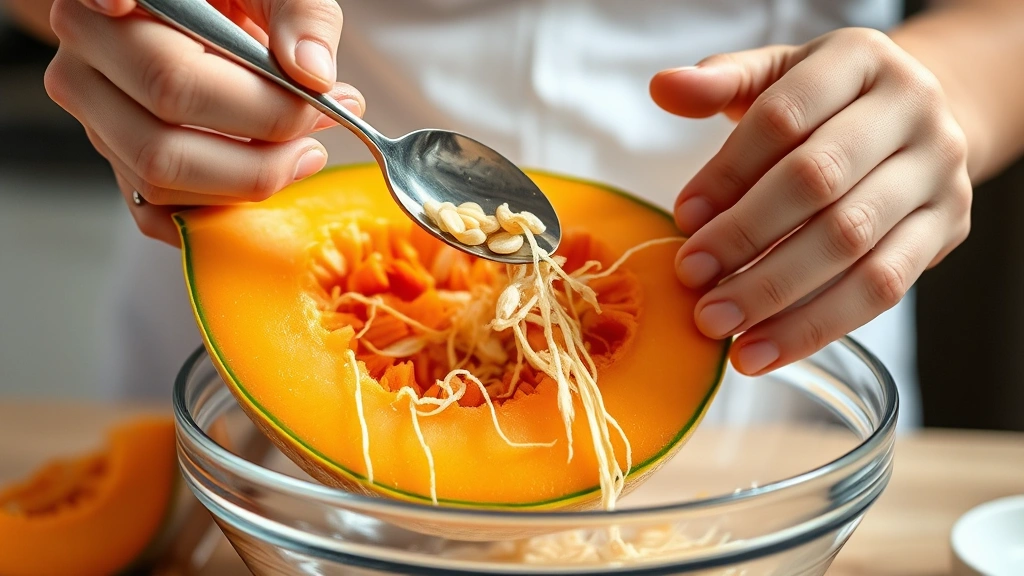
Using a sturdy spoon or melon baller, scrape out all the seeds and the stringy fiber surrounding them. Work over a bowl to catch the seeds and juices. Be thorough—any remaining seeds can be unpleasant when eating. Save the seeds if desired; they’re edible and nutritious when roasted.
Step 5: Create Sections
Now that you have clean halves, decide how you want to cut them. For most applications, cutting each half into thirds or quarters works well. Place a half cut-side down on your cutting board and use your chef’s knife to cut lengthwise, creating wedge-shaped sections. These sections are easier to work with for the final slicing or cubing steps.
Creating Perfect Slices
Cantaloupe slices are elegant for serving and popular for breakfast presentations. There are several methods depending on your desired slice thickness and style.
The Crescent Moon Method
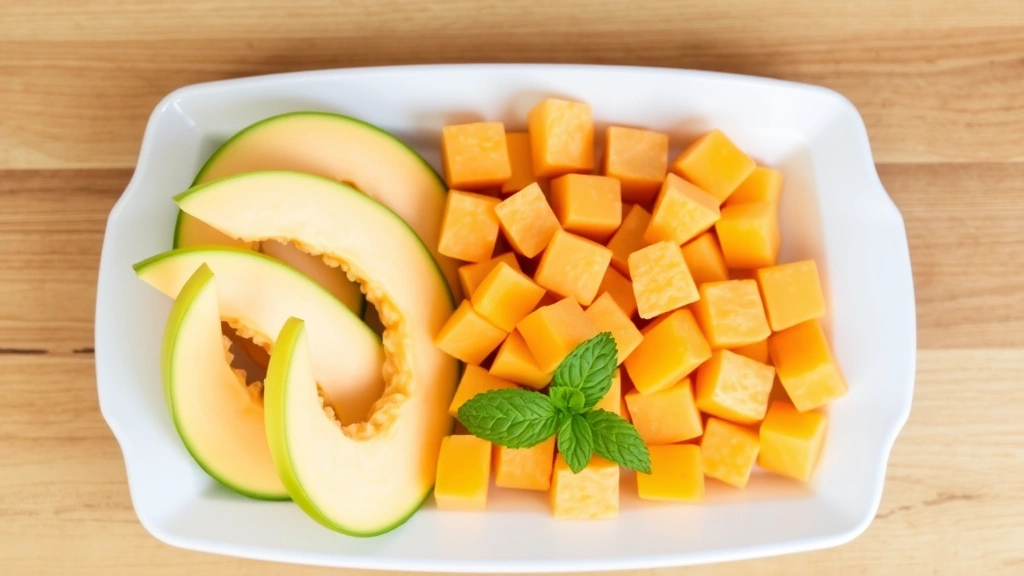
This classic approach creates beautiful crescent-shaped slices. After cutting your melon in half and removing seeds, place a half skin-side down on your cutting board. Starting at one end, slice downward at a slight angle, creating thin slices that curve gently. Space your cuts about ¼ to ½ inch apart depending on preference. The skin remains attached to each slice, making them easy to handle and serve on a platter.
The Skinless Slice Method
If you prefer slices without skin, cut your cantaloupe into wedges as described earlier. Then place a wedge skin-side down and use your knife to carefully separate the flesh from the rind by slicing horizontally along the inner edge of the skin. Once separated, you can cut the flesh into uniform slices. This method requires more precision but creates elegant, presentation-ready slices.
Creating Uniform Thickness
For professional-looking slices, consistency is key. Use your fingers as a measuring guide—for example, if you want ½-inch slices, use the width between your thumb and forefinger as a guide. Alternatively, invest in a quality chef’s knife with measurement markings or use a cutting guide tool designed for slicing fruits and vegetables.
When slicing, maintain consistent knife angle and pressure. Use a rocking motion with your chef’s knife, keeping the tip on the cutting board while moving the handle up and down. This technique, combined with a sharp blade, produces clean, uniform slices without crushing the fruit.
Making Cubes and Chunks
Cubed cantaloupe is perfect for fruit salads, smoothies, and meal prep. The technique is straightforward once you understand the basic approach.
Creating Uniform Cubes
Start with a cantaloupe half, skin-side down. Make parallel cuts from one end to the other, spacing them about ½ inch apart (or your desired cube size). Next, make perpendicular cuts across these lines, creating a grid pattern. Finally, turn the melon 90 degrees and make horizontal cuts to create individual cubes. This method ensures uniform sizing and minimal waste.
The Melon Baller Technique
A melon baller creates beautiful, decorative cantaloupe balls perfect for elegant presentations. Simply press the spherical scoop firmly into the cantaloupe flesh, twist it 360 degrees, and pull out. The result is a perfect sphere. This method works best on cantaloupe halves and creates impressive fruit platters, though it does result in more waste than traditional cubing.
Maximizing Yield
To get the most usable flesh from your cantaloupe, cut cubes from the thickest parts first. The remaining irregular pieces can be cubed more roughly for smoothies or blended for juice. Nothing needs to go to waste if you plan appropriately. Save those seeds for roasting—they’re packed with nutrients and make an excellent snack.
Safety Tips and Best Practices
Cutting cantaloupe safely should always be your priority. Sharp knives and firm fruits create potential hazards that proper technique minimizes.
Knife Safety Fundamentals
Always use a sharp knife—this might seem counterintuitive, but dull blades require more pressure and are more likely to slip. Keep fingers curled inward in a claw grip when holding the cantaloupe, positioning your knuckles toward the blade rather than your fingertips. This protects your hands if the knife slips.
Preventing the Melon from Rolling
A rolling melon is a safety hazard. Always create that stable flat base by cutting thin slices from the top and bottom first. Work on a non-slip surface, and consider placing a damp kitchen towel under your cutting board for additional stability. Never attempt to cut a cantaloupe while holding it in the air—always work on a solid, stable surface.
Proper Cutting Technique
Use smooth, controlled motions rather than forceful hacking. Let your sharp knife do the work. Apply steady pressure while using a gentle sawing motion for initial cuts through the tough skin. Once you’re in the flesh, you can use more direct downward pressure. Keep your work area clear of distractions and focus entirely on the task at hand.
Hygiene and Food Safety
Beyond selecting a ripe cantaloupe from the FixWiseHub Blog resources, proper hygiene during cutting is essential. Wash your hands before preparing the fruit, and always clean your cutting board and knife before and after use. The cantaloupe’s exterior can harbor bacteria, so washing it thoroughly before cutting is crucial. If your knife touches the outer skin and then the flesh, you could introduce bacteria into the fruit.
Storage and Shelf Life
Proper storage extends the life of your cut cantaloupe and maintains its quality. Understanding how long your cantaloupe lasts helps with meal planning and food waste reduction.
Whole Cantaloupe Storage
An uncut, ripe cantaloupe keeps for about 5-7 days at room temperature or 7-10 days in the refrigerator. Store it in the crisper drawer away from ethylene-producing fruits like apples and bananas if you want to slow ripening. If your cantaloupe is not yet fully ripe, leave it at room temperature away from direct sunlight.
Cut Cantaloupe Storage
Once cut, cantaloupe should be stored in an airtight container in the refrigerator. Properly stored cut cantaloupe lasts about 3-5 days. The exposed flesh oxidizes and loses quality over time, so consume it as soon as possible for best flavor and texture. Never leave cut cantaloupe at room temperature for more than 2 hours.
Freezing Cantaloupe
While fresh cantaloupe doesn’t freeze well due to its high water content (the texture becomes mushy when thawed), you can freeze cubes for use in smoothies. Place cubes on a baking sheet, freeze until solid, then transfer to freezer bags. Frozen cantaloupe works well for blending but not for eating fresh.
Creative Serving Ideas
Now that you’ve mastered cutting cantaloupe, explore creative ways to serve it. These ideas transform simple melon into impressive dishes.
Breakfast and Brunch Presentations
Arrange cantaloupe slices on a platter with prosciutto, mozzarella, and fresh mint for an elegant appetizer. Serve cubes in a yogurt parfait with granola and berries. Create a melon medley with watermelon and honeydew for a colorful breakfast fruit plate. The natural sweetness of cantaloupe pairs beautifully with savory elements like cured meats and salty cheeses.
Fruit Salads and Smoothies
Combine cubed cantaloupe with other fruits, fresh lime juice, and mint for a refreshing salad. Blend cantaloupe with yogurt, honey, and ice for a creamy smoothie. The mild, sweet flavor of cantaloupe complements virtually any fruit combination, making it incredibly versatile for healthy recipes.
Grilled Cantaloupe
For a surprising twist, grill cantaloupe slices until they develop caramelized edges. Serve with vanilla ice cream and a drizzle of balsamic reduction. The heat intensifies the natural sugars and creates a sophisticated dessert that guests will find memorable.
Cantaloupe Sorbet and Gazpacho
Puree fresh cantaloupe with simple syrup and lemon juice to create refreshing sorbet. For a chilled soup, blend cantaloupe with cucumber, lime juice, and a touch of jalapeño for a sophisticated summer starter. These preparations showcase the fruit’s natural flavor while offering something unexpected.
Cantaloupe and Cheese Boards
Include cantaloupe slices on cheese and charcuterie boards. The fruit’s sweetness balances salty, aged cheeses and cured meats. Arrange slices decoratively alongside nuts, crackers, and complementary fruits for an impressive entertaining presentation.
FAQ
How do I know if my cantaloupe is ripe enough to cut?
A ripe cantaloupe should feel heavy for its size, have a golden-tan color under the netting, and emit a sweet fragrance from the stem end. The blossom end should yield slightly to gentle thumb pressure. If it’s too firm, place it in a paper bag at room temperature for 1-2 days to ripen.
What’s the best knife for cutting cantaloupe?
An 8-inch chef’s knife with a sharp blade is ideal. The length provides leverage for cutting through the tough exterior, while sharpness ensures clean cuts without crushing the flesh. A dull knife requires excessive pressure and increases the risk of slipping.
Can I cut cantaloupe in advance for meal prep?
Cut cantaloupe keeps for 3-5 days in an airtight container in the refrigerator. For best quality, cut it no more than 2-3 days in advance. The flesh oxidizes and loses moisture over time, so fresher is always better. Store in the coldest part of your refrigerator, away from strong-smelling foods.
Is it safe to eat cantaloupe that’s been left at room temperature?
Cut cantaloupe should not sit at room temperature for more than 2 hours. The warm environment promotes bacterial growth, particularly if the melon’s exterior wasn’t thoroughly washed before cutting. When in doubt, throw it out—foodborne illness isn’t worth the risk.
What should I do with cantaloupe seeds?
Cantaloupe seeds are edible and nutritious. Rinse them thoroughly, dry them completely, toss with oil and salt, and roast at 300°F for about 40-50 minutes until golden and crispy. They make an excellent snack packed with magnesium and other nutrients.
Why does my cantaloupe smell fermented or sour?
This indicates overripeness or the beginning of fermentation. The fruit should be discarded. A properly ripe cantaloupe has a sweet, fragrant aroma. Fermented smells suggest internal decay, and consuming it could cause foodborne illness.
Can I cut cantaloupe with a serrated knife instead of a chef’s knife?
While a serrated knife can work for cutting through the tough exterior, a sharp chef’s knife is superior. Serrated blades can crush the delicate flesh inside. A sharp chef’s knife provides cleaner cuts and more control, resulting in better-looking slices and cubes.
How do I prevent my cutting board from slipping while cutting cantaloupe?
Place a damp kitchen towel or non-slip mat under your cutting board. The moisture from the cantaloupe can make surfaces slippery, creating a safety hazard. A stable work surface is essential for safe, controlled cutting.

Related Posts

Superscript in Google Docs: Expert Tips

Strikethrough in Excel: Easy Steps for Beginners
