
Clean Quartz Countertops? Expert Tips Inside
How to Clean Quartz Countertops: Expert Tips Inside
Quartz countertops have become a favorite choice for homeowners seeking durability, beauty, and low maintenance. These engineered stone surfaces combine natural quartz crystals with resin binders, creating a non-porous, stain-resistant work surface that outperforms natural stone in many ways. However, maintaining that pristine appearance requires understanding the proper cleaning techniques and products to use.
Unlike natural granite or marble that demand specialized sealers and careful handling, quartz offers greater flexibility in daily cleaning. Still, using the wrong approach can dull the surface or cause permanent damage. This guide walks you through everything you need to know about keeping your quartz countertops looking showroom-fresh for years to come.
Why Quartz Requires Different Care
Understanding your countertop material is the foundation of proper maintenance. Quartz differs fundamentally from natural stone options because it’s engineered rather than quarried. This manufacturing process creates a non-porous surface that resists bacteria, mold, and staining far better than granite or marble. The resin binding means quartz doesn’t require sealing, which simplifies your cleaning routine considerably.
The non-porous nature also means spills don’t penetrate the surface, giving you more time to respond before potential staining occurs. However, this same composition makes quartz sensitive to extreme heat and certain harsh chemicals. The resin can discolor or soften when exposed to temperatures above 150 degrees Fahrenheit, and aggressive solvents can damage the finish. Learning what works and what doesn’t prevents costly refinishing or replacement.
If you’re interested in comparing maintenance approaches across different surfaces, check out our guide on how to clean a leather couch, which explores how different materials demand tailored cleaning strategies.
Daily Cleaning Essentials
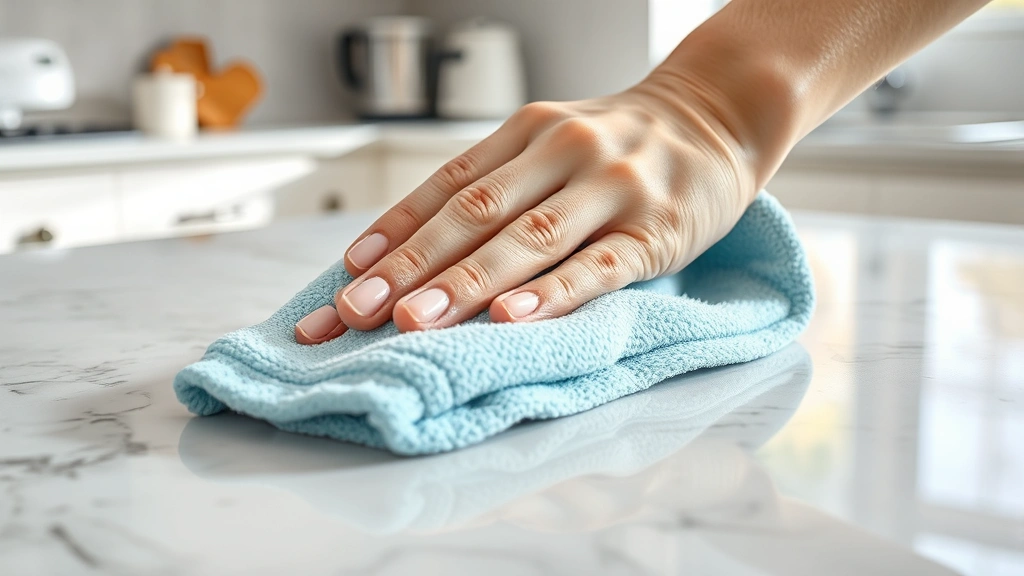
Your daily cleaning routine sets the stage for long-term countertop health. The good news is that quartz requires minimal effort for regular maintenance. Start with warm water and a soft cloth or microfiber towel. Wipe down your counters after meal preparation and after eating to prevent buildup of crumbs, grease, and bacteria.
For light grease or food residue, add a few drops of dish soap to warm water. Dish soap is gentle enough for daily use while effectively cutting through kitchen grime. Apply the soapy water with a soft cloth, wipe thoroughly, then dry with a clean towel to prevent water spots. This simple routine handles approximately 95 percent of daily cleaning needs.
Keep a microfiber cloth dedicated to your countertops—these cloths trap dust and bacteria without scratching the surface like paper towels can. Microfiber’s electrostatic properties actually pull dirt away from the surface rather than just pushing it around. For busy households, keeping cleaning supplies in a convenient drawer near your kitchen makes daily maintenance feel less like a chore.
Tackling Stubborn Stains
Even with non-porous quartz, stubborn stains occasionally happen. Coffee spills, wine splashes, and oil splatters require a bit more attention than everyday crumbs. The key is responding quickly—most stains lift easily if addressed before they dry completely.
For Organic Stains (Coffee, Wine, Juice): Mix equal parts white vinegar and water in a spray bottle. Spray the stained area and let it sit for 5-10 minutes. The mild acidity of vinegar breaks down organic compounds without harming quartz. Wipe with a soft cloth and rinse thoroughly with clean water. Repeat if necessary for stubborn marks.
For Oil and Grease Stains: A small amount of rubbing alcohol on a cloth works effectively. Dab the stain gently—don’t rub aggressively. Alcohol evaporates quickly, reducing the risk of water spotting. For cooking oil splatters, a degreasing dish soap solution works just as well as alcohol.
For Dried-On Food: Use a soft plastic scraper or old credit card edge to gently lift dried material. Hold the scraper at a shallow angle to avoid gouging. Once you’ve removed the bulk, clean with soapy water as normal. Never use metal scrapers, which can scratch the surface.
If you’re dealing with multiple surfaces that need attention, our article on how to clean gold jewelry covers how different materials need different approaches—a principle that applies to countertops too.
What to Avoid on Quartz
Knowing what damages quartz is equally important as knowing what cleans it. This is where many homeowners make costly mistakes that compromise their investment.
Harsh Chemicals to Avoid: Bleach, ammonia-based cleaners (like Windex), and acidic drain cleaners can damage quartz’s resin binder and dull the finish. These harsh substances are designed to strip or dissolve materials—exactly what you don’t want happening to your countertops. Avoid oven cleaners, paint thinners, and acetone completely. Even diluted versions of these products can cause discoloration or surface degradation over time.
Abrasive Materials: Steel wool, scouring pads, and abrasive powders scratch quartz. While the scratches might be subtle initially, repeated use creates a dull patch that stands out against the glossy finish. Use only soft cloths, non-abrasive sponges, or plastic scraping tools.
Extreme Heat: Never place hot pots, pans, or baking sheets directly on quartz. The resin can soften or discolor at temperatures above 150°F. Always use trivets, hot pads, or cutting boards under hot cookware. This also protects the surface from thermal shock—sudden temperature changes that can cause cracking in any stone.
Excessive Impact: While quartz is durable, it’s not indestructible. Dropping heavy objects or striking the edge forcefully can chip or crack the material. Handle kitchen tools with care around the counters, and avoid using the surface as a cutting board without proper protection.
Sealing Products: Many homeowners mistakenly buy stone sealers thinking quartz needs them. Don’t apply sealers, waxes, or polishes to quartz countertops. These products build up over time, creating a dull, sticky residue that’s difficult to remove. The engineered nature of quartz means it doesn’t absorb liquids the way natural stone does, so sealers serve no purpose.
Deep Cleaning Methods
Quarterly deep cleaning keeps your quartz looking like new and removes buildup that daily cleaning might miss. This process takes 30-45 minutes and requires minimal supplies.
The Basic Deep Clean: Mix one part rubbing alcohol with four parts water. This solution cuts through grease and disinfects without harsh chemicals. Use a soft cloth to apply the solution evenly across the entire countertop surface. Pay special attention to backsplashes and edges where grease and dust accumulate. Let the solution sit for a few minutes, then wipe thoroughly with a clean, damp cloth. Dry completely with a microfiber towel to prevent water spots.
For Heavy Buildup: If your counters have accumulated grease film, use a mixture of one tablespoon of dish soap in one quart of warm water. Apply with a soft cloth, working in circular motions to break down stubborn buildup. Rinse with clean water multiple times to ensure all soap residue is removed—any remaining soap leaves a film that dulls the finish. This is more thorough than daily cleaning and should be done quarterly or as needed.
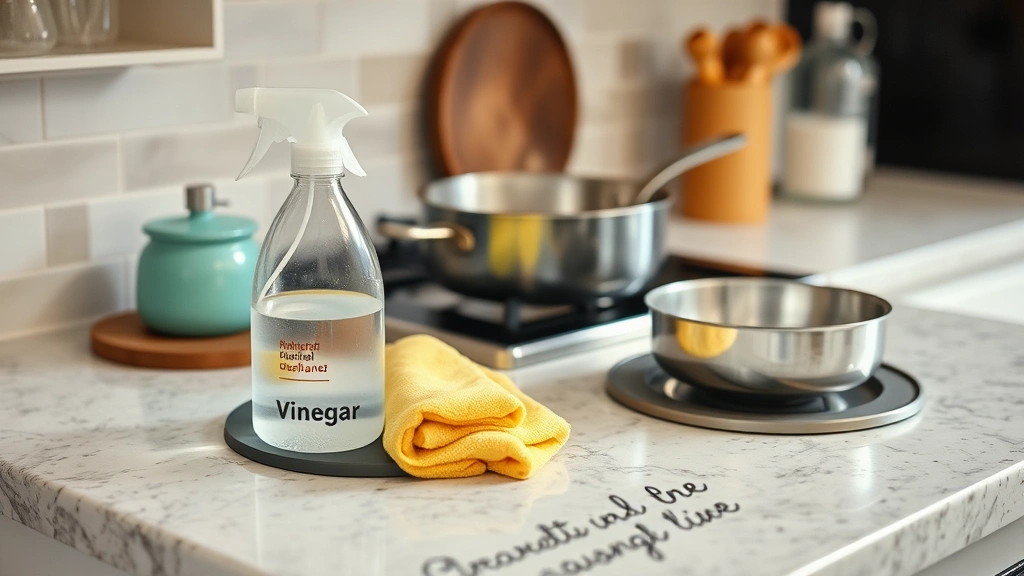
Addressing Hard Water Spots: If you live in an area with hard water, mineral deposits can accumulate on your quartz. White vinegar addresses this effectively. Mix equal parts white vinegar and distilled water (distilled water prevents new mineral deposits from forming). Spray on the affected area, let sit for 10 minutes, then wipe clean. Dry thoroughly to prevent new spots from forming.
For guidance on maintaining various surfaces in your home, explore our FixWiseHub blog where we cover how to clean a coffee maker and other household maintenance tasks that follow similar systematic approaches.
Maintaining Shine and Luster
Quartz countertops come with a factory finish that provides natural shine and luster. Preserving this finish requires understanding what causes it to dull and how to restore it.
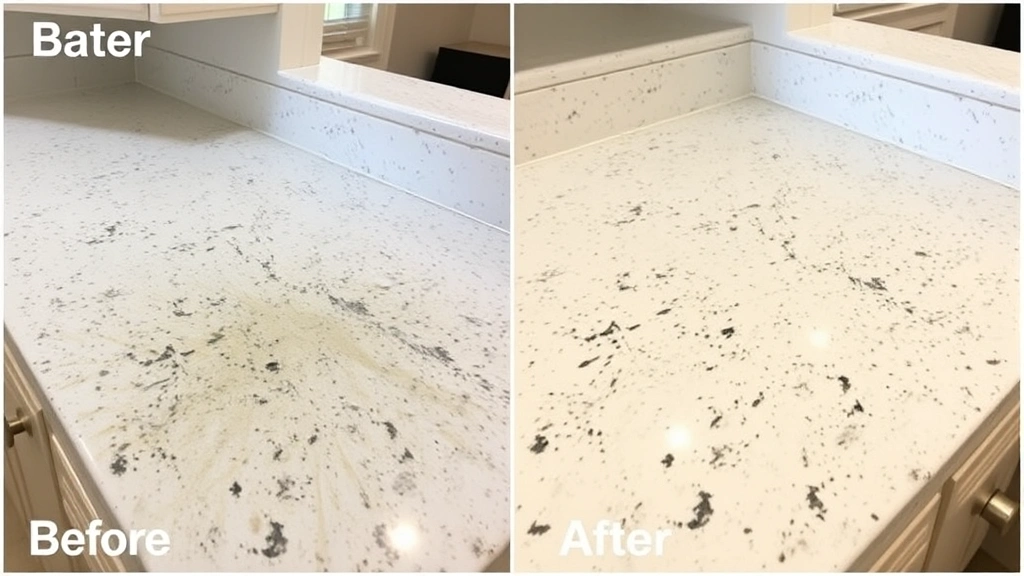
Why Quartz Loses Shine: The primary culprits are residual soap films, hard water deposits, and grease buildup. These layers accumulate gradually, creating a hazy appearance that makes the countertop look dull and tired. Unlike scratches or stains, this dullness is reversible with proper cleaning.
Restoring the Shine: The vinegar and water solution mentioned earlier actually restores shine by removing mineral deposits and soap films. After deep cleaning with this solution, your counters should regain their original luster. If you want to enhance shine further, some manufacturers recommend using their brand-specific quartz cleaners, which are formulated to clean and add a subtle shine without leaving residue.
Preventive Measures: Minimize shine loss by wiping up spills immediately and drying your counters after cleaning. This prevents water spots and mineral deposit formation. Use coasters under glasses to prevent water rings. Wipe up grease splatters promptly—the longer they sit, the harder they are to remove and the more they dull the finish.
Maintaining your kitchen surfaces is part of a broader home care strategy. Much like how you’d maintain other investment pieces, our FixWiseHub blog provides comprehensive guides for protecting your home’s valuable components.
Professional Refinishing: If your quartz has lost significant shine despite proper cleaning, or if it has developed scratches you want to address, professional refinishing is available. Specialized companies can polish and reseal quartz surfaces, though this is typically only necessary after years of use. This service costs considerably less than replacement, making it a worthwhile investment for heavily used countertops.
FAQ
Can I use Lysol or other disinfectants on quartz countertops?
Most commercial disinfectants contain harsh chemicals that can damage quartz. However, spray disinfectants labeled as safe for stone can work. Better options include a solution of 10 percent bleach and 90 percent water (used sparingly), or rubbing alcohol diluted with water. Always test any new product on an inconspicuous area first, and rinse thoroughly after use.
What should I do if quartz gets scratched?
Minor surface scratches are often invisible unless viewed at specific angles. For noticeable scratches, professional polishing can blend them into the surrounding surface. Deep gouges may require professional repair involving resin application. Prevention through careful use is more practical than repair for most homeowners.
Is it safe to use a dishwasher to clean quartz countertop items?
Yes, the dishwasher is fine for items that sit on quartz. The concern is only about cleaning the quartz surface itself—never put countertop pieces in the dishwasher if you’re trying to clean the counters. Items made from quartz that you use in cooking should be hand-washed to maintain their finish.
How often should I deep clean quartz countertops?
Deep cleaning every three months is ideal for most households. High-traffic kitchens with frequent cooking might benefit from monthly deep cleaning. Light-use kitchens can extend this to every six months. Adjust frequency based on how your counters look and feel—if you notice dullness or buildup, it’s time to deep clean.
Can I use baking soda paste on quartz?
Baking soda is mildly abrasive and should be avoided for regular cleaning. However, a paste of baking soda and water can address stubborn stains if used gently with a soft cloth. Apply minimal pressure and avoid scrubbing motions. Test on an inconspicuous area first, and rinse thoroughly afterward.
What’s the best way to handle a spill immediately?
Blot immediately with a soft cloth or paper towel to absorb excess liquid. Avoid wiping motions that spread the spill. Once you’ve absorbed most of the liquid, clean the area with warm soapy water and dry thoroughly. Quick action prevents most stains from setting permanently on quartz.
Are there professional quartz cleaners I should use?
Most quartz manufacturers recommend their branded cleaning products, which are formulated specifically for engineered stone. Brands like Dupont, Cambria, and Silestone offer quartz-safe cleaners. These are optional—plain soap and water work perfectly well for daily cleaning. Professional cleaners are more useful for restoration and shine enhancement than routine maintenance.

Related Posts

Superscript in Google Docs: Expert Tips

Strikethrough in Excel: Easy Steps for Beginners
