

How Long Does It Take to Smoke a Turkey? Expert Tips
How Long Does It Take to Smoke a Turkey? Expert Tips for Perfect Results
There’s something magical about smoking a turkey that transforms it from ordinary to absolutely unforgettable. Whether you’re planning Thanksgiving dinner or a summer gathering, understanding the smoking timeline is crucial to pulling off a bird that’s juicy on the inside and gorgeously bronzed on the outside. The answer isn’t as simple as “X hours,” though—it depends on several variables that we’ll break down for you.
The general rule most pitmasters follow is 13 to 15 minutes per pound at 225°F to 250°F, but that’s just the starting point. We’re talking about a process that requires patience, attention, and a bit of planning. A 12-pound turkey might take anywhere from 2.5 to 4 hours, while a massive 20-pounder could demand 4 to 5 hours or more. The beauty of smoking is that when done right, you get results that rival any traditional oven-roasted bird—with significantly more flavor depth and complexity.
In this guide, we’ll walk you through everything you need to know about smoking turkey timing, temperature management, and pro tips that’ll make you the hero of your next gathering. Let’s dive in.
Smoking Time Basics: The Numbers You Need
Let’s get straight to what everyone wants to know: how long does it take to smoke a turkey? The answer revolves around one fundamental principle—low and slow cooking at consistent temperatures. Most experienced smokers aim for 225°F to 250°F, which translates to roughly 13 to 15 minutes per pound. This timeframe assumes your turkey is thawed and you’re maintaining steady heat throughout the process.
For a practical example, here’s what you’re looking at:
- 10-12 lb turkey: 2.5 to 3 hours
- 12-14 lb turkey: 3 to 3.5 hours
- 14-16 lb turkey: 3.5 to 4 hours
- 16-18 lb turkey: 4 to 4.5 hours
- 18-20 lb turkey: 4.5 to 5 hours
- 20+ lb turkey: 5+ hours
These estimates assume you’re smoking at 250°F. If you drop to 225°F, add about 15-20% more time. Conversely, if you bump up to 275°F for faster cooking, subtract about 20% from these times. The key is using a reliable meat thermometer to verify doneness rather than relying solely on time estimates. The thickest part of the thigh should reach 165°F, and the breast typically finishes around 160-165°F.
When you’re learning how to smoke a turkey for the first time, give yourself extra buffer time. It’s better to finish early and rest the bird than to rush it and end up with undercooked poultry. Many experienced smokers recommend planning for an extra 30 minutes beyond your calculated time, just in case.
Temperature Matters More Than You Think
Here’s where most beginners go wrong: they fixate on time and ignore temperature consistency. Your smoker’s internal temperature is the real MVP in this process. Fluctuations of even 10-15 degrees can throw off your entire timeline and create uneven cooking.
Most competition pitmasters swear by 250°F as the sweet spot. This temperature is hot enough to render fat and create that beautiful mahogany skin without drying out the meat, yet slow enough to allow smoke penetration and collagen breakdown that creates tenderness. If you prefer a faster cook, you can push to 275°F, though you’ll sacrifice some smoke flavor and might get crispier skin (which some people prefer, honestly).
The lower end of the spectrum—225°F—produces the most tender, smoky results but requires more patience. Plan for about 15-18 minutes per pound at this temperature. This is ideal if you’re smoking overnight or have the luxury of a full day ahead.
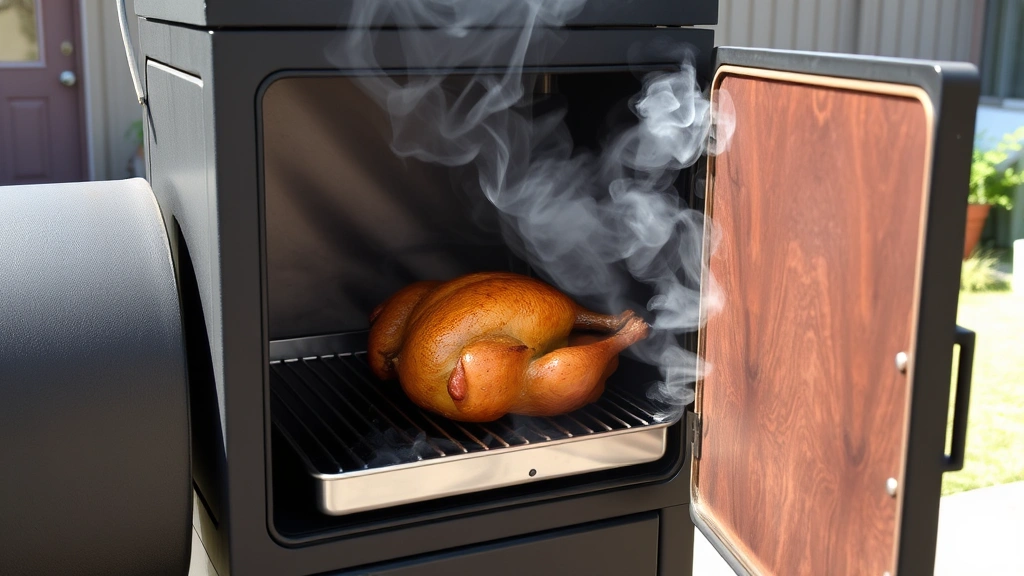
Invest in a quality dual-probe thermometer. One probe monitors your smoker’s chamber temperature, while the other tracks the turkey’s internal temperature. This eliminates guesswork and prevents the rookie mistake of opening your smoker constantly to check progress. Every time you open that door, you’re dropping temperature and adding 10-15 minutes to your cook time.
Turkey Size and Weight Considerations
The bird you choose directly impacts your smoking timeline. Most people assume bigger is always better, but that’s not necessarily true when smoking. A 12-16 pound turkey is actually the ideal size for smoking—large enough to feed a crowd but small enough to cook evenly without hot spots.
Smaller turkeys (under 12 pounds) cook quickly but can dry out more easily. They’re great for smaller gatherings and actually require less hands-on attention. Larger birds (18+ pounds) take significantly longer and present more challenges in achieving even cooking. The outer meat can overcook while the thigh stays undercooked if you’re not careful.
One pro tip: consider smoking two smaller turkeys instead of one massive bird. Two 12-pounders will finish in roughly the same time as one 20-pounder, but you’ll get more surface area for that coveted smoke ring and better heat circulation around each bird. Plus, you have backup if something goes sideways with one of them.
When seasoning your turkey, the weight factor matters too. Larger birds benefit from injections and dry rubs applied further in advance, allowing flavors to penetrate deeper into the meat.
Preparation Timeline: Planning Ahead
Smoking a turkey isn’t just about throwing it on the grate and checking back in a few hours. Proper preparation begins days before you fire up the smoker.
Three to Five Days Before: Purchase your turkey if it’s frozen. This gives you adequate time for a slow thaw in the refrigerator. Never thaw at room temperature—it’s a food safety nightmare. Plan your menu and confirm your smoker is in working order. There’s nothing worse than discovering a broken thermometer the morning of your cook.
Two Days Before: Remove the turkey from the freezer if you haven’t already. It should be completely thawed by now. Confirm your rub ingredients and smoking wood selection. This is also an excellent time to review our guide on smoking timeline basics if you’re new to the process.
One Day Before: Pat your turkey dry with paper towels. Moisture is the enemy of crispy skin. Apply your dry rub, cover it loosely with plastic wrap, and refrigerate overnight. This allows the rub to cure into the skin and season the meat throughout.
Morning Of: Remove the turkey from the refrigerator 40 minutes before smoking to bring it closer to room temperature. This ensures more even cooking. Prepare your smoker—clean the grates, fill water pans, and get your wood and charcoal ready. Start preheating your smoker to your target temperature about 30-45 minutes before the turkey goes on.
The Smoking Process Step-by-Step
Now we get to the actual smoking. This is where theory meets practice.
Setup and Placement: Once your smoker reaches target temperature and has been holding steady for 15 minutes, place the turkey on the grates breast-side up. Position it away from direct heat if you’re using an offset smoker. In a kamado or ceramic cooker, place it in the center. Ensure there’s at least 2-3 inches of clearance on all sides for air circulation.
Initial Smoke Phase (First 2-3 Hours): This is when your turkey will absorb the most smoke. Use quality smoking wood—hickory, apple, cherry, or oak all work beautifully with poultry. Add wood chips or chunks according to your smoker’s design. Maintain your target temperature without opening the door unless absolutely necessary. Your meat thermometer is your window into progress.
Mid-Cook Check (Around Hour 3): This is your first opportunity to open the smoker and assess things. Check the thermometer reading and look for even browning. If one side seems to be browning too quickly, rotate the turkey 180 degrees. If you’re concerned about the skin getting too dark, you can tent it loosely with foil—though this will reduce smoke penetration slightly.
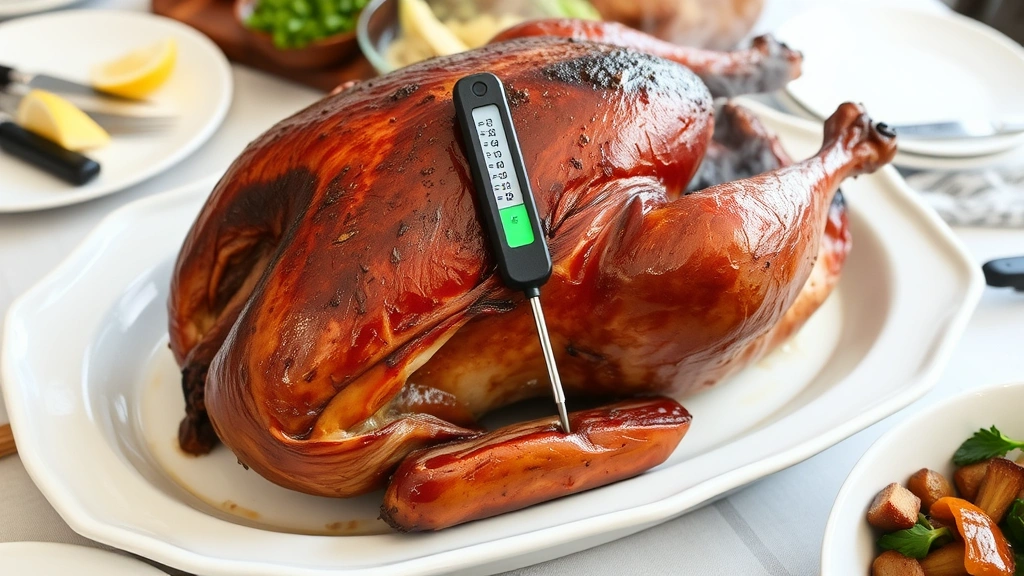
Final Phase (Last 1-2 Hours): Continue monitoring temperature. Reduce wood smoke if you’ve achieved a good smoke ring. Focus on hitting your target internal temperature. The thigh is always the last part to finish, so prioritize that reading. When the thickest part of the thigh reaches 165°F and the breast reaches 160-165°F, you’re done.
If you’re implementing the wrap method (common in competitive smoking), wrap your turkey tightly in butcher paper when it reaches about 140°F internally. This accelerates cooking slightly and prevents excessive moisture loss from the surface.
Common Issues and Solutions
Uneven Cooking: This usually happens with larger birds or inconsistent heat. Solution: Rotate the turkey halfway through cooking. In offset smokers, move it from the hot side to the cool side. Use a meat thermometer to verify multiple spots—both thighs, the breast, and the thickest part of the wings.
Skin Not Crisping: Blame moisture and low heat. Solution: Increase your smoker temperature to 275°F for the final hour. Pat the skin dry before it goes on the smoker. Consider finishing the turkey at higher heat for 15-20 minutes if the skin is still soft.
Dry Meat: This happens when you cook too fast or don’t manage temperature properly. Solution: Maintain lower temperatures (225-250°F), use a water pan in your smoker to add humidity, and don’t skip the resting period. Inject butter or broth into the meat before smoking for added moisture insurance.
Oversmoked Flavor: Sometimes less is more. Solution: Use milder woods like apple or cherry instead of strong hickory. Limit smoke to the first 3-4 hours. Remember, after the bark sets (typically 2-3 hours), additional smoke doesn’t add flavor—it just adds acrid taste.
If you’re transitioning from other smoking projects, like smoking a pork butt, remember that poultry requires different handling. Turkey is leaner, so it’s more prone to drying out. Adjust your approach accordingly.
Resting and Carving Your Smoked Turkey
Here’s the part many home cooks skip, and it’s a critical mistake: resting your turkey. After you pull it off the smoker, resist the urge to immediately carve it. The internal carryover cooking continues for several minutes, and the meat’s juices need time to redistribute throughout the bird.
Let your turkey rest for 20-30 minutes, loosely tented with foil. This resting period is non-negotiable if you want moist, succulent meat. During this time, the residual heat gently carries over cooking, bringing the thigh up those final couple of degrees if needed, while the meat relaxes and reabsorbs its juices rather than running all over your cutting board.
When you’re ready to carve, use a sharp carving knife and a carving fork. Remove the legs first by pulling one leg away from the body and cutting through the joint. Separate the thighs from the drumsticks. Slice the breast meat parallel to the breastbone, angling your knife slightly for larger slices. Work methodically—there’s no prize for speed here.
Pro tip: If you’re hosting a large gathering and want to keep things warm while you carve, place finished pieces on a platter and tent loosely with foil. The residual heat keeps everything warm without drying it out.
Frequently Asked Questions
Can you smoke a turkey overnight?
Absolutely. Many pitmasters prefer smoking turkeys at 225°F overnight, which typically takes 15-18 minutes per pound. You’ll get incredible tenderness and smoke penetration. Just ensure your smoker maintains consistent temperature overnight—use a quality thermometer and consider a smoker with better insulation for overnight cooks.
What’s the best wood for smoking turkey?
Apple, cherry, and hickory are excellent choices. Apple and cherry produce milder, slightly sweet smoke that complements poultry beautifully. Hickory is stronger but still works well if used moderately. Avoid mesquite for turkey—it’s too aggressive and can overpower the delicate poultry flavor. Oak is a solid middle-ground option.
Should you inject a smoked turkey?
Yes, injecting adds moisture insurance and flavor depth. Inject a butter-based or broth-based mixture 12-24 hours before smoking, or right before it goes on the smoker. This is especially helpful for larger birds that take longer to cook.
How do you keep smoked turkey moist?
Maintain consistent temperatures between 225-250°F, use a water pan in your smoker for humidity, inject the meat with butter or broth, and absolutely do not skip the resting period. Also, don’t cook past 165°F—every degree beyond that dries things out faster.
Can you smoke a frozen turkey?
Technically yes, but it’s not recommended. A frozen turkey takes significantly longer to cook (adding 50% more time), and you risk uneven cooking with cold spots in the center. Always thaw your turkey in the refrigerator beforehand. It’s safer and produces better results.
What temperature should the turkey reach internally?
The USDA safe temperature is 165°F for all poultry. Check the thickest part of the thigh without touching bone. Many pitmasters pull their turkeys at 160-162°F in the breast and 165°F in the thigh, allowing for carryover cooking during resting. This prevents the breast from drying out while ensuring food safety.
How long can smoked turkey sit out before serving?
Don’t leave it at room temperature for more than 2 hours total (1 hour if your kitchen is above 90°F). After that, bacteria growth becomes a concern. Slice and serve promptly, or refrigerate leftovers within 2 hours.
Can you smoke a turkey the day before?
Yes. Smoke it completely, cool it to room temperature, wrap it tightly, and refrigerate. The next day, you can serve it cold, slice it for sandwiches, or reheat it gently in a low oven (around 275°F) until warmed through. Reheating typically takes 30-45 minutes depending on the size. This is actually a great strategy if you’re hosting multiple dishes and need to manage oven space.
Is smoking or roasting faster?
Traditional roasting in a 325°F oven typically takes 13 minutes per pound, which is roughly the same as smoking. The real difference is flavor and moisture—smoked turkey usually turns out juicier and more flavorful, though it requires more active management and smoker knowledge.

Related Posts

How Long to Boil Lobster Tails: Cooking Guide

How Long to Fly from New York to London? Travel Times
